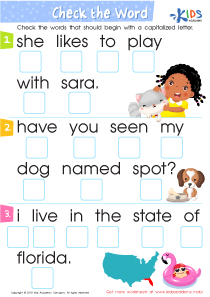
Normal Punctuation Worksheets for Ages 4-8
12 filtered results
-
From - To
Explore our engaging Normal Punctuation Worksheets designed specifically for children aged 4-8! These worksheets provide a fun and interactive way for young learners to grasp essential punctuation concepts, including periods, commas, question marks, and exclamation points. Each worksheet features colorful illustrations and simple exercises, perfect for enhancing your child's writing skills. As they complete the activities, kids will boost their comprehension and become confident in their punctuation usage. Ideal for home practice or classroom settings, these worksheets promote a love for writing while ensuring that your little ones master the fundamentals of punctuation. Start their learning journey today!
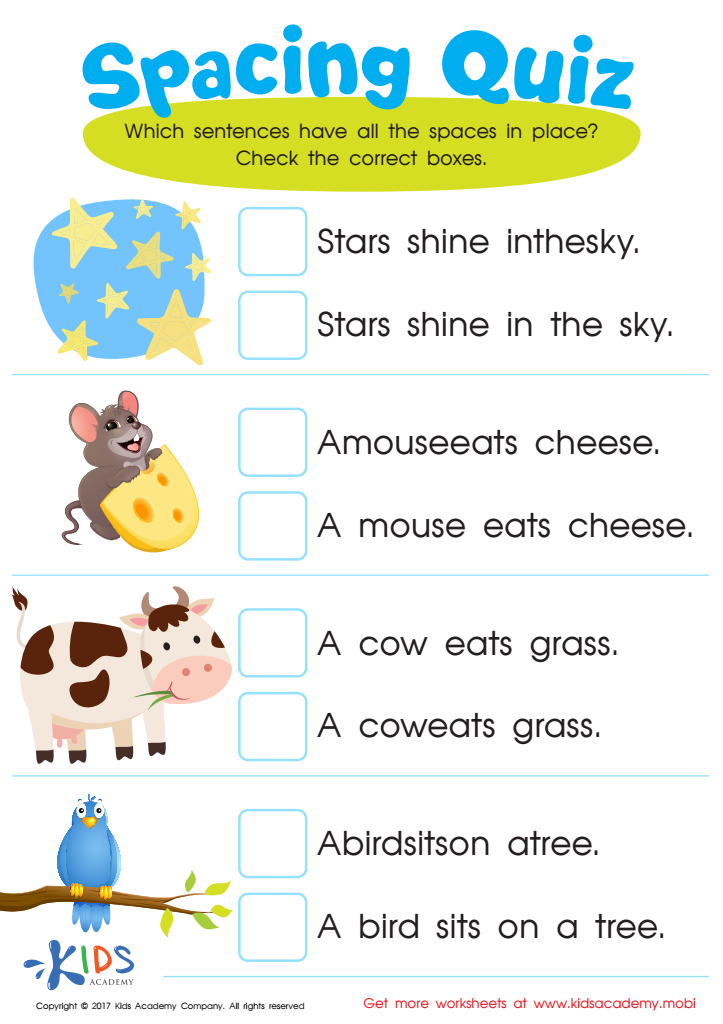
Spacing Quiz Worksheet
 Assign to My Students
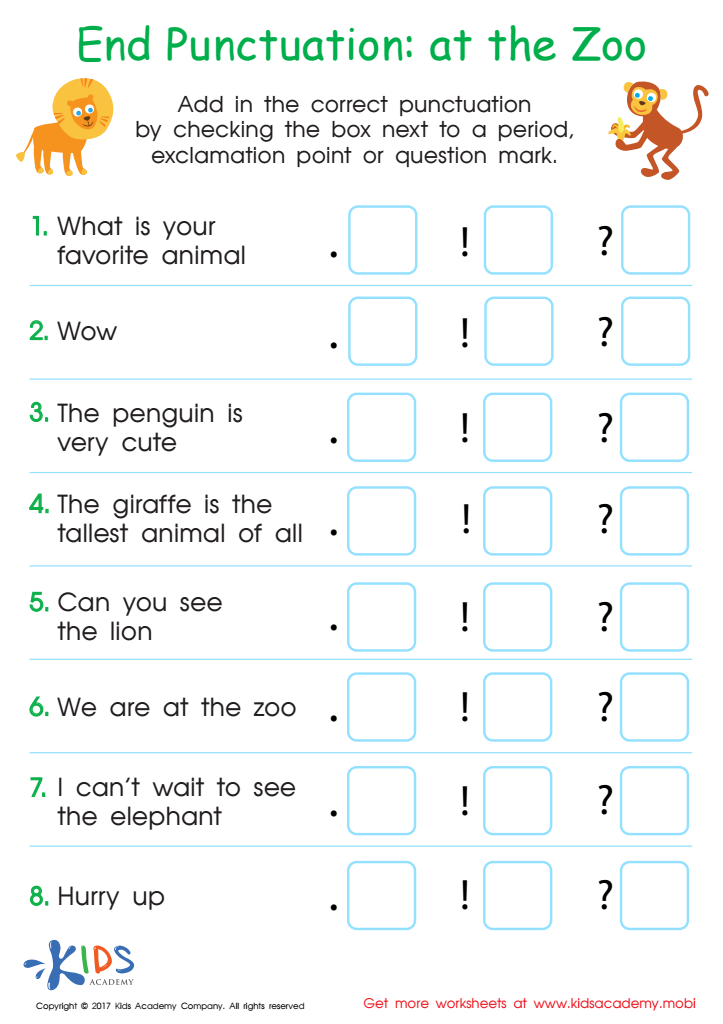
End Punctuation: At the Zoo Worksheet
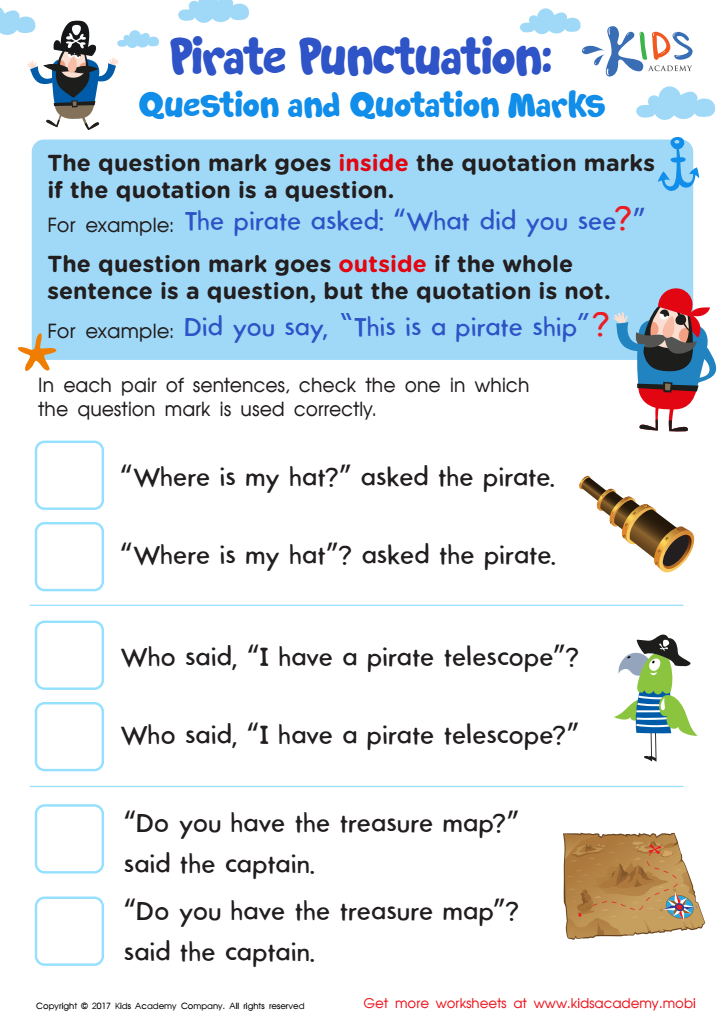
Question and Quotation Marks Worksheet
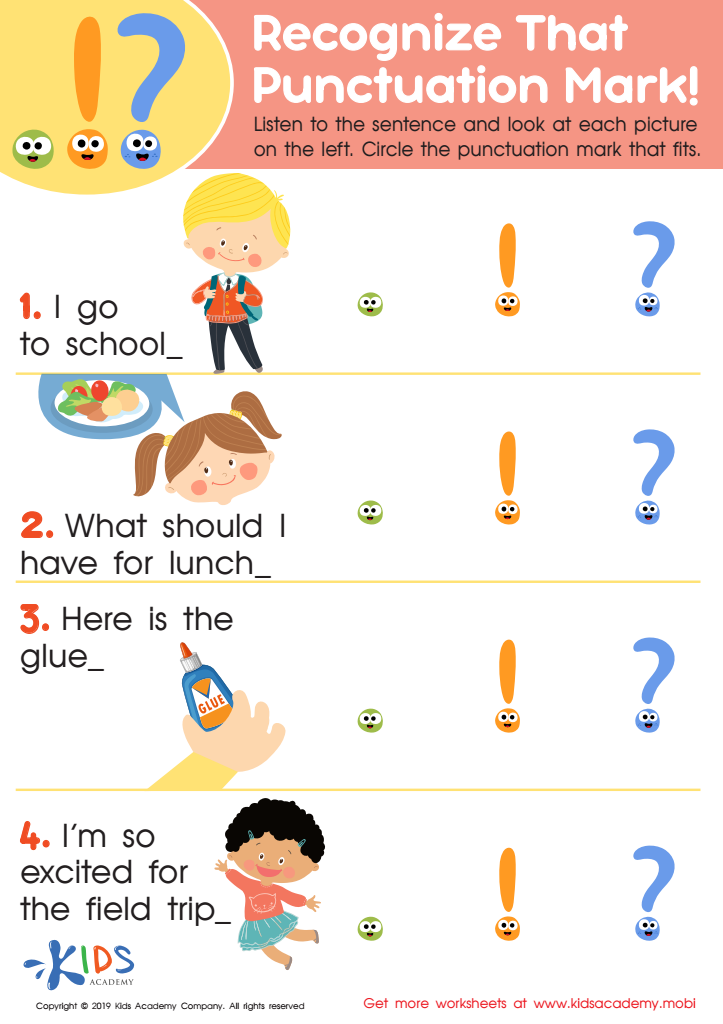
Recognize Punctuation Marks Worksheet
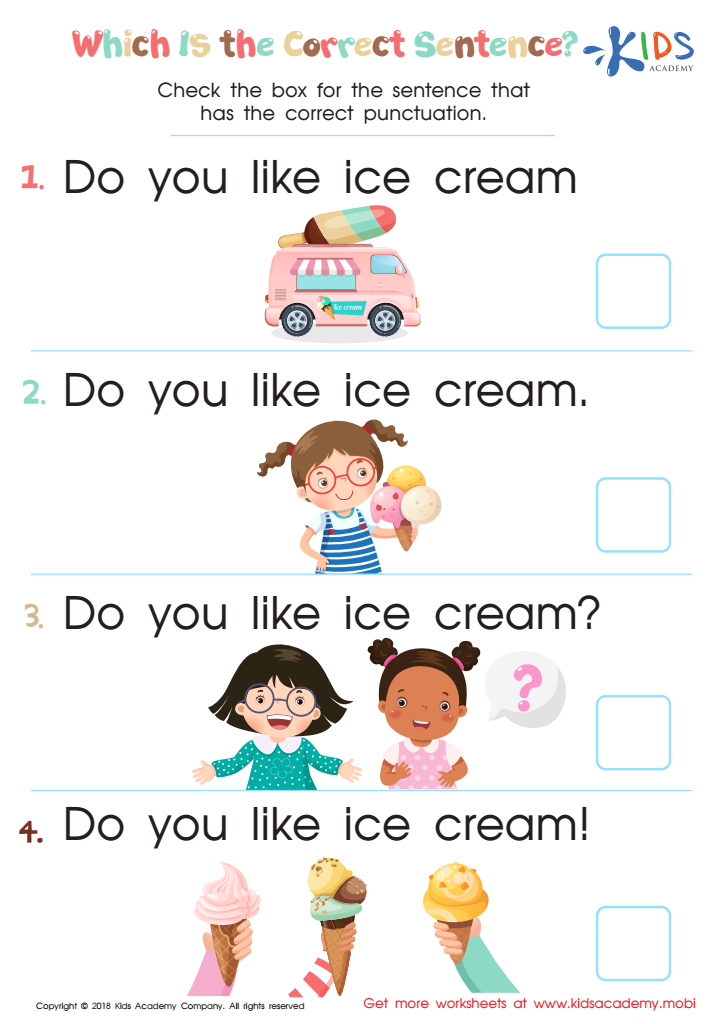
Which is the Correct Sentence? Worksheet
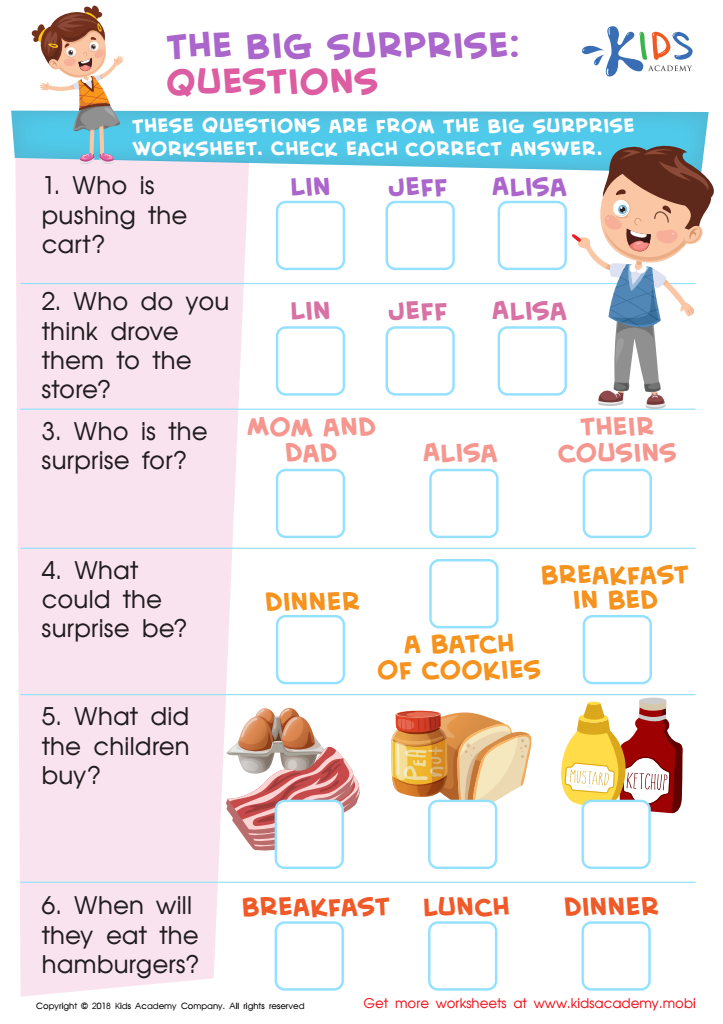
The Big Surprise: Questions Worksheet
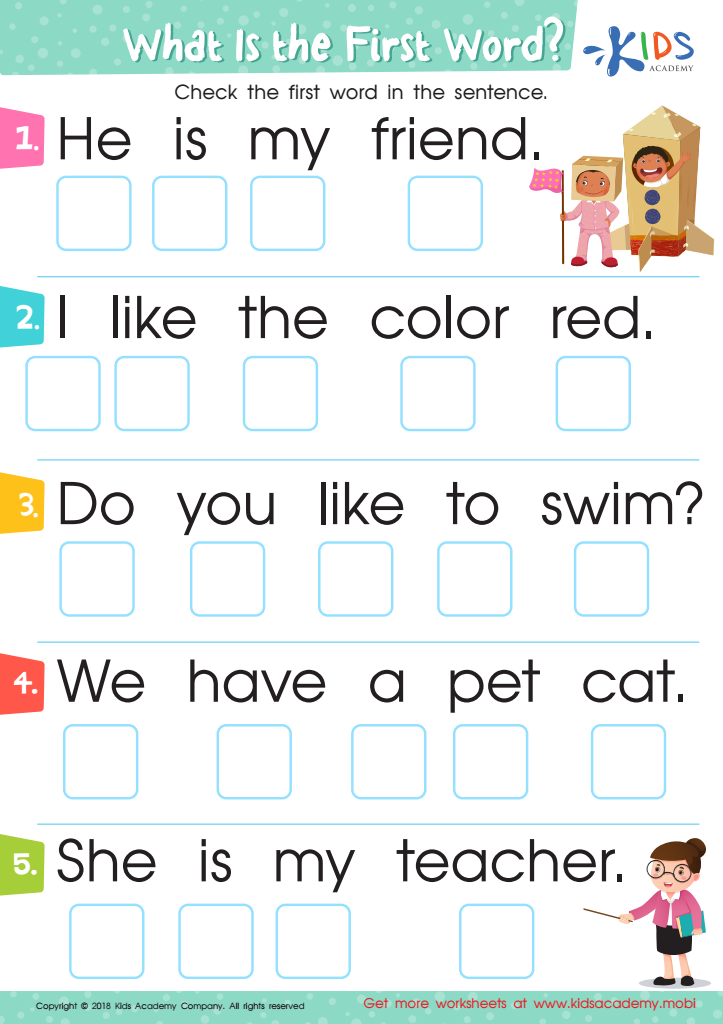
What is the First Word? Worksheet
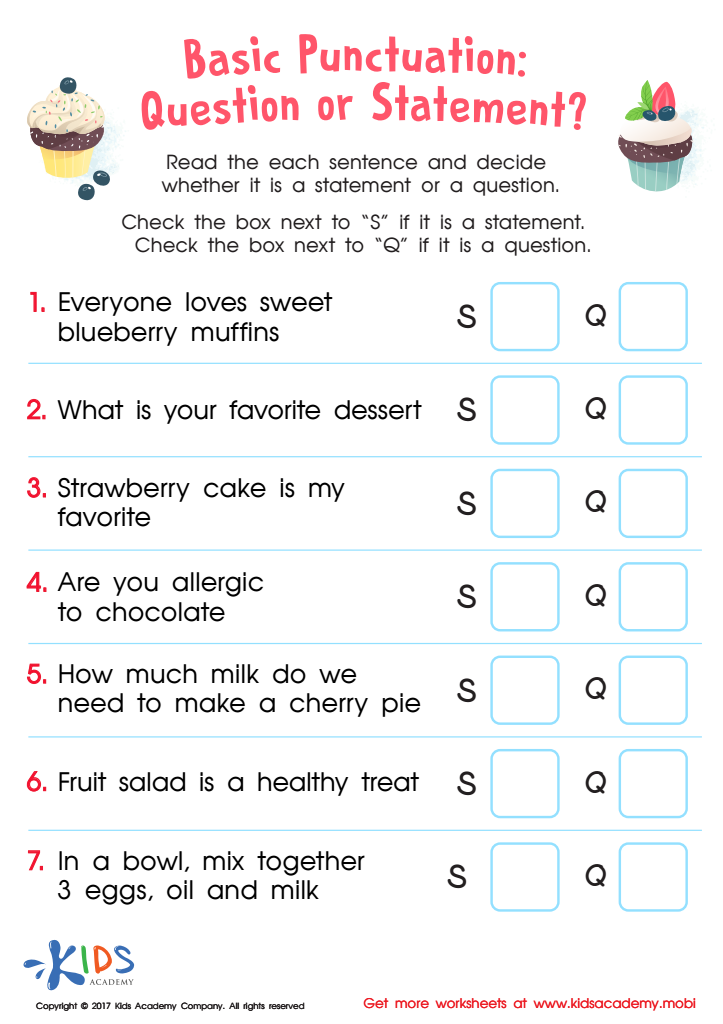
Basic Punctuation: Question or Statement Printable
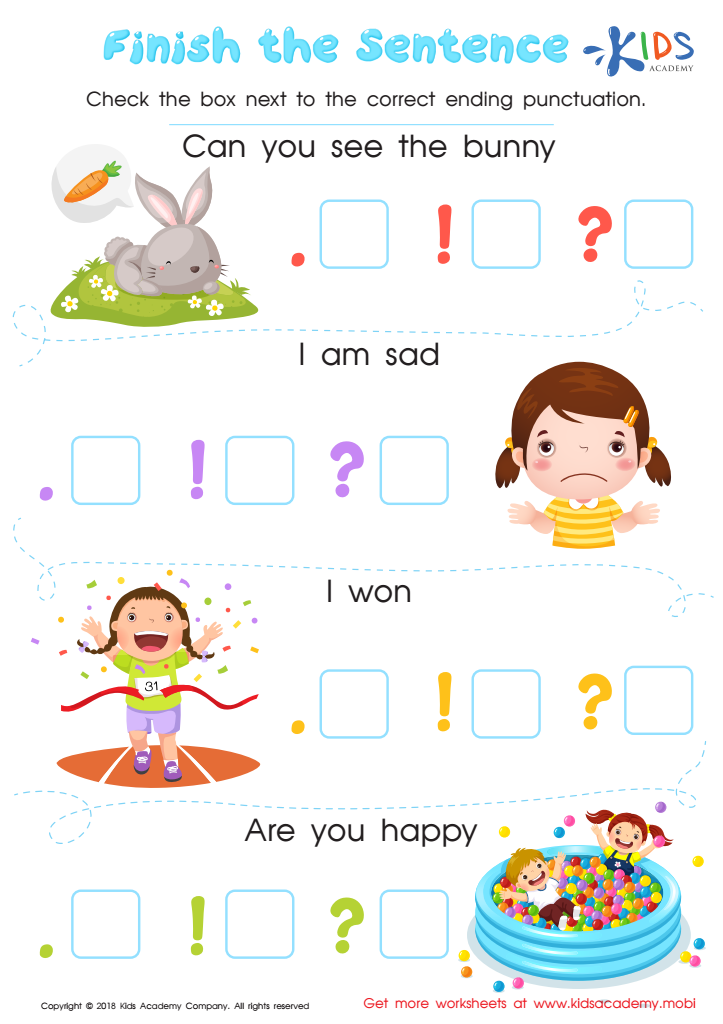
Finish the Sentence Worksheet
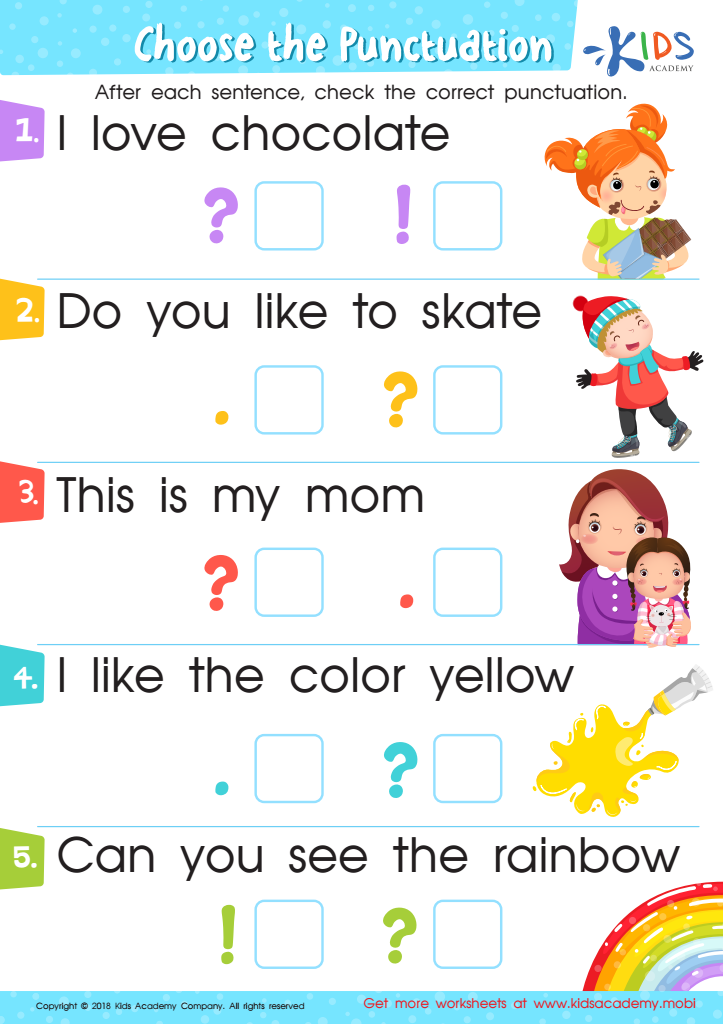
Choose the Punctuation: Assessment Worksheet
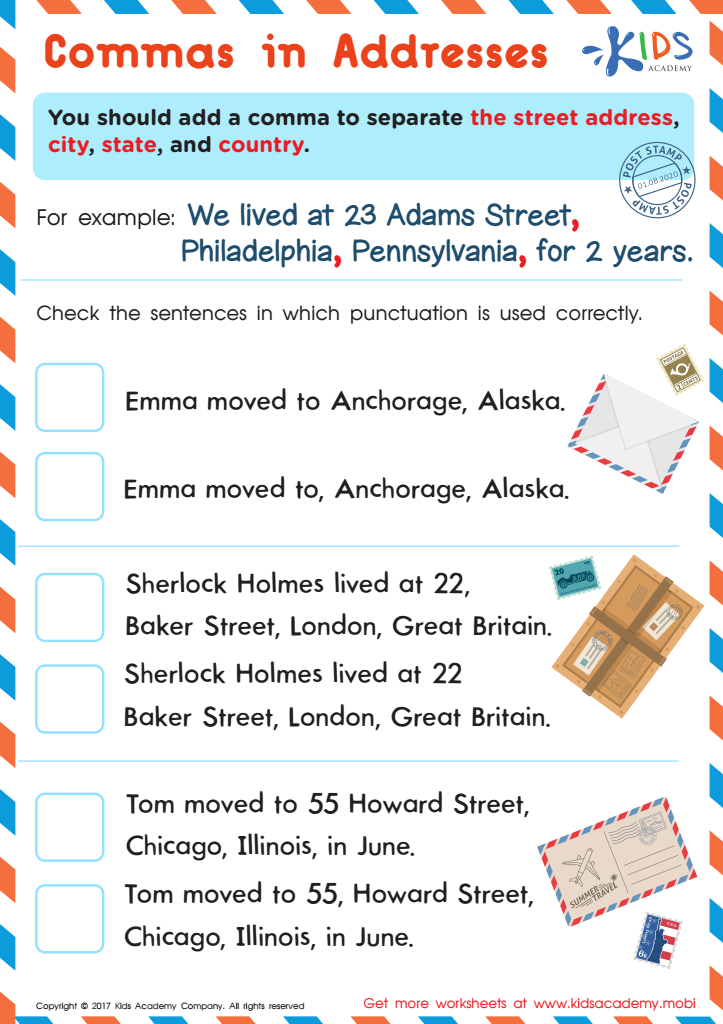
Commas in Addresses Worksheet
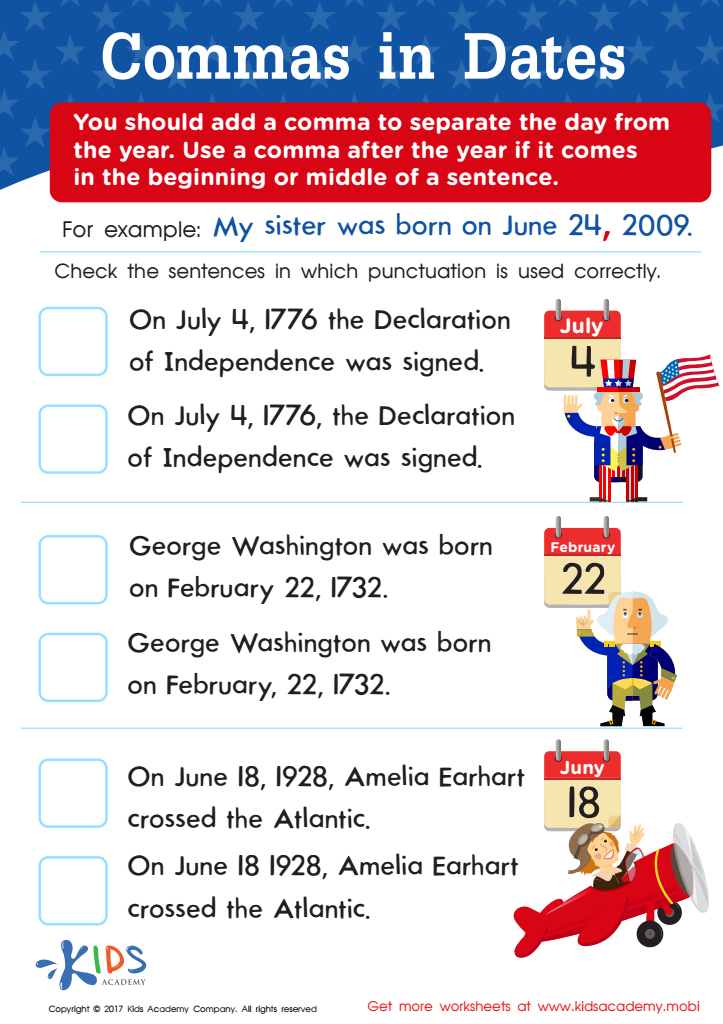
Commas in Dates Worksheet






Normal punctuation is essential for children ages 4-8 as it lays the groundwork for effective communication and literacy skills. During this developmental stage, young learners are beginning to grasp the basics of writing and reading, and proper punctuation helps them understand the structure and rhythm of language. By familiarizing children with punctuation marks like periods, commas, and question marks, parents and teachers can teach them how to convey meaning clearly and expressively.
Moreover, punctuation serves as visual cues that indicate pauses, inflections, and the end of thoughts, significantly enhancing comprehension. Children who grasp these concepts are more likely to become confident readers and writers, able to express their ideas with finesse. Additionally, a strong foundation in punctuation can boost a child’s academic performance across subjects, particularly in language arts, by improving their writing clarity and organization.
Furthermore, cultivating good punctuation habits early can instill a lifelong appreciation for written language and communication. As these children grow, they will encounter increasingly complex texts, and a solid understanding of punctuation will empower them to navigate these challenges with ease. Parents and teachers must prioritize this skill to ensure children’s future success in literacy and beyond.