Lowercase identification Normal Alphabet Worksheets for Ages 4-9
4 filtered results
-
From - To
Introducing our engaging Lowercase Identification Normal Alphabet Worksheets, designed specifically for children ages 4-9! These interactive worksheets promote key literacy skills by helping young learners recognize and identify lowercase letters in a fun and enjoyable way. Featuring a variety of activities, including tracing, coloring, and matching, these worksheets cater to various learning styles, making letter recognition accessible and entertaining. Each worksheet is crafted to enhance fine motor skills and letter familiarity while encouraging independent learning. Ideal for both home and classroom settings, our printable worksheets will support your child's journey in mastering the alphabet, fostering a strong foundation for reading and writing success!
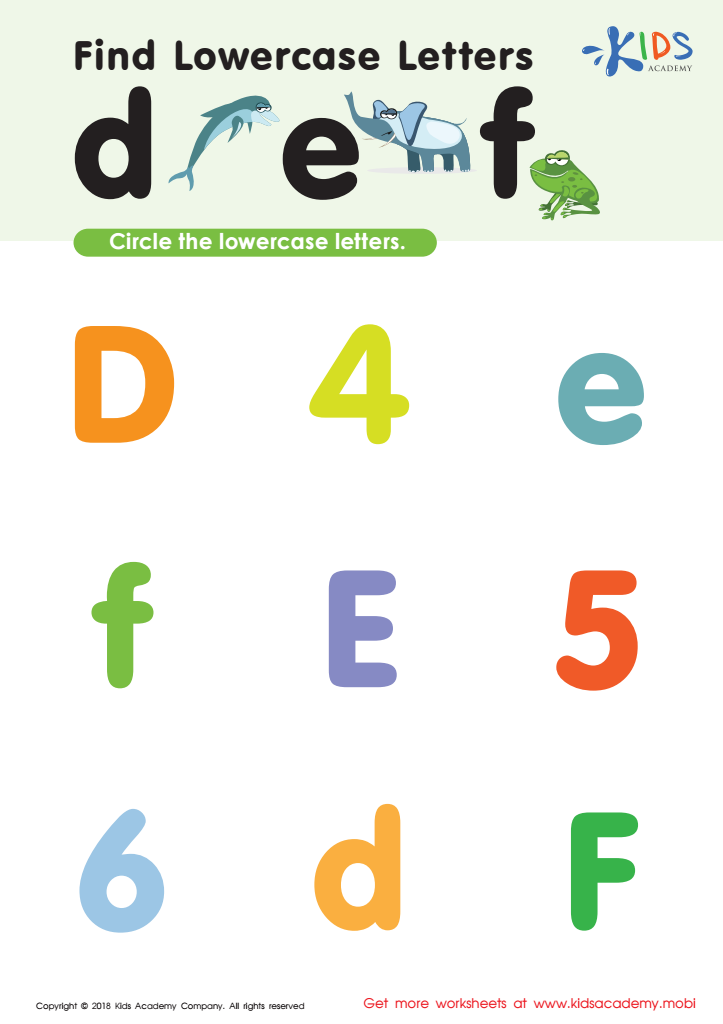
Find Lowercase Letters d e f Worksheet
 Assign to My Students
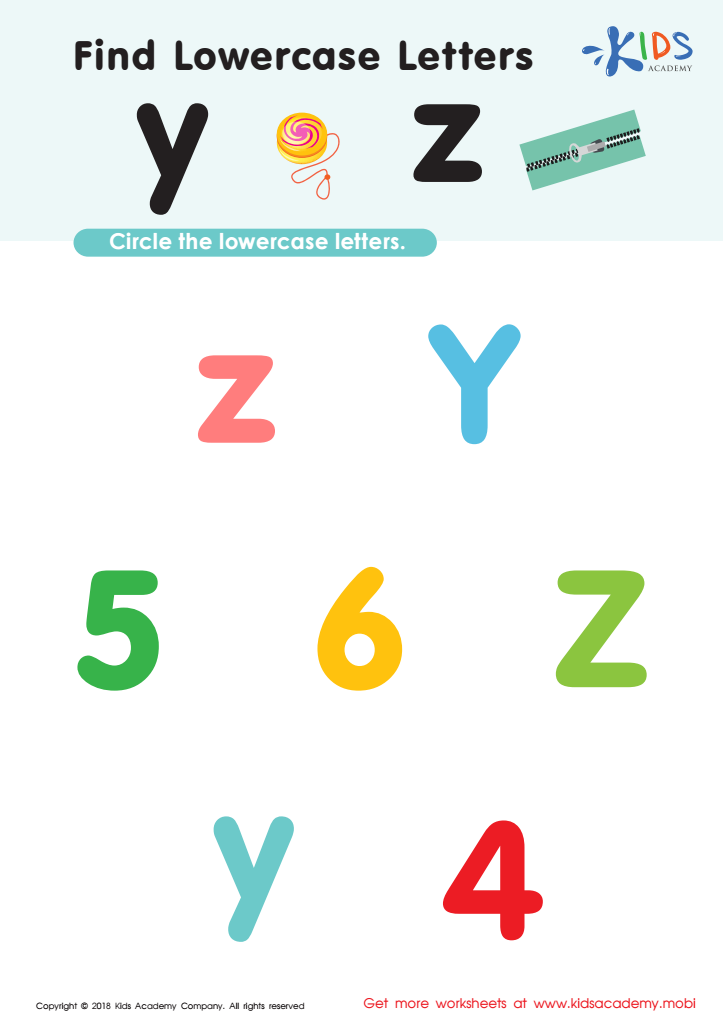
Find Lowercase Letters y z Worksheet
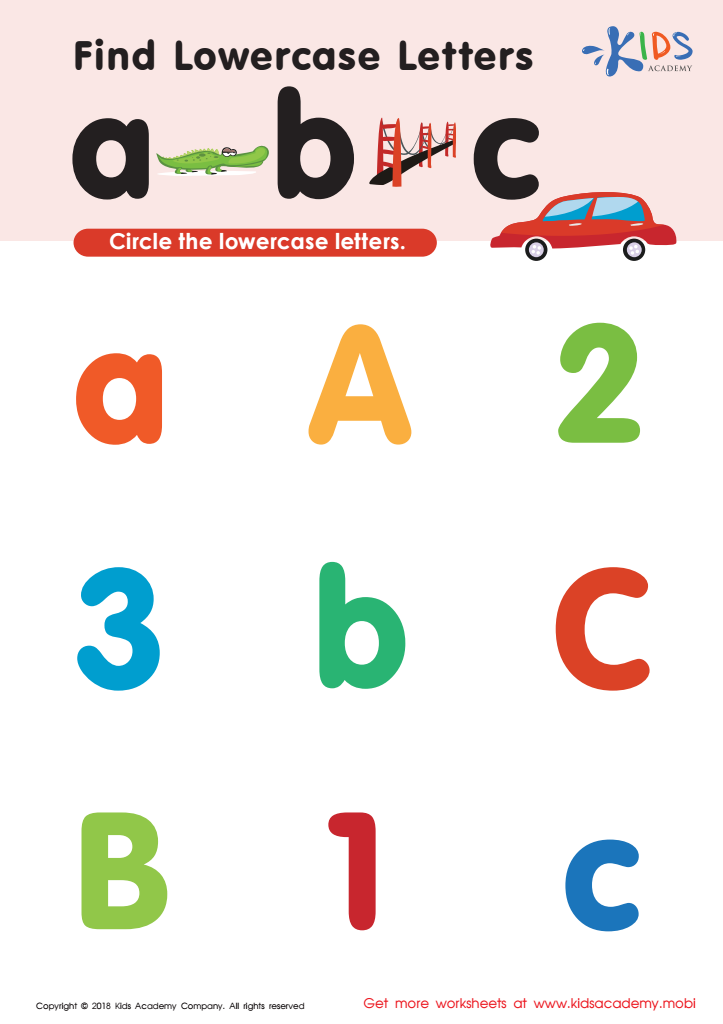
Find lowercase letters a b c Worksheet
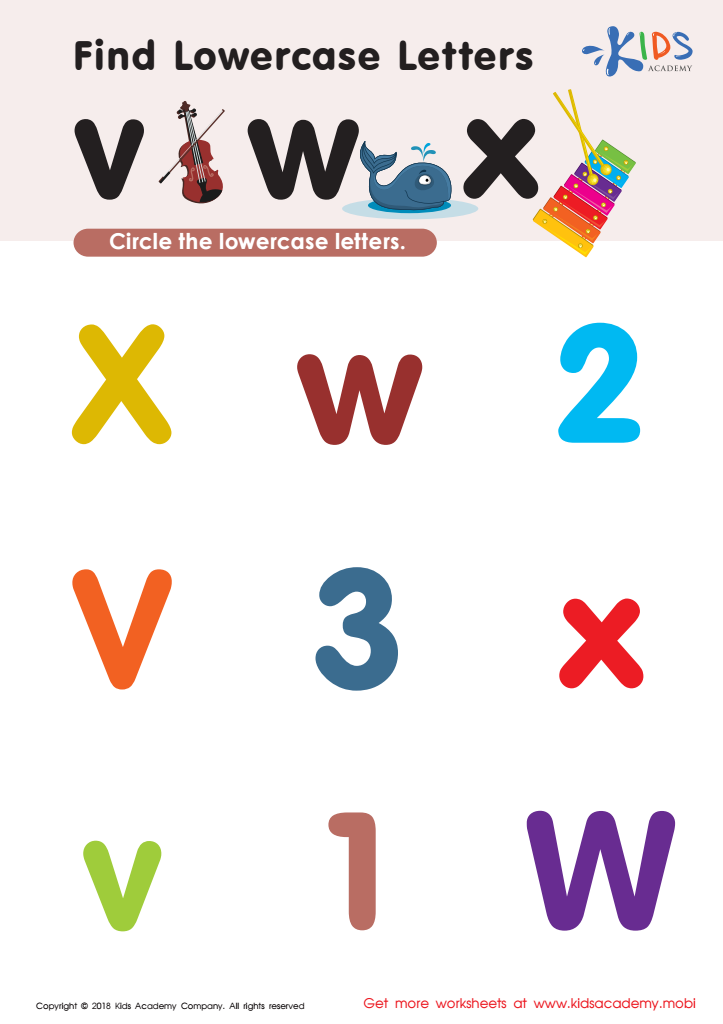
Find Lowercase Letters v w x Worksheet






Lowercase letter identification is crucial for children ages 4-9 as it lays the foundation for their reading and writing skills. Mastery of lowercase letters is essential because the vast majority of text in books, signs, and digital content uses lowercase letters. Familiarity with these letters helps children develop phonemic awareness, which is critical for decoding words. When children recognize lowercase letters, they can blend sounds, forming a bridge between spoken language and written words.
Additionally, recognizing and identifying lowercase letters aids early literacy development. It fosters confident reading behaviors, enhances vocabulary acquisition, and supports comprehension skills. Encouraging lowercase recognition also promotes fine motor skills through writing practice. As children learn to form lowercase letters, they develop hand-eye coordination, which is important for their overall academic progress.
Teaching lowercase alphabet identification fosters a love for reading and bolsters cognitive development. By actively engaging in lowercase literacy activities, parents and teachers equip children not only with essential academic skills but also inspire lifelong learning habits. Overall, prioritizing lowercase letter identification can significantly enhance children's educational journey and academic success, paving the way for proficient reading and writing as they advance in their studies.







