Comparing Fractions Normal Worksheets for Ages 4-9
5 filtered results
-
From - To
Introducing our engaging "Comparing Fractions Normal Worksheets" designed for children aged 4-9! These carefully crafted worksheets aim to develop essential math skills by making fraction comparison fun and accessible. With vibrant illustrations and age-appropriate exercises, young learners will explore the concepts of greater than, less than, and equal to through hands-on activities. Our user-friendly resources are perfect for classroom use or at-home learning, helping children build confidence in their math abilities. Each worksheet encourages critical thinking and reinforces understanding. Dive into the world of fractions today to spark your child's interest in math and enhance their learning experience!
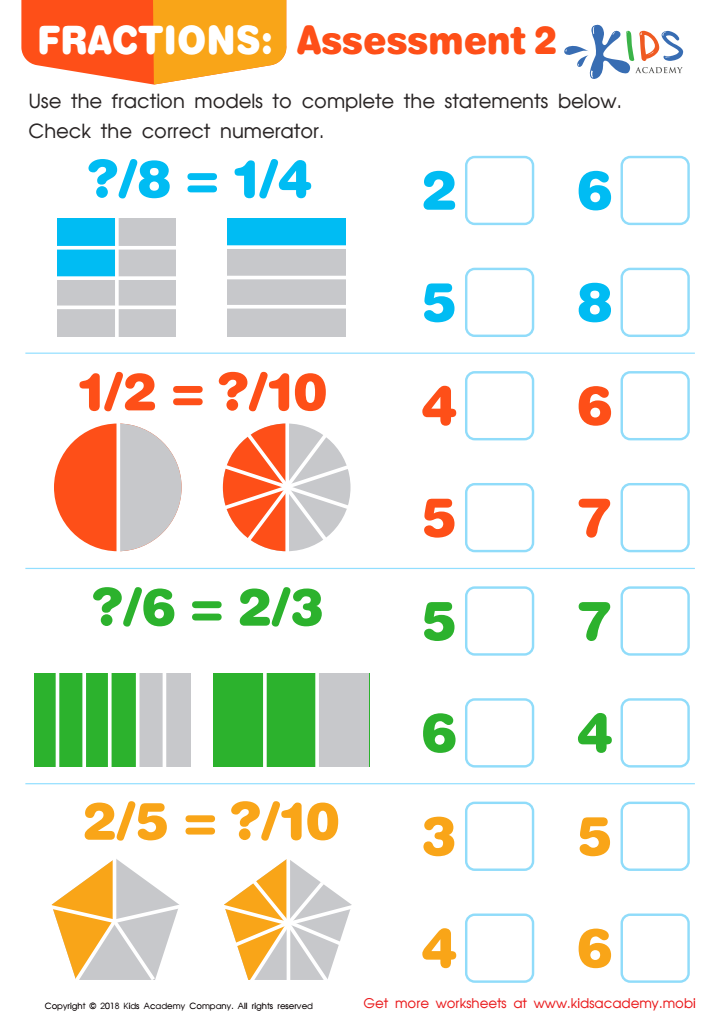
Fractions: Assessment 2 Worksheet
 Assign to My Students
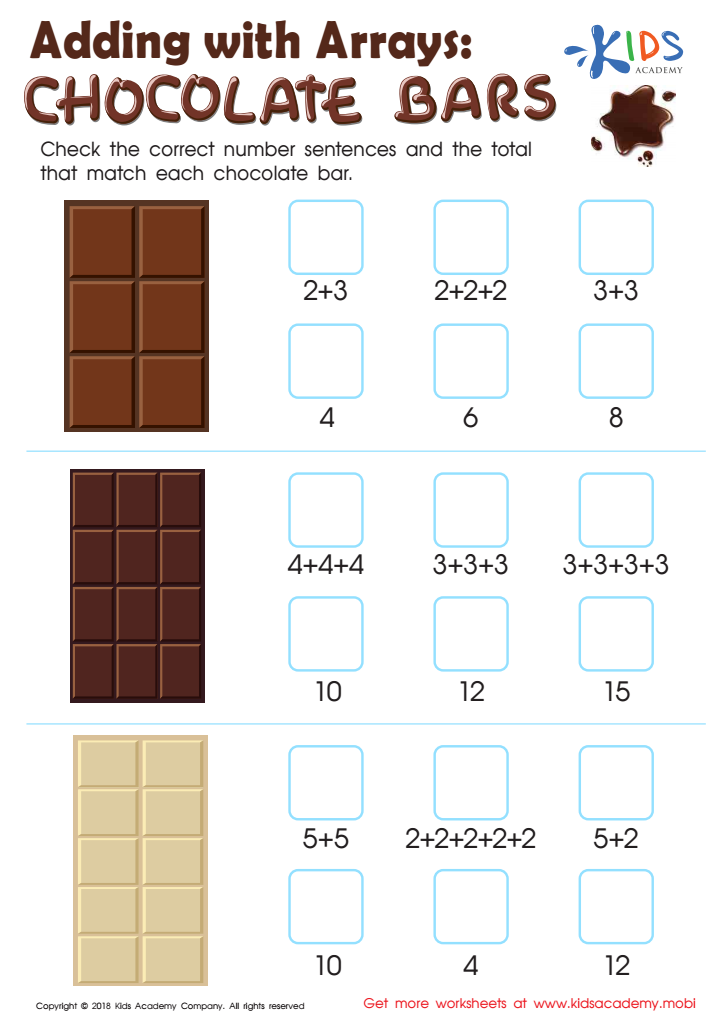
Adding with Arrays: Chocolate Bars Worksheet
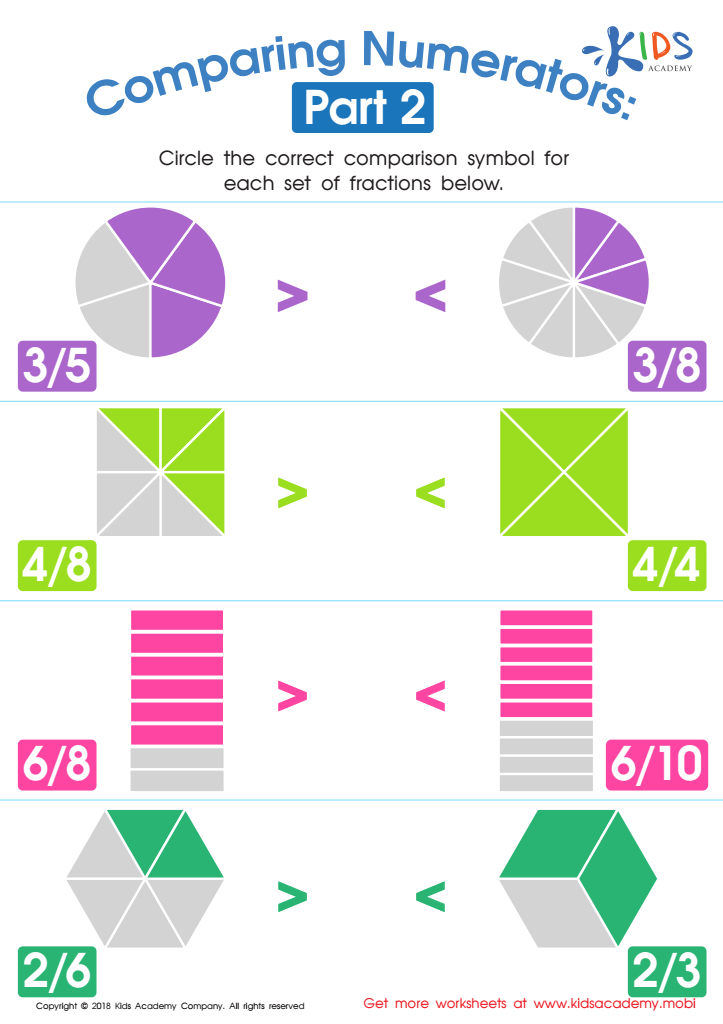
Comparing Numerators Part 2 Worksheet
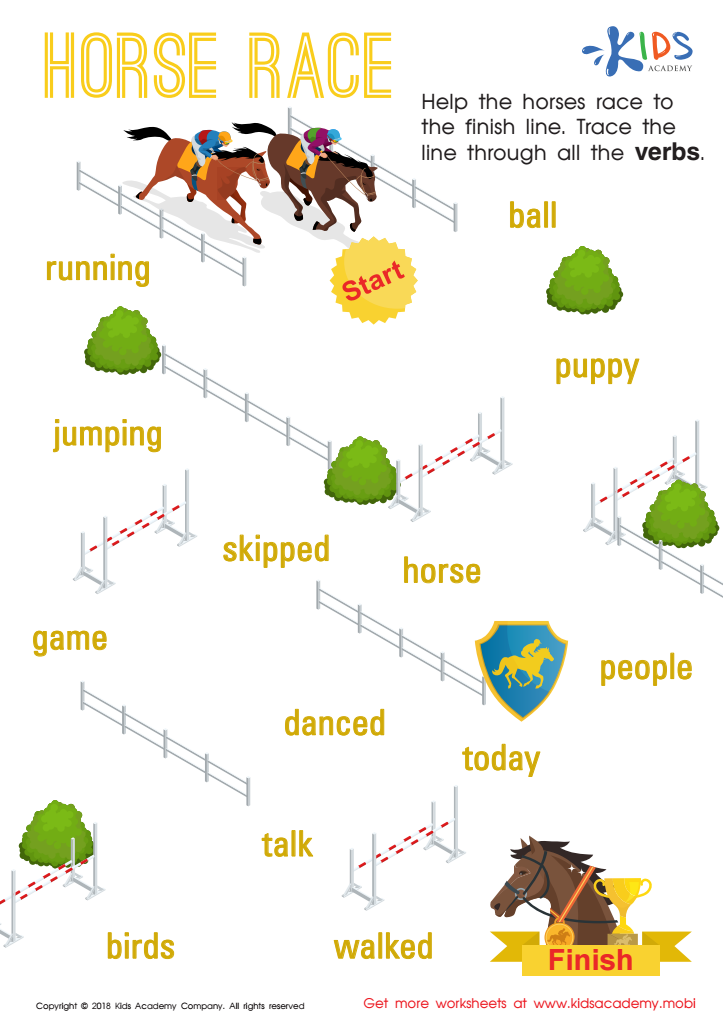
Horse Race Worksheet
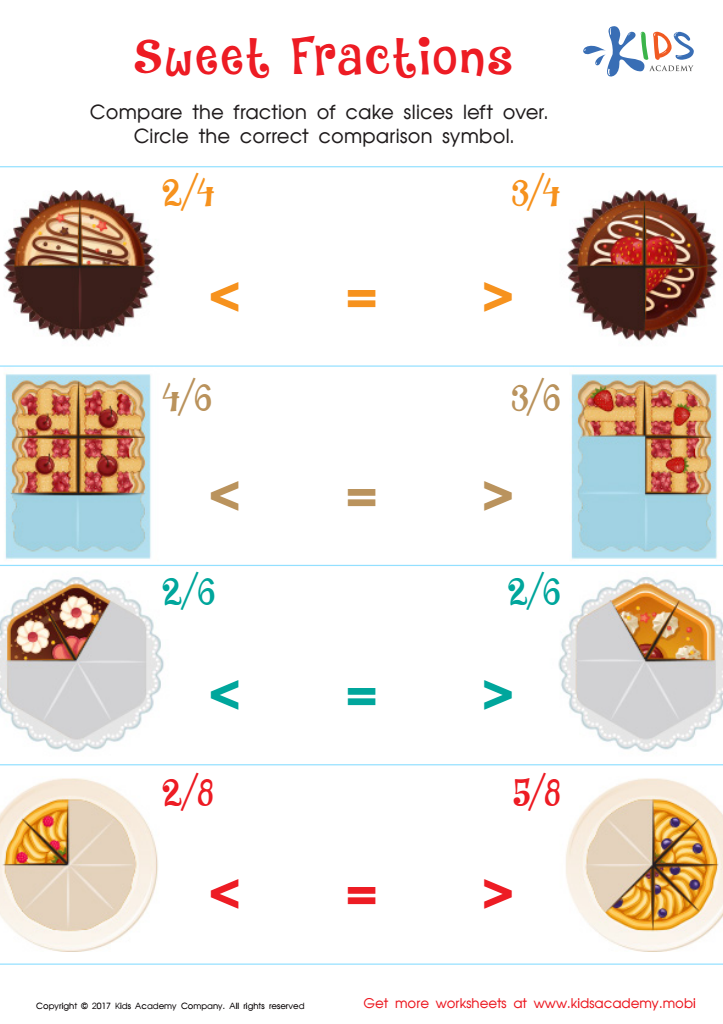
Compare Fractions Worksheet







.jpg)
Understanding how to compare fractions is an essential skill for children aged 4-9, as it lays the foundational blocks for more advanced mathematical concepts. Parents and teachers should prioritize this skill because it cultivates critical thinking and problem-solving abilities. From real-life scenarios, like sharing pizza or dividing toys, children begin to grasp the idea of parts of a whole, which enhances their numerical literacy.
Comparing fractions encourages children to engage in discussions about quantity, size, and relationships, helping develop their verbal and analytical reasoning skills. It strengthens their overall understanding of fractions, crucial for future mathematical success. Moreover, early exposure to comparing fractions may ease the transition to more complex mathematical operations, such as addition and subtraction of fractions.
Additionally, when parents and teachers actively participate in learning activities that focus on fractions, it fosters a supportive environment that encourages curiosity and exploration. This collaborative approach not only makes learning enjoyable but also reinforces the idea that math can be fun and applicable in everyday life. By caring about this skill, they are not only enhancing their child's mathematical abilities but also contributing to their overall cognitive and social development, setting them up for future success.








