Interpreting data Normal Worksheets for Ages 4-9
4 filtered results
-
From - To
Explore our engaging "Interpreting Data Normal Worksheets" designed specifically for children aged 4-9! These worksheets help young learners develop essential skills in data interpretation, fostering critical thinking and analytical abilities. Through fun and interactive activities, children will learn to read charts, understand graphs, and analyze simple data sets. Each worksheet balances educational content with enjoyable exercises, ensuring that learning is both effective and entertaining. Perfect for home or classroom use, these resources provide a solid foundation in data literacy. Join us in making learning fun and impactful, and watch your child thrive in their understanding of data!
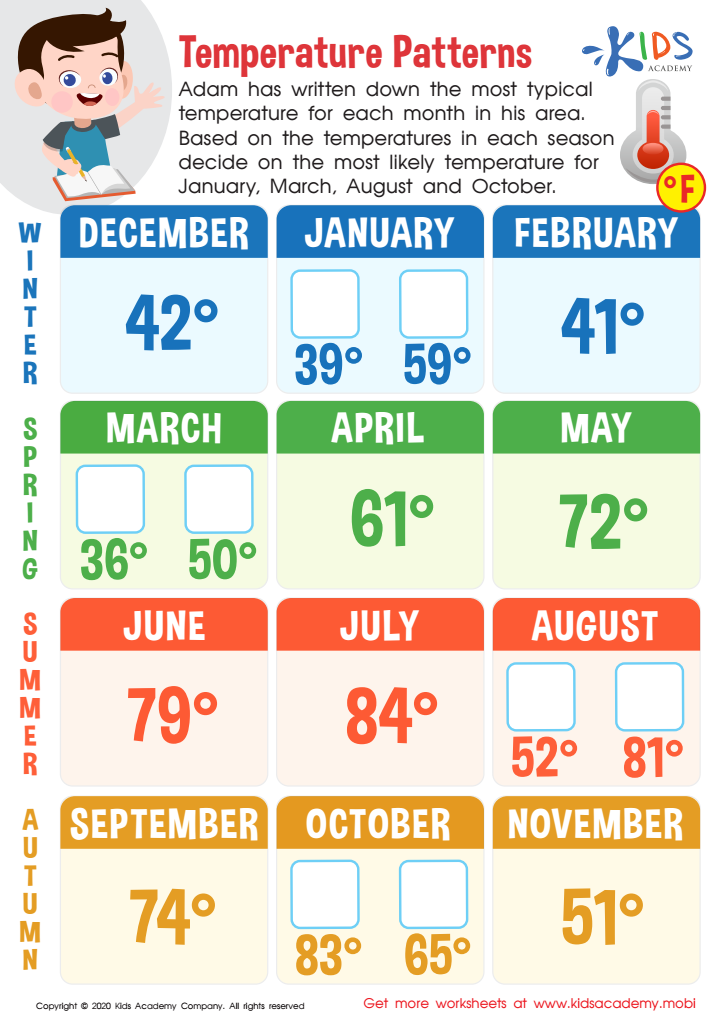
Temperature Patterns Worksheet
 Assign to My Students
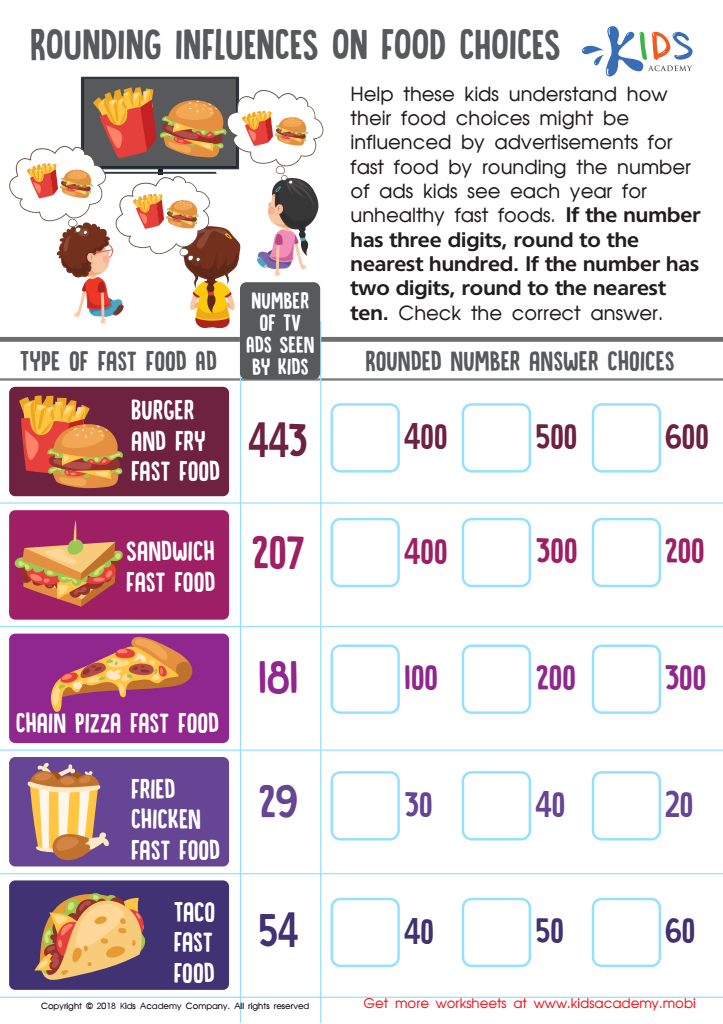
Rounding Influences Food Choices Worksheet
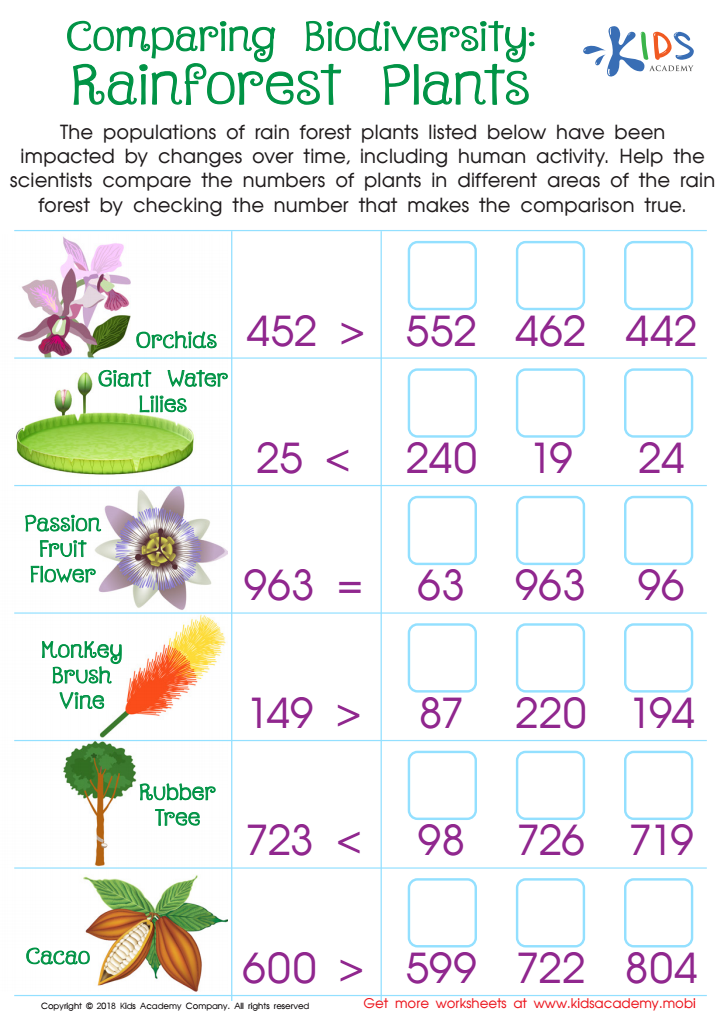
Comparing Biodiversity: Rainforest Plants Worksheet
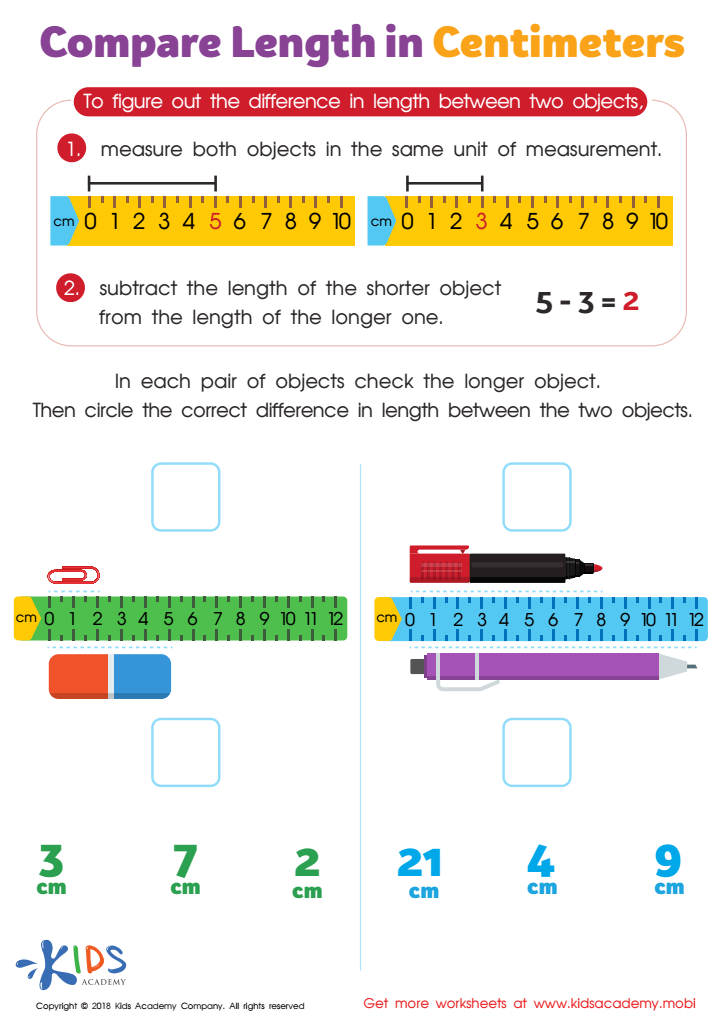
Compare Length in Centimeters Worksheet








Interpreting data is essential for parents and teachers of children aged 4-9 because it provides valuable insights into a child's development, learning progress, and overall well-being. At this critical age, children are developing foundational skills in literacy, numeracy, and social interaction, making data interpretation a pivotal tool for guiding instruction and support.
For parents, understanding data—such as assessment scores, behavioral reports, and progress tracking—can help them identify their child's strengths and challenges. This knowledge empowers them to engage meaningfully in their child’s education and advocate for the resources or interventions they may need.
Teachers, on the other hand, rely on data to inform their teaching practices. By analyzing student performance, they can tailor their instruction to meet diverse needs, ensuring that each child receives targeted support. Furthermore, regular data interpretation can reveal trends and areas for improvement, both within the classroom and across the curriculum.
Overall, interpreting data equips adults with the understanding necessary to foster a nurturing and effective learning environment that promotes individual growth and prepares children for future academic success and social-emotional development.








