Lowercase identification Normal Worksheets for Ages 4-9
4 filtered results
-
From - To
Discover engaging lowercase identification worksheets designed specifically for children aged 4-9! Our normal worksheets provide a fun and interactive way for young learners to master lowercase letter recognition and enhance their reading skills. Each worksheet features vibrant illustrations and diverse activities that promote active learning and retention. Perfect for home or classroom use, these worksheets cater to various learning styles, helping kids develop confidence in their literacy abilities. Encourage children to practice critical skills through tracing, matching, and identifying letters, fostering a love for reading from an early age. Start their educational journey with our easy-to-use lowercase identification worksheets today!
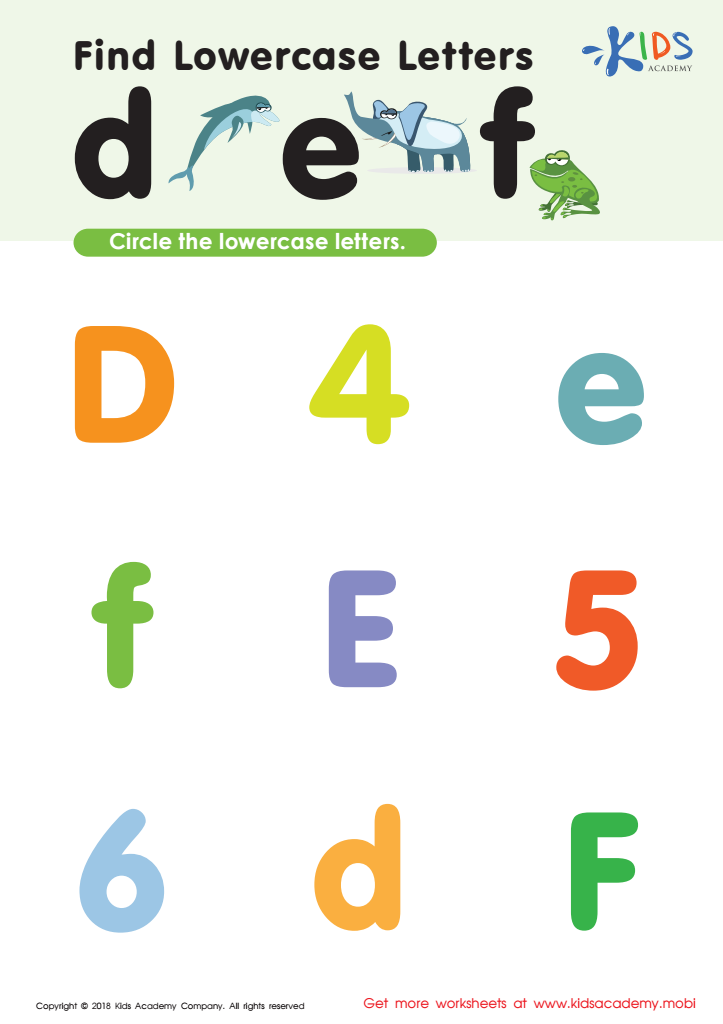
Find Lowercase Letters d e f Worksheet
 Assign to My Students
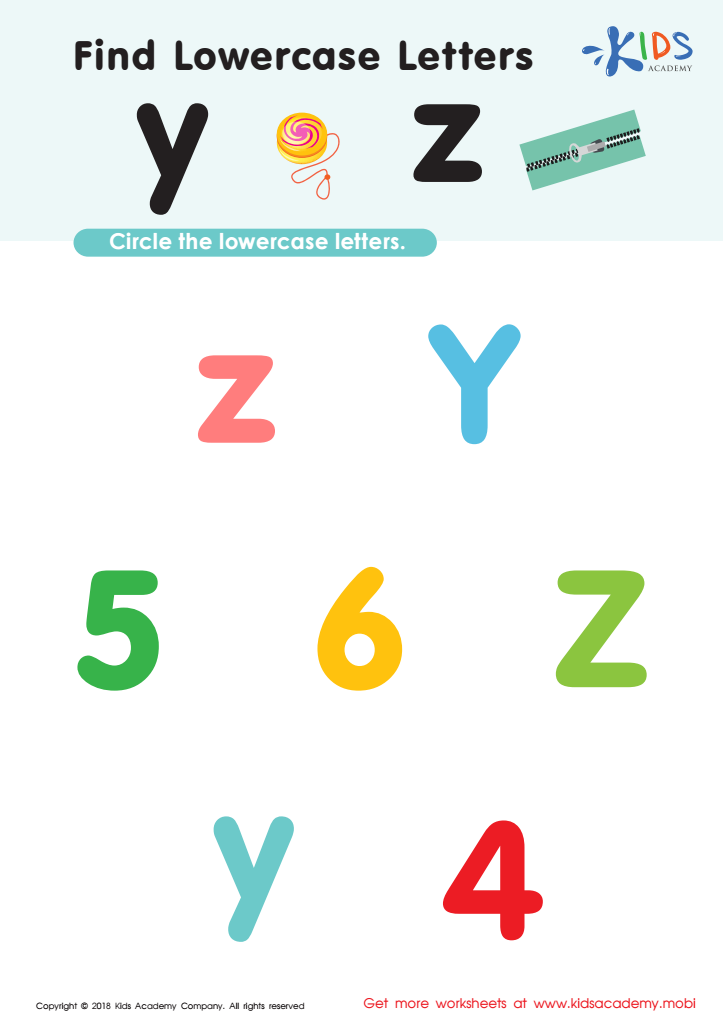
Find Lowercase Letters y z Worksheet
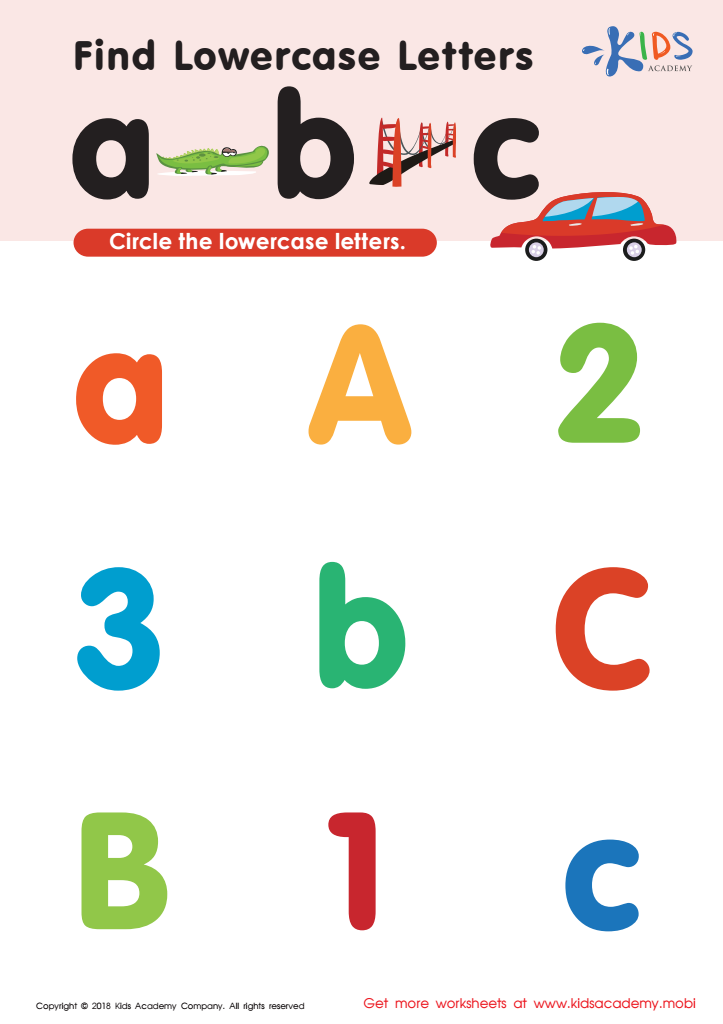
Find lowercase letters a b c Worksheet
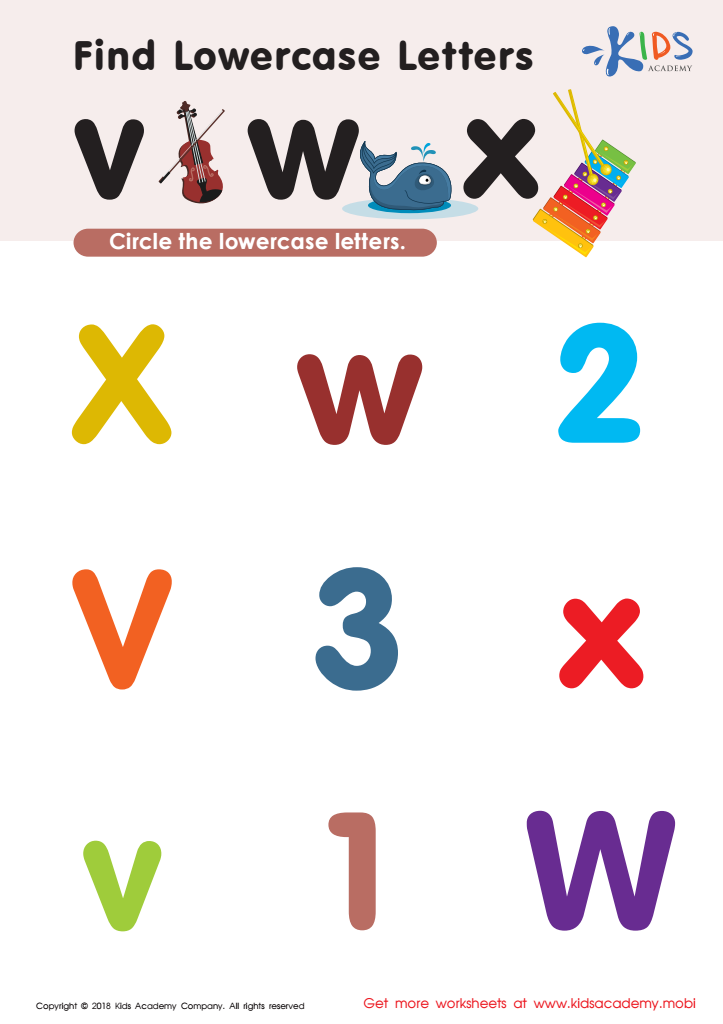
Find Lowercase Letters v w x Worksheet



.jpg)




Lowercase letter identification is a crucial foundational skill for children aged 4-9 as they embark on their literacy journey. Mastering lowercase letters is essential for reading and writing fluency, which significantly impacts children's overall learning. In early education, many texts, especially children's books, primarily use lowercase letters, making it essential for children to recognize and differentiate these letters to build reading comprehension skills.
Parents and teachers should care about lowercase identification because it not only influences basic literacy yet also affects children's confidence and motivation. When children can easily recognize and write lowercase letters, they feel more capable and willing to engage with reading activities, fostering a love for books and learning. Moreover, neglecting lowercase identification can lead to future academic struggles, as students might lose interest or feel overwhelmed by written language.
Additionally, understanding and mastering lowercase letters support spelling and phonics skills. By emphasizing lowercase letter identification through fun, interactive learning experiences, adults can provide essential support that empowers children to become proficient readers and writers in the long term, paving the way for lifelong learning and academic success. It's a vital step that lays the groundwork for children to thrive in their educational journeys.








