Reading thermometers Normal Worksheets for Ages 4-9
3 filtered results
-
From - To
Welcome to our "Reading Thermometers Normal Worksheets" page, designed specifically for children aged 4-9! These engaging worksheets help young learners grasp the essential skill of reading thermometers. With vibrant illustrations and age-appropriate activities, students will develop confidence in interpreting temperature readings while improving their math and critical thinking abilities. Our interactive resources cater to different learning styles, making it easy for teachers and parents to effectively teach this important concept. Explore our collection today to enrich your child’s understanding of temperature and enhance their learning experience with fun and educational worksheets! Let’s make learning about thermometers exciting together!
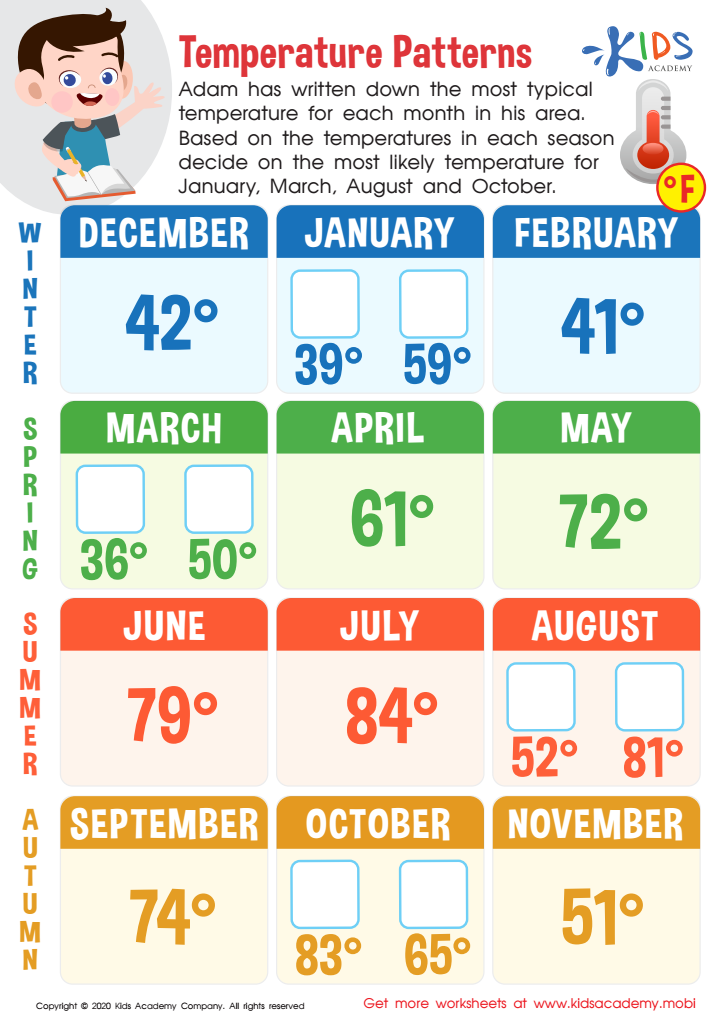
Temperature Patterns Worksheet
 Assign to My Students
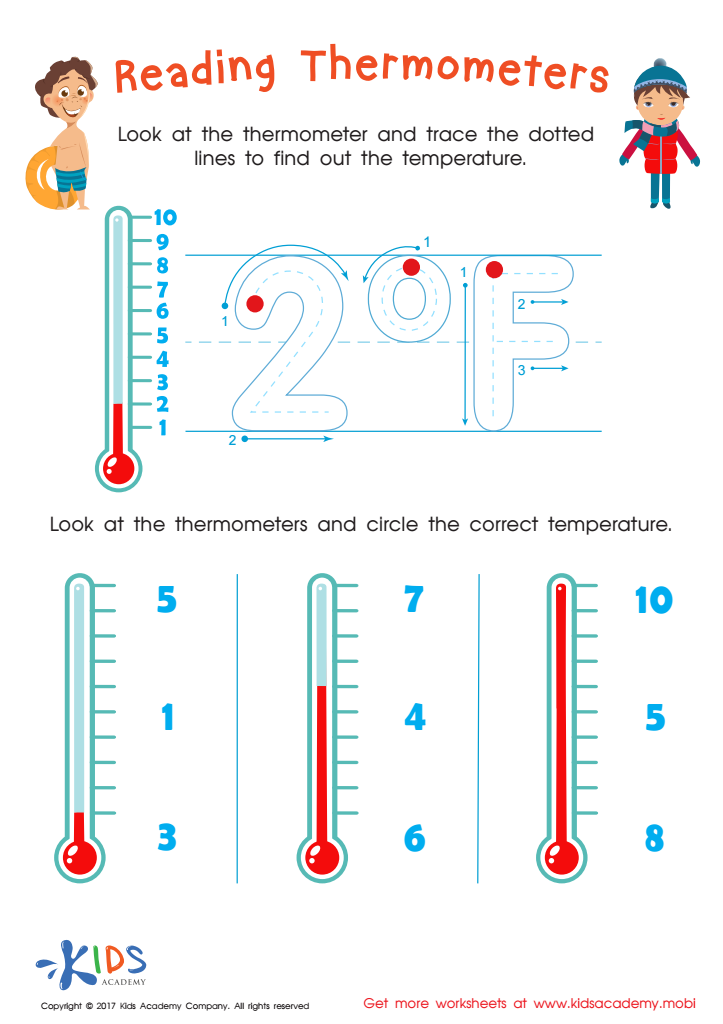
Reading Thermometers Printable
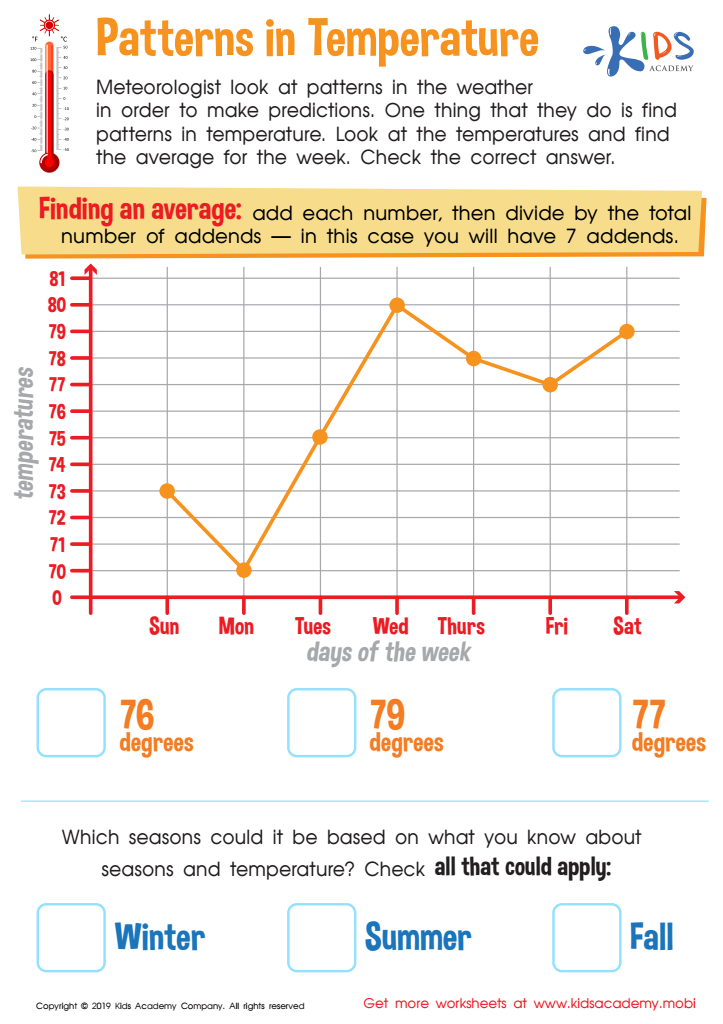
Patterns in Temperature Worksheet








Reading thermometers, especially for ages 4-9, is essential for both parents and teachers because it promotes early literacy skills, fosters independence, and enhances a child's understanding of health and science. At this developmental stage, children are curious and eager to learn about the world around them. Understanding how to read a thermometer introduces them to important numerical concepts and measurement, laying the foundation for future math and science learning.
Caring about this skill also empowers children by teaching them how to monitor their own health, which promotes responsibility and self-awareness. When kids know how to use a thermometer, they can communicate their health status effectively, which is especially crucial during times of illness. This knowledge allows for more informed discussions between parents, teachers, and healthcare providers, facilitating timely responses to health issues.
Additionally, incorporating reading thermometers into everyday learning experiences helps instill a sense of curiosity about science, encouraging children to ask questions and seek answers. This record of inquiry supports their overall cognitive development. Therefore, both parents and teachers play a vital role in nurturing this skill, landscaping a path to healthier lifestyles and more engaged, scientifically literate individuals.








