
Strategic thinking Normal Worksheets for Ages 4-9
3 filtered results
Difficulty Level
Grade
Age
-
From - To
Subject
Activity
Standards
Enhance your child's cognitive development with our Strategic Thinking Normal Worksheets designed for ages 4-9. These engaging, interactive resources help young learners sharpen their problem-solving skills, boost their creativity, and enhance logical reasoning through fun activities. Our worksheets are crafted to encourage critical thinking, allowing children to explore different strategies and solutions in various scenarios. Ideal for home or classroom use, these resources support early childhood education by fostering independent thought and resilience. Download our worksheets today to set your child on the path to becoming a confident, strategic thinker while making learning an enjoyable experience!
Favorites
With answer key
Interactive
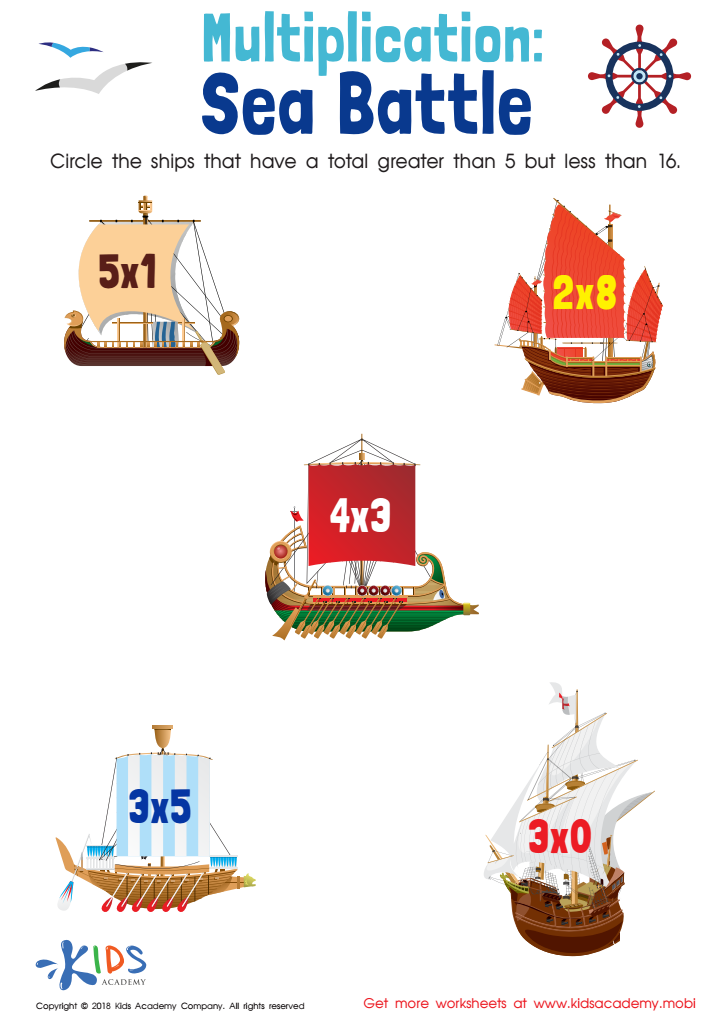
Sea Battle: Multiplication Worksheet
Test your child's math skills and give them an exciting adventure with our Sea Battle: Multiplication Worksheet. Have them solve the multiplication problems on each ship's sail then circle the answers between 5 and 16. An entertaining way to boost their math skills!
 Assign to My Students
Sea Battle: Multiplication Worksheet
Worksheet
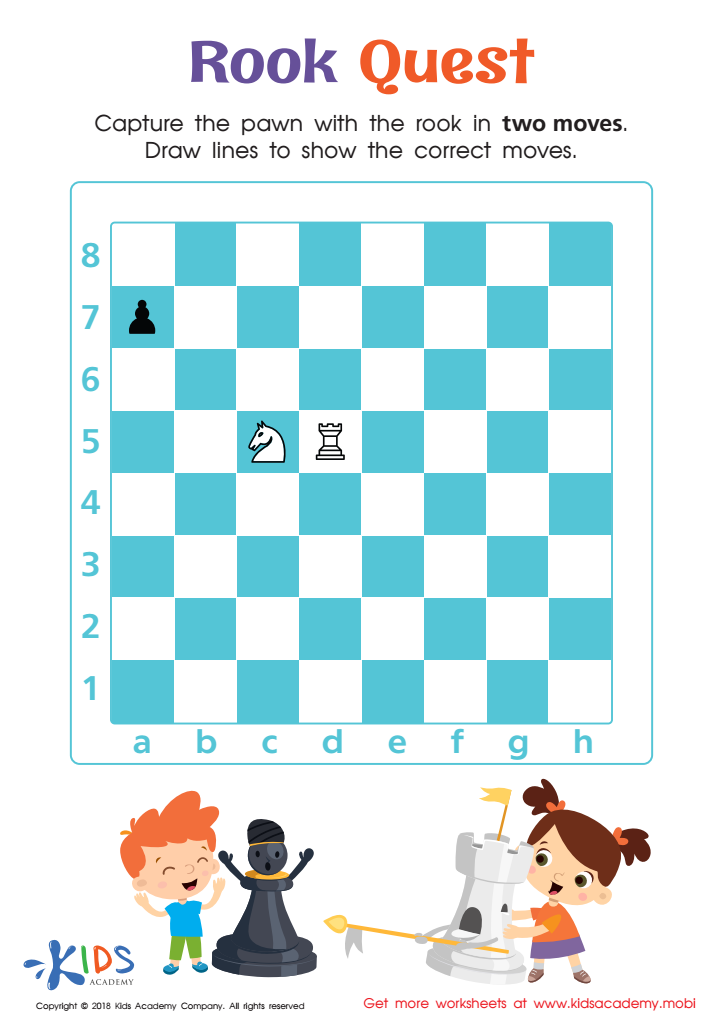
Rook Quest Worksheet
Is your child a chess whiz? Check their progress with this rook quest: get the enemy's pawn piece in just two moves. Have them draw the lines for the moves they'll make. See how quickly they master it!
Rook Quest Worksheet
Worksheet
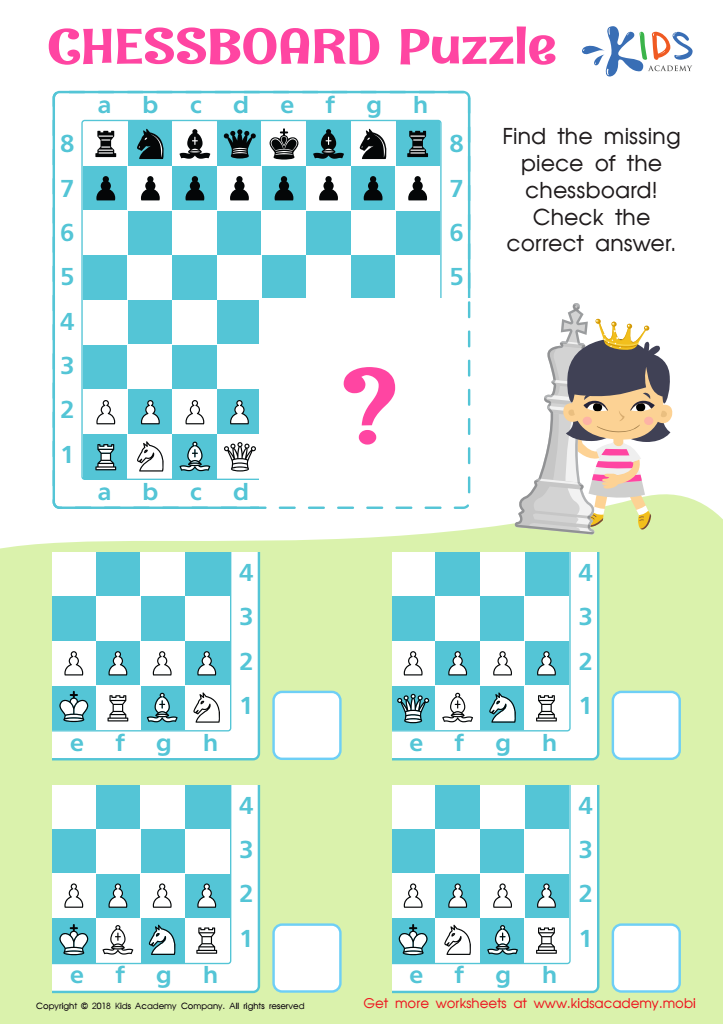
Chessboard Puzzle Worksheet
Test your child's chess prowess with this simple worksheet. They must find the missing pieces to complete the white side of an empty chessboard. The black pieces are already arranged properly on the board. Correct answers are provided so you can see how they did!
Chessboard Puzzle Worksheet
Worksheet
Join Kids Academy for Free
Who is primarily going to use this learning content?








Strategic thinking is an essential cognitive skill for children aged 4-9, impacting their development in numerous ways. First, this ability to plan, analyze, and evaluate various options fosters critical problem-solving skills. As young learners navigate challenges—whether in games, academics, or everyday situations—strategic thinking enables them to make informed decisions and understand the consequences of their actions.
Moreover, it promotes resilience, as children learn that failure can lead to valuable lessons and that revising their approach is a part of growth. This skill also encourages creativity, motivating children to envision multiple solutions to a problem and embrace innovative thinking. Through activities that require strategy, such as puzzles or games, children enhance their social skills by learning to collaborate, negotiate, and communicate effectively with peers.
For parents and teachers, fostering strategic thinking establishes a strong foundation for future learning. Engaging children in discussions about choices and outcomes prepares them for more complex problem-solving in later years. Consequently, prioritizing this cognitive development equips children with tools to navigate school, friendships, and eventual adult responsibilities, promoting lifelong learning and adaptability skills that are vital in today’s rapidly changing world.








