Understanding economics Normal Worksheets for Ages 4-9
3 filtered results
-
From - To
Explore engaging, age-appropriate economics worksheets designed for kids ages 4-9. These printable activities from Kids Academy make learning basic economic concepts fun and accessible. Whether at home or in the classroom, young learners will enjoy discovering topics such as money, trade, and simple financial choices through vibrant visuals and relatable scenarios. Our worksheets help build foundational skills in understanding the economy, fostering critical thinking, and promoting interactive lessons. Ideal for parents and teachers, these resources support early education with a focus on practical knowledge and real-world applications, setting the stage for a lifelong interest in economics.
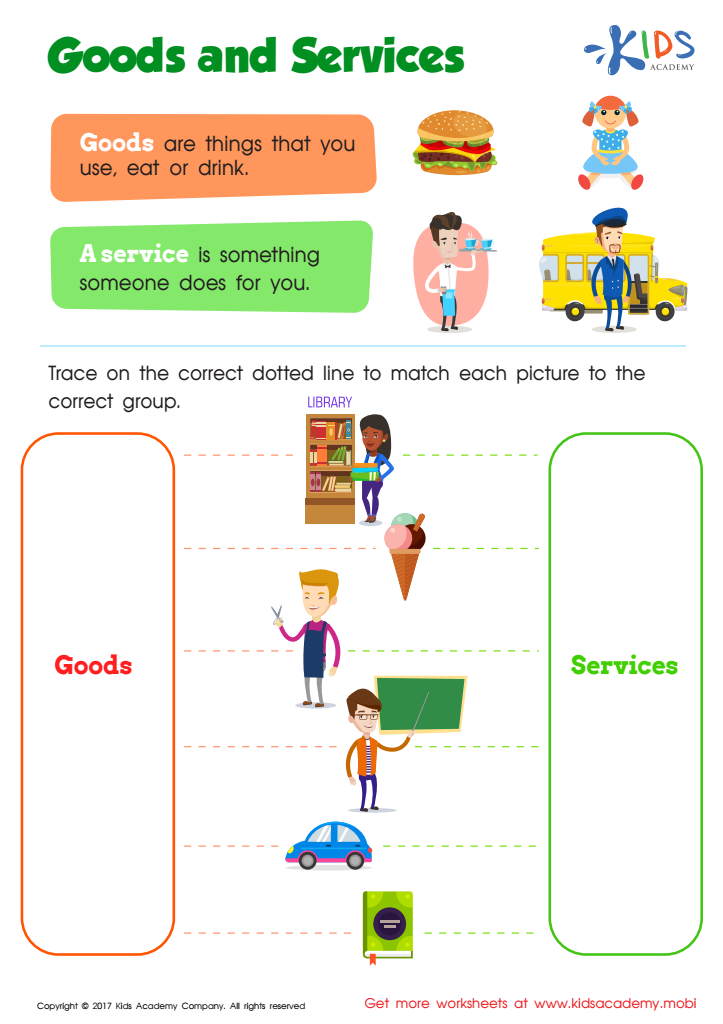
 Assign to My Students
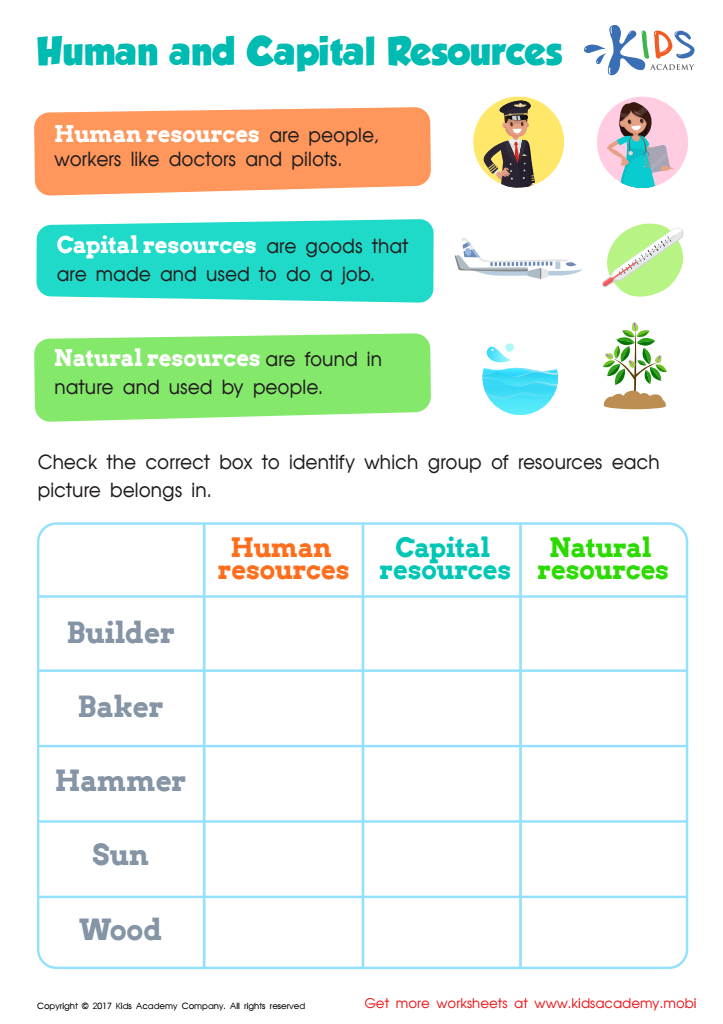
Human and Capital Resources Worksheet
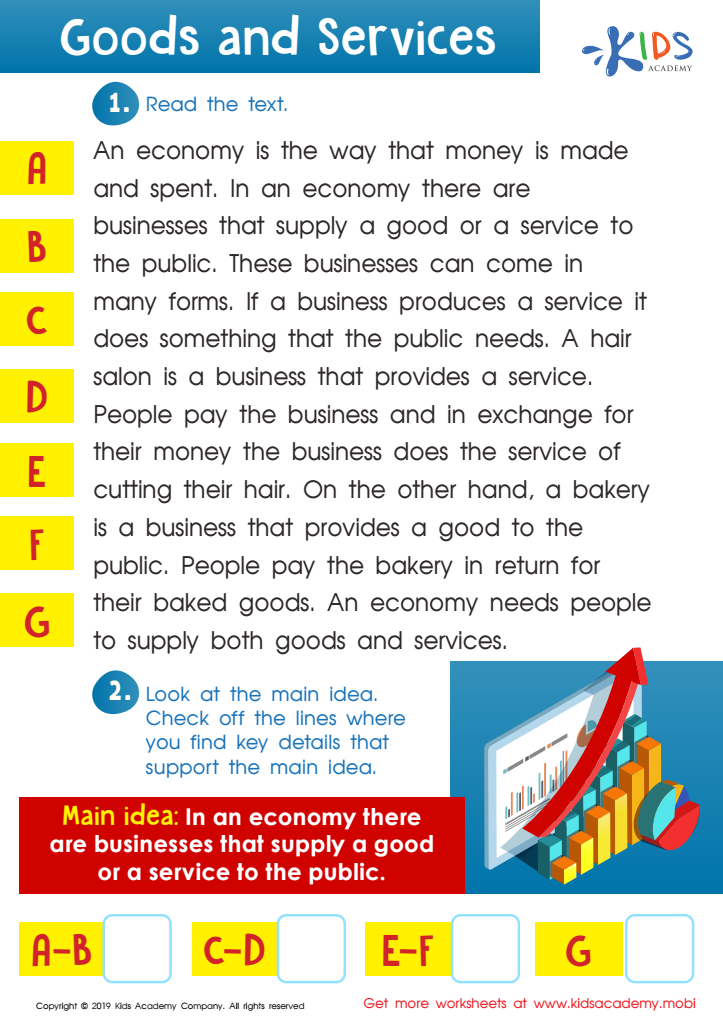
Goods and Services Worksheet







Understanding basic economics concepts is vital for young children, ages 4-9, for several key reasons. Firstly, grasping the essentials of economics, like the ideas of saving, spending, and sharing, can foster sound money management skills early on. When children understand that resources (such as money, time, and goods) are limited, they learn to make thoughtful decisions and prioritize needs over wants. This foundational knowledge can result in more prudent financial behaviors in adulthood.
Secondly, teaching kids about economics encourages critical thinking and problem-solving. Children become aware that their choices have consequences, leading them to consider possible outcomes before taking action. They start understanding terms like trade-offs, which can be applied in everyday situations, such as choosing between different playtime activities or snack options.
Moreover, introducing economics at this age instills a sense of responsibility and fairness, particularly through concepts like sharing and cooperation. Children learn that everyone contributes to and benefits from the community, promoting empathetic and cooperative behavior.
Finally, equipping children with an understanding of economics can help demystify the world around them, empowering them with the knowledge needed to navigate a complex society confidently. Thus, parents and teachers play a crucial role in laying the groundwork for economically savvy future citizens.








