
Understanding opposites Normal Worksheets for Ages 4-9
3 filtered results
Difficulty Level
Grade
Age
-
From - To
Subject
Activity
Standards
Discover the fun and engaging "Understanding Opposites Normal Worksheets" designed for children aged 4-9. These interactive worksheets help young learners grasp the concept of opposites through lively illustrations and relatable examples. Each activity is crafted to reinforce critical thinking skills and vocabulary development while encouraging creativity. Ideal for home or classroom settings, these worksheets make learning enjoyable and effective. Whether it's identifying hot vs. cold, big vs. small, or fast vs. slow, children will build essential skills in recognizing and applying opposites in everyday life. Download our worksheets today and support your child’s educational journey with playful learning!
Favorites
With answer key
Interactive
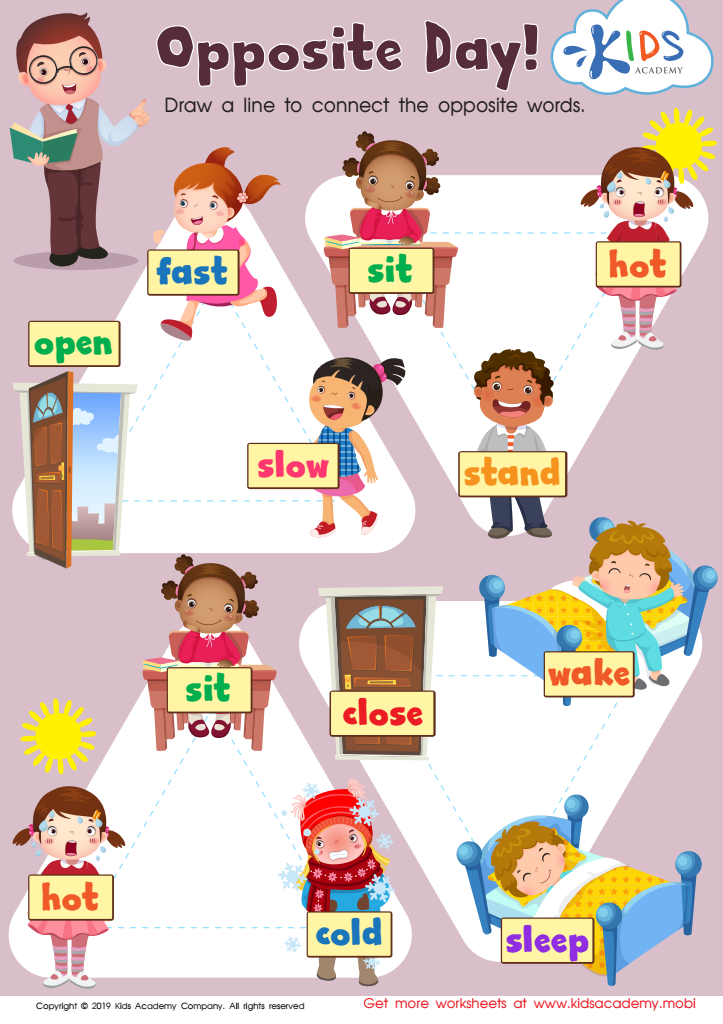
Opposite Day Worksheet
Early learners need to know about opposites to improve their higher-order thinking and critical thinking. This fun worksheet helps them understand the concept, practice opposite words, read high-frequency words and work on fine motor skills. Download the traceable PDF to get started.
 Assign to My Students
Opposite Day Worksheet
Worksheet
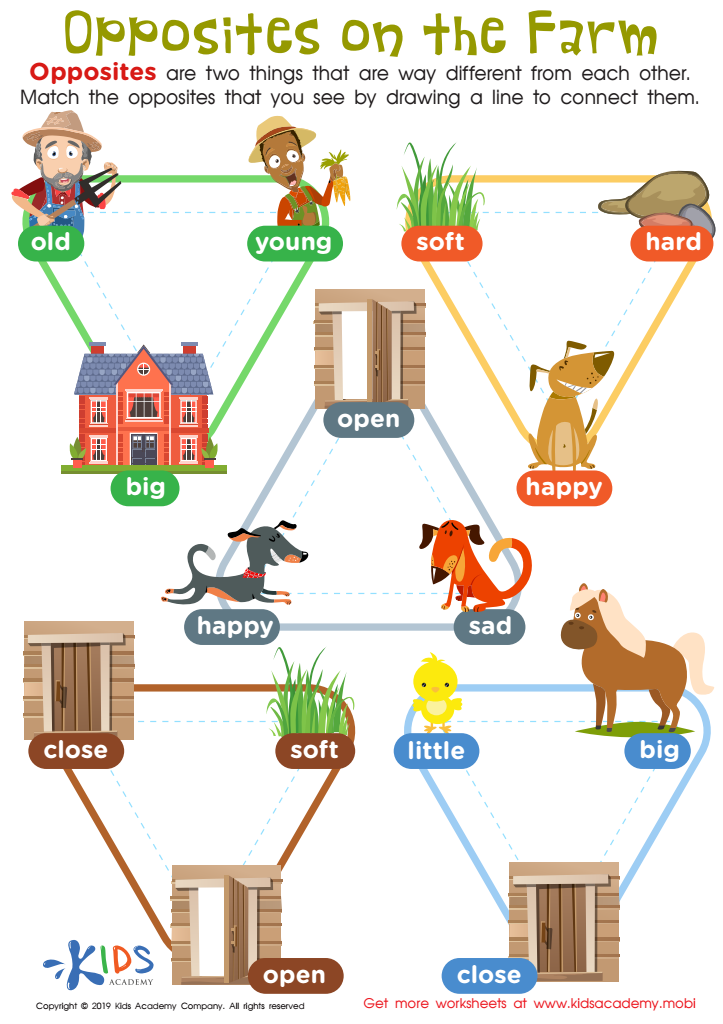
Opposites on the Farm Worksheet
Teaching children the concept of opposites is important for their development. This worksheet offers a fun way to practice. Kids can use traceable lines to match farm imagery with pairs of opposites. It's a great way to help them compare and contrast, a key skill for reading, math, writing and more.
Opposites on the Farm Worksheet
Worksheet
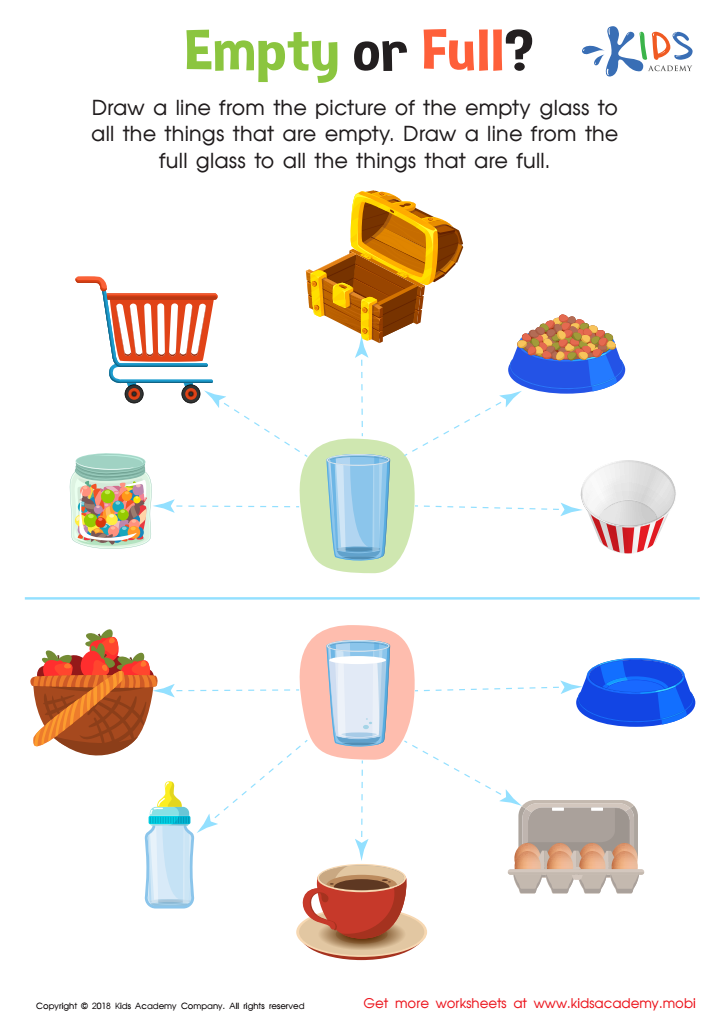
Empty or Full? Worksheet
Let students get to grips with the concepts of empty and full with this PDF worksheet. It uses fun, bright pictures to help them comprehend the difference and also helps develop fine-motor skills with tracing lines. Kids will be proud of themselves as they get answers right!
Empty or Full? Worksheet
Worksheet
Join Kids Academy for Free
Who is primarily going to use this learning content?




.jpg)


Understanding opposites is crucial for young children aged 4-9, as it lays the foundation for essential cognitive and language skills. This concept helps children develop critical thinking by enabling them to categorize objects and experiences, which enhances their ability to make comparisons. For parents and teachers, fostering this understanding aids in vocabulary expansion, as children learn descriptive words through the lens of opposites, such as hot/cold, big/small, or happy/sad.
Moreover, acknowledging opposites supports emotional development. Children learn to identify and articulate their feelings better by understanding contrasts between emotions, which is key for social interactions and conflict resolution. It also bolsters comprehension skills, as recognizing opposites helps children decode and understand narratives in stories and daily life, enriching their learning experiences.
Furthermore, early grasping of opposites can serve as a fun and engaging activity that stimulates curiosity and creativity. Through games, songs, and hands-on activities, parents and teachers can turn learning into an enjoyable experience, fostering a love for learning. In summary, understanding opposites not only nurtures critical cognitive and emotional skills, but also creates engaging educational experiences that are vital in shaping well-rounded and expressive children.








