
Visual discrimination Normal Worksheets for Ages 4-9
12 filtered results
Difficulty Level
Grade
Age
-
From - To
Subject
Activity
Standards
Enhance your child's visual discrimination skills with our "Visual Discrimination Normal Worksheets" designed for ages 4-9. These engaging, printable worksheets help young learners differentiate between shapes, colors, and patterns while boosting their focus and observation ability. Our activities cater to various skill levels, making them perfect for home or classroom use. Kids will enjoy fun exercises that promote critical thinking and visual processing, essential for their overall cognitive development. Download these worksheets today and watch your child gain confidence in their visual perception as they master important learning skills through play! Start their adventure in learning now!
Favorites
With answer key
Interactive
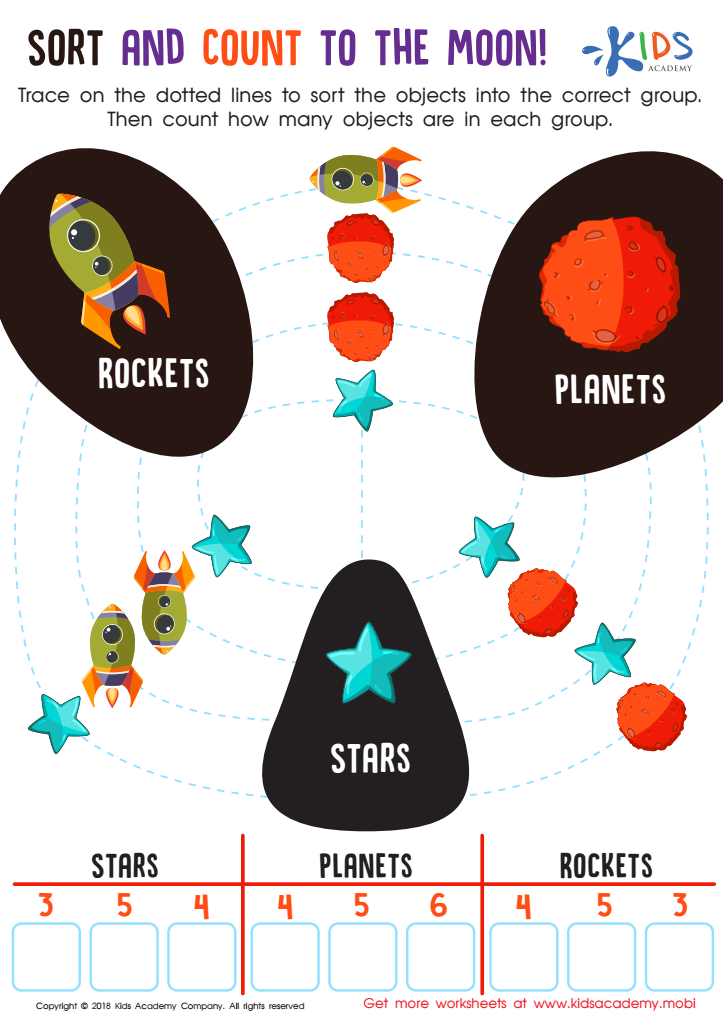
Sort and Count to the Moon Worksheet
Little space explorers will love counting, sorting and strengthening number sense with this galactic worksheet! They'll use traceable lines to sort pictures of stars, planets and rockets into categories according to properties. After sorting, they'll count each item and fill in the boxes. Bold pictures make it fun and build critical thinking skills.
 Assign to My Students
Sort and Count to the Moon Worksheet
Worksheet
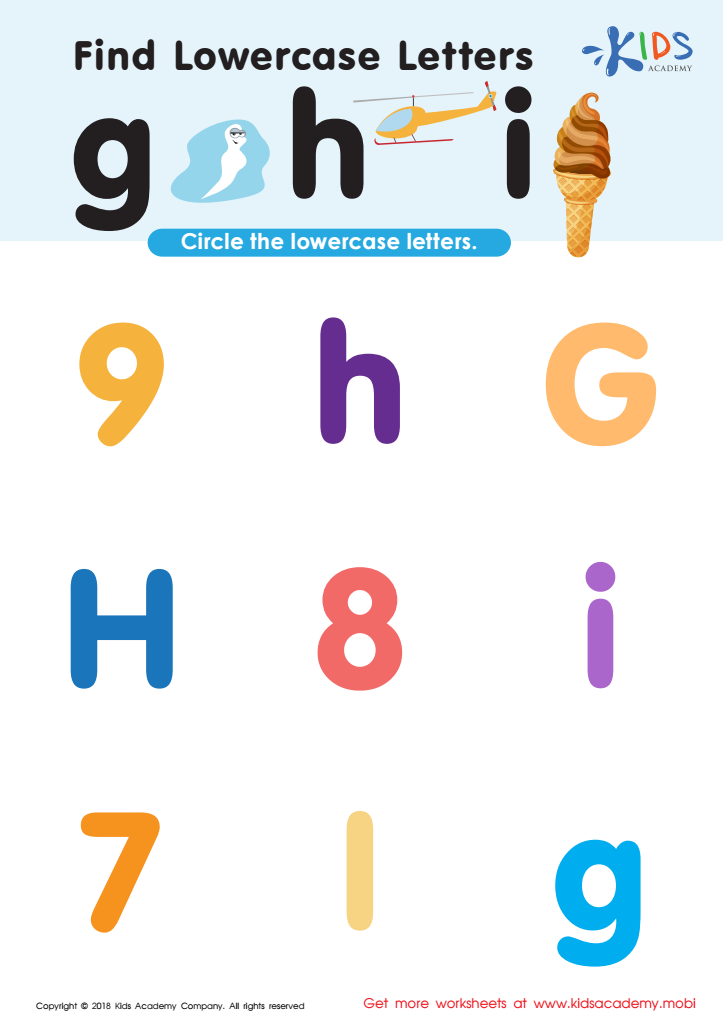
Find Lowercase Letters g h i Worksheet
Turn learning into a fun journey with your child! Use this free worksheet to find and circle the lowercase letters hidden amongst uppercase letters and numbers. Your child will understand what you're teaching them as they enjoy the search.
Find Lowercase Letters g h i Worksheet
Worksheet
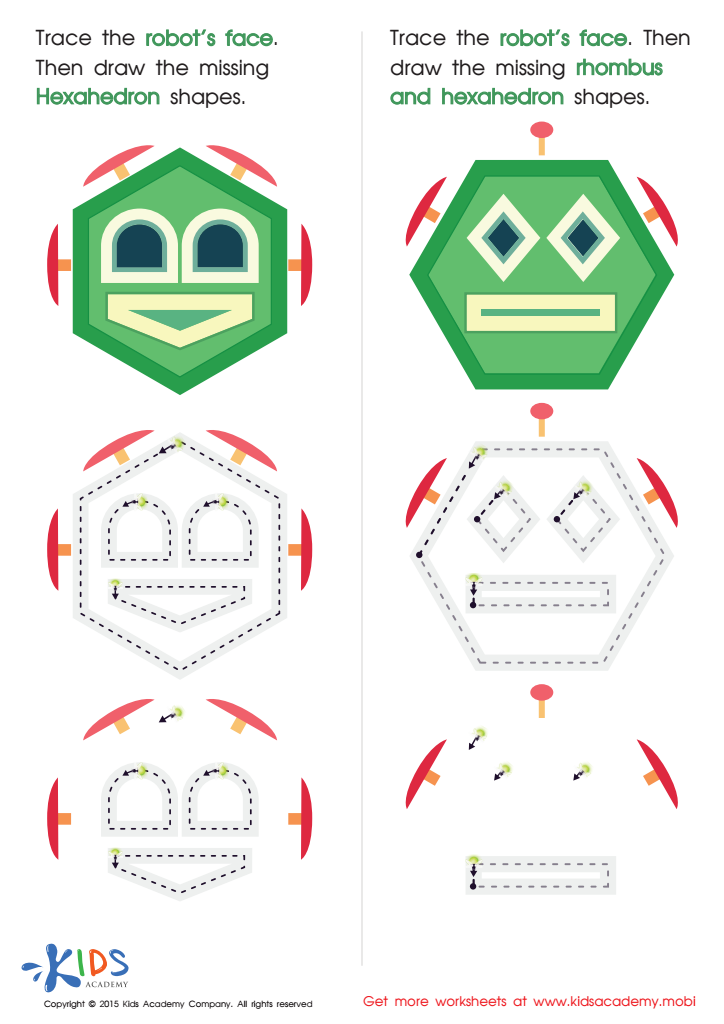
Practice Drawing Hexahedrons And a Rhombus Worksheet
Trace the Robot's face, draw hexahedron and rhombus shapes, then trace again. Our tracing shapes worksheets make it easy for kids to learn geometry. Get more materials from Kids Academy to practice all the shapes.
Practice Drawing Hexahedrons And a Rhombus Worksheet
Worksheet
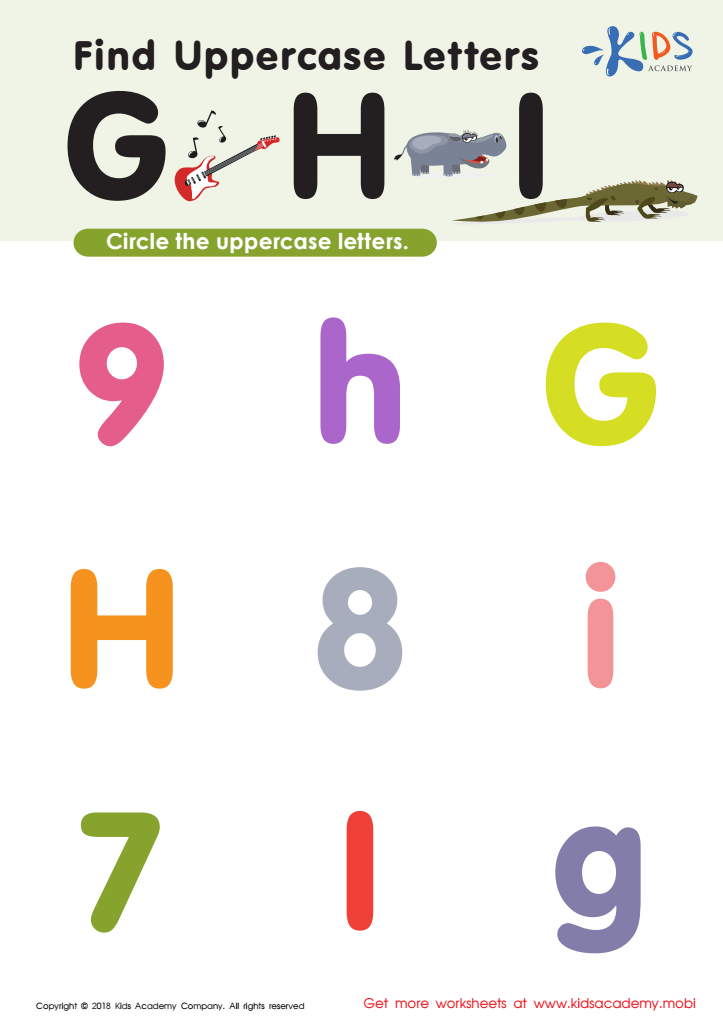
Find Uppercase Letters G, H, and I Worksheet
Find G, H, and I in uppercase with this downloadable worksheet! Numbers are included to challenge your kindergartener's letter recognition skills. Plus, practice G, H, and I sounds using the cute graphics. Perfect for learning letter case recognition!
Find Uppercase Letters G, H, and I Worksheet
Worksheet
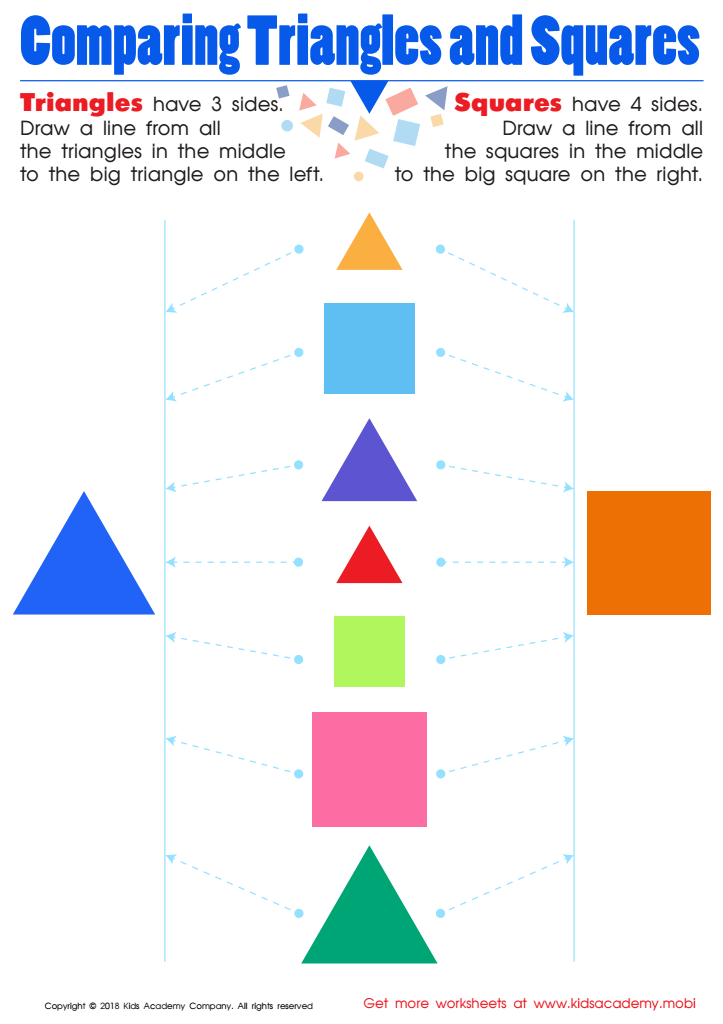
Comparing Triangles Squares Worksheet
Squares and triangles are different in the number of sides they have. Challenge kids to compare them with this fun worksheet! Read the descriptions at the top, then use the left and right shapes to match up the middle ones. Go down the page, joining the middle shapes to the side using the dotted lines!
Comparing Triangles Squares Worksheet
Worksheet
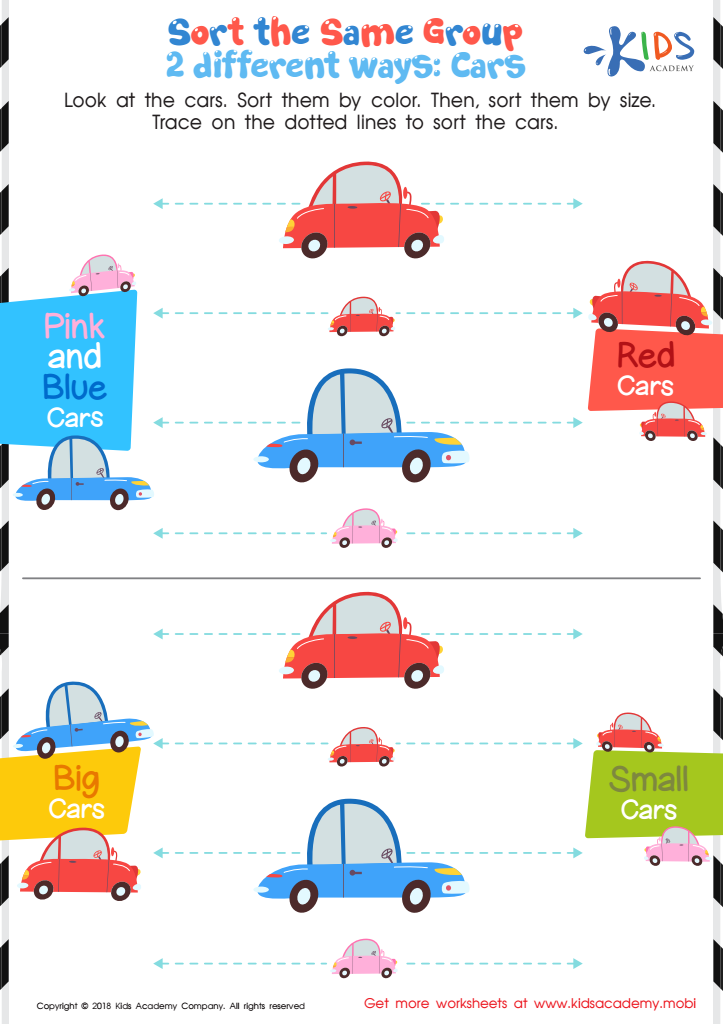
Sort the Same Group 2 Different Ways: Cars Worksheet
Look at the pictures with your child. Can they identify the objects? Ask them to sort the cars first by color and then size. Assist them to trace the dotted lines to sort the cars by color and size. This worksheet lets you easily assess your child's color and size organization skills.
Sort the Same Group 2 Different Ways: Cars Worksheet
Worksheet
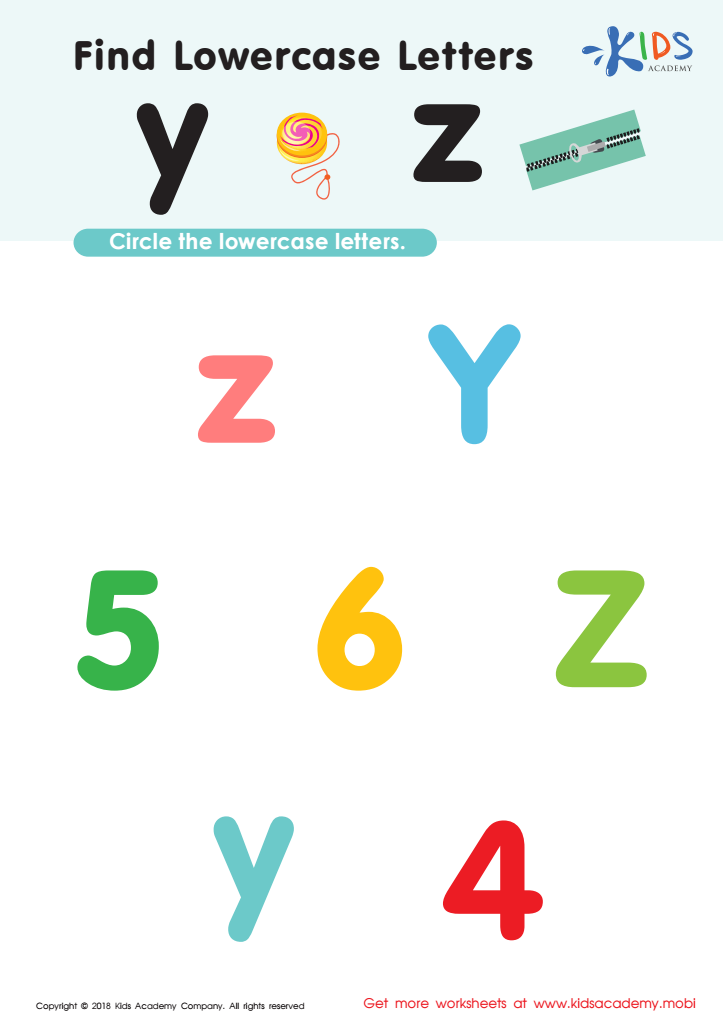
Find Lowercase Letters y z Worksheet
Help your kid learn the alphabet. Before they can move on to words and reading, they must first know the lower and uppercase letters. Show them how to find the letters y and z in this worksheet, which is filled with uppercase letters and numbers. Together, find and circle them.
Find Lowercase Letters y z Worksheet
Worksheet
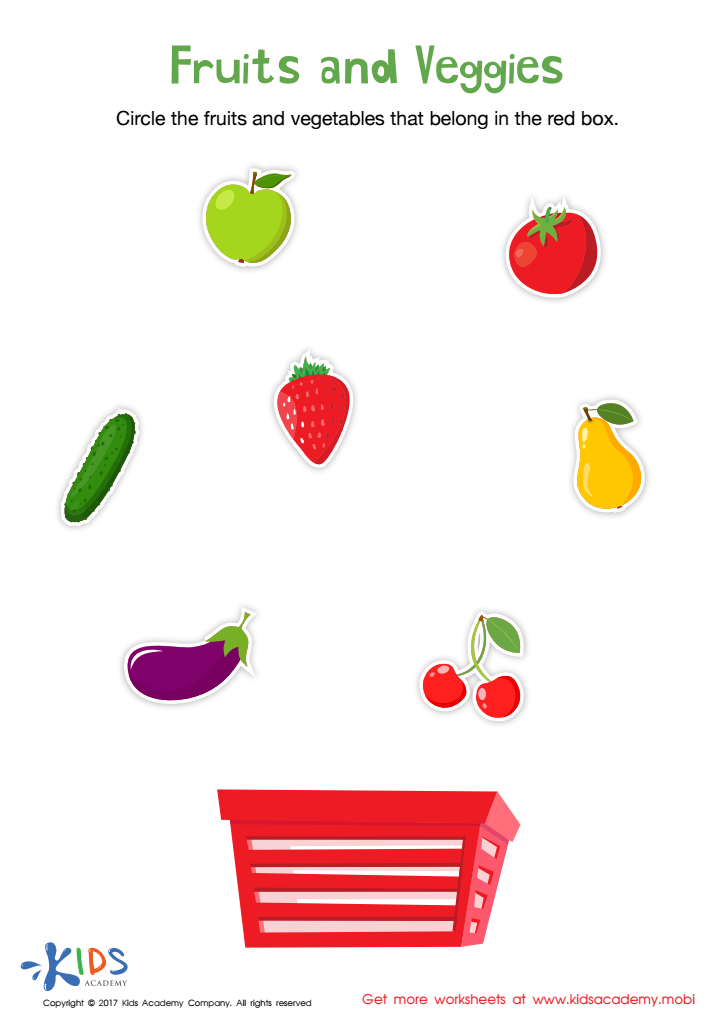
Classifying Fruits and Veggies by Color Sorting Worksheet
Worksheet
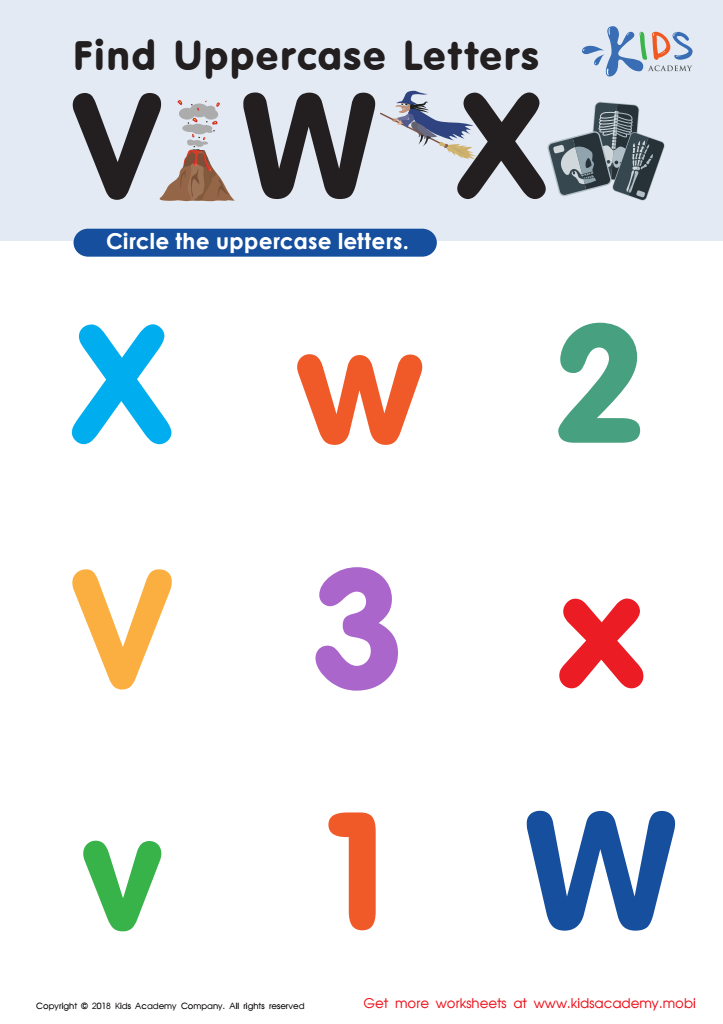
Find Uppercase Letters V, W, X Worksheet
Ask your kids if they can spot the uppercase letters V, W and X hidden in the lowercase letters and numbers, then have them circle them. After that, ask them to give you examples of words beginning with those letters. This worksheet will help them get started.
Find Uppercase Letters V, W, X Worksheet
Worksheet
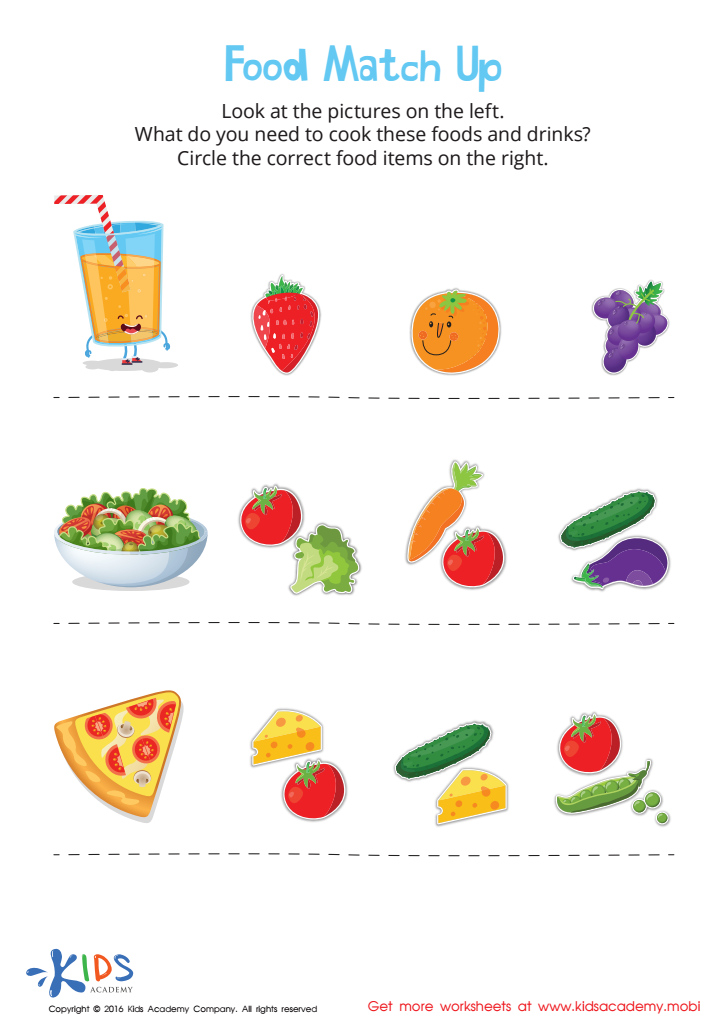
Food Match Up Worksheet
This worksheet will help your preschooler develop early math and cognitive skills. It challenges them to pay attention to details, understand how smaller parts make a whole, and increase important matching skills. Use it to give them a hands-on learning experience in the kitchen, and watch them understand how ingredients come together to make something delicious!
Food Match Up Worksheet
Worksheet
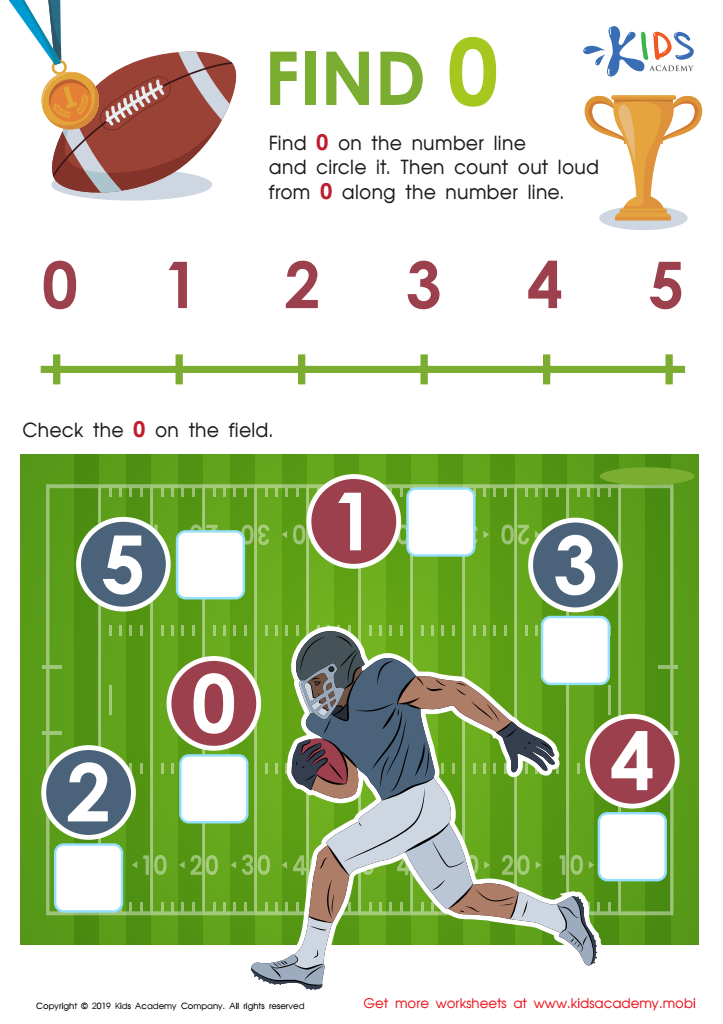
Find 0 Worksheet
Help make number learning easier with this worksheet! Ask your students to find and circle 0 on the number line, then count aloud from 0 to the last number. It might not be their favorite subject, but it's unavoidable - and with this worksheet, they'll be counting like pros!
Find 0 Worksheet
Worksheet
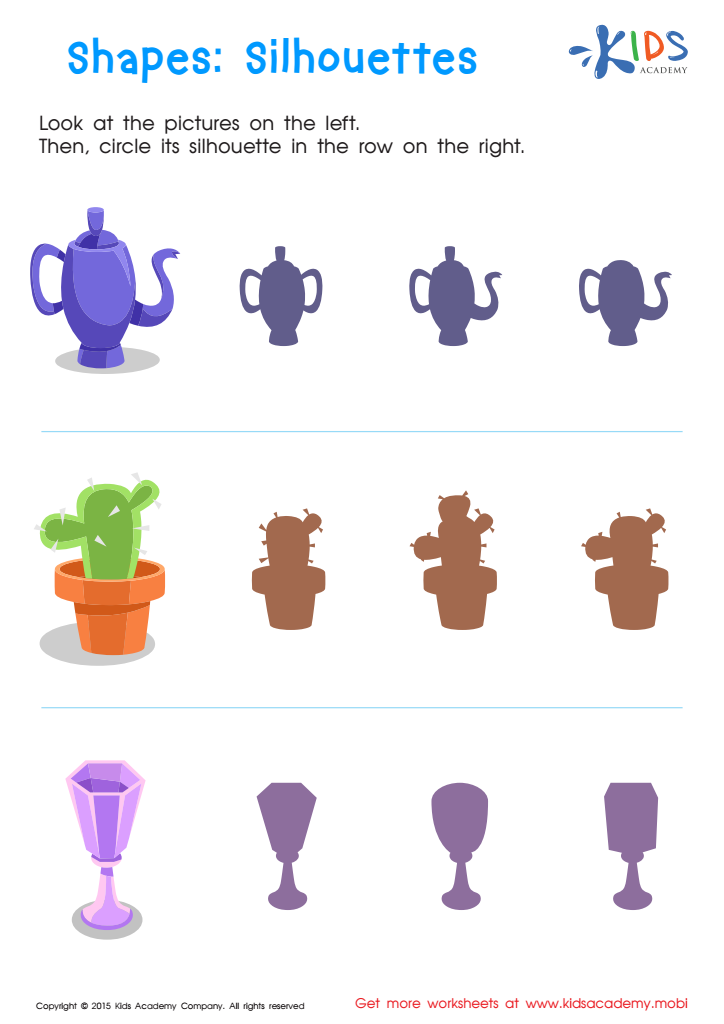
Silhouettes – Shapes Worksheet
Kids can have fun while learning to compare sizes with this silhouettes shapes worksheet! Matching pictures to silhouettes helps them build early math skills, while enjoying the activity!
Silhouettes – Shapes Worksheet
Worksheet
Join Kids Academy for Free
Who is primarily going to use this learning content?






Visual discrimination is the ability to differentiate between shapes, colors, sizes, and patterns. For children aged 4-9, this skill is crucial for their cognitive development and academic success. Parents and teachers should care about visual discrimination because it plays a vital role in early learning, particularly in foundational skills such as reading and math.
Children who struggle with visual discrimination may find it challenging to recognize letters and numbers, ultimately affecting their reading and writing abilities. For example, distinguishing between "b" and "d" or identifying similar-looking numbers can hinder their progress in literacy and numeracy. Furthermore, strong visual discrimination skills contribute to a child’s ability to organize and categorize information, which is necessary for effective problem-solving and critical thinking.
Additionally, visual discrimination supports the development of social skills. Children use visual cues to read emotions and body language, aiding their interactions with peers. By fostering these skills through targeted activities and play, parents and teachers can enhance a child’s learning experience, build confidence, and set a strong foundation for future academic endeavors. Encouraging visual discrimination should be a priority, as it significantly influences educational outcomes and overall development in young children.








