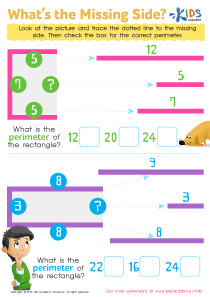
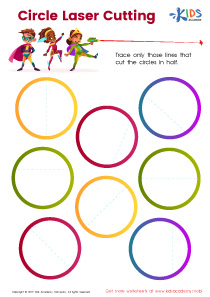
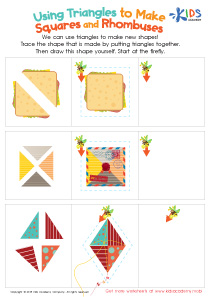
Critical Thinking Normal 2D Shapes Worksheets for Ages 4-9
5 filtered results
-
From - To
Unlock your child’s potential with our Critical Thinking Normal 2D Shapes Worksheets for Ages 4-9. Specially designed to enhance young minds, these engaging worksheets focus on the fundamental aspects of 2D shapes to boost children's understanding and analytical skills. Through fun activities, kids will identify, compare, and contrast various shapes, developing crucial critical thinking abilities in the process. Perfect for home or classroom use, these printable worksheets offer an interactive approach to learning, ensuring that children remain both challenged and entertained. Help your little learners build a strong mathematical foundation while sharpening their problem-solving skills.
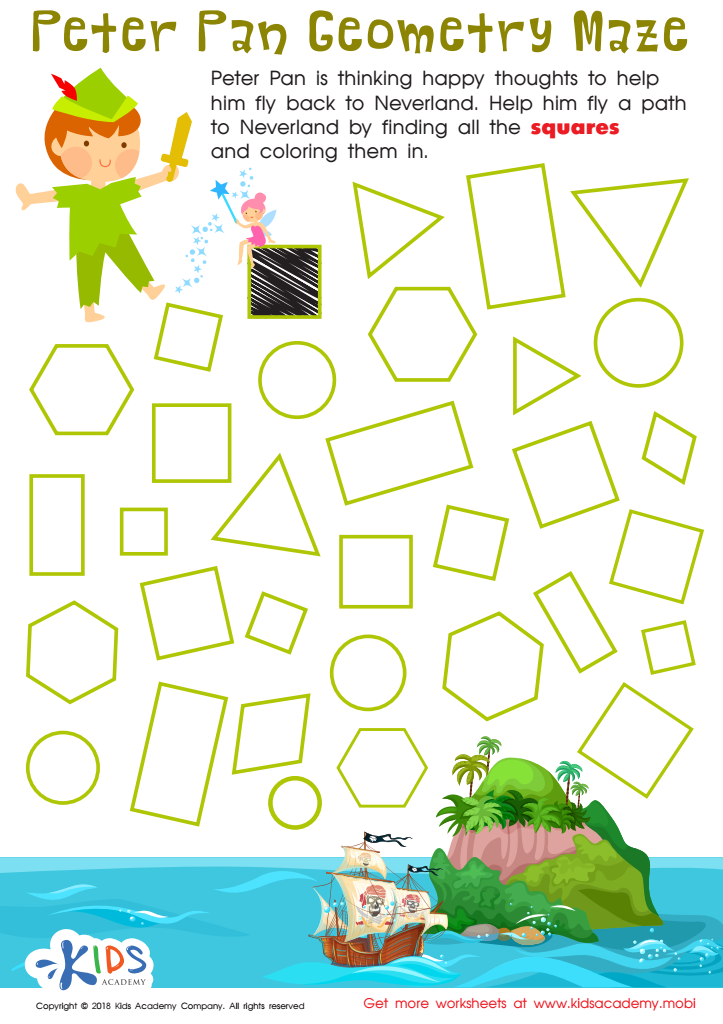
Peter Pan Worksheet
 Assign to My Students











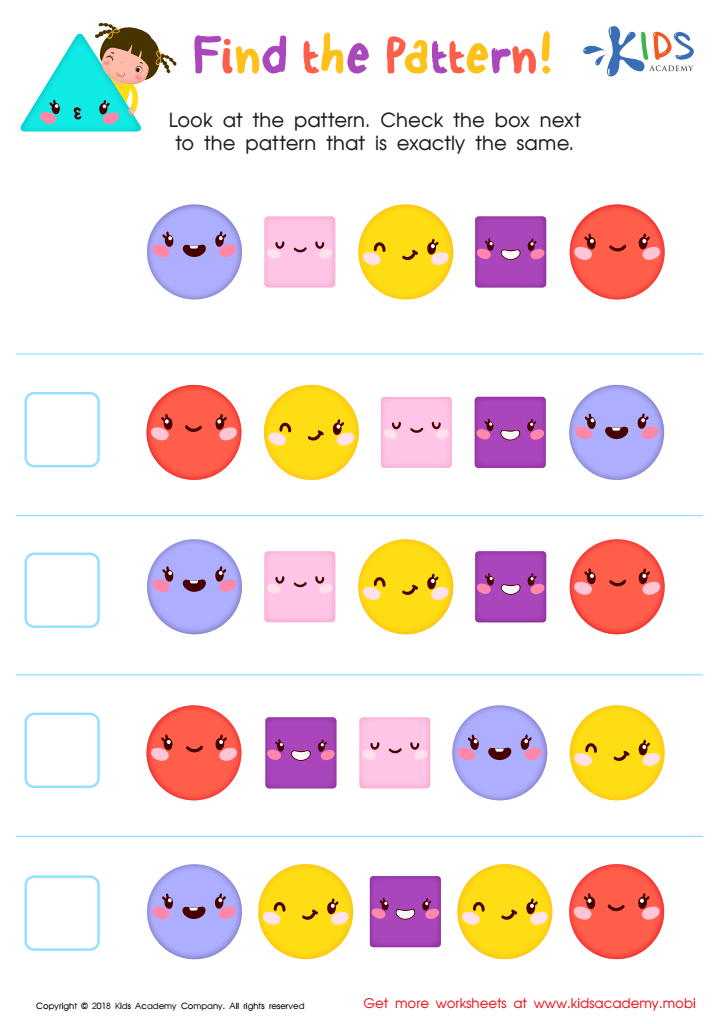
Find the Pattern Worksheet
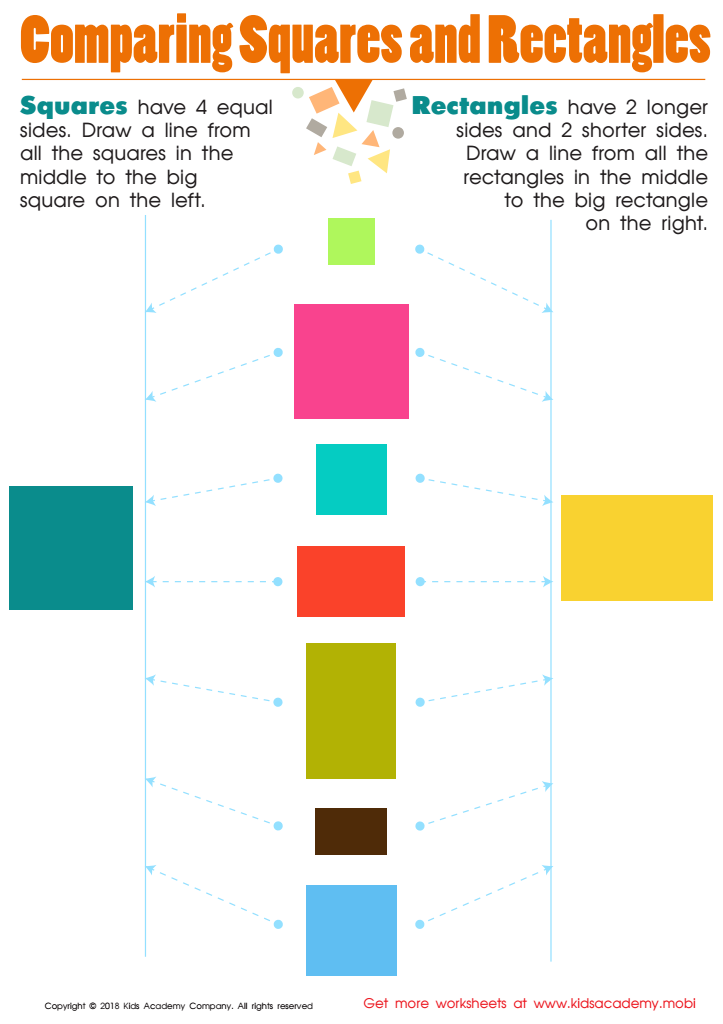
Comparing Squares Rectangles Worksheet
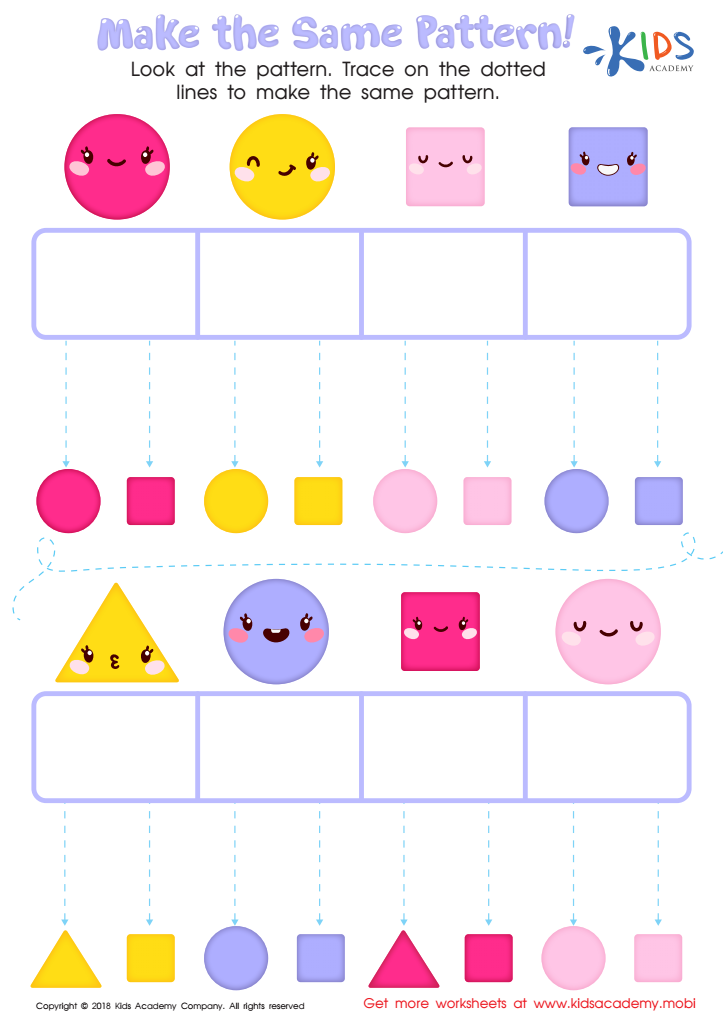
Make the Same Pattern Worksheet
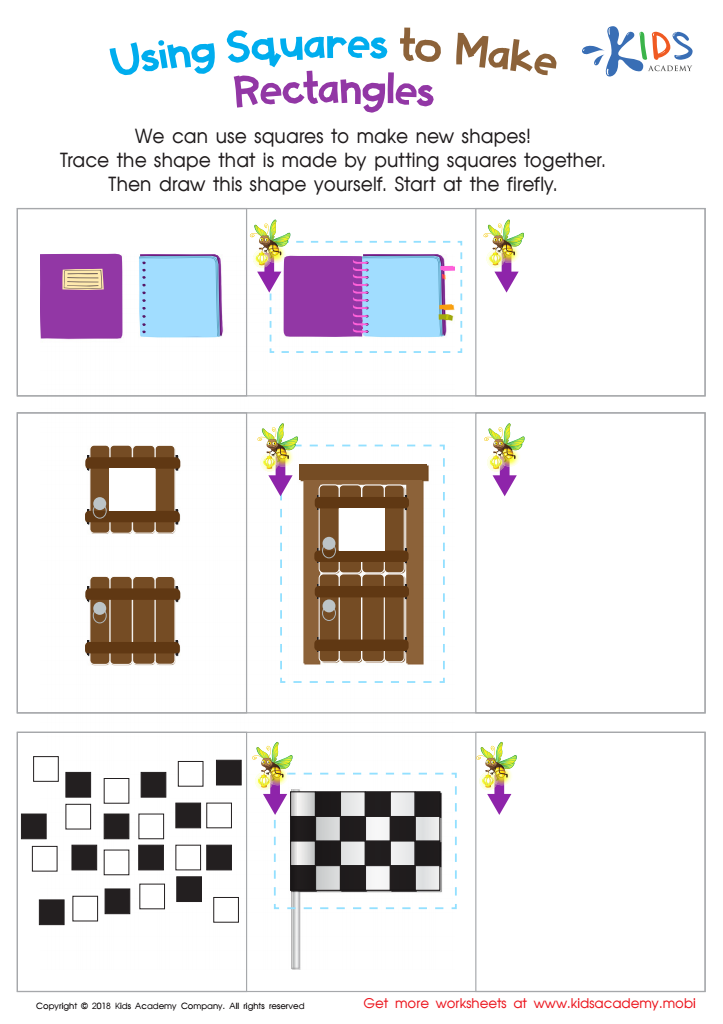
Using Squares to Make Rectangles Worksheet








Critical thinking skills are key cognitive abilities that foster exploration, problem-solving, and logical reasoning among young children. Introducing critical thinking during early developmental stages can significantly benefit children's academic, social, and emotional growth. Utilizing 2D shapes as a means to develop these skills offers a concrete and accessible way to engage children aged 4-9.
Using 2D shapes to teach critical thinking encourages children to identify, compare, and contrast basic geometric forms, thereby enhancing their ability to distinguish and classify objects. For instance, when children are asked to sort and group shapes or solve puzzles incorporating shapes, they learn to recognize patterns and relationships between different elements. These activities challenge them to make predictions, analyze outcomes, and explore alternative solutions — all fundamental aspects of critical thinking.
Integrating 2D shapes into learning also aids in building foundational mathematical concepts, such as understanding properties of shapes, symmetry, and spatial awareness. Beyond math, these skills nurture abilities to think rationally and make reasoned judgments in everyday contexts.
Equipping children with critical thinking competencies through familiar and engaging tools lays the groundwork for a lifetime of effective problem-solving and informed decision-making. Thus, it is imperative for parents and teachers to incorporate activities centered around 2D shapes into their early education curricula to support holistic cognitive development.