Normal Addition and Subtraction Word Problems Worksheets for Ages 4-9 - Page 2
29 filtered results
-
From - To
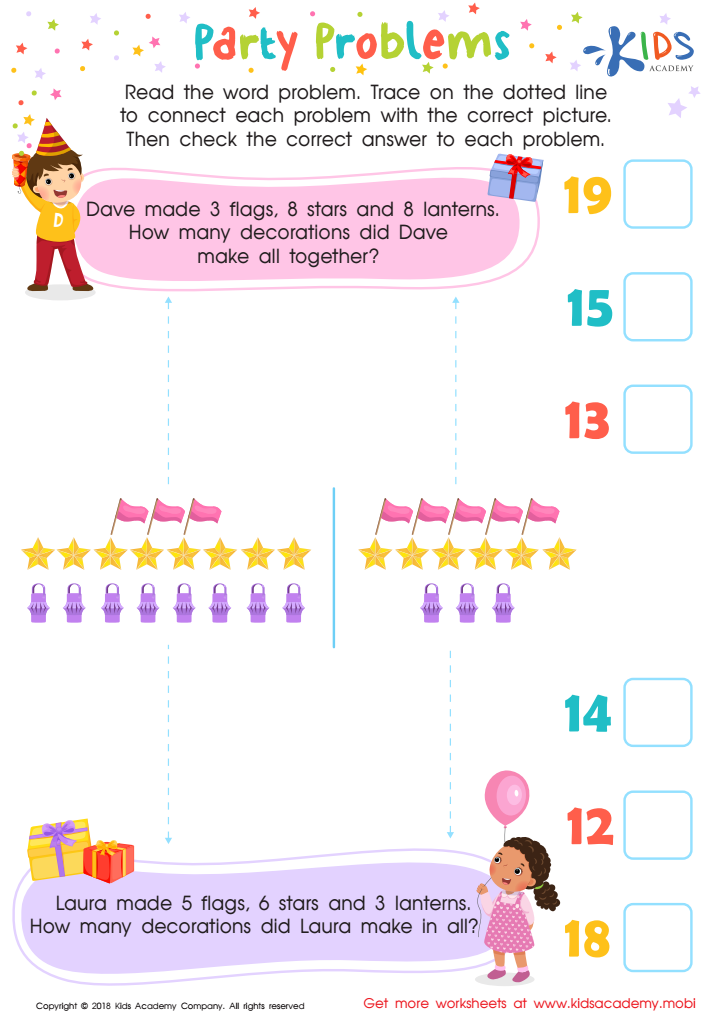
Party Problems Worksheet
 Assign to My Students
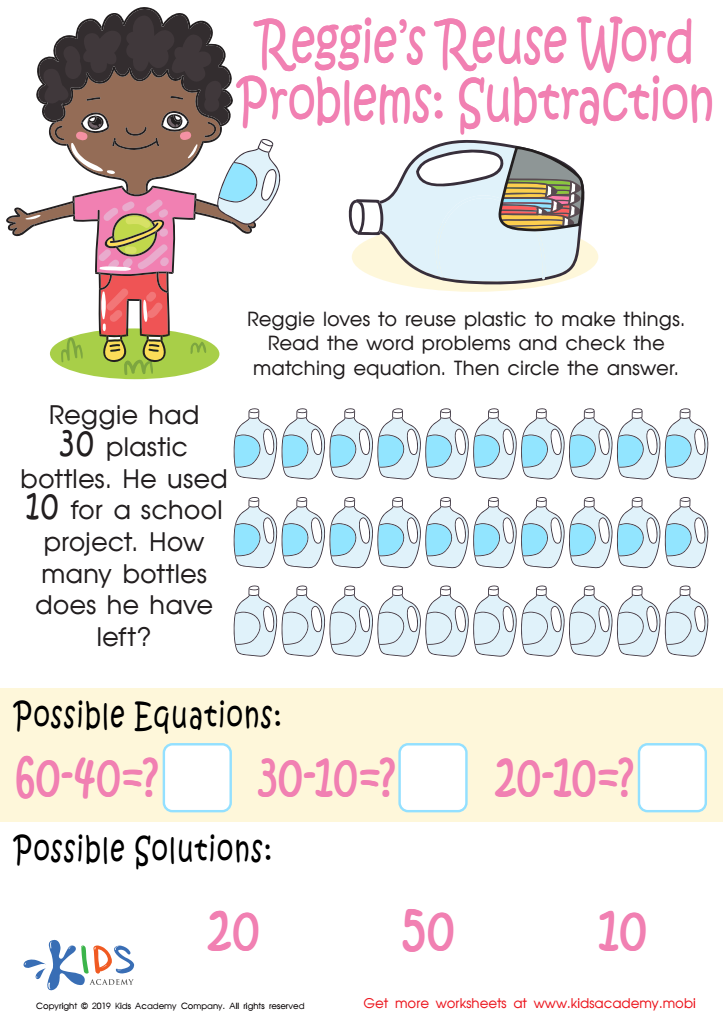
Reggie's Reuse Word Problems: Subtraction Worksheet
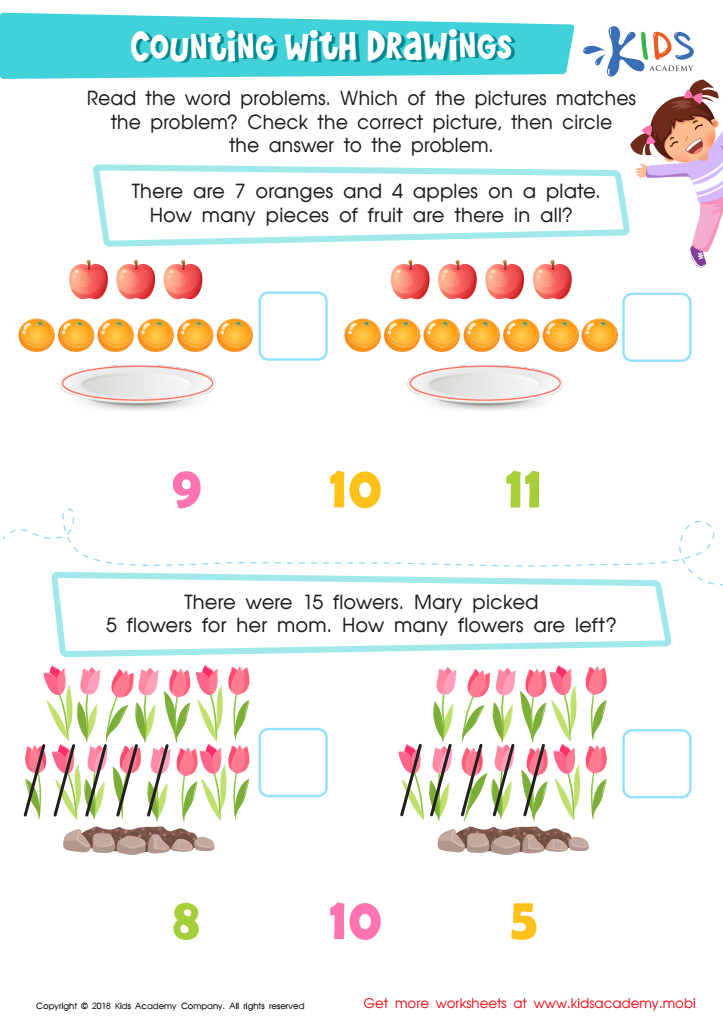
Counting with Drawings:Fruits & Flowers Worksheet
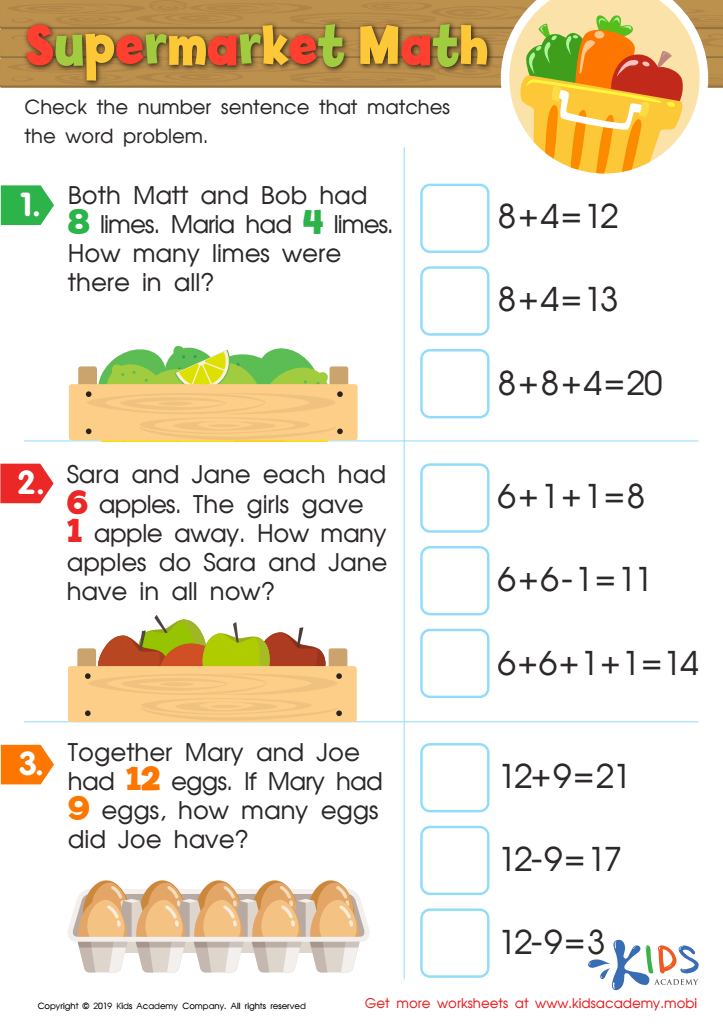
Supermarket Math Worksheet
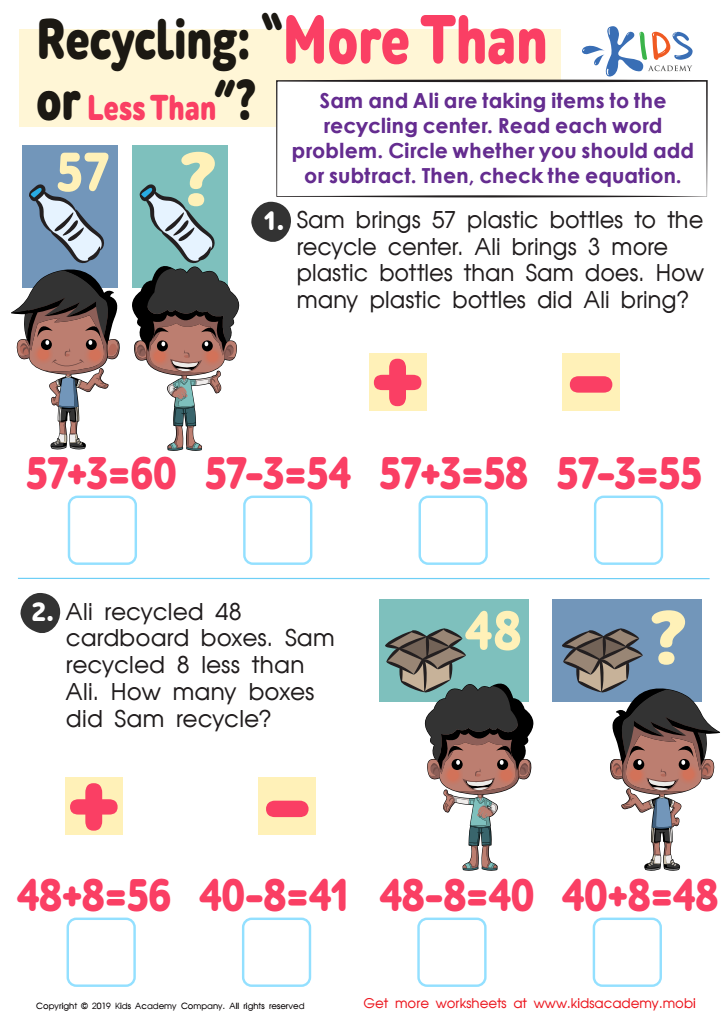
Recycling - More or Less Worksheet








Parents and teachers should prioritize normal addition and subtraction word problems for ages 4-9 because these problems are foundational for developing critical mathematical skills essential for later learning. At this age, children are in a crucial stage of cognitive development, where they begin to understand not just arithmetic operations but also how to apply them to solve real-world problems. Engaging with word problems enhances their comprehension and critical thinking abilities, fostering logical reasoning and analytical skills.
Additionally, solving word problems encourages children to practice reading comprehension, as they must parse language and discern relevant information. This dual focus on math and literacy is essential for holistic development. Furthermore, normal addition and subtraction scenarios create relatable contexts that connect math to everyday life, making the subject matter more meaningful and stimulating to young learners.
Incorporating such problems into educational activities promotes a growth mindset, reinforcing the idea that challenges can be overcome with effort and strategy. Ultimately, supporting children in mastering these skills prepares them for more advanced mathematical concepts and nurtures a positive attitude toward learning that can last a lifetime. Thus, parents and teachers play a vital role in guiding their children through these important developmental stages.