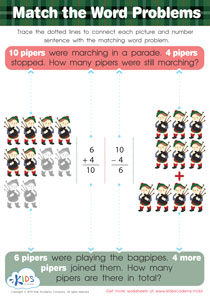
Mental math skills Normal Addition Worksheets for Ages 4-9
5 filtered results
-
From - To
Enhance your child's mathematical abilities with our Mental Math Skills Normal Addition Worksheets, designed specifically for ages 4-9. These engaging worksheets focus on building foundational addition skills through fun activities that nurture confidence in young learners. Children will practice mental addition techniques, enabling them to solve problems quickly and accurately without relying on paper or calculators. Each worksheet is crafted to adapt to various learning levels, ensuring a supportive environment for every child. Encourage a love for math while honing critical thinking and problem-solving skills. Explore our collection to provide your child with the tools they need for early mathematical success!
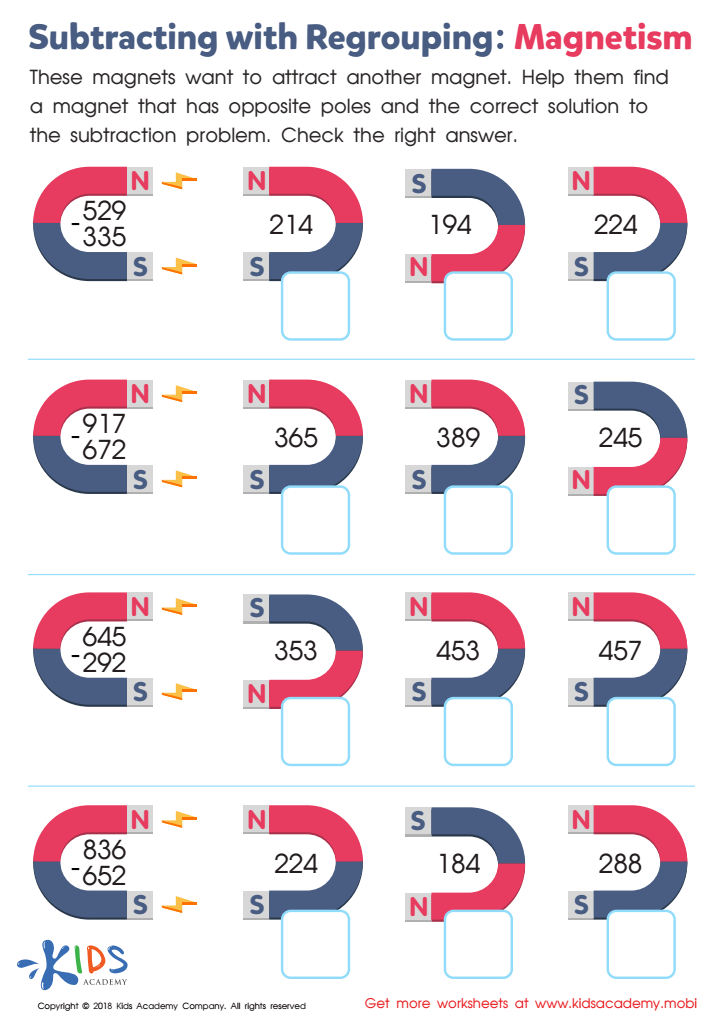
Subtracting with Regrouping: Magnetism Worksheet
 Assign to My Students
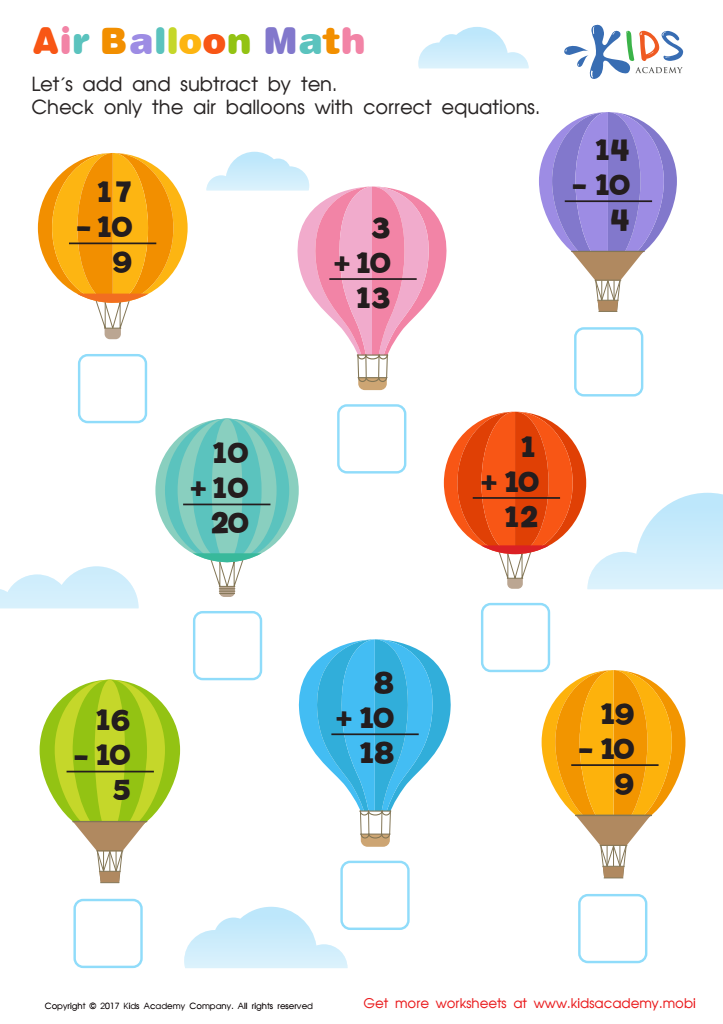
Air Balloon Math Worksheet
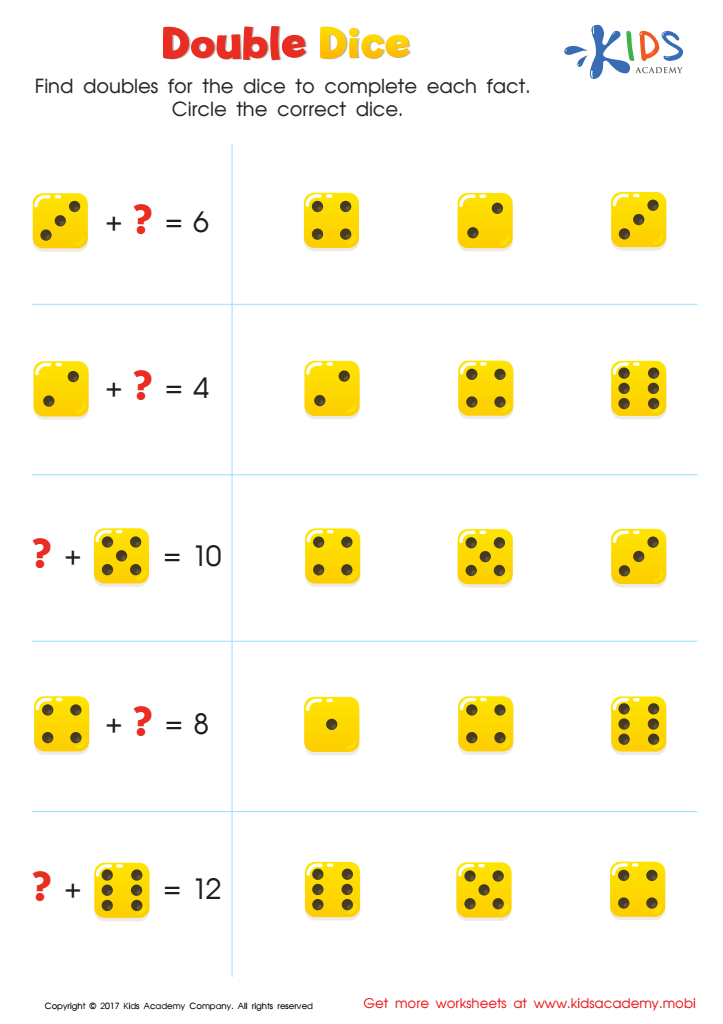
Addition Facts: Double Dice Worksheet
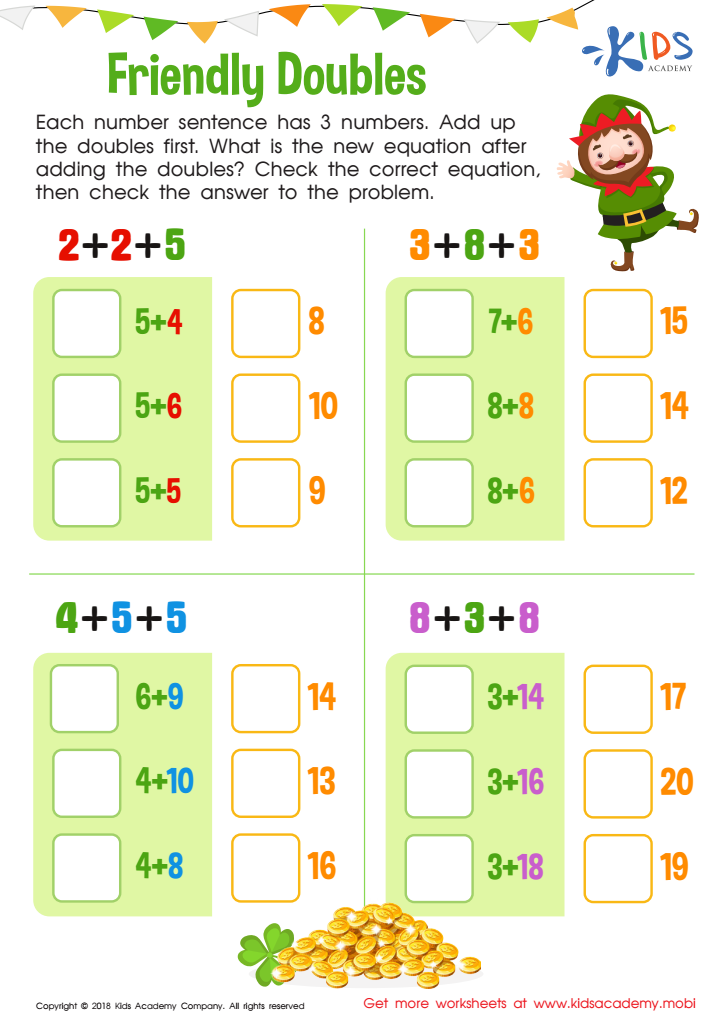
Friendly Doubles Worksheet
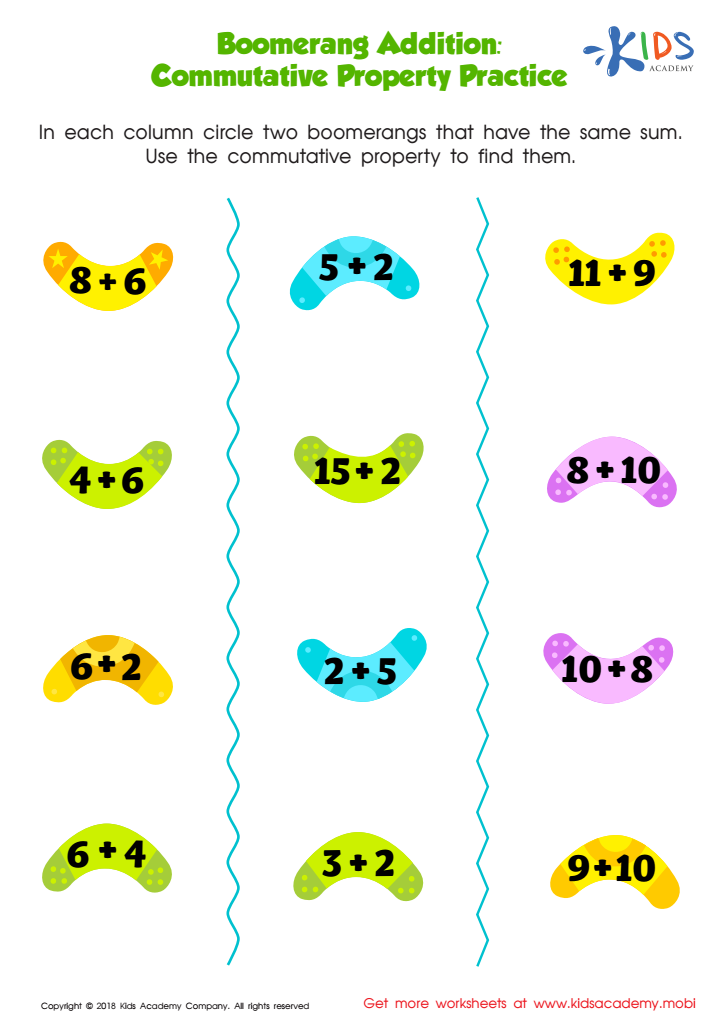
Boomerang Addition Worksheet








Mental math skills, particularly in normal addition, are crucial for children aged 4-9 because they form the foundation of overall mathematical understanding. At this developmental stage, fostering these skills enhances not only academic performance but also cognitive abilities. When children practice mental addition, they learn to recognize patterns, develop number sense, and improve critical thinking skills.
Moreover, mastering mental math promotes self-confidence and independence in young learners. It equips them with tools to tackle more complex mathematical tasks in the future without reliance on calculators or paper-and-pencil methods. In a world increasingly driven by technology, strong mental arithmetic enables children to make quick calculations in everyday situations, such as budgeting their allowance or measuring ingredients, thereby enhancing their practical life skills.
Furthermore, engaging in mental math encourages collaborative learning and communication among peers, as they often share strategies and techniques. This interaction fosters a supportive learning environment where curiosity and confidence thrive. Therefore, parents and teachers should prioritize mental math skills to empower children not only academically but also socially and emotionally, cultivating a positive attitude towards math that will benefit them throughout their educational journey and beyond.