Counting practice Normal Geometry Worksheets for Ages 4-9
3 filtered results
-
From - To
Enhance your child's math skills with our Counting Practice Normal Geometry Worksheets, specially designed for ages 4-9. These engaging worksheets combine basic counting activities with geometric concepts, helping young learners grasp vital foundational math skills. Each worksheet features colorful illustrations and easy-to-follow instructions, making learning fun and enjoyable! As children navigate through shapes and numbers, they will build confidence in counting, recognizing patterns, and understanding geometry. Perfect for classroom use or at-home practice, these resources cater to diverse learning styles and keep kids motivated. Start your child’s math journey today and lay the groundwork for future success!
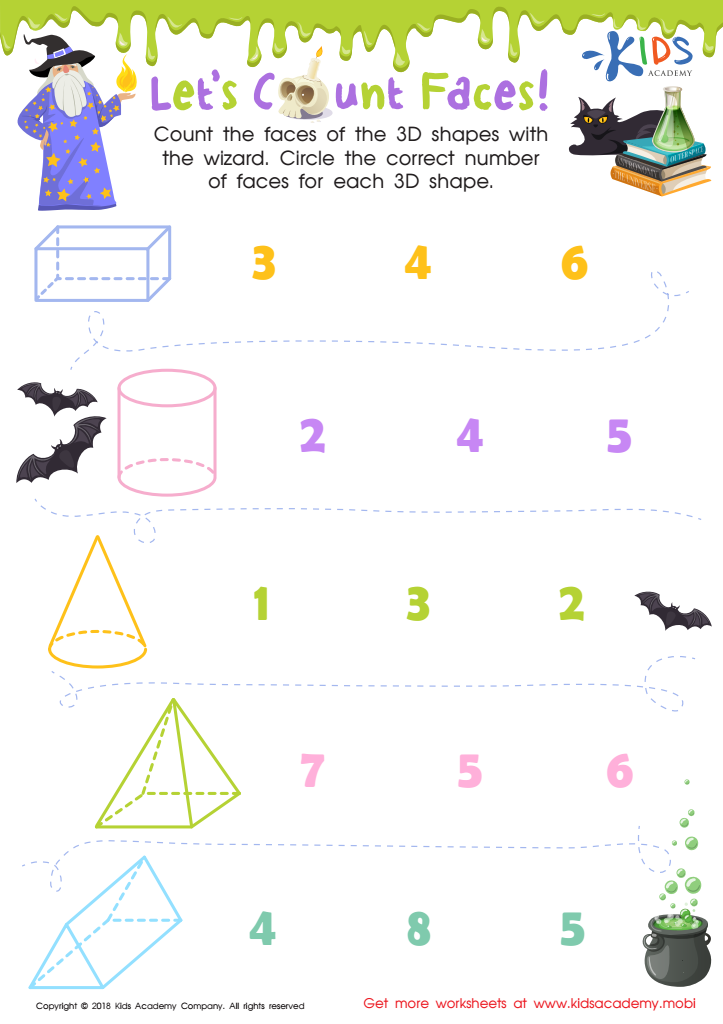
Let's Count Faces! Worksheet
 Assign to My Students











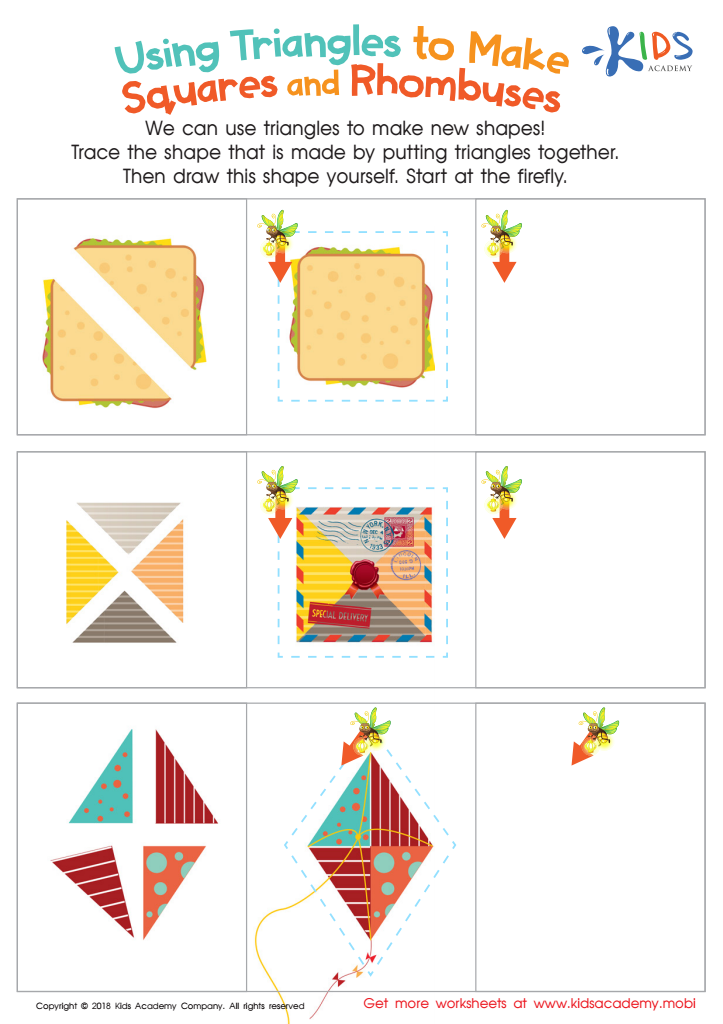
Using Triangles to Make Squares and Rhombuses Worksheet
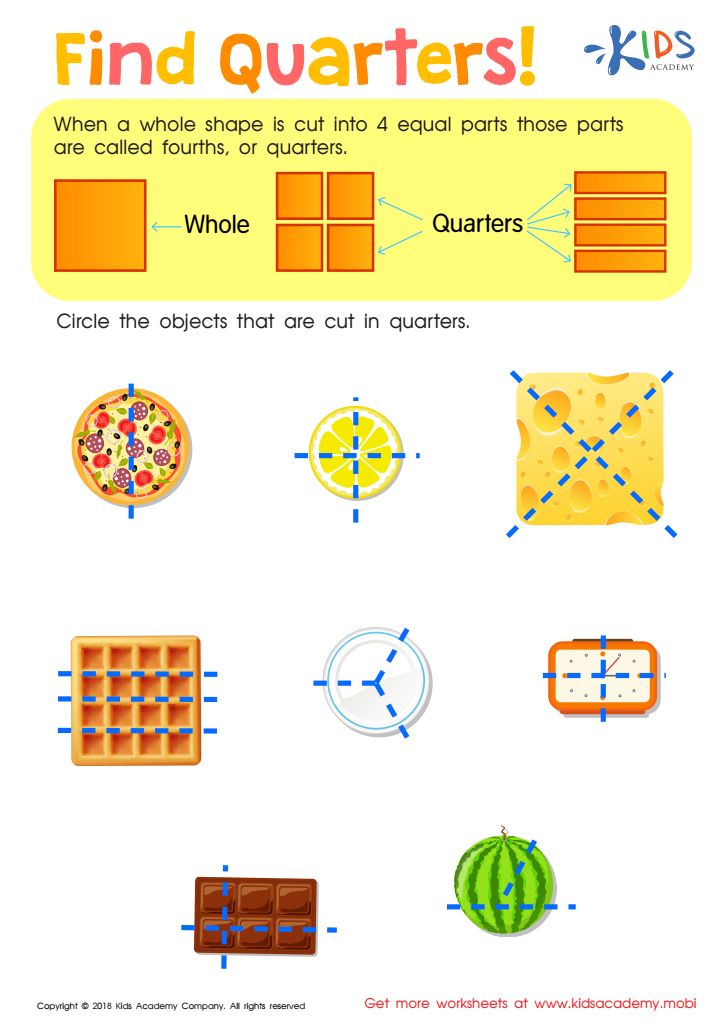
Find Quarters Worksheet








Counting practice and geometry are essential components of early childhood education, particularly for children aged 4-9. During these formative years, children develop foundational mathematical skills that significantly impact their lifelong learning. Engaging in counting activities helps children master number recognition, one-to-one correspondence, and basic arithmetic concepts. These skills enhance their numeracy and instill confidence as they tackle more complex mathematical challenges in the future.
Normal geometry is equally important as it introduces young learners to shapes, spatial relationships, and measurement. By exploring concepts such as symmetry, patterns, and area, children develop critical thinking and problem-solving skills that extend beyond math. Understanding geometry helps them make sense of the world around them, from recognizing shapes in their environment to applying mathematical reasoning in everyday situations.
Moreover, early exposure to these subjects promotes cognitive development and boosts a child's ability to think logically. Parents and teachers who prioritize counting practice and normal geometry can cultivate a solid foundation that not only prepares children for academic success but also fosters a growth mindset. These early experiences lay the groundwork for a positive attitude towards math and learning, encouraging children to embrace challenges and explore new ideas in their future educational journeys.








