Shape identification Normal Geometry Worksheets for Ages 4-9
5 filtered results
-
From - To
Explore our engaging "Shape Identification Normal Geometry Worksheets" designed for children ages 4 to 9. These worksheets help young learners recognize and differentiate various shapes through interactive activities and vibrant illustrations. Each worksheet is crafted to promote essential math skills while making learning fun and accessible. With a blend of exercises that cater to different learning styles, kids will enhance their shape identification abilities and build a strong foundation in geometry. Perfect for home or classroom use, our resources encourage creativity and critical thinking. Start your child’s journey in mathematics today with our carefully designed geometry worksheets!
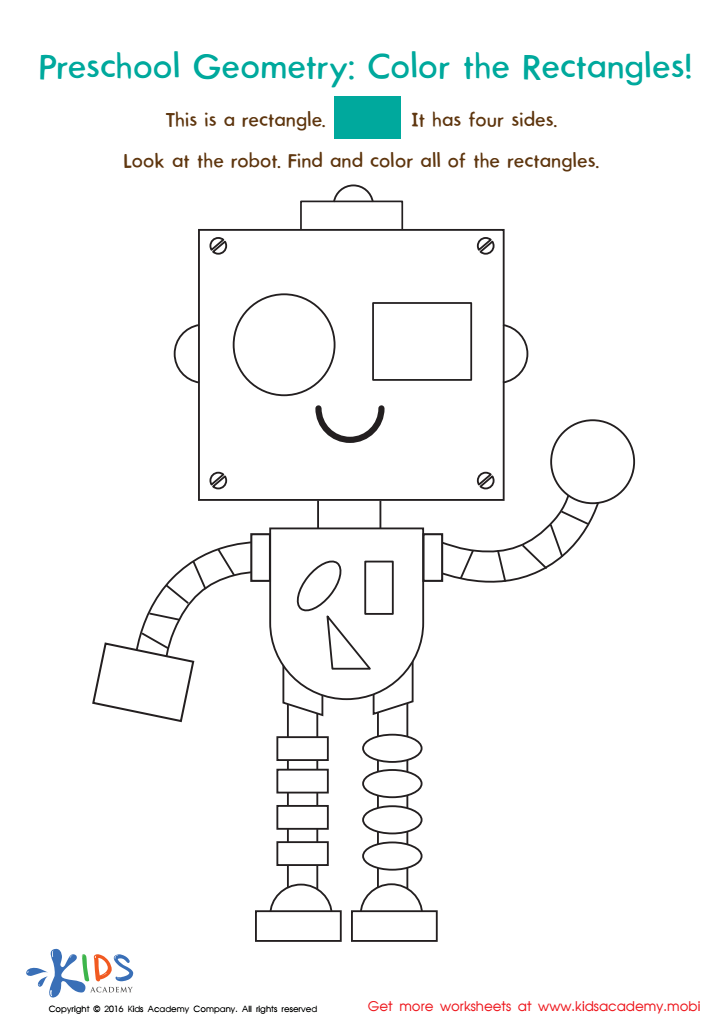
Geometry Worksheet
 Assign to My Students











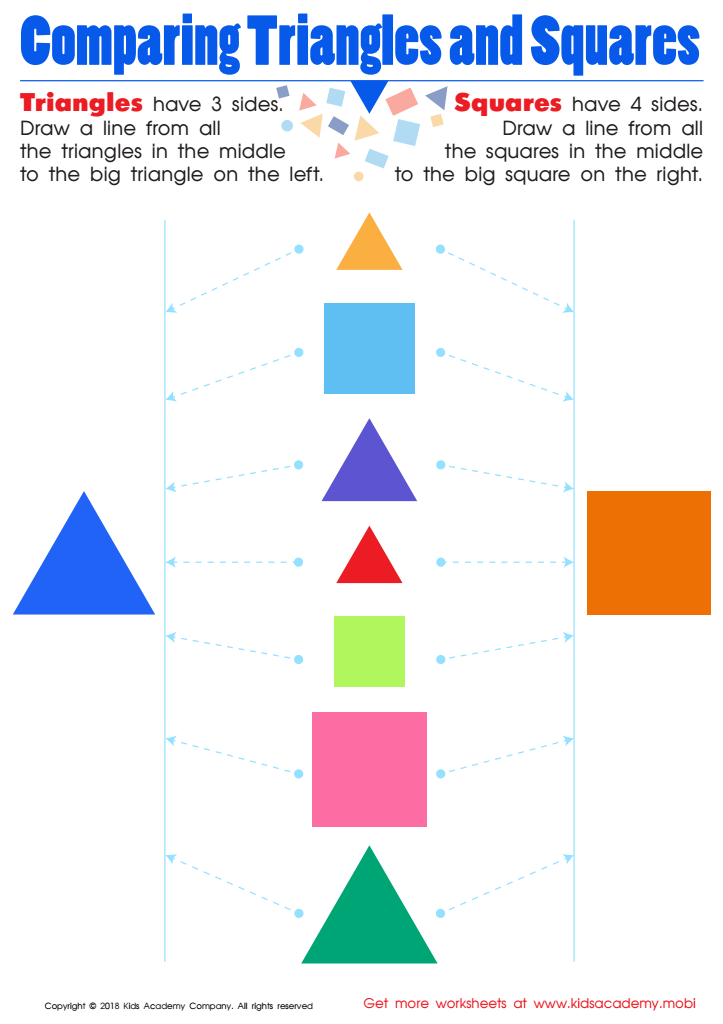
Comparing Triangles Squares Worksheet
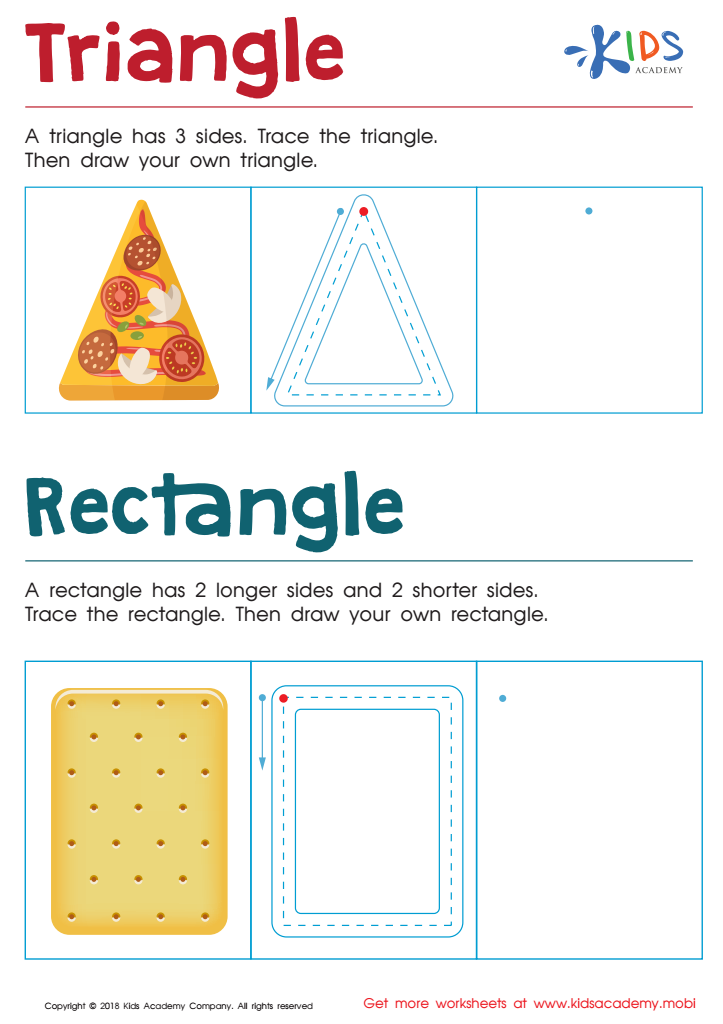
Triangle Rectangle Worksheet
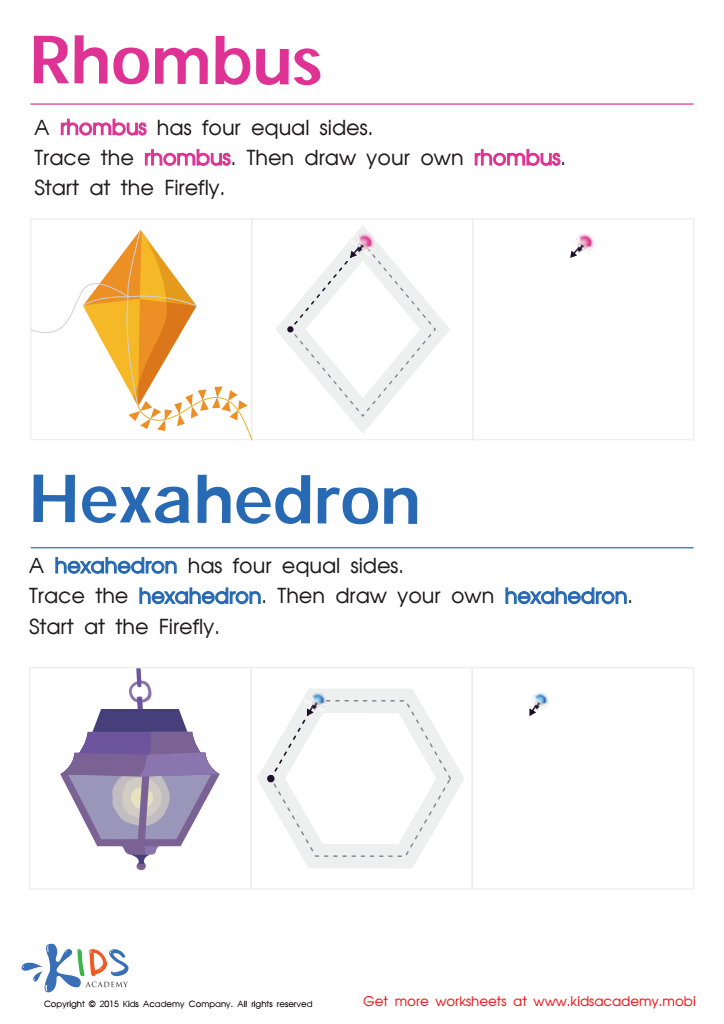
Draw a Rhombus And a Hexahedron Printable
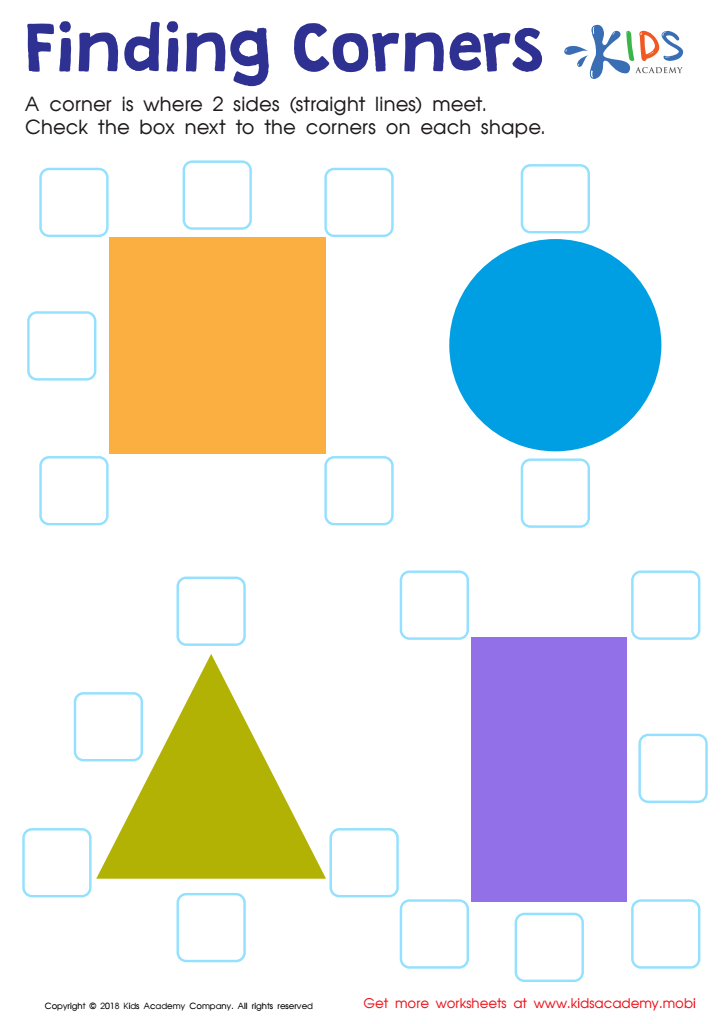
Finding Corners Worksheet








Shape identification is a fundamental aspect of early childhood education, especially for children aged 4-9. Parents and teachers should care about this topic for several reasons. First, geometric shapes are essential building blocks for mathematical understanding. Familiarity with common shapes such as circles, squares, and triangles lays the groundwork for more complex concepts later on, such as symmetry, angles, and spatial reasoning.
Moreover, shape identification fosters cognitive development. Young children learn to classify and categorize shapes, enhancing their problem-solving skills and critical thinking. This process cultivates their ability to observe, analyze, and draw connections between various concepts in their environment.
Additionally, understanding shapes improves communication skills. When children learn specific vocabulary associated with shapes, they become better at expressing their thoughts and ideas. This vocabulary acquisition is vital for language development, as it helps children articulate their observations and engage in discussions with peers.
Finally, shape recognition often leads to practical applications in daily life, such as art, design, and construction, encouraging creativity and resourcefulness. By prioritizing shape identification, parents and teachers can equip children with essential skills that promote academic success while simultaneously nurturing their overall growth and development.








