Comparison Skills Normal Math Worksheets for Ages 4-9
3 filtered results
-
From - To
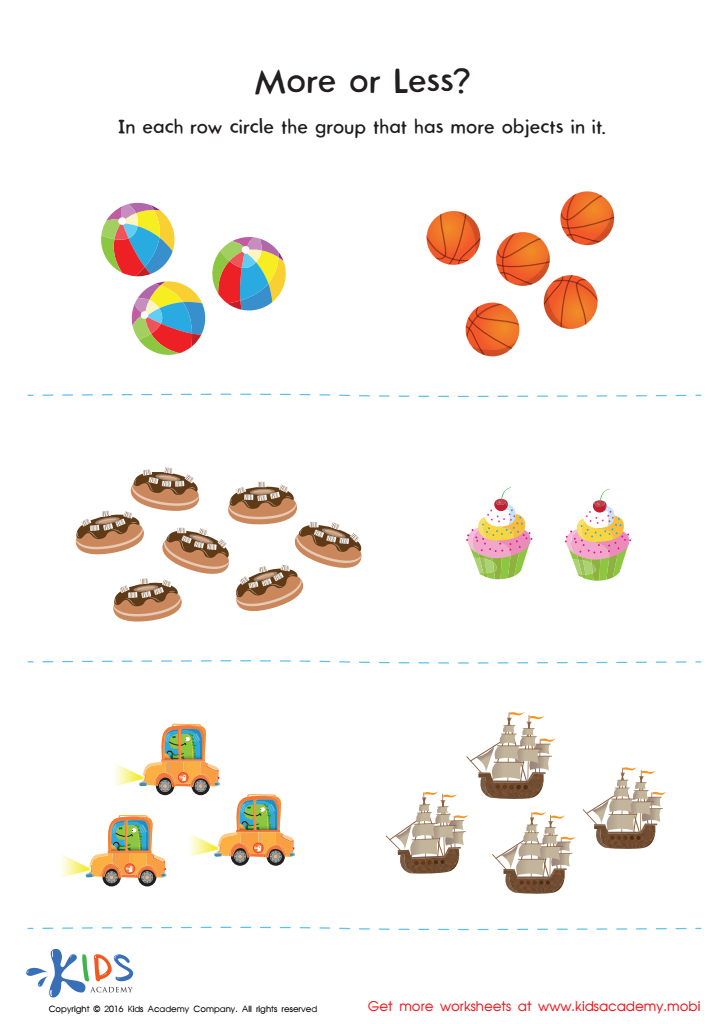
Enhance your child's math journey with our "Comparison Skills" worksheets designed for ages 4-9! These engaging materials help young learners develop essential comparison skills through fun exercises that foster critical thinking. With a variety of activities that focus on understanding size, quantity, and differences, kids will enjoy interactive learning while building foundational math abilities. Our worksheets promote visual recognition and problem-solving strategies, making it easier for children to grasp core concepts. Perfect for at-home learning or in the classroom, these worksheets are a great resource to prepare your child for future math success. Start comparing and learning today!
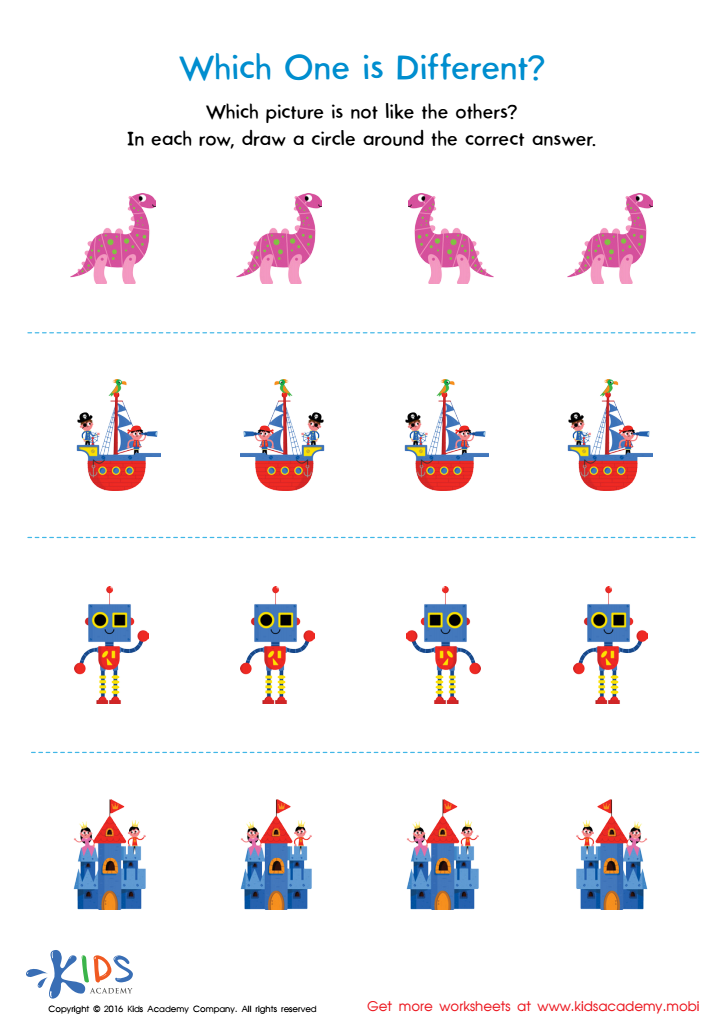
Which One Is Different Worksheet
 Assign to My Students
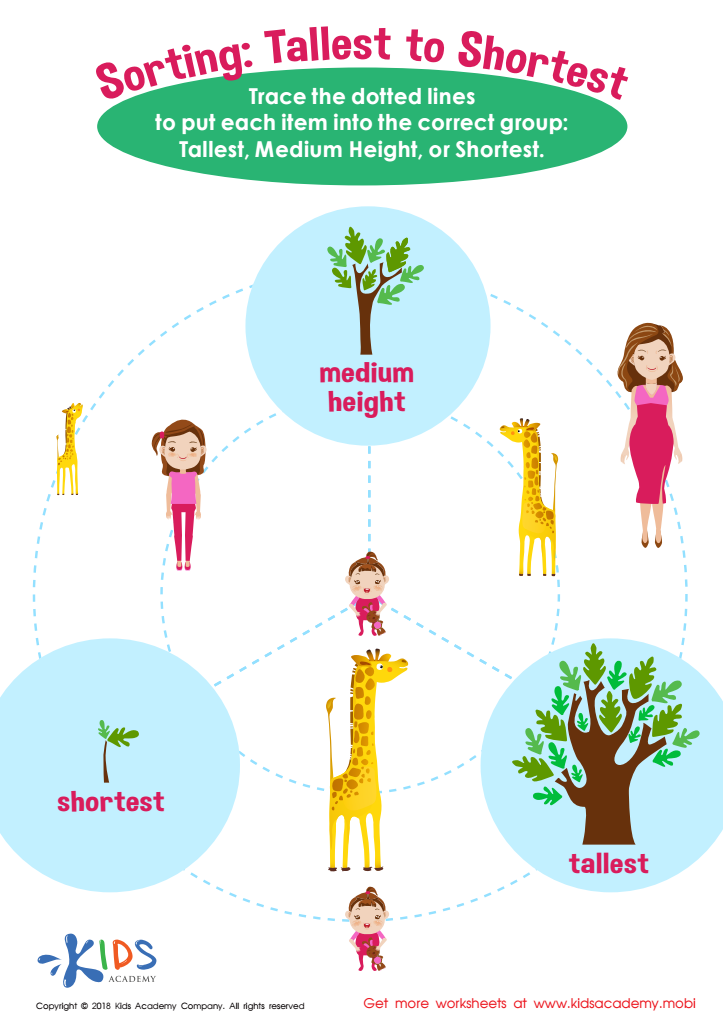
Sorting: Tallest to Shortest Worksheet






Comparison skills in math are fundamental for children aged 4-9 as they lay the groundwork for critical thinking and problem-solving. At this developmental stage, children begin to grasp the concept of size, quantity, and value. Teaching them how to compare objects or numbers cultivates their ability to recognize similarities and differences, which is vital in understanding mathematical relationships.
When children develop comparison skills, they enhance their numerical fluency. For instance, distinguishing between "more than" and "less than" fosters a foundational understanding of comparative value, setting a solid base for future arithmetic. These skills also integrate seamlessly into everyday situations, helping children make informed decisions, such as choosing between different quantities while shopping or sharing equally with friends.
Moreover, strong comparison skills boost confidence in their ability to analyze and interpret data, another crucial competency for later academic success. Parents and teachers who prioritize these skills not only contribute to strong math foundations but also encourage a lifelong love of learning. Engaging children in comparison-friendly activities—whether through games, storytelling, or real-world scenarios—ensures they can navigate and interact with the world around them effectively. Ultimately, fostering comparison skills equips children with the tools needed for ongoing academic achievement.








