Handwriting practice Normal Math Worksheets for Ages 4-9
6 filtered results
-
From - To
Explore our engaging Handwriting Practice Normal Math Worksheets designed for children ages 4-9! These worksheets seamlessly blend math skills with handwriting development, making learning fun and effective. Suitable for preschoolers to early grade schoolers, they incorporate basic math concepts such as counting, number recognition, and simple addition while encouraging fine motor skills through practice writing numbers and math-related terms. Perfect for home or classroom use, our worksheets provide a structured approach to reinforce learning. Enhance your child's education with these interactive and age-appropriate resources that support both handwriting proficiency and foundational math knowledge. Download and inspire your little learners today!
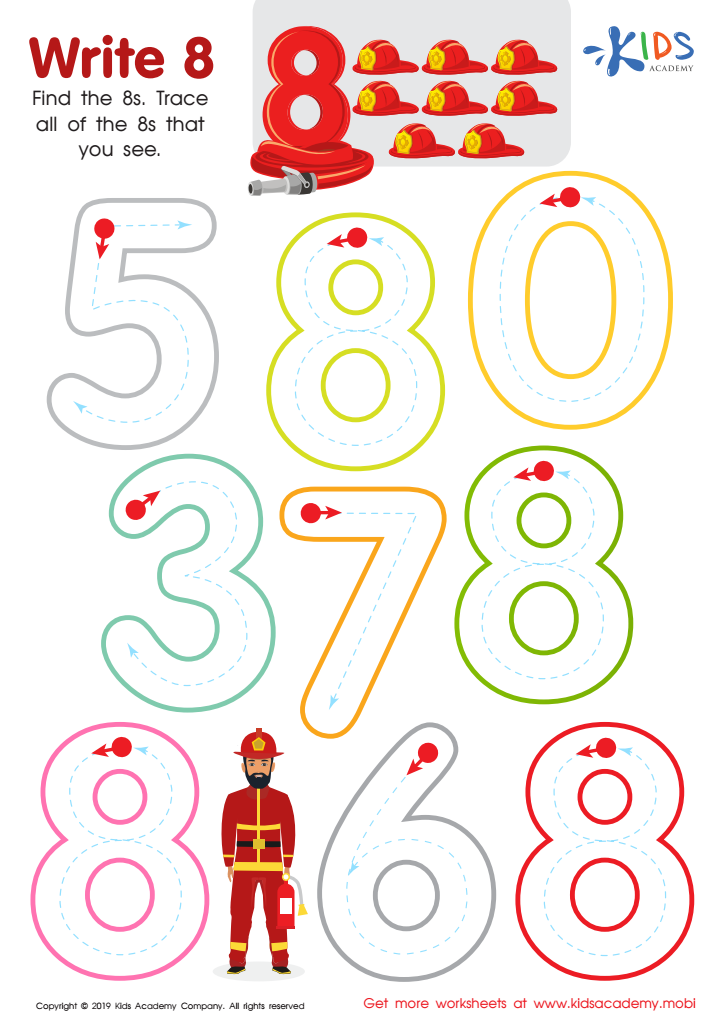
Write 8 Worksheet
 Assign to My Students
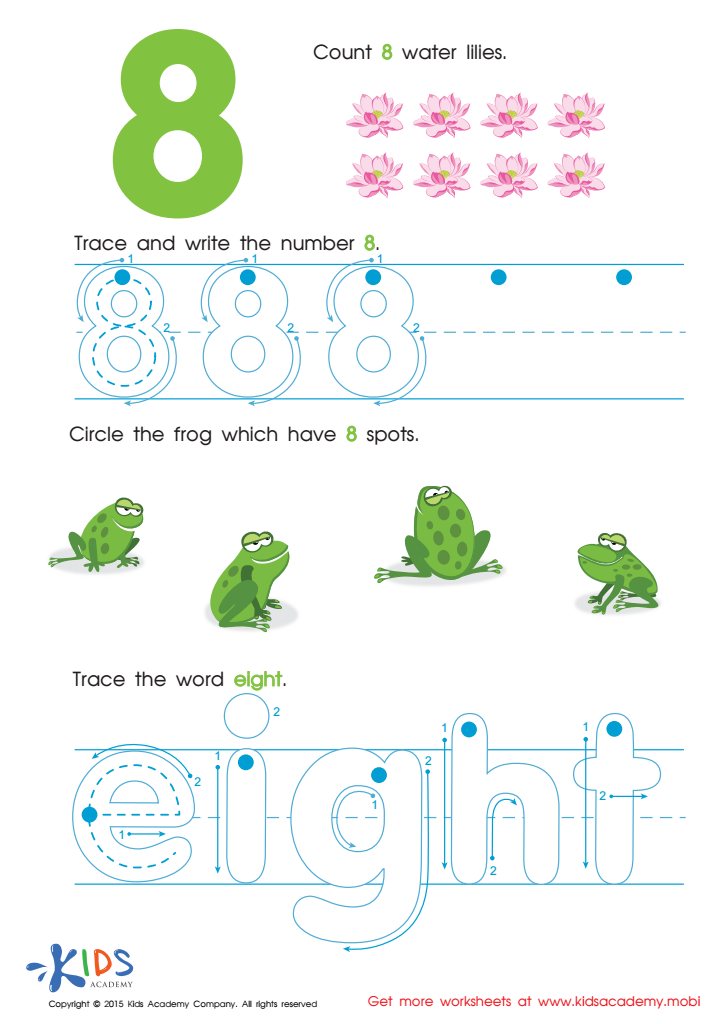
Learn Number 8 Easily Worksheet
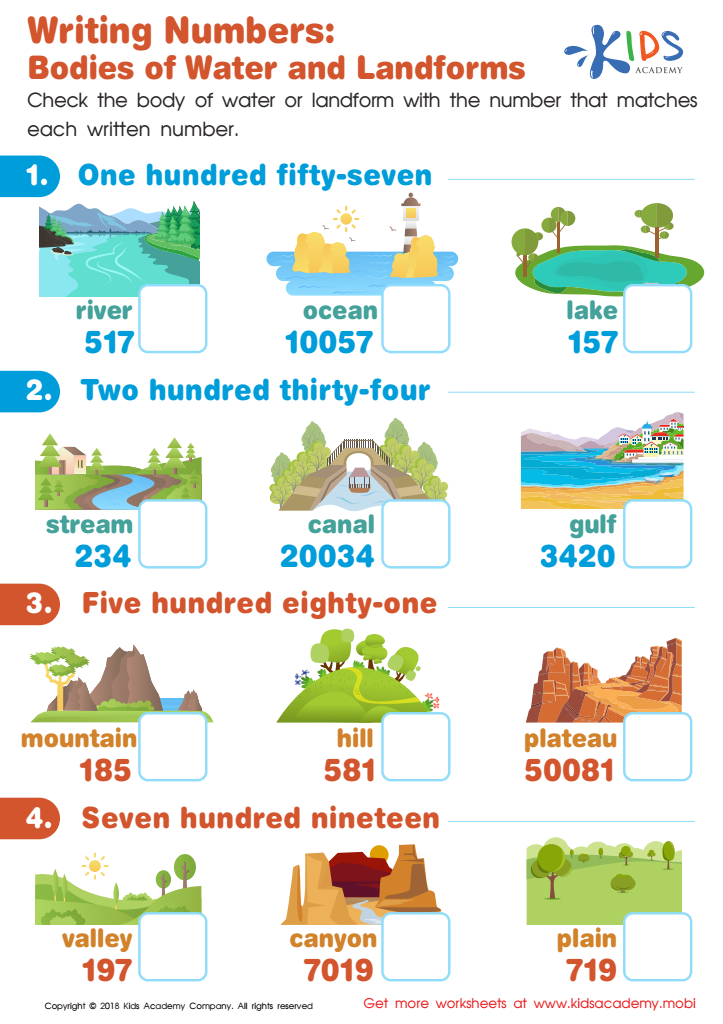
Bodies of Water and Landforms Writing Numbers Worksheet
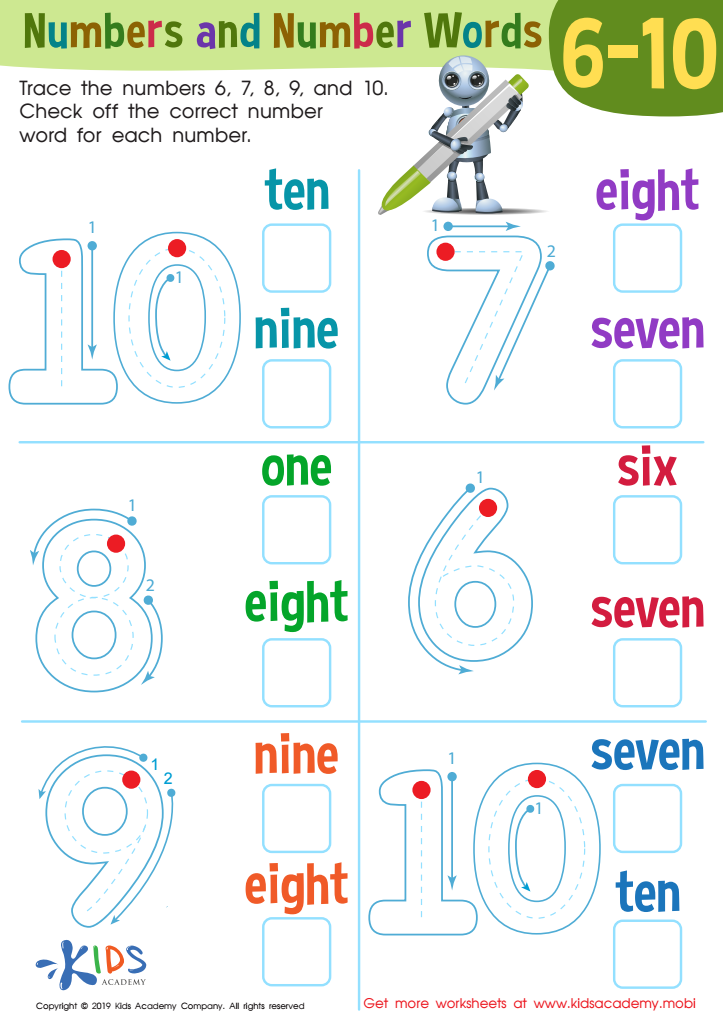
Numbers and Number Words 6–1 Worksheet
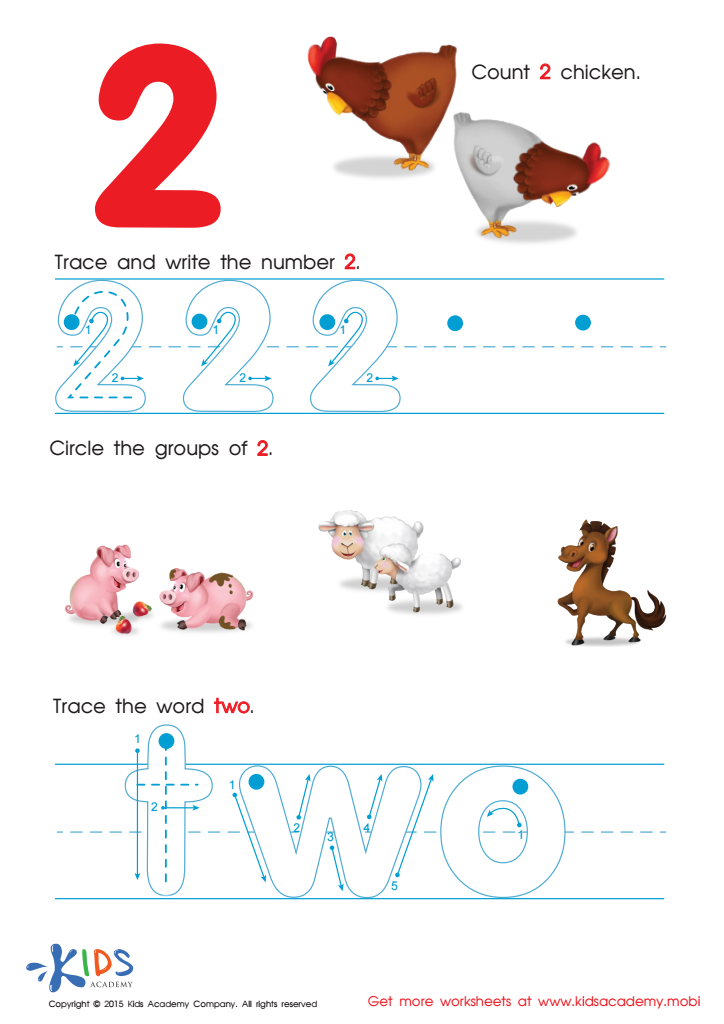
Learn to Write the Number 2 Worksheet
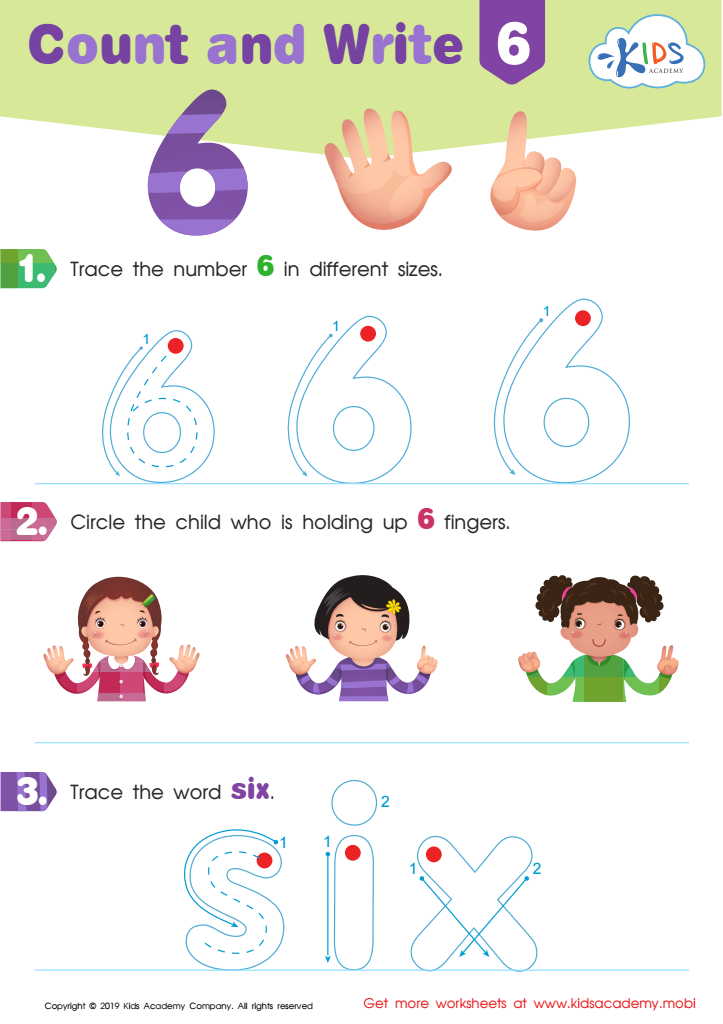
Count and Write 6 Worksheet






.jpg)

Handwriting practice, particularly for children aged 4 to 9, is crucial for several reasons that parents and teachers should prioritize. Firstly, early handwriting skills are foundational for developing fine motor skills, which significantly contribute to a child's overall dexterity and coordination. As children trace letters and numbers, they engage their hand-eye coordination, which translates to better control in other activities, such as sports or playing musical instruments.
Moreover, writing helps reinforce cognitive skills. The act of forming letters and numbers aids memory retention and language development, sharpening a child's ability to communicate effectively. It also enhances their understanding of the connection between spoken and written language.
Additionally, handwriting practice fosters a sense of pride and accomplishment. As children progress, they gain confidence in their abilities, which positively impacts their enthusiasm for learning. This practice also creates opportunities for educators and parents to provide positive feedback and encourage a growth mindset.
Lastly, in an increasingly digital world, maintaining handwriting skills becomes essential, as handwriting is still necessary for personal expression and various examinations. Therefore, investing in handwriting practice is a valuable component of early education that promotes both academic success and essential life skills.








