Problem-solving practice Normal Math Worksheets for Ages 4-9
4 filtered results
-
From - To
Boost your child's problem-solving skills with our expertly crafted Normal Math Worksheets for Ages 4-9! These engaging worksheets combine fun and learning to help young minds develop critical math strategies while tackling everyday challenges. Tailored to young learners, these resources cover basic arithmetic, logical reasoning, and pattern recognition, ensuring a comprehensive approach to problem-solving. With age-appropriate, colorful activities, kids will stay motivated and excited to learn. Perfect for home practice or classroom use, our worksheets are designed to build a solid math foundation and foster a lifelong love for numbers. Start the journey to math mastery today with confidence!
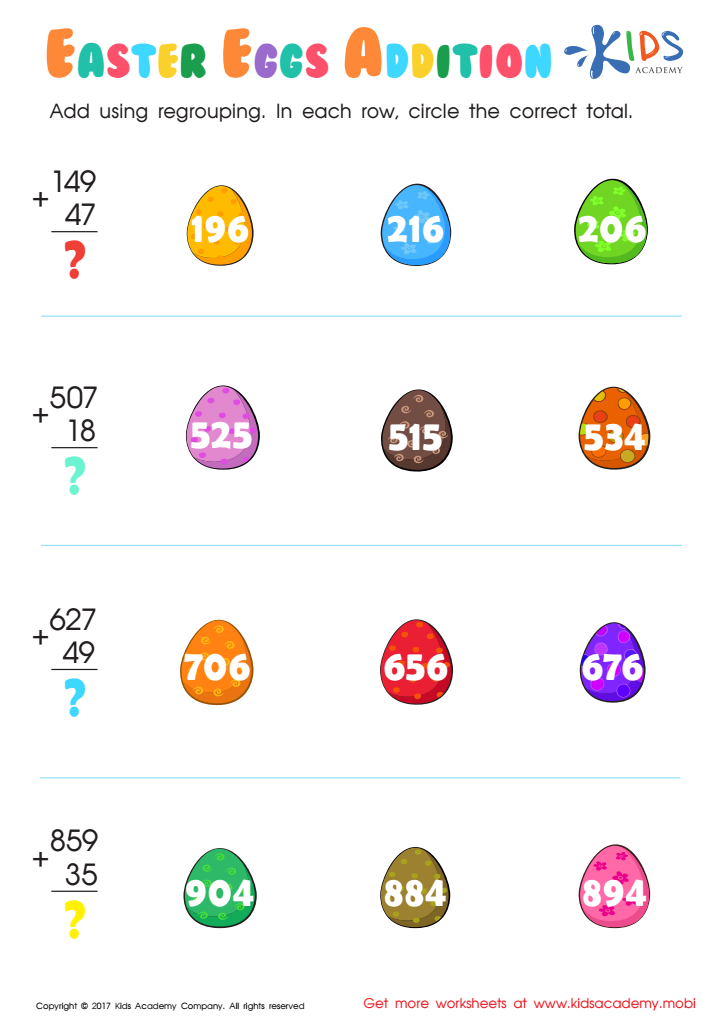
Addition with Regrouping Worksheet
 Assign to My Students
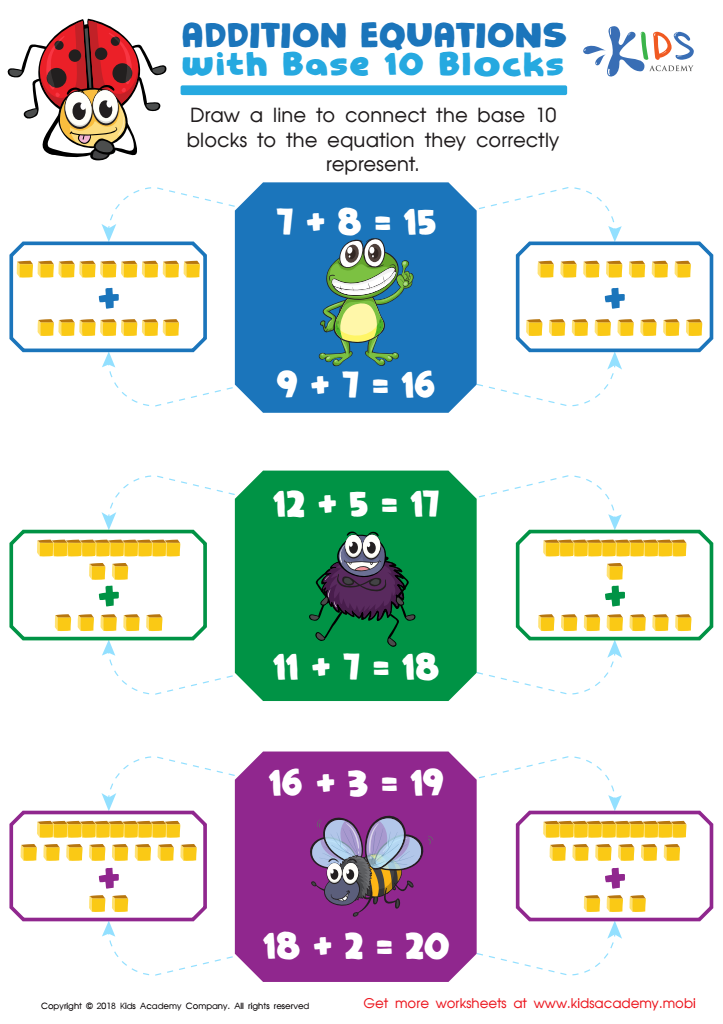
Addition Equations With Base 10 Blocks Worksheet
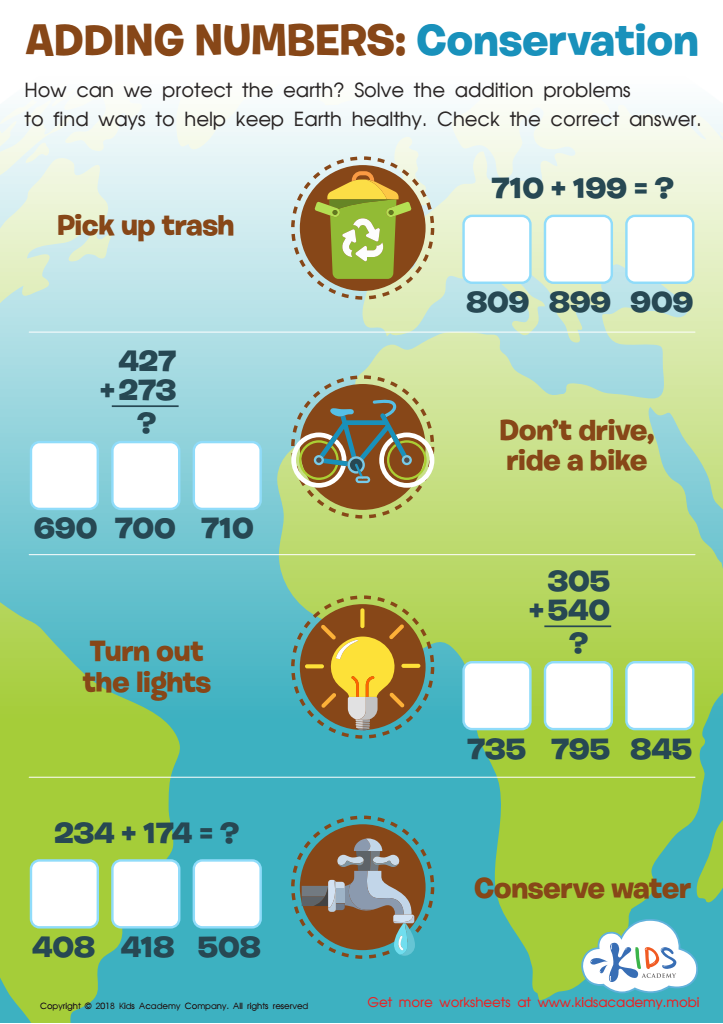
Adding Numbers: Conservation Worksheet
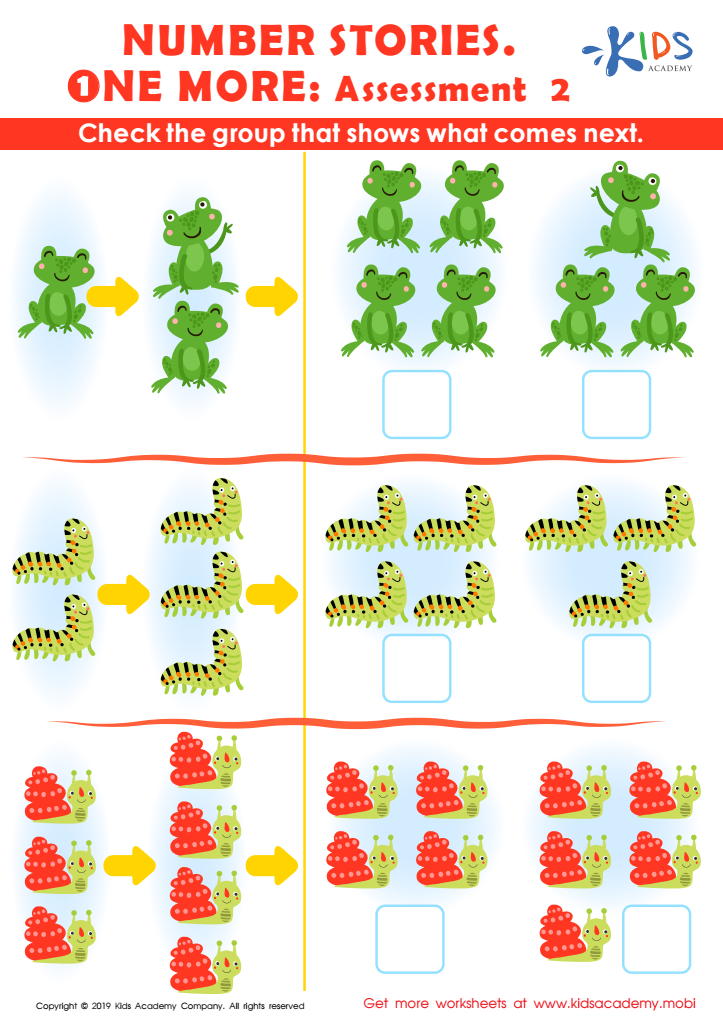
Number Stories One More – Assessment 2 Worksheet




.jpg)



Problem-solving practice in normal math for ages 4-9 is crucial for several reasons that significantly impact a child's development both academically and personally. During these formative years, children are beginning to establish the foundational skills that will support their future learning. By focusing on problem-solving practices, parents and teachers can help young learners develop critical thinking abilities, enhance their logical reasoning, and foster creativity.
Engaging in problem-solving activities encourages children to explore multiple solutions and different strategies, promoting flexibility in thinking. This adaptability is invaluable as it enables children to approach new challenges with confidence and a positive mindset. Additionally, problem-solving in math helps children build resilience. It teaches them that making mistakes is a part of the learning process and paves the way for perseverance.
Moreover, problem-solving is not restricted to math alone; it is a life skill. The habits and skills developed through early problem-solving practice can transfer to other areas of learning and everyday situations. Giving children opportunities to solve problems nurtures their independence and prepares them for real-world scenarios where critical and analytical thinking are essential.
Ultimately, emphasizing problem-solving in mathematics during early childhood sets the stage for lifelong learning and success, making it a vital component of early education that parents and teachers should prioritize.








