
Historical Knowledge Normal Multiplication Worksheets for Ages 4-9
4 filtered results
Difficulty Level
Grade
Age
-
From - To
Subject
Activity
Standards
Introduce young learners to the fascinating world of history with our carefully crafted "Historical Knowledge Normal Multiplication Worksheets for Ages 4-9." These engaging worksheets seamlessly blend essential multiplication skills with captivating historical facts, making math practice more exciting and educational. While solving multiplication problems, children will explore significant historical events and figures, enhancing both their mathematical and historical knowledge. Perfect for classroom and home use, these worksheets are designed to stimulate curiosity and promote a love for learning. Boost your child’s academic journey by combining core math skills with intriguing stories from the past. Discover endless worksheets at Kids Academy today!
Favorites
With answer key
Interactive
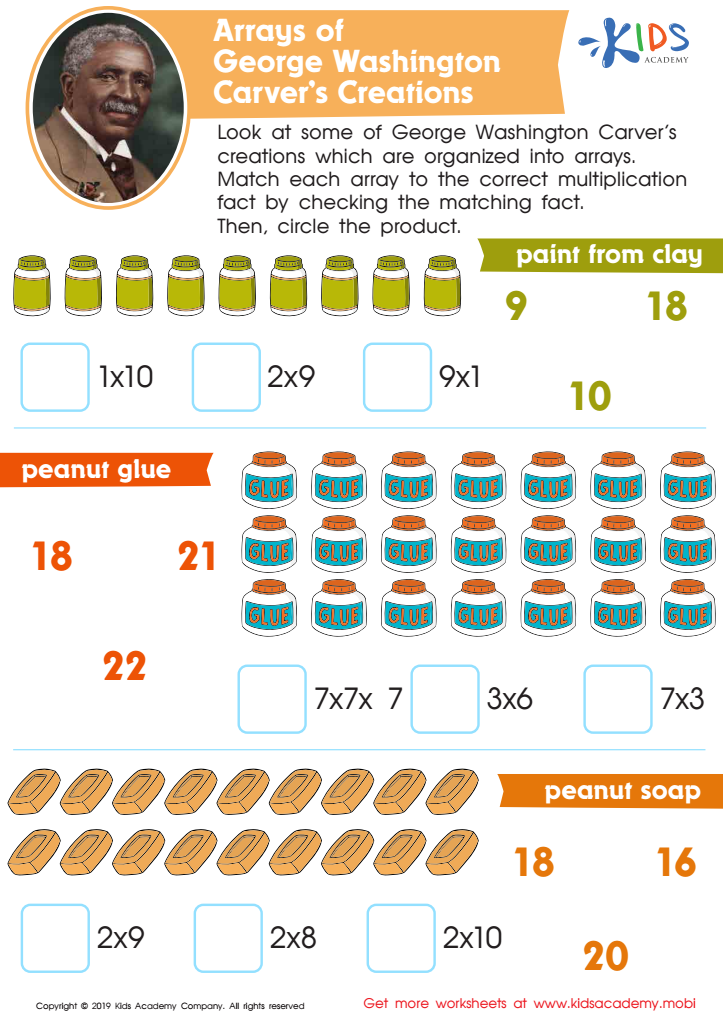
Arrays of George Washington Carver’s Creations Worksheet
Remind your child of what George Washington Carver created. Can they tell you? This worksheet has arrays with his creations. Match the array to the multiplication fact and help your child to circle the product.
 Assign to My Students
Arrays of George Washington Carver’s Creations Worksheet
Worksheet
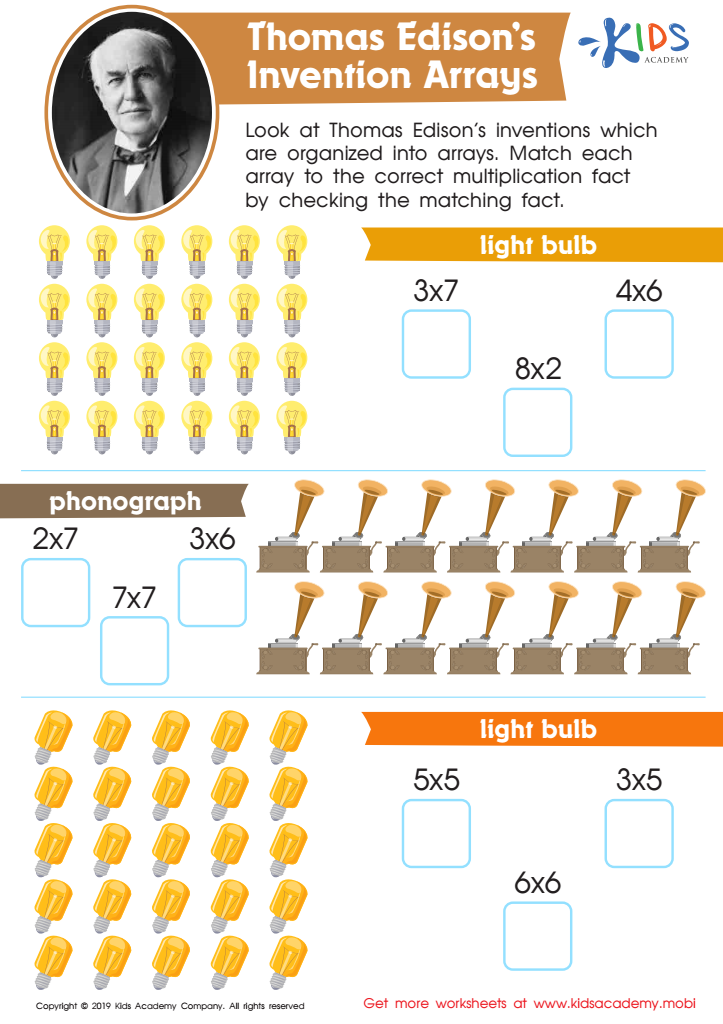
Thomas Edison’s Invention Arrays Worksheet
Test your students' knowledge on history by asking them what Thomas Edison invented. If they get the right answer, provide more information on other inventors. Check out this printout of Edison's light bulb inventions laid out in arrays. Get them to match each array to the correct multiplication fact.
Thomas Edison’s Invention Arrays Worksheet
Worksheet
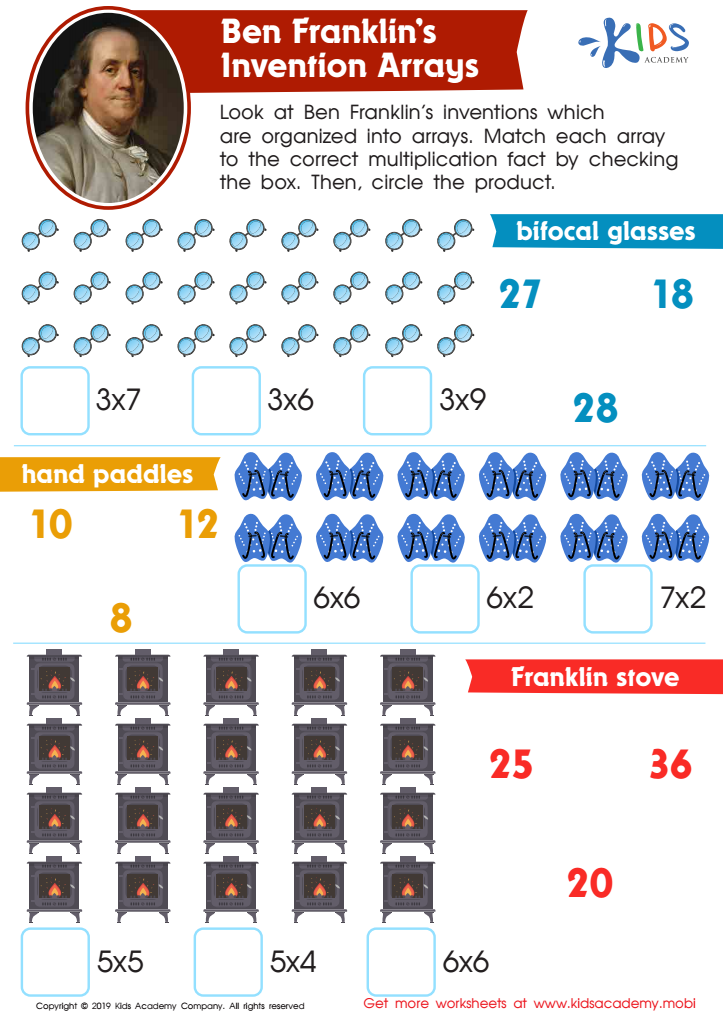
Ben Franklin’s Invention Arrays Worksheet
Have your child guess some of the inventors of the popular items we use today. For instance, the light bulb was invented by Thomas Edison. Look at Ben Franklin's inventions and help your kids match the arrays to the correct multiplication fact. Check the box and circle the product.
Ben Franklin’s Invention Arrays Worksheet
Worksheet
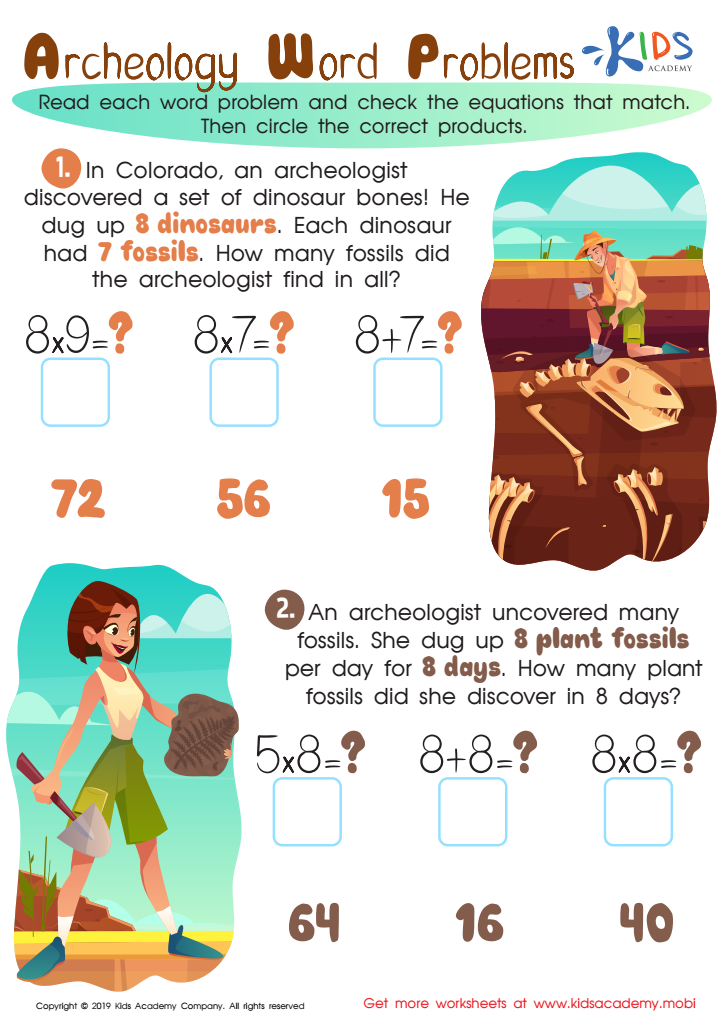
Archeology Word Problems Worksheet
Encourage your child to explore their career options! Show them an archeologist's job with this worksheet - featuring a picture of a dinosaur bone discovery. Read the accompanying text, then solve the word problems. Help your kids circle the correct answers to better understand this profession.
Archeology Word Problems Worksheet
Worksheet
Join Kids Academy for Free
Who is primarily going to use this learning content?








Parents and teachers should care about historical knowledge and normal multiplication for children aged 4-9 because these foundational concepts lay the groundwork for their academic and cognitive development. Introducing historical knowledge in early education helps children understand the world around them, fostering a sense of curiosity and cultural awareness. It teaches them about past events, significant figures, and basic timelines, which cultivates critical thinking and helps them draw parallels between history and their personal lives.
Similarly, normal multiplication is a crucial math skill that supports problem-solving abilities and logical reasoning. By learning multiplication tables early, children develop confidence in handling numbers and performing more complex calculations in the future. This foundational math knowledge is essential for understanding more advanced concepts in subjects like science, technology, engineering, and even everyday tasks, such as managing finances or time.
Moreover, developing these skills at an early age instills discipline, perseverance, and a love for learning. Parents and teachers play a key role in making these subjects engaging and relevant to children, thereby encouraging a lifelong passion for education. By investing in historical understanding and multiplication skills early on, we equip children with the tools they need to succeed academically and become informed, responsible citizens.








