Understanding ecosystems Normal Animals Worksheets for Ages 4-9
3 filtered results
-
From - To
Boost young learners' understanding of ecosystems with our "Normal Animals Worksheets for Ages 4-9." Designed to engage kids in science, these printable worksheets introduce the concepts of ecosystems and animal habitats. Each activity is tailored to balance fun and education, helping children recognize different animals and their natural environments. Perfectly suited for ages 4-9, these worksheets foster observational skills, critical thinking, and a passion for wildlife. Ideal for classroom use or at-home learning, our worksheets make exploring the animal kingdom an interactive adventure. Nurture your child's curiosity about nature and ecosystems with these expertly crafted educational resources.
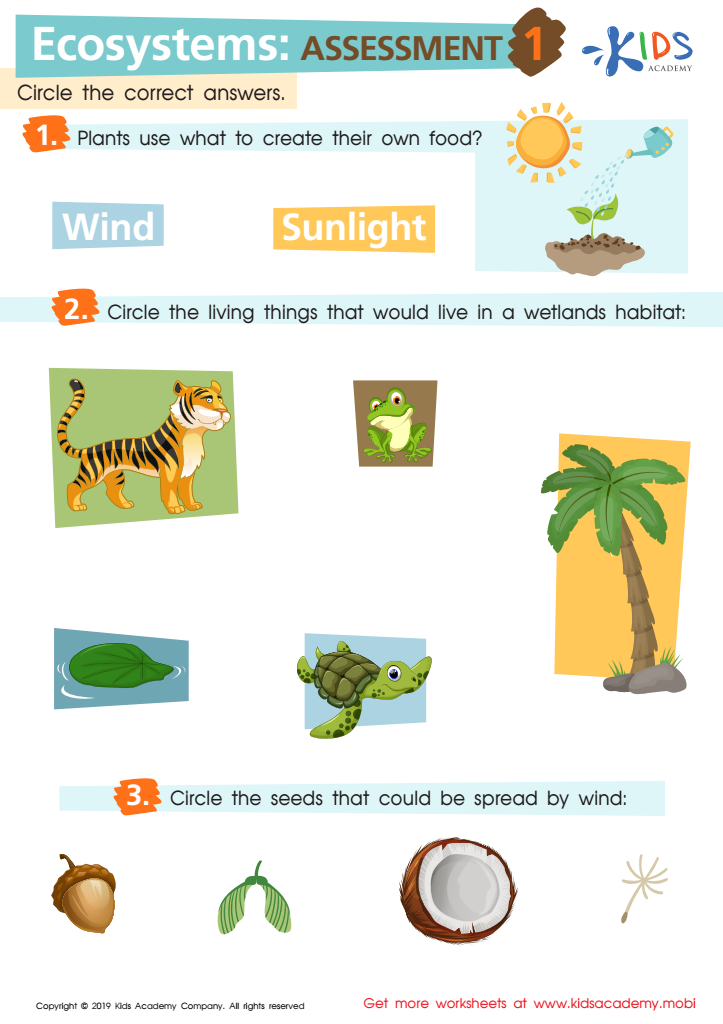
Ecosystems: Assessment 1 Worksheet
 Assign to My Students
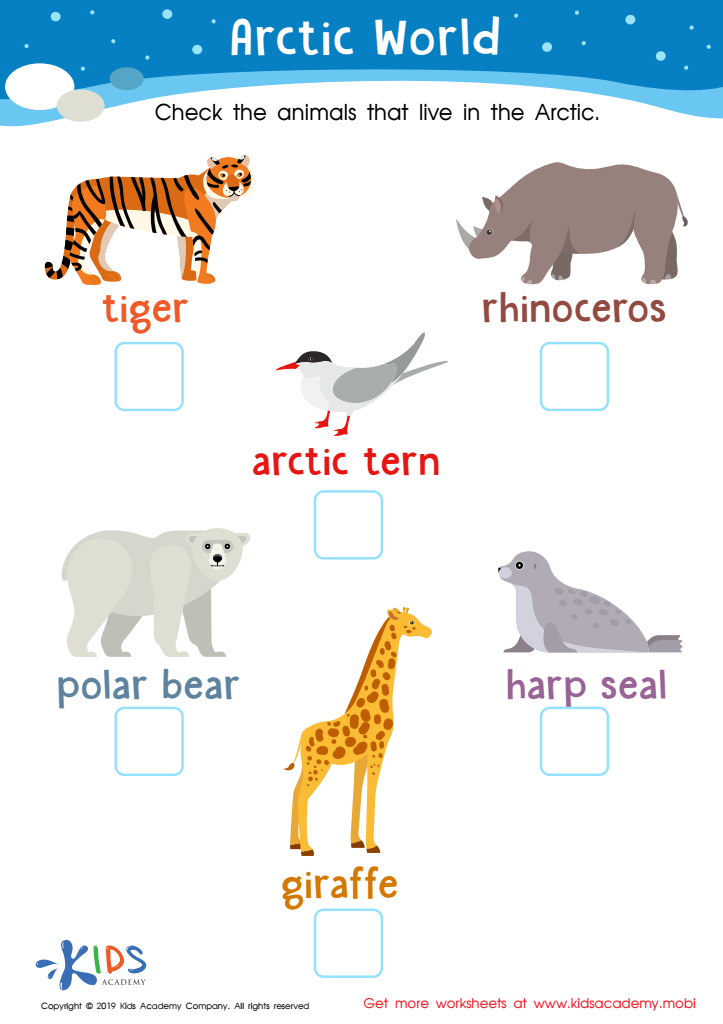
Arctic World Worksheet
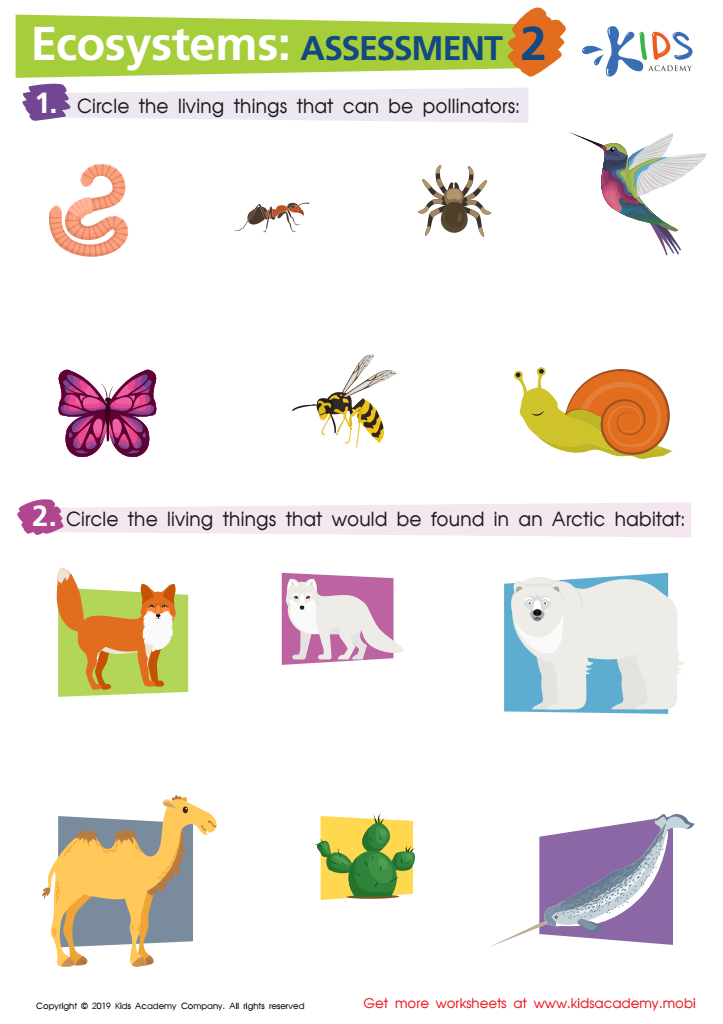
Ecosystems: Assessment 2 Worksheet







Parents and teachers should deeply care about helping children aged 4-9 understand ecosystems and normal animals because it forms a foundational appreciation for nature and promotes environmental stewardship. Early exposure to the natural world nurtures curiosity, empathy, and a sense of responsibility towards living organisms and their habitats. Understanding ecosystems—the intricate relationships between plants, animals, and their environment—imparts essential concepts, such as interdependence and the balance of nature, that are crucial for environmental science.
When children learn about normal or common animals in ecosystems, they recognize and value biodiversity. This knowledge fosters respect for all living things, encouraging behaviors that protect wildlife and preserve natural habitats. Engaging children with nature also supports holistic development, including socially, emotionally, and cognitively. It enhances observation skills, critical thinking, and problem-solving abilities.
Moreover, exploring ecosystems and animals helps children develop a meaningful connection to the earth, inspiring lifelong environmental advocacy. Awareness from an early age ensures that future generations are empowered to tackle environmental challenges and sustain the planet’s health. In essence, by teaching young children about ecosystems and animals, parents and teachers plant seeds for a healthier, more sustainable world while enhancing children’s overall learning and personal growth.








