Categorizing objects Normal Science Worksheets for Ages 4-9
4 filtered results
-
From - To
Explore our engaging "Categorizing Objects Normal Science Worksheets" designed for children aged 4-9. These worksheets help young learners develop essential cognitive and reasoning skills by sorting and classifying various items. With vibrant illustrations and age-appropriate activities, kids will enjoy identifying similarities and differences between objects, fostering critical thinking and boosting creativity. Our worksheets cover diverse themes – from animals and plants to everyday items – ensuring a comprehensive learning experience. Ideal for teachers, parents, and educators, these resources are perfect for enhancing science education in a fun and interactive way. Start encouraging your child's scientific exploration today!
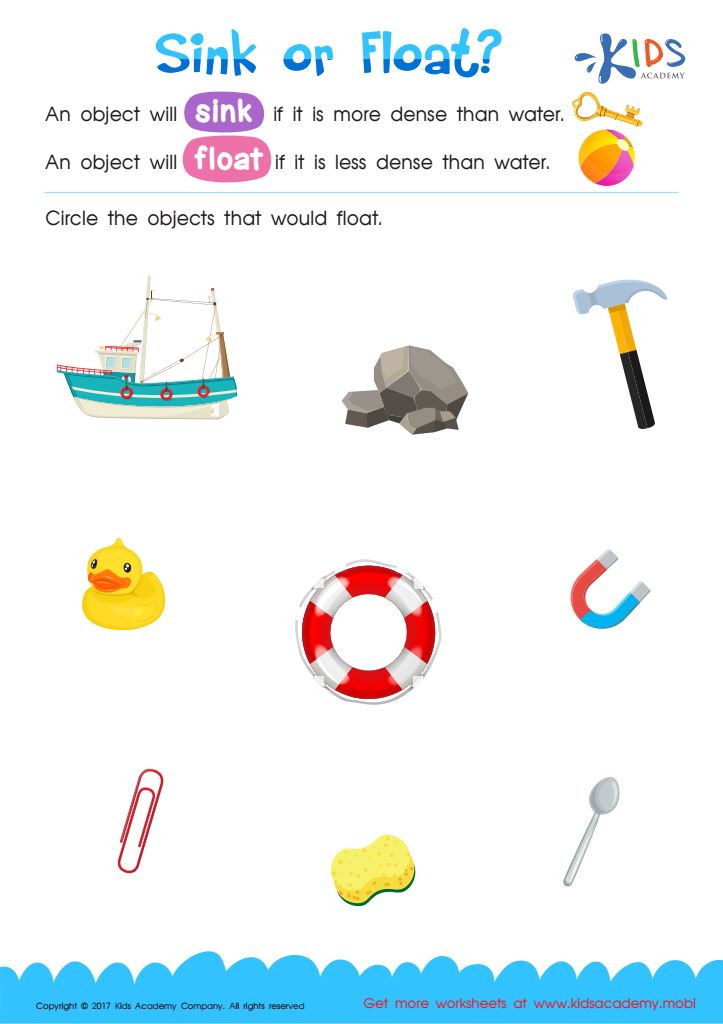
Sink or Float Printable
 Assign to My Students
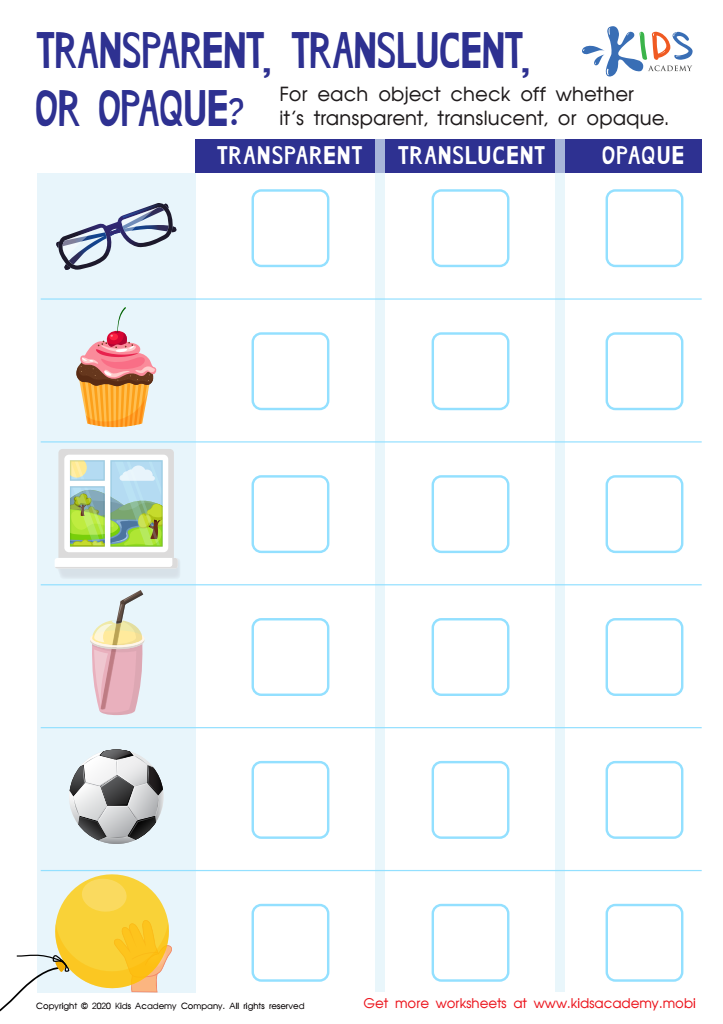
Transparent, Translucent, or Opaque Worksheet
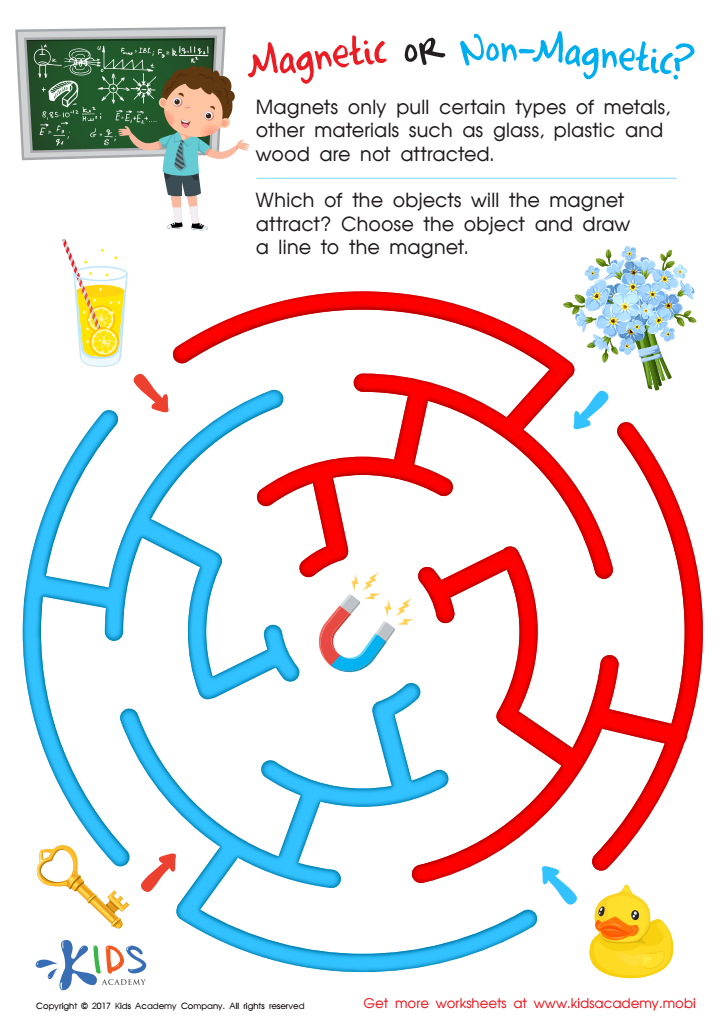
Magnetic or Non–Magnetic Worksheet
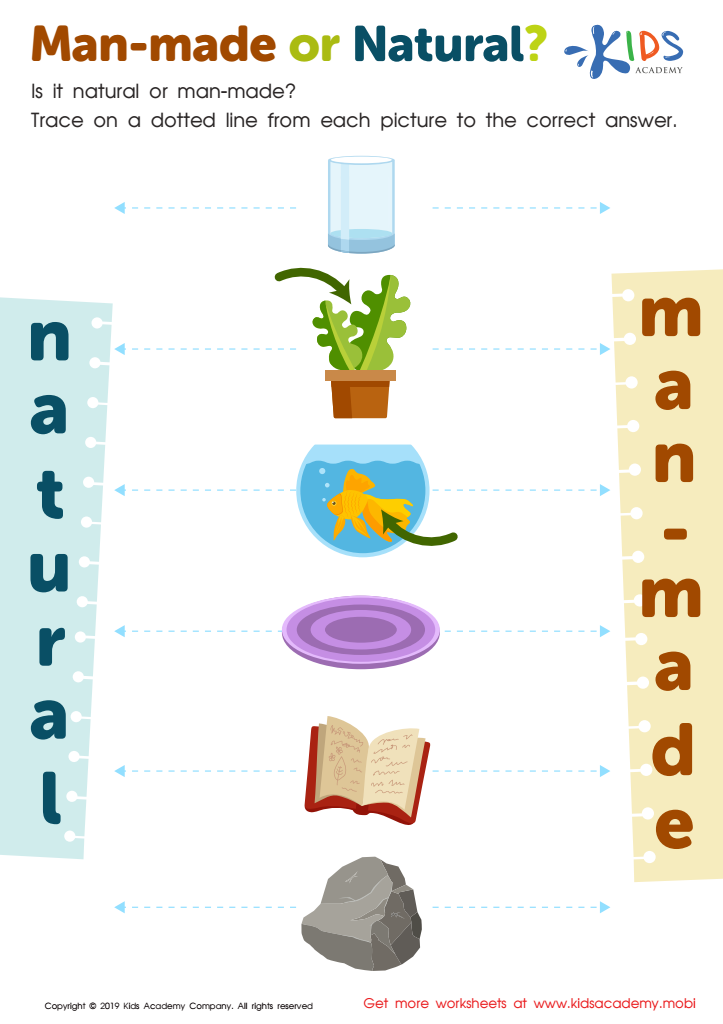
Man-Made or Natural? Worksheet




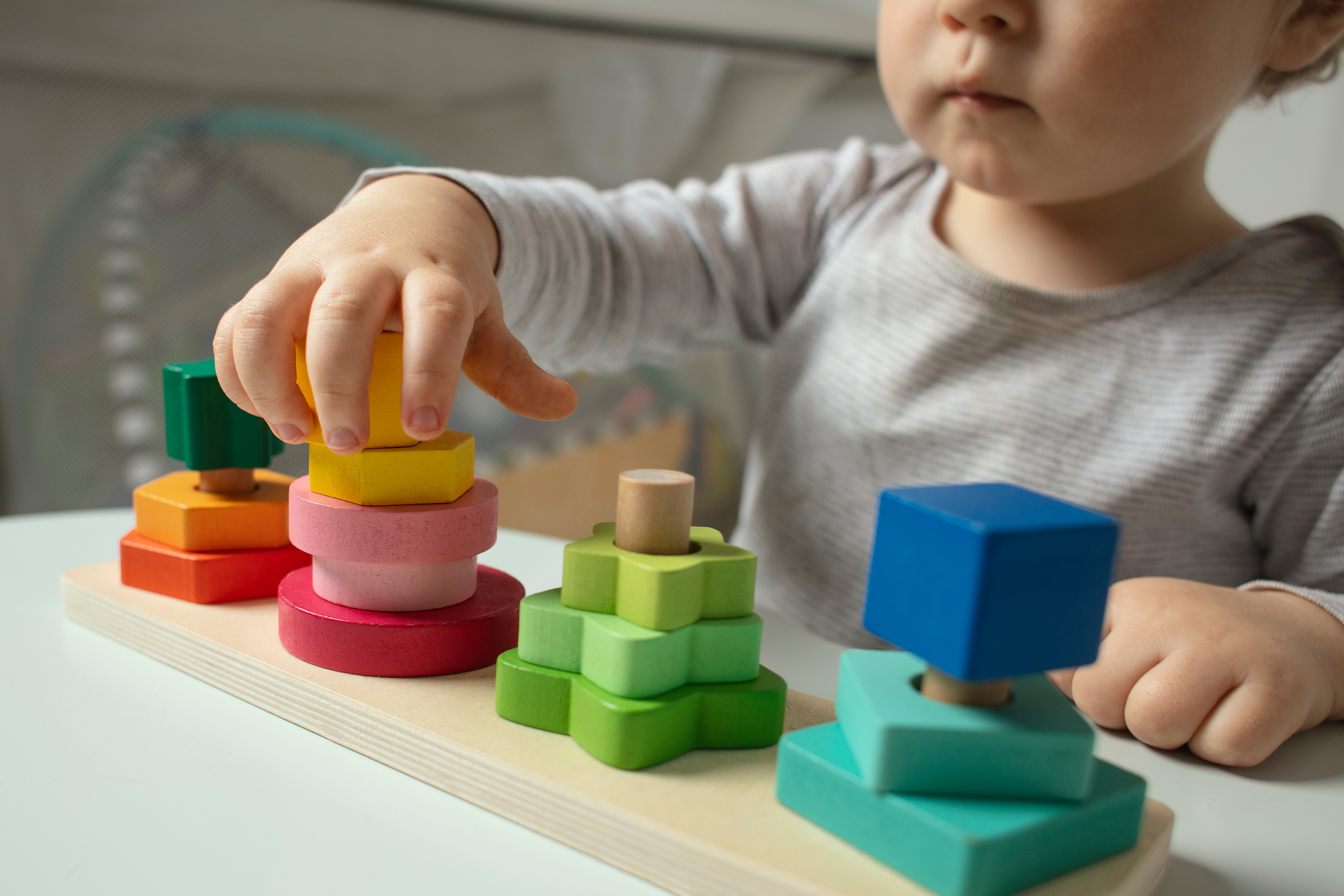
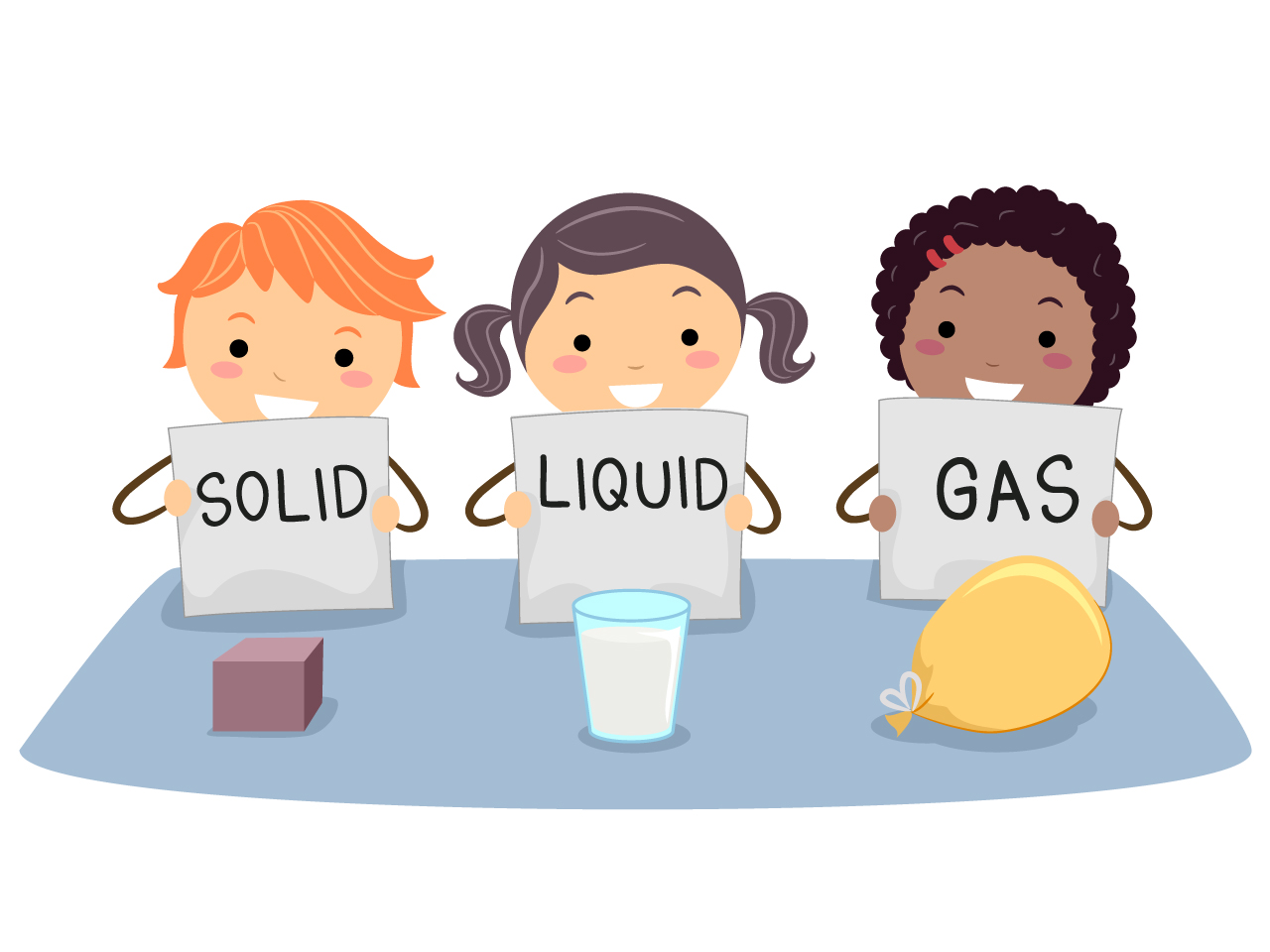
Categorizing objects is a fundamental skill that significantly enhances cognitive development in children aged 4-9. Engaging in this process helps young learners make sense of their environment by grouping objects based on shared characteristics, such as color, shape, size, or function. This foundational skill underpins various aspects of their academic journey, particularly in subjects like mathematics and science, where classification is essential.
When parents and teachers encourage children to categorize objects, they foster critical thinking and problem-solving abilities. Children learn to observe patterns, draw connections, and make decisions based on their classifications. This not only boosts their confidence but also prepares them for more complex tasks later in their education.
Moreover, categorizing enhances language development. As children describe and discuss their categorizations, they expand their vocabulary and improve communication skills. This active engagement and exploration make learning enjoyable and memorable.
Additionally, understanding how to categorize can help children with social interactions by teaching them to recognize similarities and differences among peers and objects. By valuing this aspect of Normal Science, parents and teachers can cultivate a well-rounded, inquisitive mindset in children, paving the way for lifelong learning.







