Developing research skills Normal Science Worksheets for Ages 4-9
4 filtered results
-
From - To
Unlock your child's potential with our "Developing Research Skills" Normal Science Worksheets for Ages 4-9. Our expertly crafted, age-appropriate activities engage young minds, sparking curiosity and fostering a lifelong love for science. Each worksheet is designed to build foundational research skills, teaching children how to observe, question, and gather information effectively. Through fun and interactive exercises, kids develop critical thinking abilities while exploring natural phenomena. Perfect for both classroom and homeschooling environments, these worksheets provide an enriching educational experience, helping your child embark on a journey of scientific discovery. Transform learning into an adventure today!
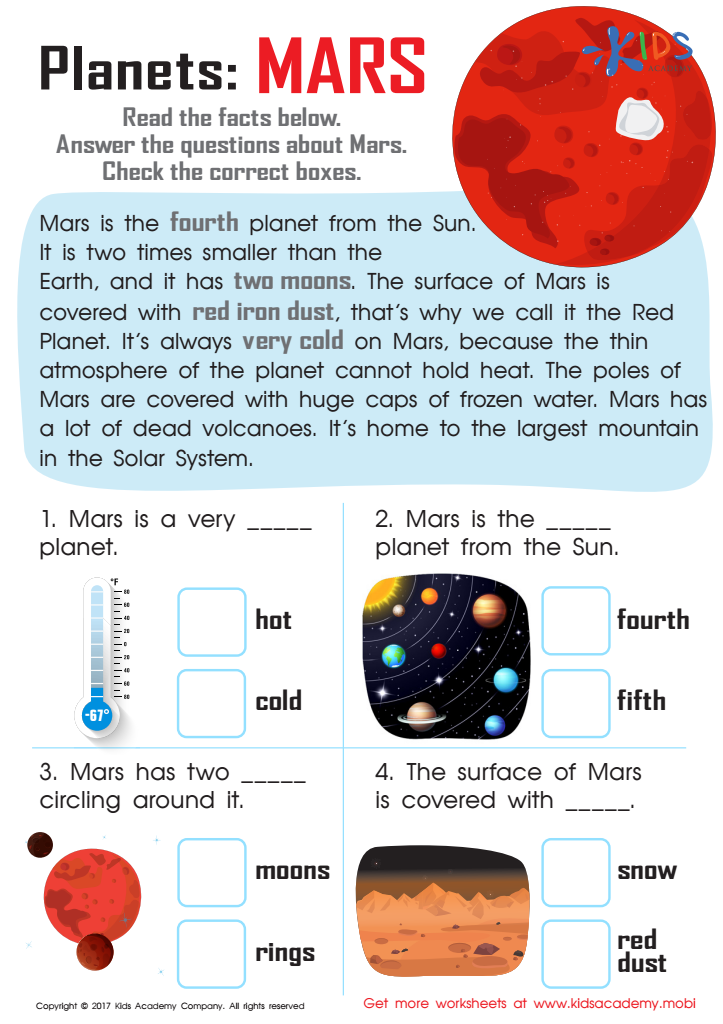
Mars Fact Printable Worksheet
 Assign to My Students
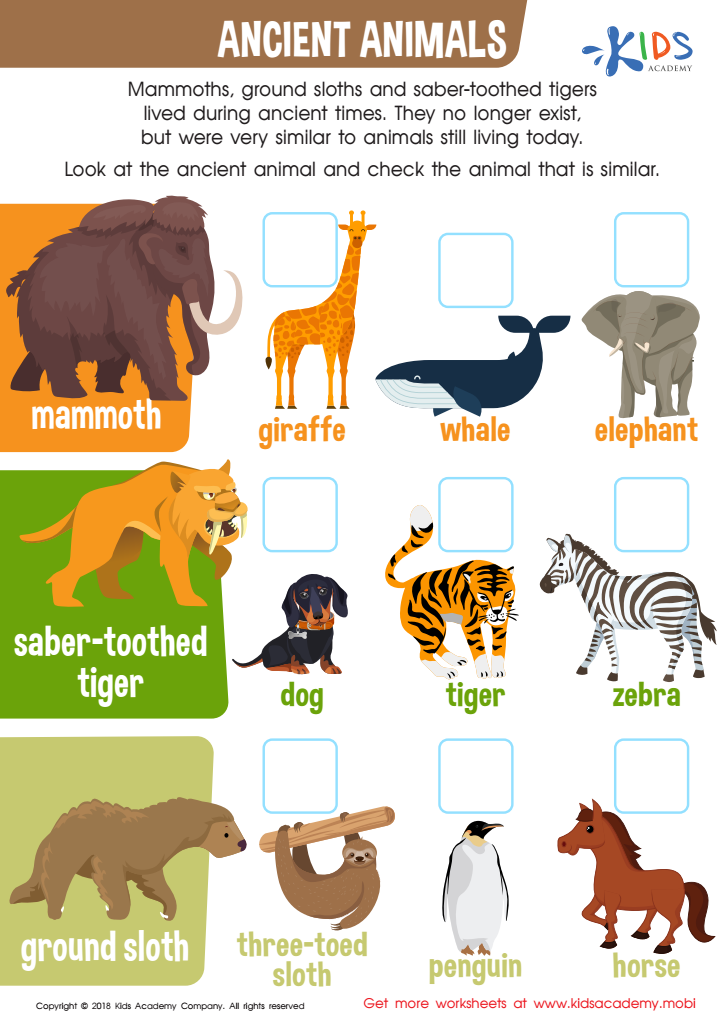
Ancient Animals Worksheet
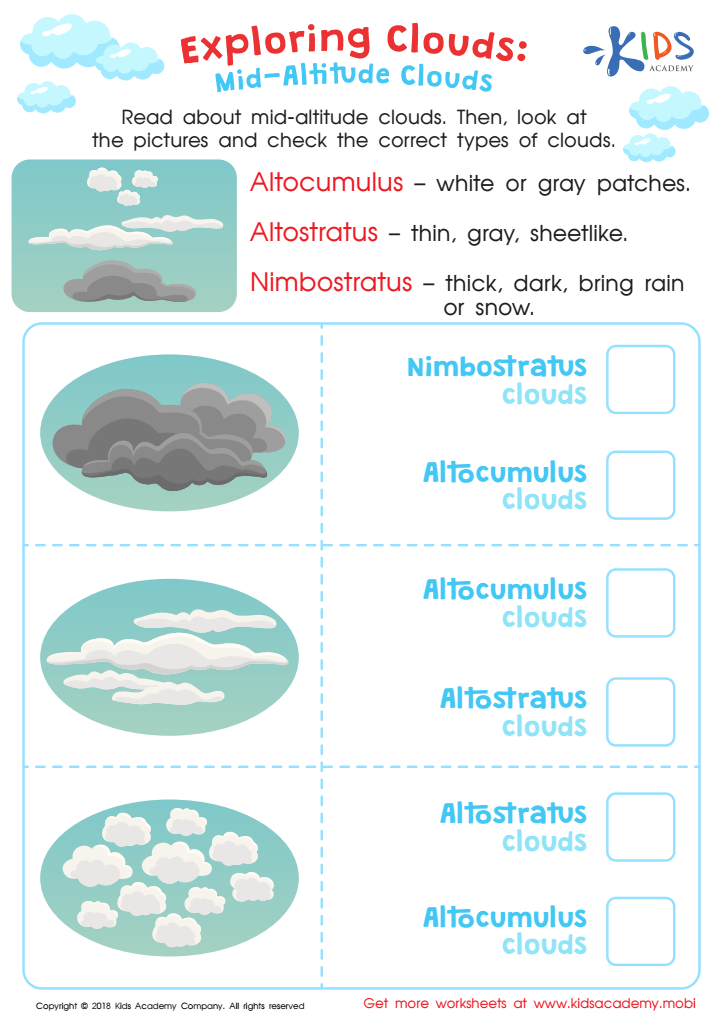
Exploring Clouds: Mid-altitude Clouds Worksheet
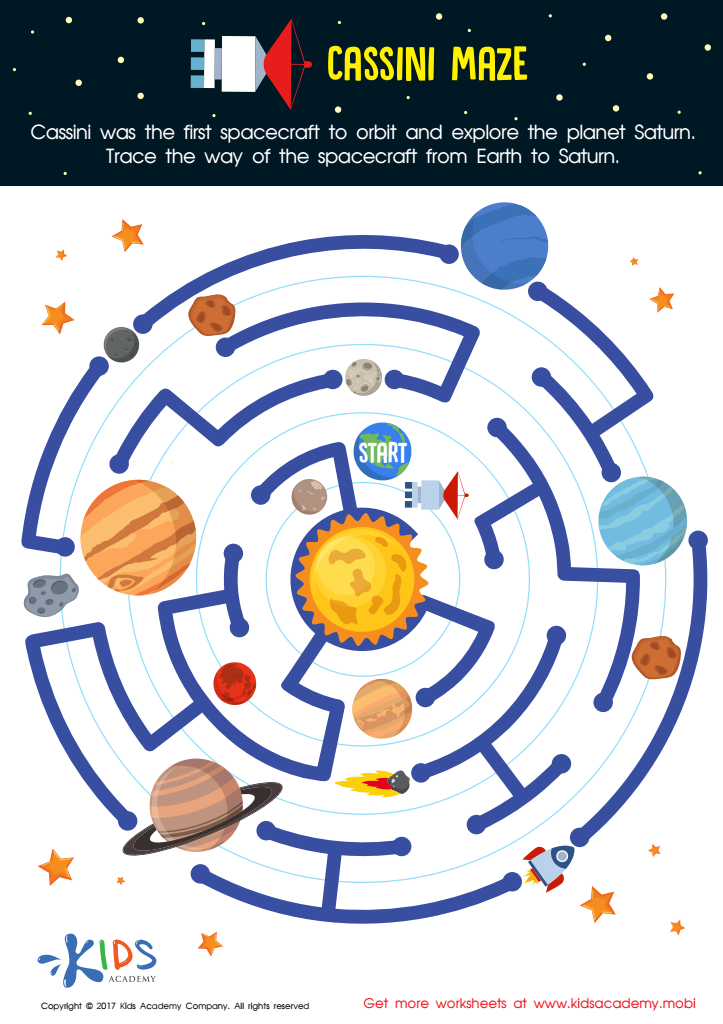
Cassini Printable Worksheet








Developing research skills in children aged 4-9 lays the foundation for a lifetime of critical thinking and curiosity. At this young age, children are naturally inquisitive and eager to explore their surroundings. By nurturing these instincts, parents and teachers can provide a structured way to channel their curiosity into meaningful learning experiences.
Research skills, including observing, asking questions, gathering information, and drawing conclusions, are fundamental for problem-solving and cognitive development. Introducing these concepts early helps children become independent learners who are capable of finding and processing information beyond rote memorization. This is crucial in an age where information is abundant and constantly evolving.
Furthermore, early research skills foster a love for learning. When children are encouraged to investigate topics of interest, they are more engaged and motivated. This not only keeps them excited about school but also helps them understand the relevance of what they are learning in real-world contexts. For example, simple research projects about nature, animals, or simple experiments can make subjects like science tactile and relatable.
Parents and teachers play a pivotal role in setting the groundwork for these skills. By encouraging questioning and exploration, they help children build the confidence needed to tackle more complex tasks as they grow. Such early involvement primes children for future academic success and cultivates a mindset that values inquiry and evidence-based understanding.







