
Enhancing critical thinking Normal Science Worksheets for Ages 4-9
3 filtered results
Difficulty Level
Grade
Age
-
From - To
Subject
Activity
Standards
Discover our "Enhancing Critical Thinking Normal Science Worksheets for Ages 4-9" designed to ignite your child's curiosity and reasoning skills. These engaging resources cater to young minds with colorful, fun-filled activities that foster problem-solving and analytical thinking. Carefully crafted to align with educational standards, our worksheets cover essential science topics while encouraging independent thought and exploration. Perfect for home or classroom use, these tools make learning exciting and effective. Empower your child with the critical thinking skills necessary for future academic success. Explore our collection to see how these worksheets can transform learning into an exciting adventure.
Favorites
With answer key
Interactive
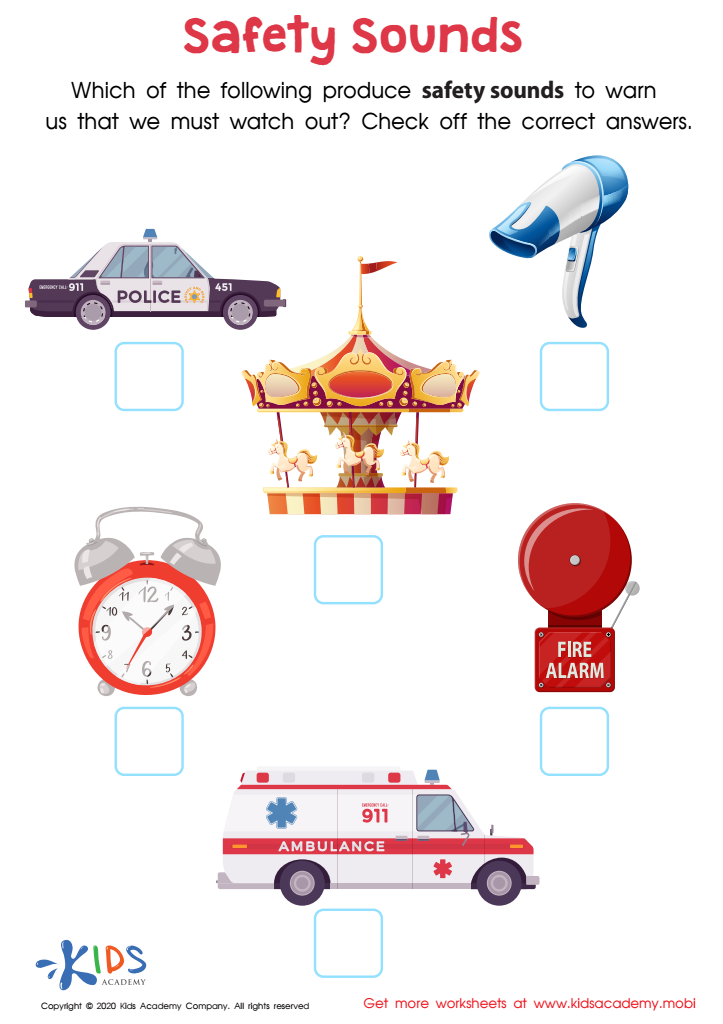
Safety Sounds Worksheet
Teach your kids about safety. Explain the rules and let them know what sounds to be aware of. Review the worksheet with pictures of objects and ask them to recognize which ones produce safety sounds. Have them check their answers. Doing this will help ensure their safety and that of others.
 Assign to My Students
Safety Sounds Worksheet
Worksheet
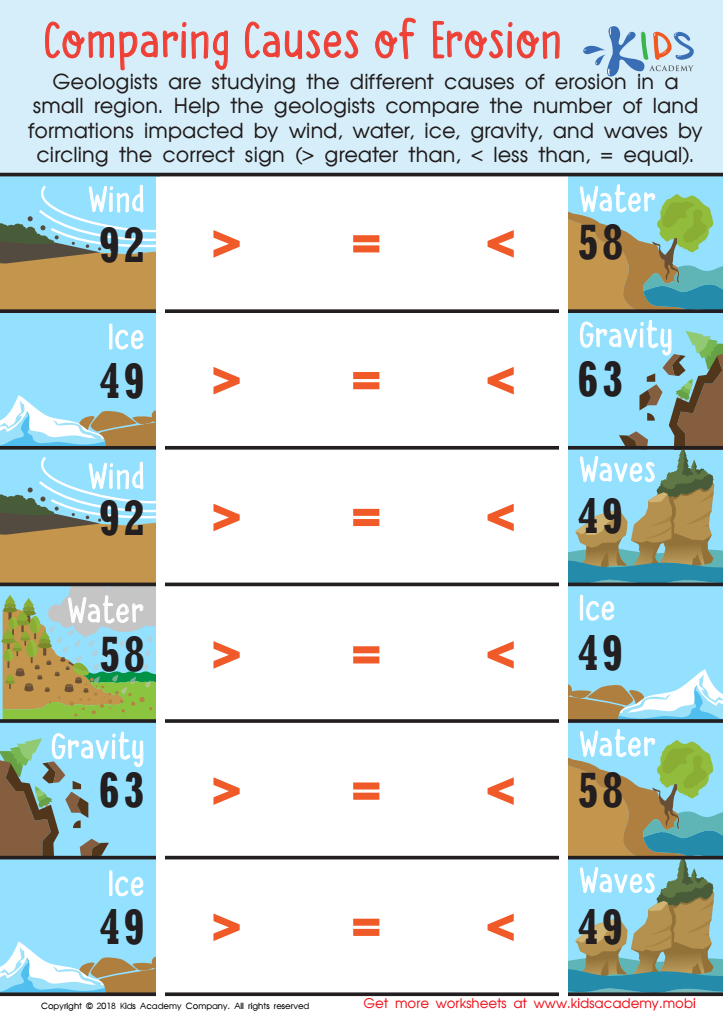
Comparing Causes of Erosion Worksheet
This free PDF worksheet combines science, number sense and comparing numbers to teach kids about the causes of erosion. They'll compare numbers related to ice, wind, water, gravity and waves and decide if each cause is greater, less than or equal to another. It's an interdisciplinary and meaningful way to learn that kids will enjoy.
Comparing Causes of Erosion Worksheet
Worksheet
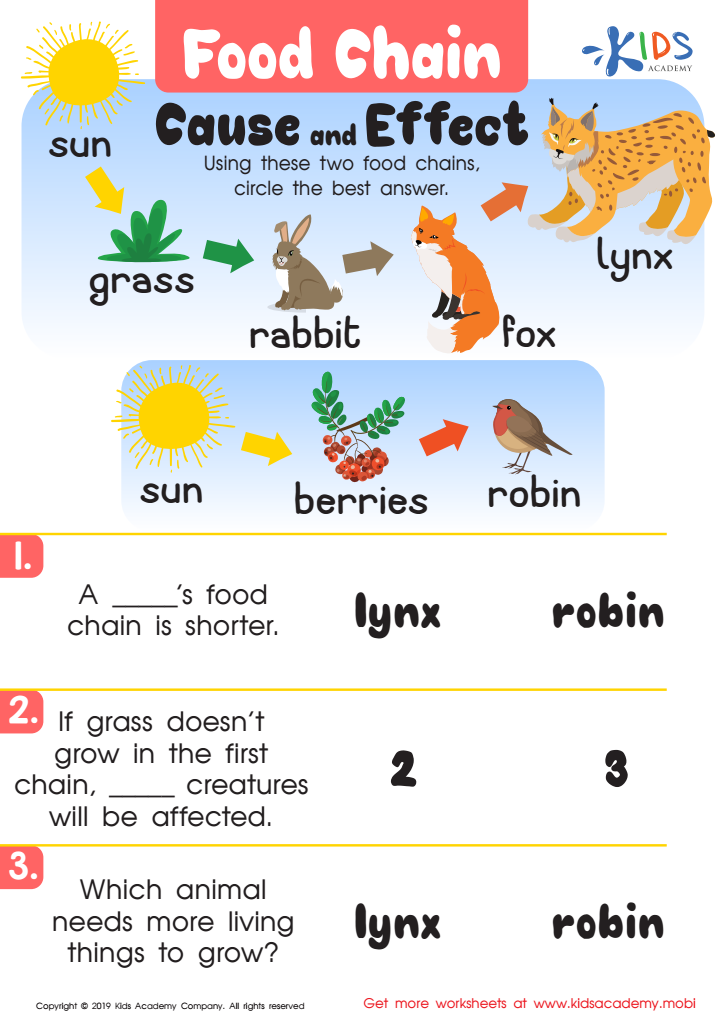
Food Chain Cause Worksheet
Help your little learner analyze ecosystems and compare food chains with this Kids Academy worksheet! Kids will compare a carnivore's and herbivore's food chain; which is longer and why? Questions at the bottom of the page will help them compare and circle the best answers. A great way to understand animal food chains!
Food Chain Cause Worksheet
Worksheet
Learning Skills
Join Kids Academy for Free
Who is primarily going to use this learning content?








Enhancing critical thinking in normal science for children ages 4-9 is crucial as it lays the foundation for lifelong learning and problem-solving skills. At this formative stage, inquisitive minds are naturally curious, and fostering critical thinking will help them analyze, evaluate, and create well-reasoned solutions to everyday challenges. Parents and teachers who focus on enhancing these skills help kids not just in science, but in all aspects of their education and future lives.
When children engage in critical thinking, they learn how to ask questions, make observations, and understand the causal relationships in the world around them. This is especially important in science, where inquiry and evidence-based thinking are key. By encouraging kids to explore, experiment, and reflect on their findings, we help them develop a deeper understanding of scientific concepts.
Moreover, early exposure to critical thinking empowers children to make informed decisions and boosts their confidence in their problem-solving abilities. This skill set also translates to improved academic performance as they grow older, leading to greater success inside and outside the classroom. Simply put, fostering critical thinking from a young age equips children with the essential tools they will need to navigate a complex, ever-changing world successfully. This is why incorporating critical thinking in early science education is a responsibility parents and teachers should wholeheartedly embrace.







