Understanding forces Normal Science Worksheets for Ages 4-9
6 filtered results
-
From - To
Discover the magic of science with our "Understanding Forces" printable worksheets, designed for young scientists aged 4-9. These engaging activities introduce the concept of forces in a fun, interactive way, helping children grasp fundamental principles through hands-on learning. Our worksheets focus on everyday examples and simple experiments to explain push, pull, gravity, and more, aligning with early education standards. By exploring these exercises, your child will develop critical thinking skills and a love for science that lasts a lifetime. Perfect for home or classroom use, ignite curiosity with Kids Academy's expert-crafted resources.
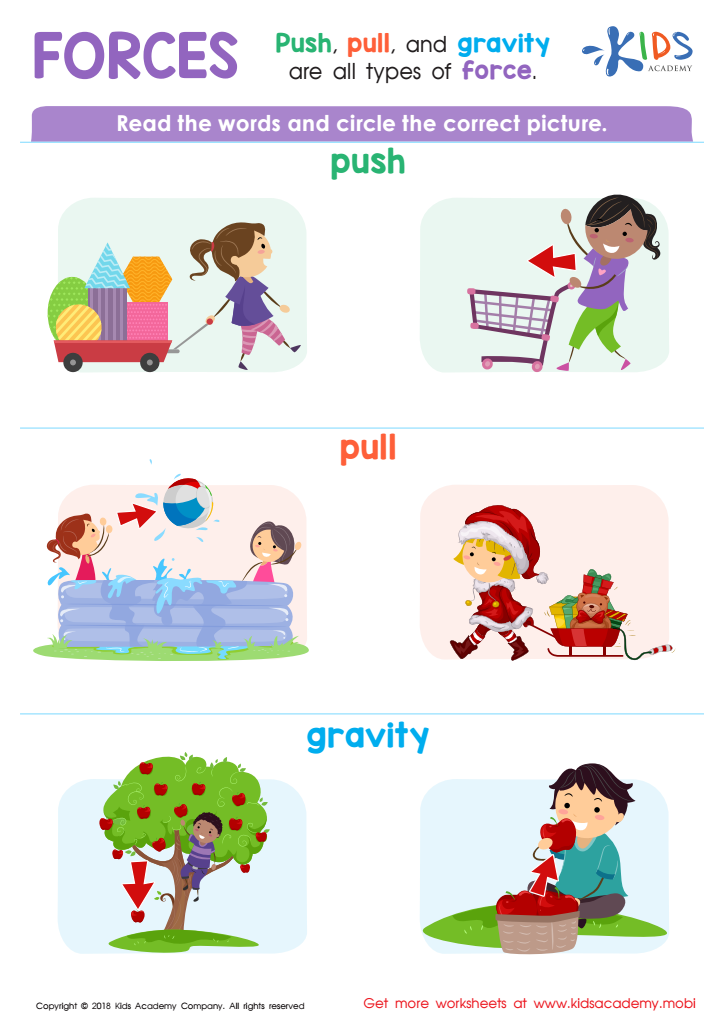
Forces Worksheet
 Assign to My Students
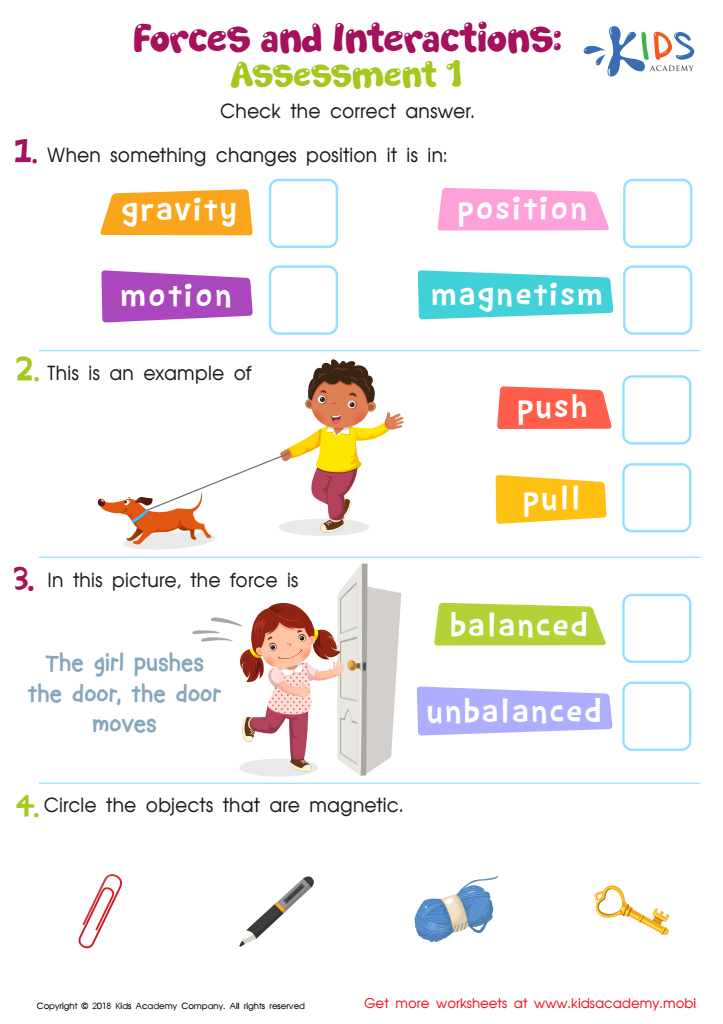
Forces and Interactions Printable
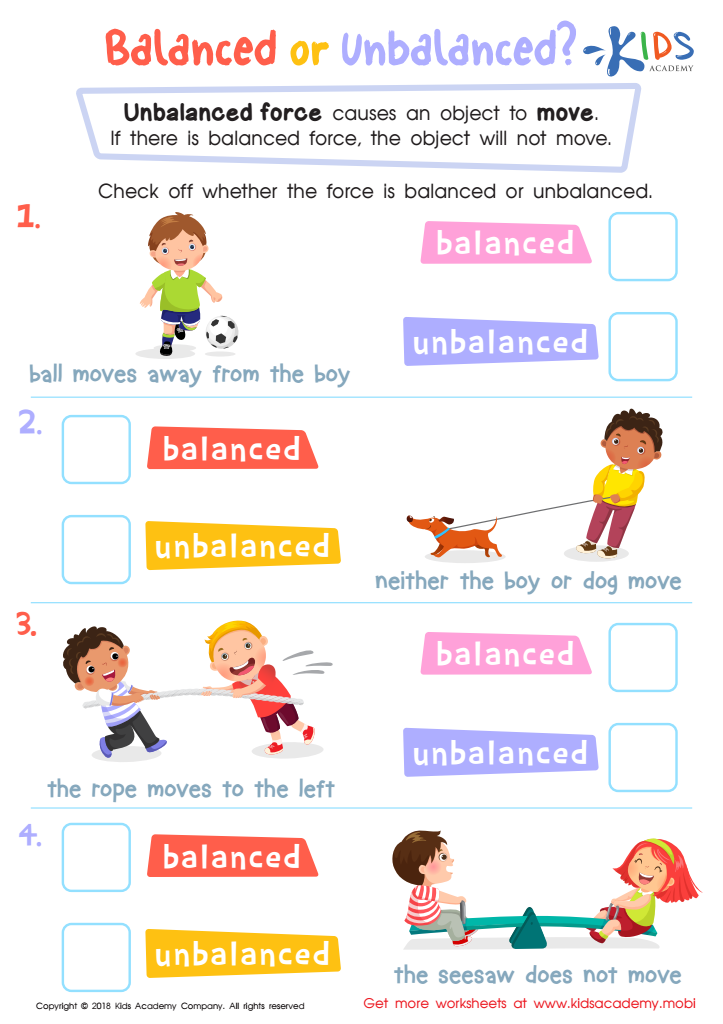
Balanced or Unbalanced Science Worksheet
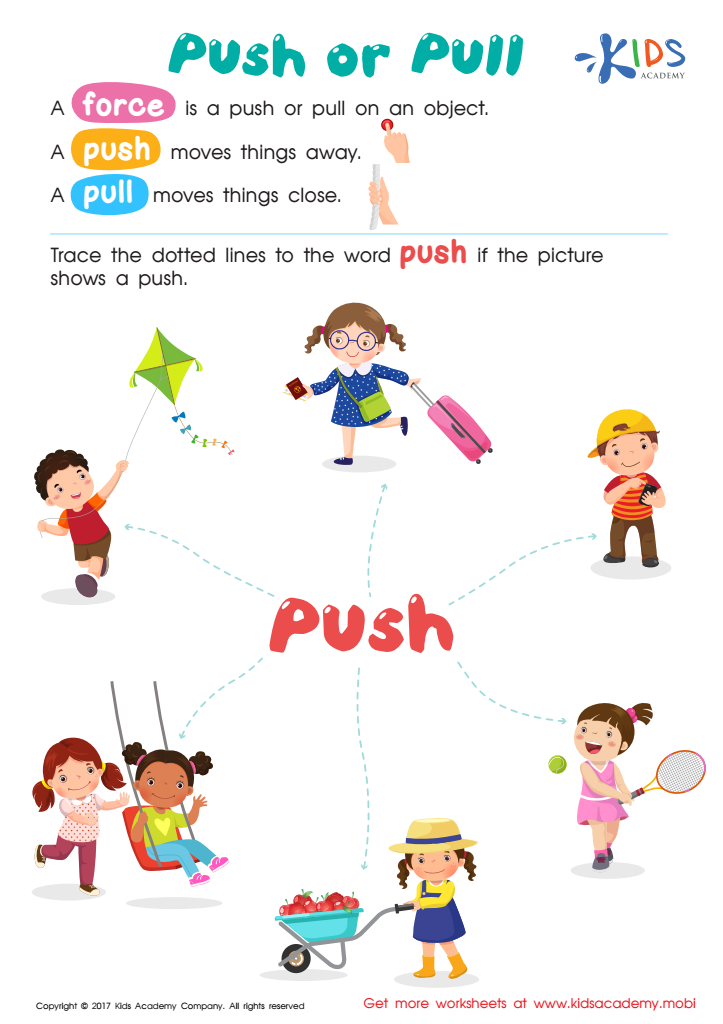
Push or Pull Worksheet
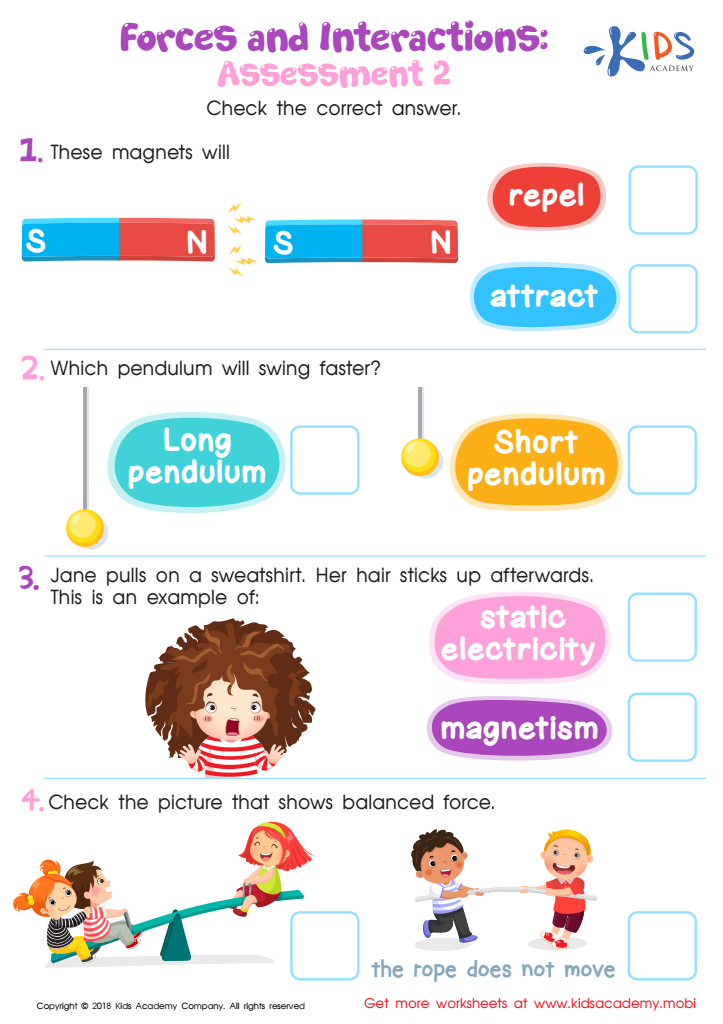
Forces and Interactions Worksheet For 3rd Grade
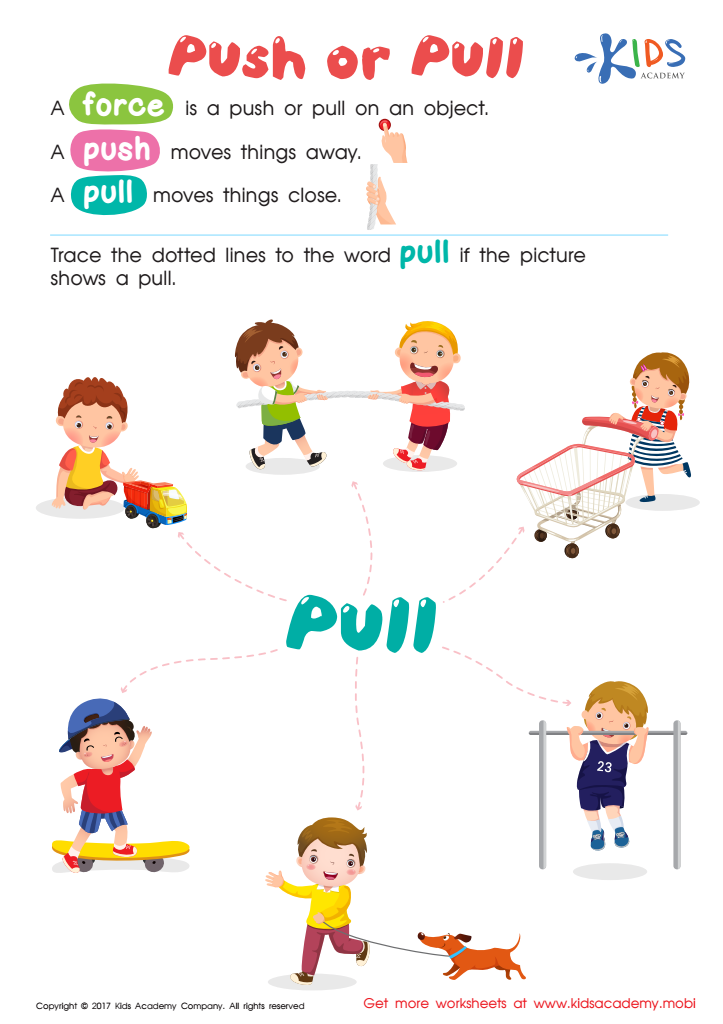
Pull or Push Worksheet








Understanding forces in the realm of normal science is crucial for young children aged 4-9 because it lays the foundational brick in their STEM education. Forces, which describe how objects move or stay still, are integral to nearly everything in the physical world, from the way toys operate to the way the human body moves.
By teaching children about forces, such as push, pull, gravity, and friction, parents and teachers can help demystify everyday phenomena at an early age. Young learners are naturally inquisitive; they tend to ask "why" and "how" a lot. Nurturing their curiosity through the understanding of forces helps develop critical-thinking skills and promotes scientific literacy.
Moreover, interactive learning experiences with forces—such as playing with building blocks, experimenting with balls and ramps, or even simple tug-of-war games—stimulate intellectual growth. These activities make scientific concepts tangible, allowing children to directly observe and understand cause and effect.
Early exposure to these concepts also encourages a lifelong interest in science and can spark future academic pursuits in disciplines like physics, engineering, and technology. Thus, the importance of integrating lessons about forces in the educational curriculum for young children cannot be overstated. They not only form the bedrock of scientific understanding but also foster cognitive and motor skills in engaging, age-appropriate ways.







