Understanding ecosystems Normal Plants and Animals Worksheets for Ages 4-9
4 filtered results
-
From - To
Discover a world of wonder with our “Understanding Ecosystems: Normal Plants and Animals Worksheets for Ages 4-9”. Perfectly crafted for young minds, these engaging worksheets make learning about ecosystems fun and interactive. Children will explore the fascinating relationships between plants, animals, and their environments, developing essential science and critical thinking skills. Our printable activities offer hands-on experiences for curious minds, fostering a deep appreciation for nature. Age-appropriate and curriculum-aligned, these worksheets are fantastic resources for teachers and parents looking to inspire future nature lovers and scientists. Dive into the adventure of ecosystems today!
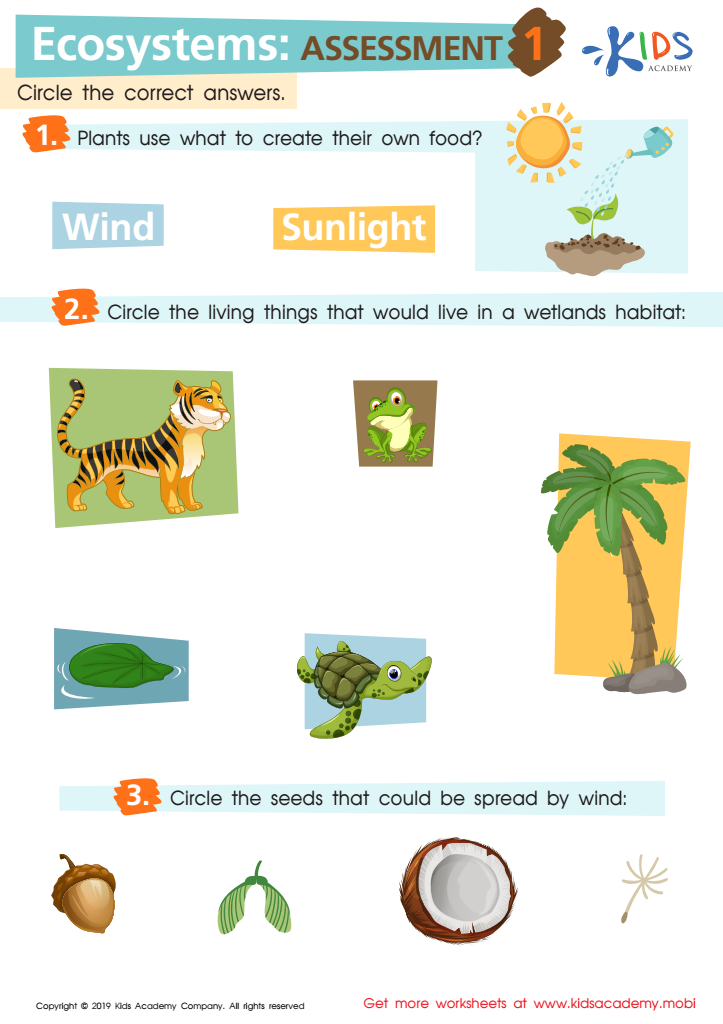
Ecosystems: Assessment 1 Worksheet
 Assign to My Students











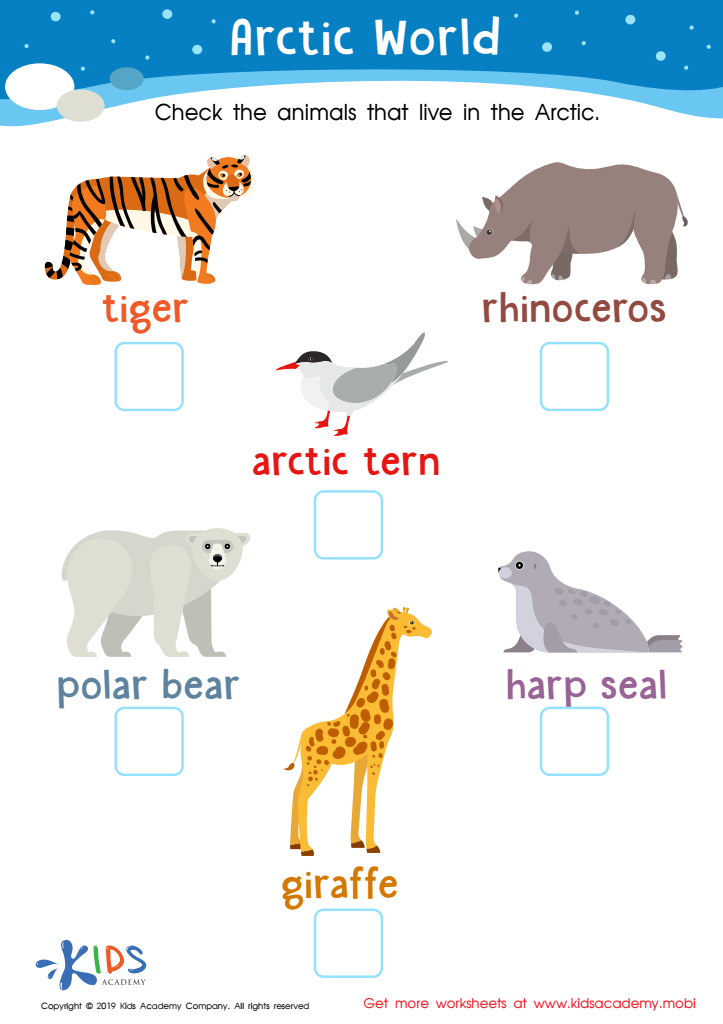
Arctic World Worksheet
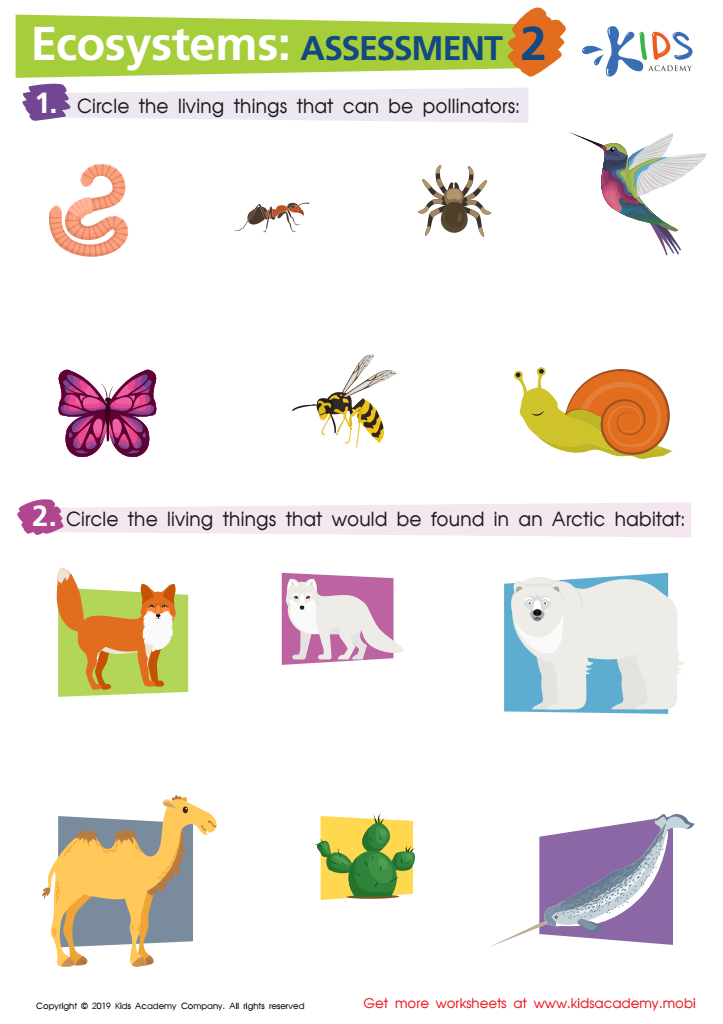
Ecosystems: Assessment 2 Worksheet
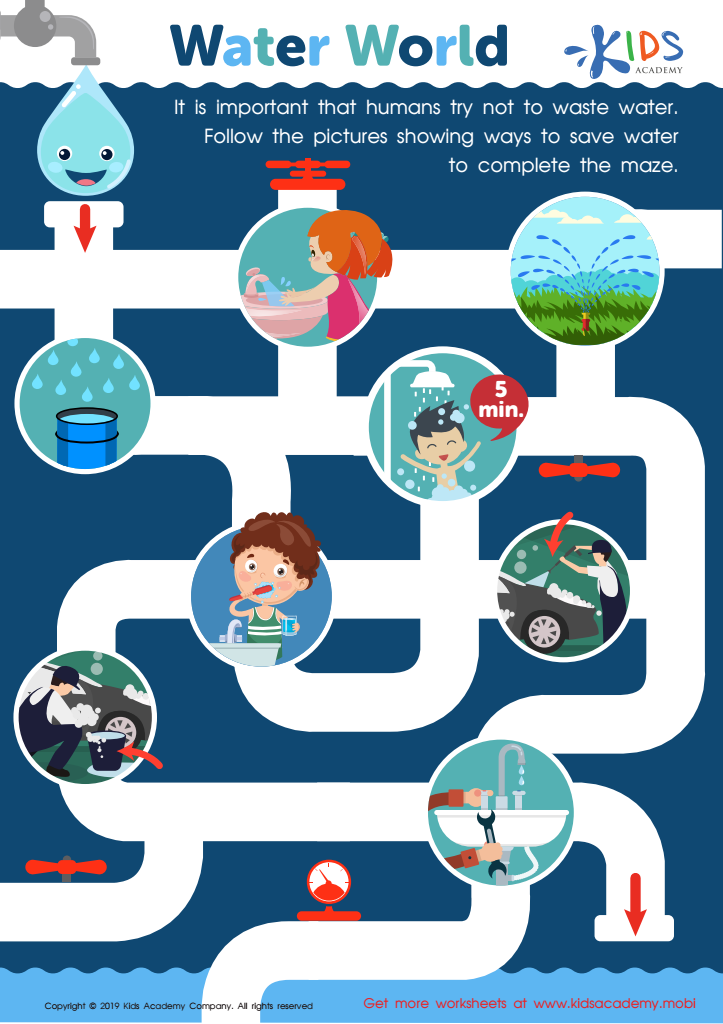
Water World Worksheet






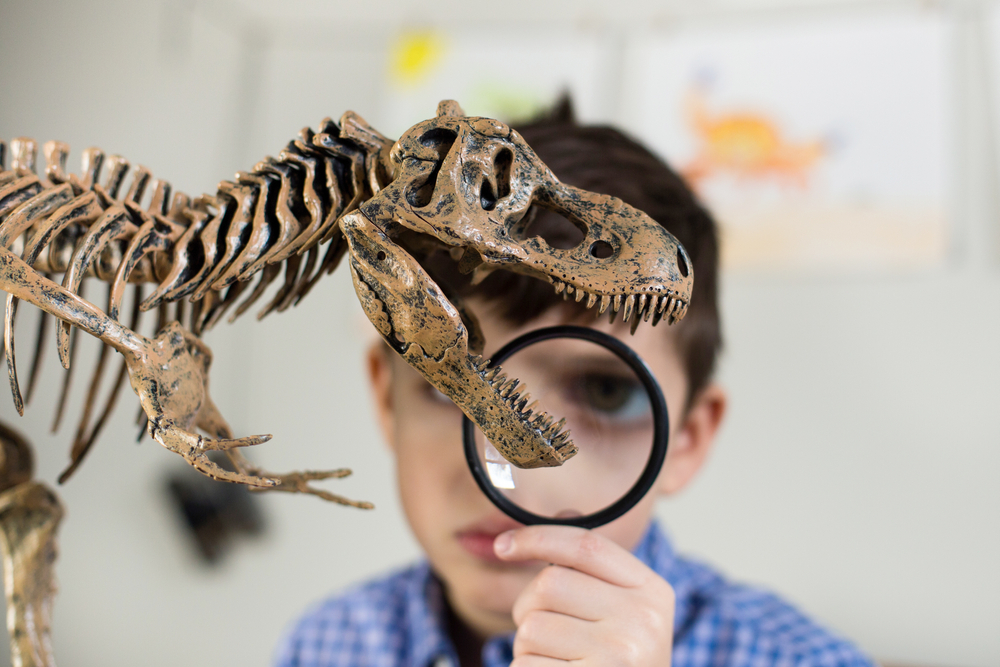

Understanding ecosystems, normal plants, and animals is vital for ages 4-9 as it lays the foundation for environmental stewardship, empathy, and scientific curiosity. During these formative years, children's brains are remarkably receptive to learning about the world around them. Introducing them to ecosystems fosters a sense of respect and appreciation for nature. It helps youngsters realize the interdependence between plants, animals, and humans, teaching them that their actions can impact the environment.
When children grasp the basics of how ecosystems function, they better understand concepts such as food chains, habitats, and biodiversity. This knowledge underpins science education and promotes critical thinking and problem-solving skills. Familiarity with local plants and animals sparks curiosity, encouraging outdoor exploration and physical activity rather than screen time.
Furthermore, teaching children about ecosystems and the diversity of life nurtures empathy and compassion towards living beings. Understanding that animals and plants have ecological roles helps kids see the value in all forms of life, which can lead to behaviors that protect and conserve the environment.
Therefore, parents and teachers investing time in educating young children about ecosystems create environmentally aware citizens who are equipped with the knowledge and empathy to make sustainable choices for the future.







