Vocabulary expansion Normal History Worksheets for Ages 4-9
5 filtered results
-
From - To
Boost your child's vocabulary while exploring intriguing historical topics with our "Vocabulary Expansion Normal History Worksheets" ideal for ages 4-9! Specially crafted for young learners, these worksheets enable imaginative minds to understand and retain new words by connecting them to captivating historical events and figures. Incorporating engaging activities and vibrant illustrations, these resources are designed to enhance your child's learning experience, fostering both their language and critical thinking skills. Whether you are a parent or teacher, our materials provide a fun and educational way to enhance history lessons and expand your young learner's vocabulary effortlessly.
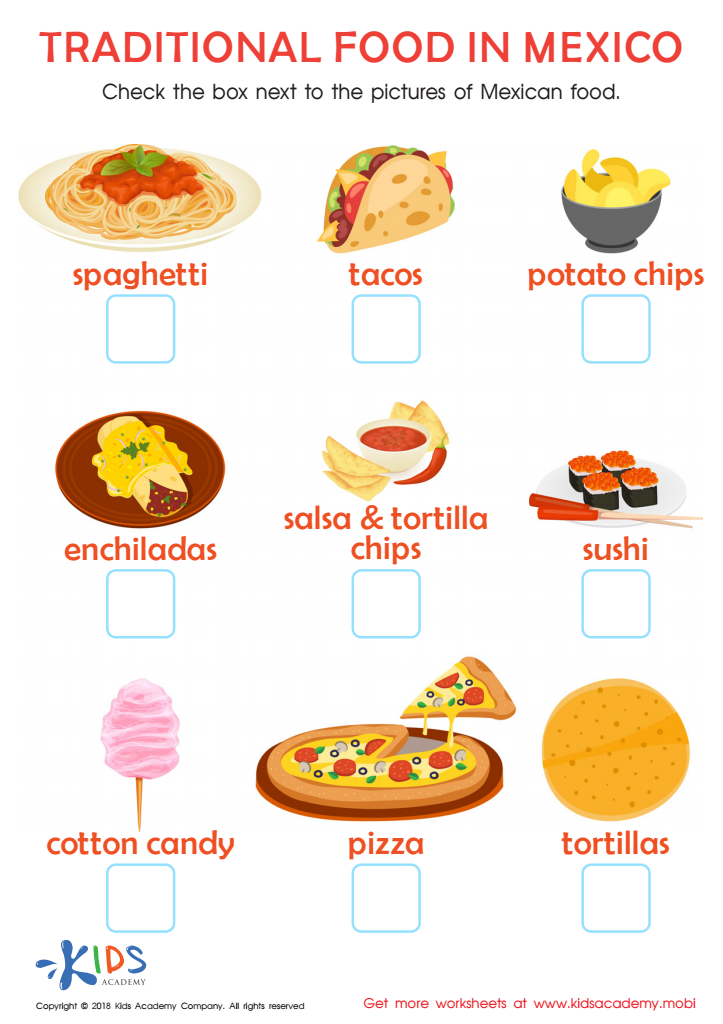
Traditional Food in Mexico Worksheet
 Assign to My Students
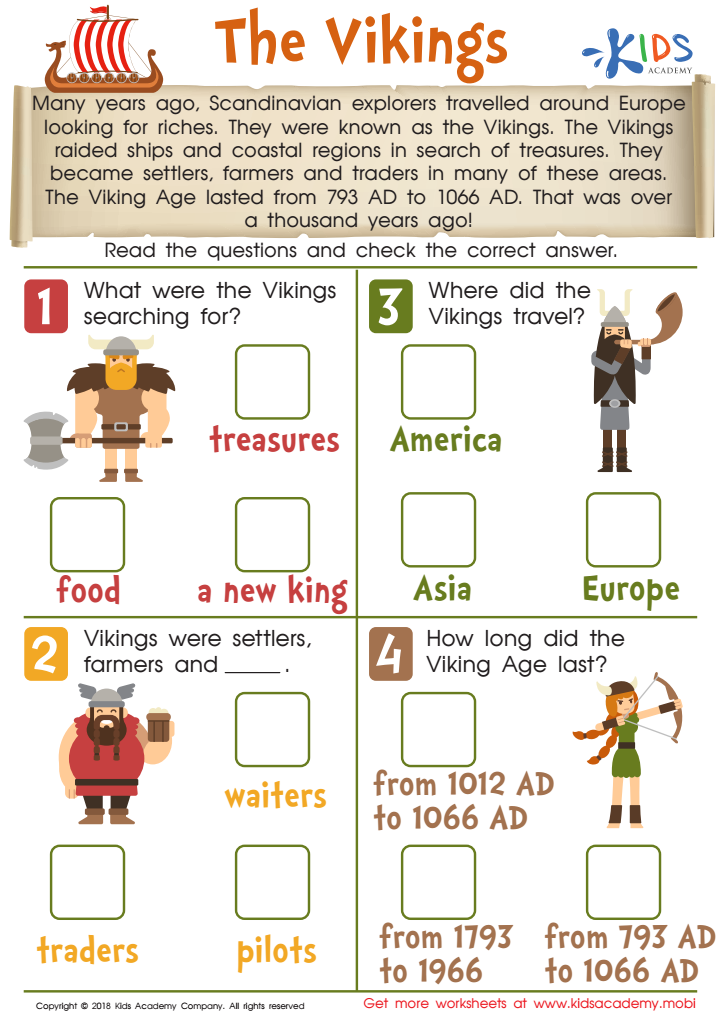
The Vikings Worksheet
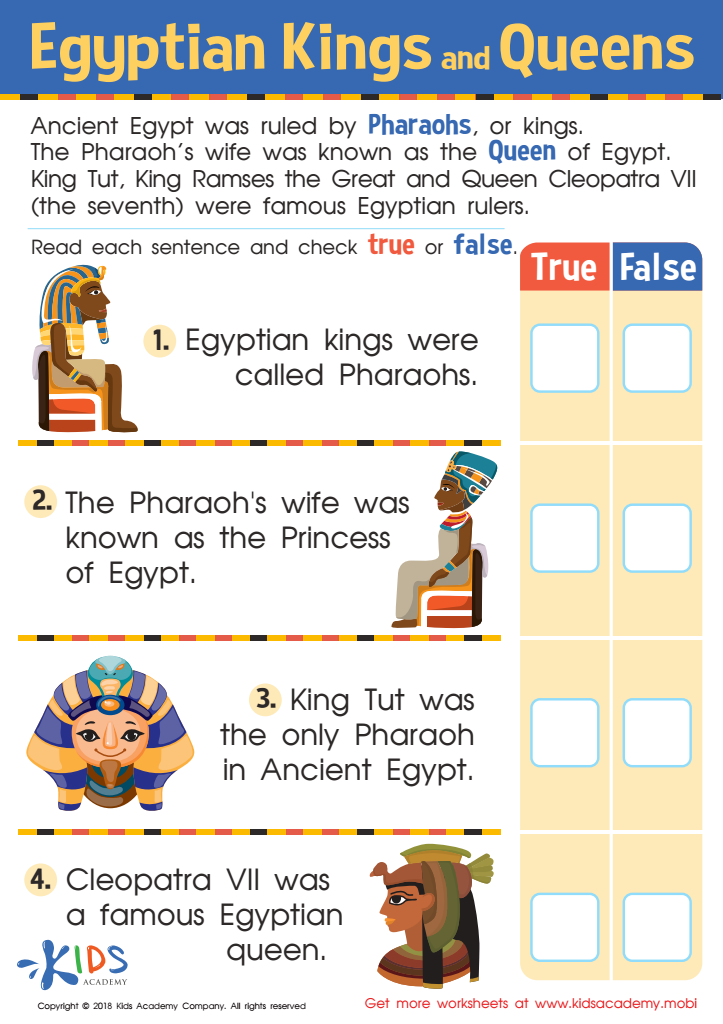
Egyptian Kings and Queens Worksheet
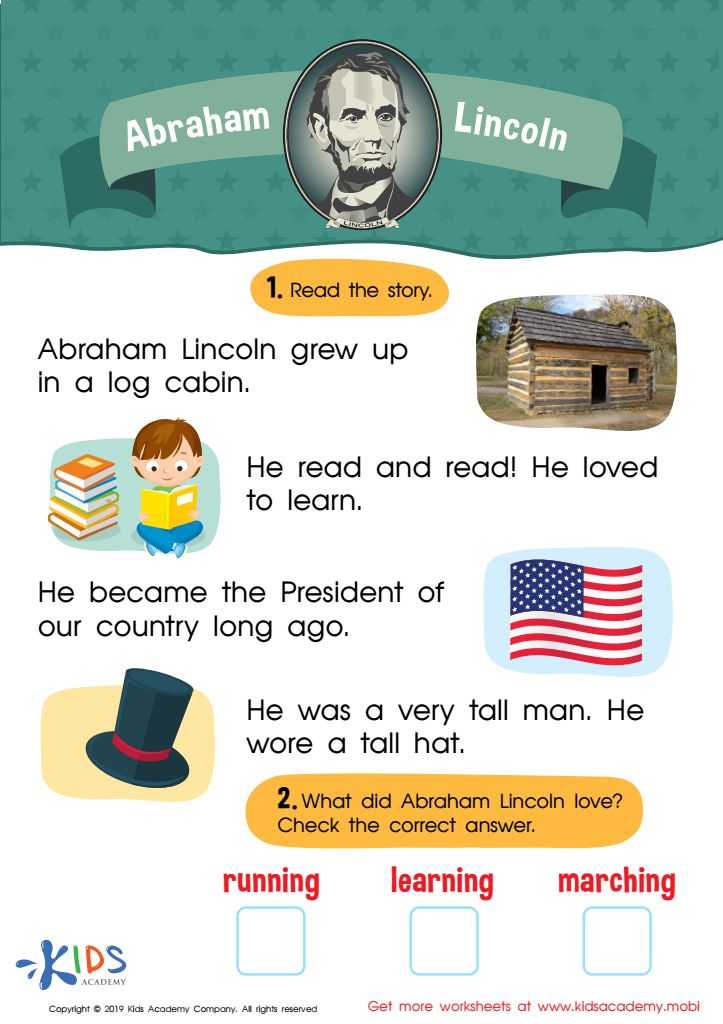
Abraham Lincoln Worksheet
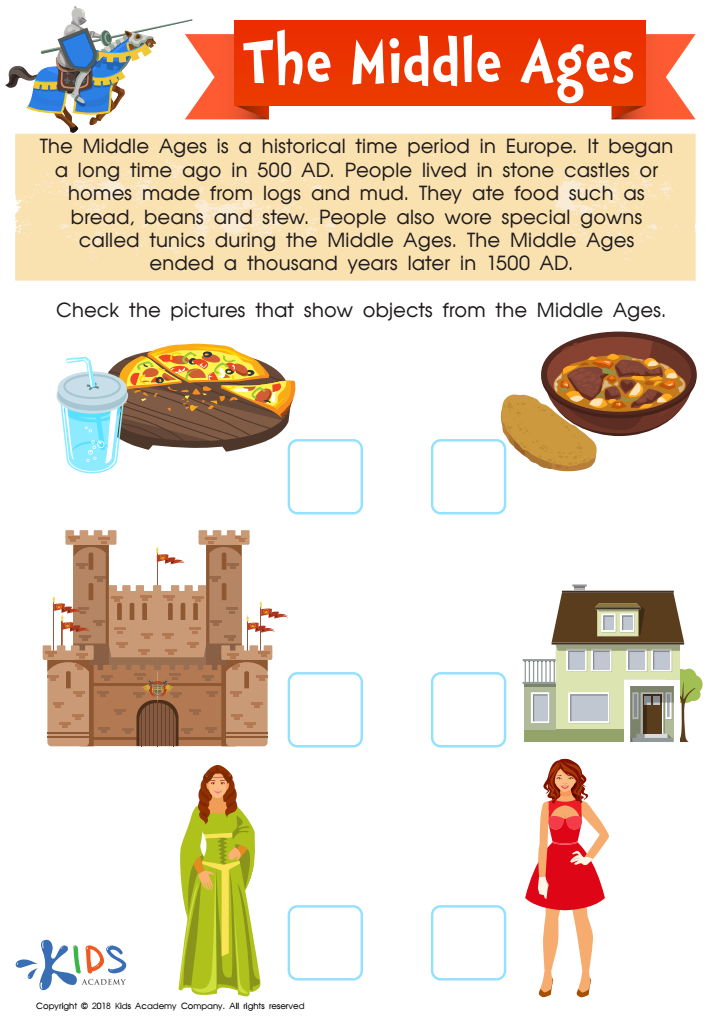
The Middle Ages Worksheet








Vocabulary expansion in children aged 4-9 is crucial for several reasons, deserving the attention of both parents and teachers. During these early years, a child’s brain is exceptionally receptive to learning new words and concepts. The development of a rich vocabulary serves as the foundation for effective communication, enabling children to express their thoughts, needs, and emotions more precisely.
Moreover, vocabulary growth directly influences reading comprehension. Children who know more words can understand and enjoy texts more fully, fostering a love for reading that promotes lifelong learning. A robust vocabulary also contributes to academic achievement across subjects, given that all areas of learning involve language.
Socially, a well-developed vocabulary allows children to interact more proficiently with peers and adults, aiding in the development of essential social skills. Children who can articulate their ideas and understand others are better equipped to form healthy relationships.
Finally, expanding one’s vocabulary is linked to cognitive development, promoting critical thinking and problem-solving abilities. When children learn new words, they also learn new ways to think about and engage with the world.
In essence, vocabulary expansion isn’t merely about learning words; it’s about building the tools necessary for a lifetime of effective communication, learning, and social interaction.








