
Critical thinking skills Normal Social Studies Worksheets for Ages 4-9
5 filtered results
Difficulty Level
Grade
Age
-
From - To
Subject
Activity
Standards
Enhance your child's critical thinking skills with our engaging Social Studies worksheets designed for ages 4-9. These thoughtfully crafted resources encourage young learners to explore important concepts through interactive activities that promote reasoning and analysis. Our printable worksheets include a variety of exercises that stimulate curiosity about the world, its communities, and cultures. With vibrant visuals and age-appropriate challenges, children will develop essential problem-solving skills while learning about social dynamics. Perfect for educators and parents alike, our Critical Thinking Skills worksheets foster a love for learning and help build a strong foundation for future academic success. Download your worksheets today!
Favorites
With answer key
Interactive
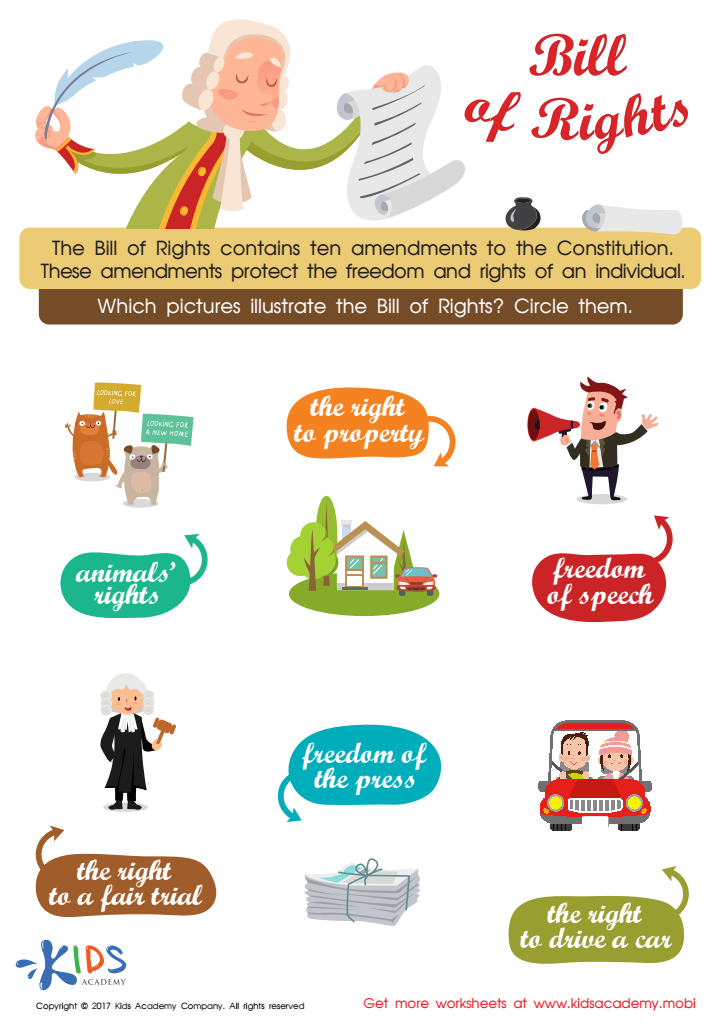
Bill of Rights Worksheet
Kids can learn about the rights the Bill of Rights grants us as US citizens. Work on the PDF worksheet with your 3rd grader to understand the ten amendments. This is a great way for your child to learn about the historical and essential document!
 Assign to My Students
Bill of Rights Worksheet
Worksheet
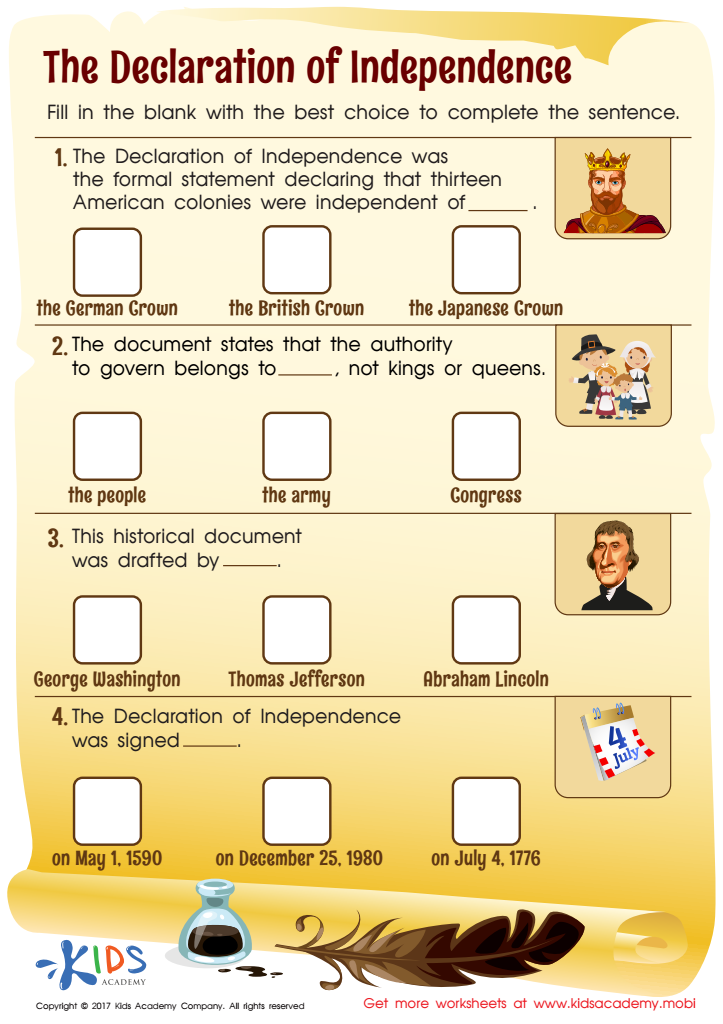
Declaration of Independence Worksheet
This PDF worksheet will help your child review important US history facts about the Declaration of Independence. It will cover key topics such as its purpose, author and date it was signed, which are integral to the US as a nation.
Declaration of Independence Worksheet
Worksheet
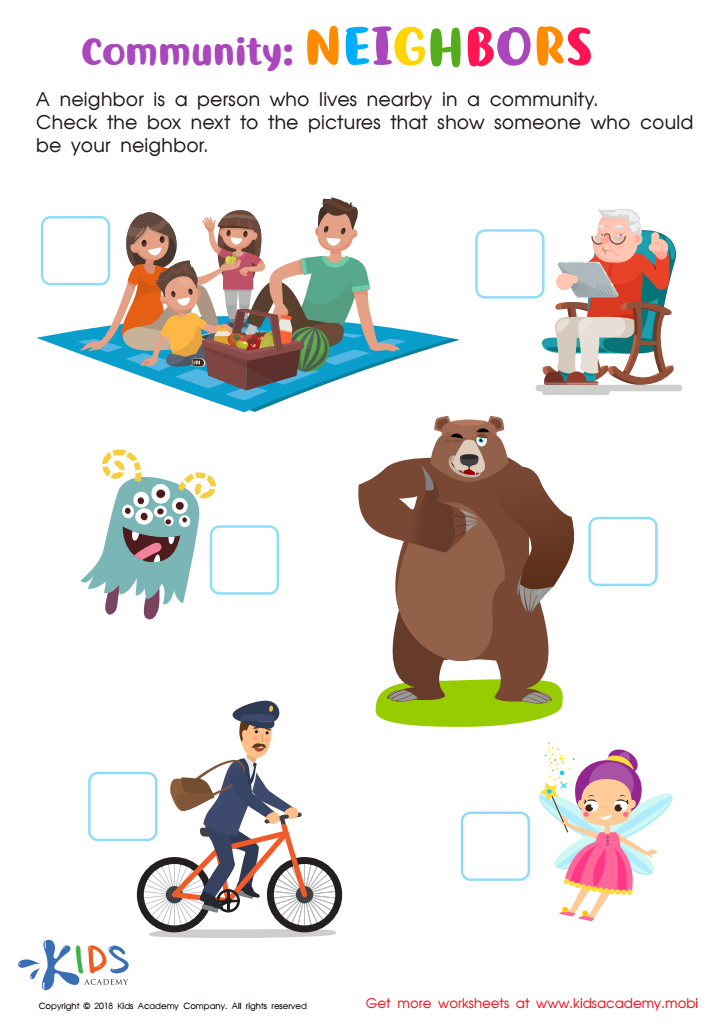
Community: Neighbors Worksheet
This free worksheet helps young learners understand who neighbors are and how they fit into their community. Have your student check out the options, decide which can and can't be neighbours and develop essential social and emotional skills. It's a fun and cheery way to learn about the social sciences!
Community: Neighbors Worksheet
Worksheet
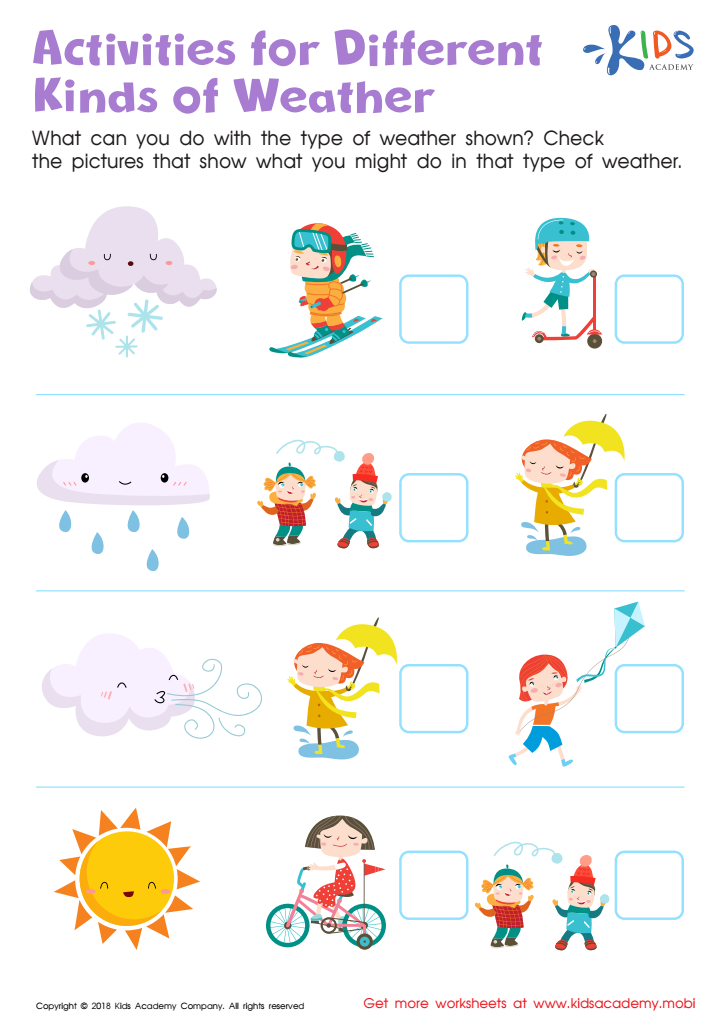
Activities for Different Kinds of Weather Worksheet
Help your child explore the changing seasons with this interactive worksheet. Ask them to name the different seasons and activities associated with each type of weather. Show the pictures and explain what they can do in that kind of weather. Have them check off the activities to help them learn and enjoy the changing seasons.
Activities for Different Kinds of Weather Worksheet
Worksheet
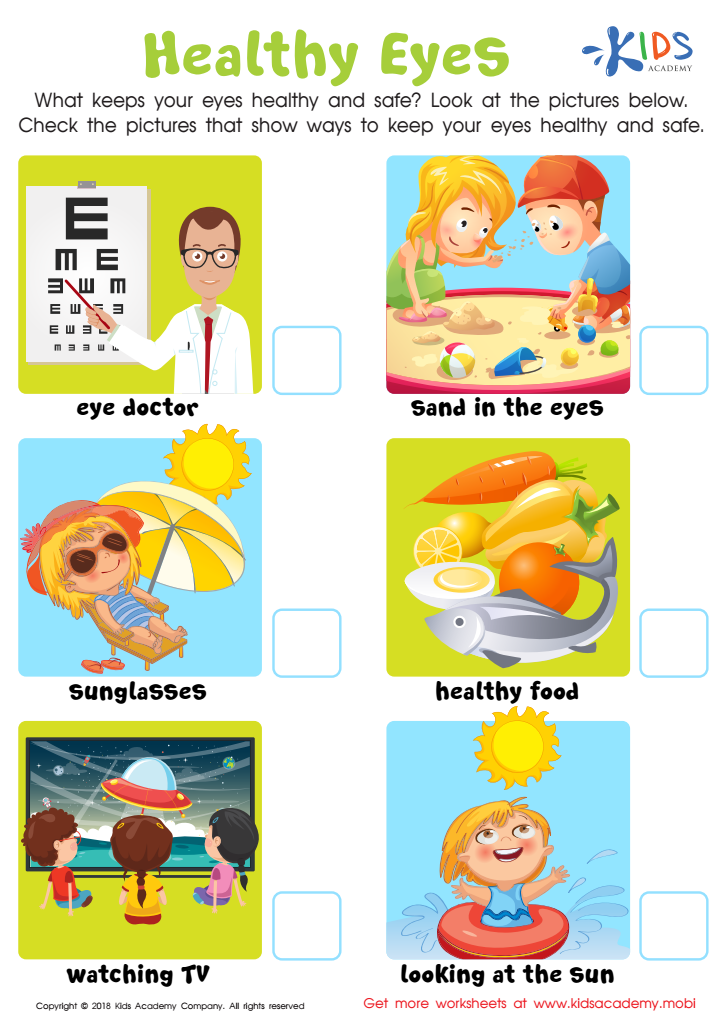
Healthy Eyes Worksheet
Does your child know how to care for their eyes? Help them understand with this worksheet. Look through the pictures together and discuss the different ways to keep the eyes healthy and safe. These include visits to the doctor, wearing sunglasses, and eating healthy food.
Healthy Eyes Worksheet
Worksheet
Join Kids Academy for Free
Who is primarily going to use this learning content?








Critical thinking skills are essential for children, especially in the context of social studies for ages 4-9. At this formative stage, fostering a child’s ability to analyze information and make reasoned decisions lays the groundwork for lifelong learning. Parents and teachers should be invested in this development for several reasons.
Firstly, critical thinking helps children comprehend the world around them. By engaging with topics like communities, cultures, and history, they learn to question, compare perspectives, and appreciate diversity. This not only promotes empathetic citizens but also equips them with essential skills to navigate societal challenges.
Additionally, during group activities and discussions, children learn to articulate thoughts and respect differing opinions. This social interaction encourages collaboration, communication, and leadership abilities, crucial for future success in academic and real-world scenarios.
Lastly, as we prepare children for an increasingly complex society, the ability to think critically empowers them to analyze facts, discern misinformation, and make informed choices that align with their values. By fostering critical thinking in young children, parents and teachers contribute significantly to cultivating a thoughtful, engaged, and responsible generation. Encouraging these skills early on enriches their education and prepares them as proactive members of society.








