Identification skills Normal Social Studies Worksheets for Ages 4-9
3 filtered results
Difficulty Level
Grade
Age
-
From - To
Subject
Activity
Standards
Our Identification Skills Normal Social Studies Worksheets are specially designed for children aged 4-9, providing an engaging and fun way to develop critical thinking and observation skills. These worksheets are crafted to help young learners identify and understand various social concepts and elements in an age-appropriate manner. Through colorful visuals and interactive tasks, kids will learn to recognize community helpers, landmarks, cultural symbols, and more. Perfect for classroom or home use, these worksheets foster curiosity and foundational social studies knowledge, laying the groundwork for future academic success in a playful and educational way.
Favorites
With answer key
Interactive
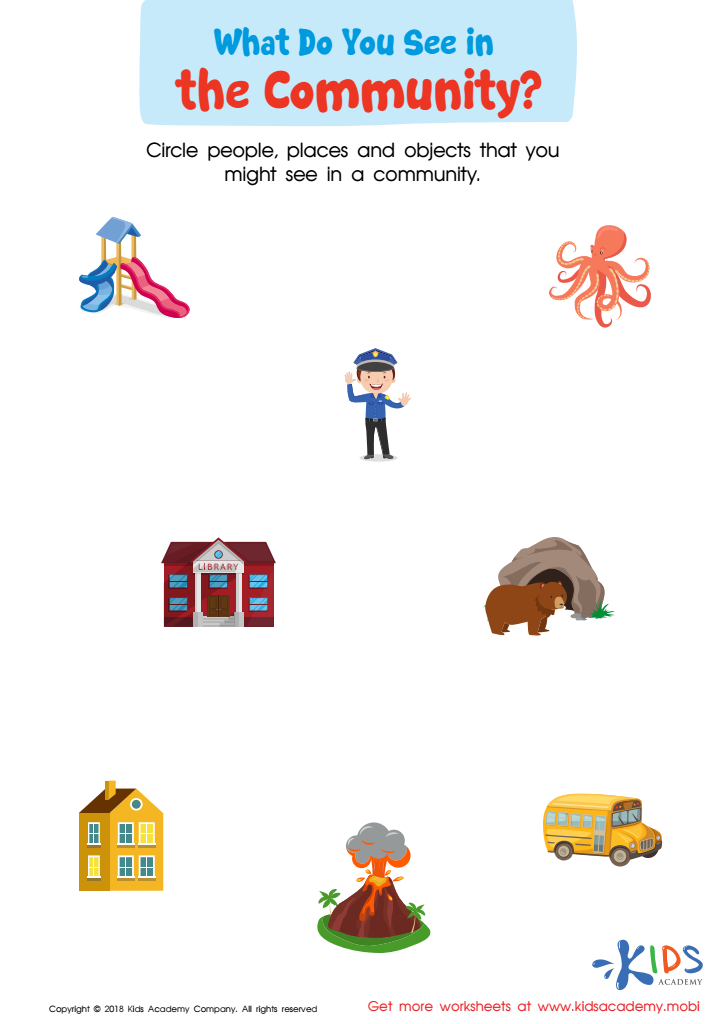
What Do You See in the Community Worksheet
This free social studies PDF can help your children learn about their local community. They'll identify its members, places and objects using engaging and recognizable pictures. As they trace circles around them, they'll also practice fine motor skills. It's a great way to introduce social science concepts and help them understand the importance of community.
 Assign to My Students
What Do You See in the Community Worksheet
Worksheet
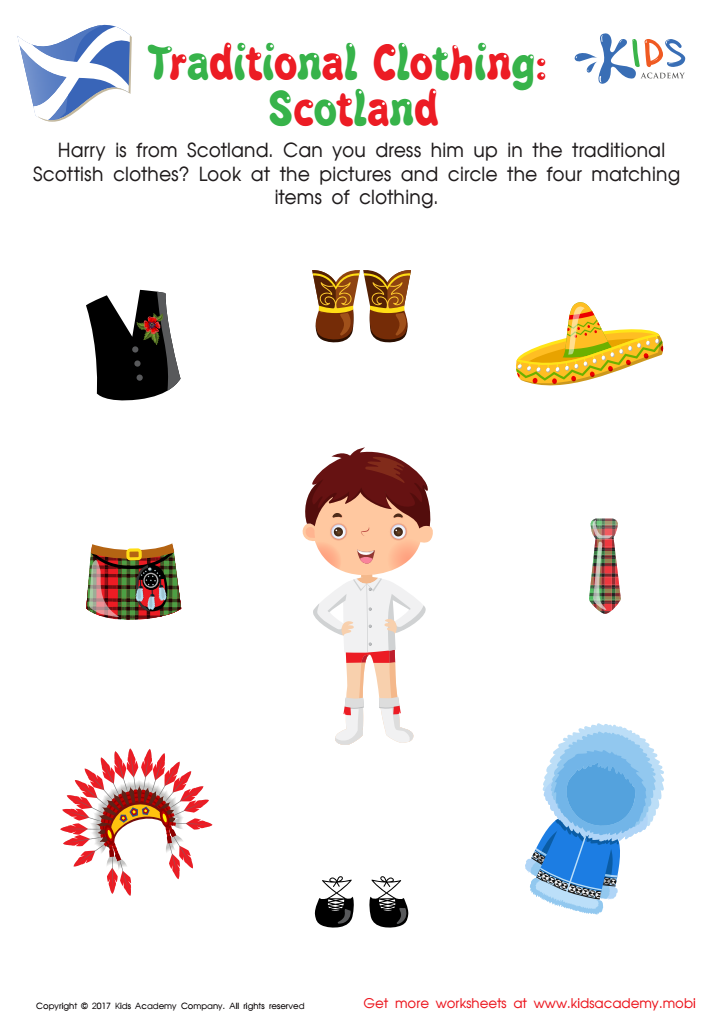
Traditional Clothing in Scotland Worksheet
Explore Scotland's traditional clothing without leaving home! This engaging worksheet will help your kid gain a new appreciation for different cultures. They'll have a blast learning about Scotland's clothing!
Traditional Clothing in Scotland Worksheet
Worksheet
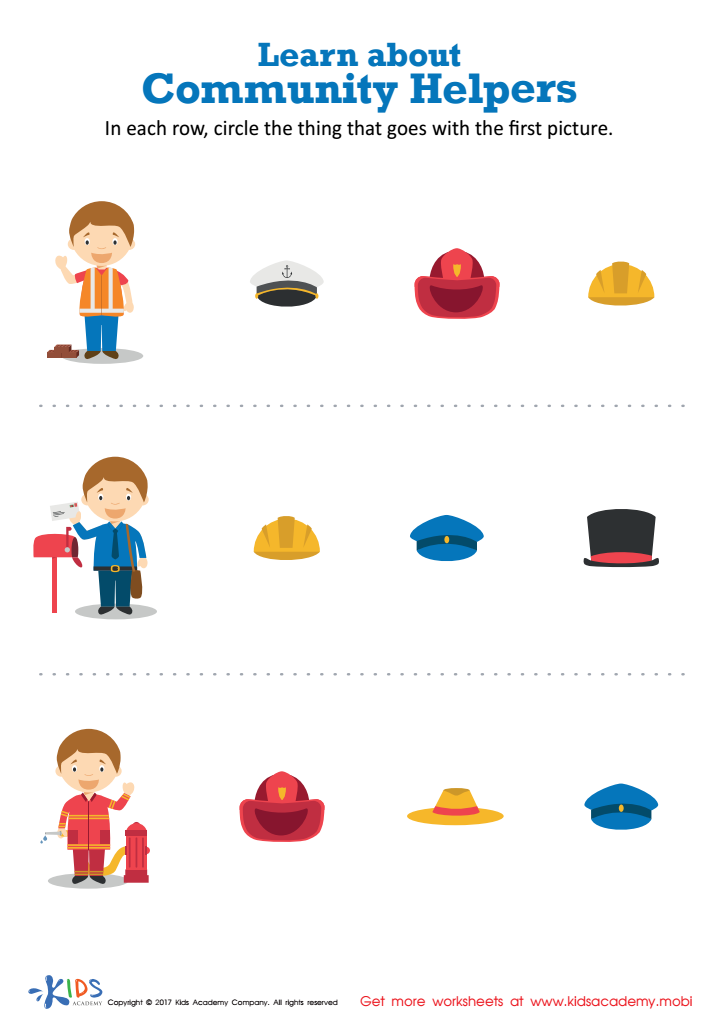
Learn about Community Helpers Printable
Introduce your little one to the amazing and hard-working people in the community with this free worksheet. It will help them use matching and observational skills to match the correct hat to its worker and recognize community helpers. Perfect for early learners, this worksheet uses familiar images to help them gain a deeper appreciation for their community helpers!
Learn about Community Helpers Printable
Worksheet
Join Kids Academy for Free
Who is primarily going to use this learning content?







Identification skills in social studies for children aged 4-9 are crucial for their overall development and understanding of the world. At this formative stage, kids are naturally curious and eager to explore their surroundings. Identification skills allow them to recognize and name various objects, places, symbols, and people, which lays the foundation for more advanced learning.
From a parent's perspective, these skills help children gain confidence and independence. When kids can identify their community members, local landmarks, or everyday objects, they feel more secure in their environment. This self-assurance supports their ability to navigate social settings, fostering social and emotional development. Moreover, early identification skills enhance language development and cognitive abilities, aiding in problem-solving and critical thinking.
Teachers, on the other hand, find that identification skills are integral for effective lesson planning and instruction. These skills enable children to make connections between new information and their prior knowledge, facilitating deeper understanding. In social studies, these abilities help kids grasp basic geographical concepts, historical events, and cultural norms, making the subject matter more relatable and engaging.
Overall, by focusing on identification skills, parents and teachers provide children with essential tools that support lifelong learning and social competence. These skills serve as building blocks that pave the way for future academic and personal success.