Counting skills Normal Geometry Worksheets for 4-Year-Olds
6 filtered results
-
From - To
Enhance your child’s learning journey with our Counting Skills Normal Geometry Worksheets for 4-Year-Olds. Specifically designed to make early math engaging, these worksheets introduce essential counting skills through playful geometric shapes. As children identify and quantify shapes, they develop strong foundational math abilities that pave the way for future learning. Each worksheet encourages exploration and creativity, ensuring kids remain curious and motivated. Our resources are perfect for parents and educators looking to enrich their teaching toolbox. Let your little ones embark on a fun counting adventure while mastering the basics of geometry, all while honing their critical thinking skills!
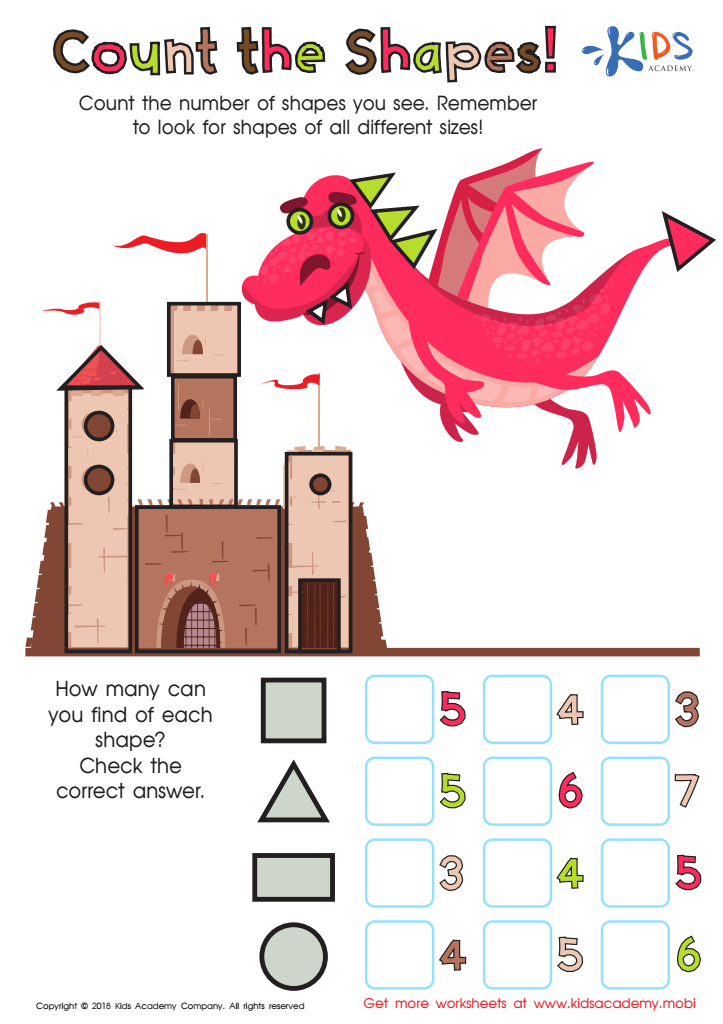
Count the Shapes Worksheet
 Assign to My Students











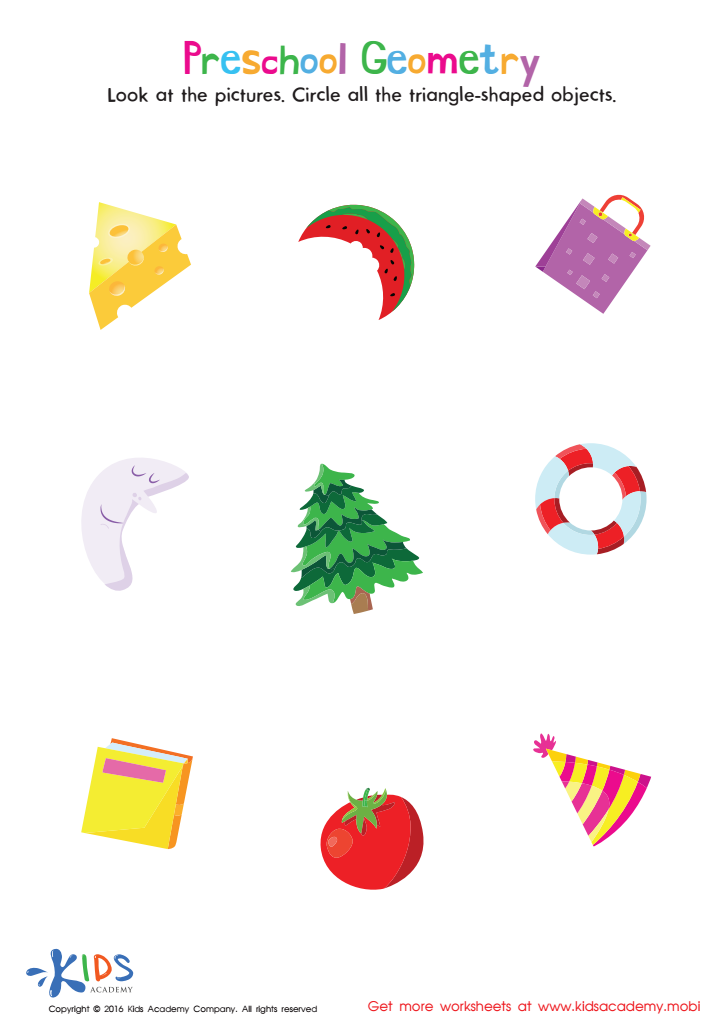
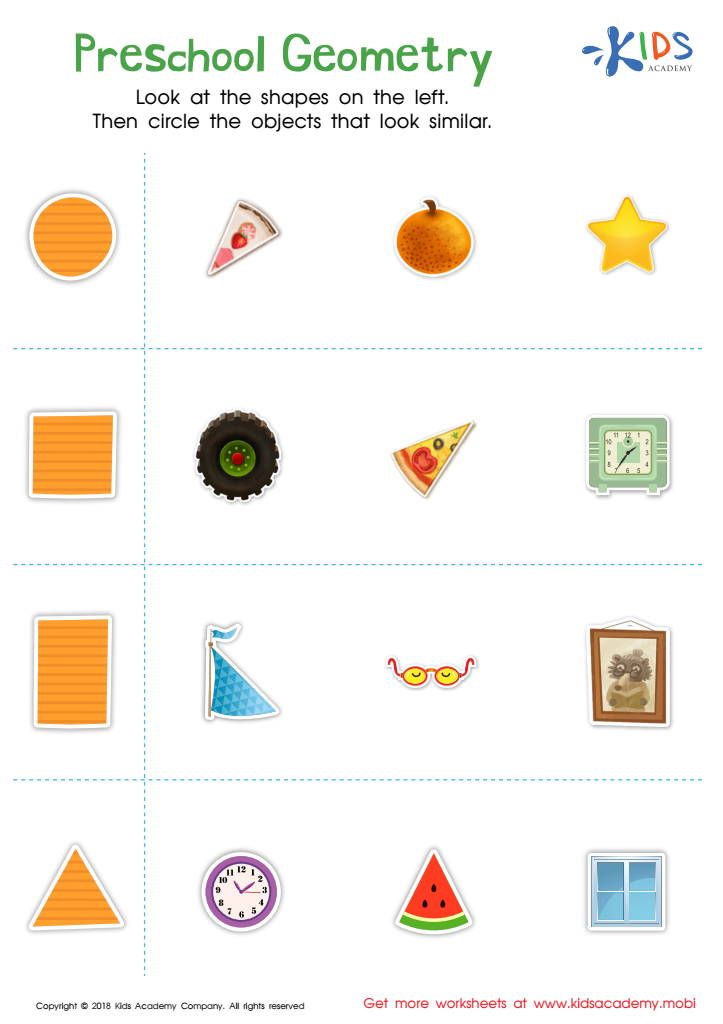
Preschool Geometry Worksheet
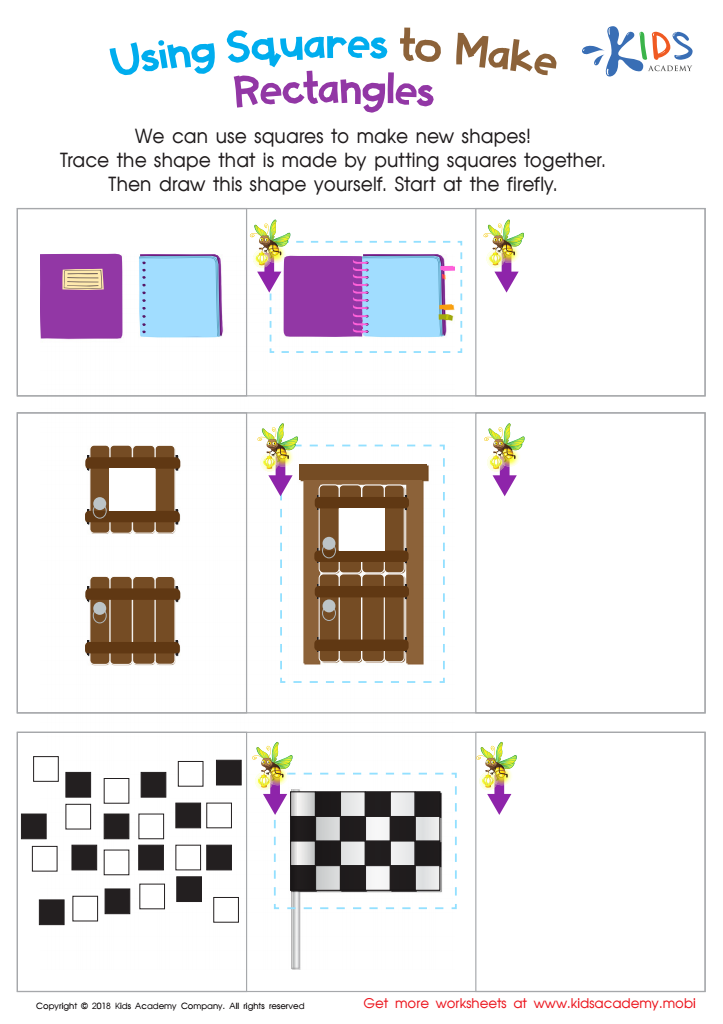
Using Squares to Make Rectangles Worksheet
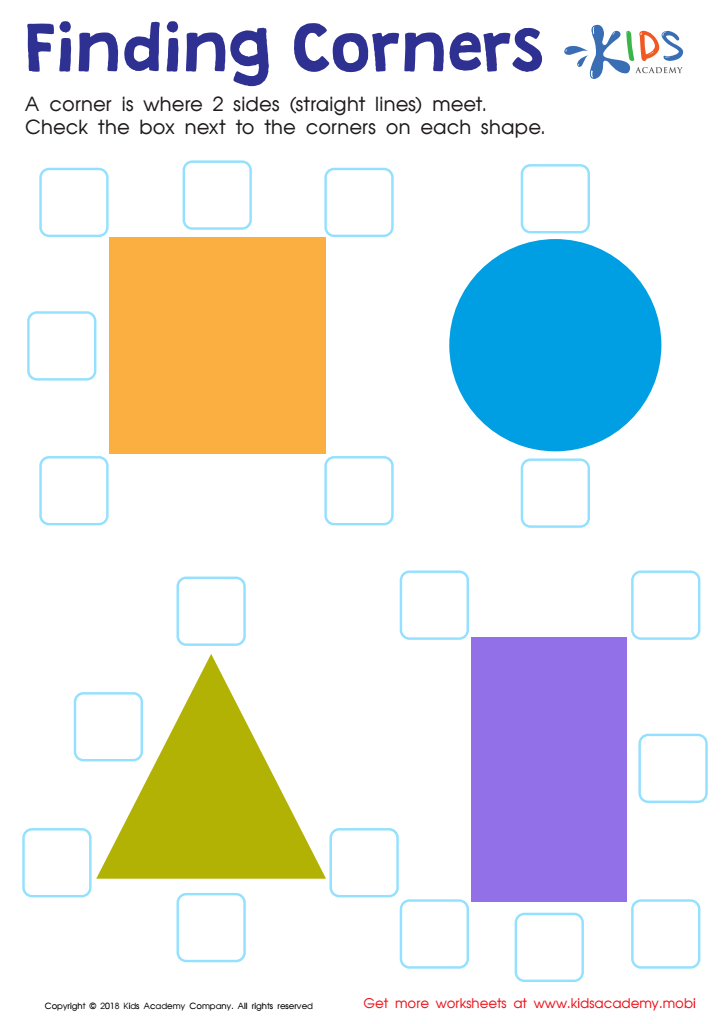
Finding Corners Worksheet
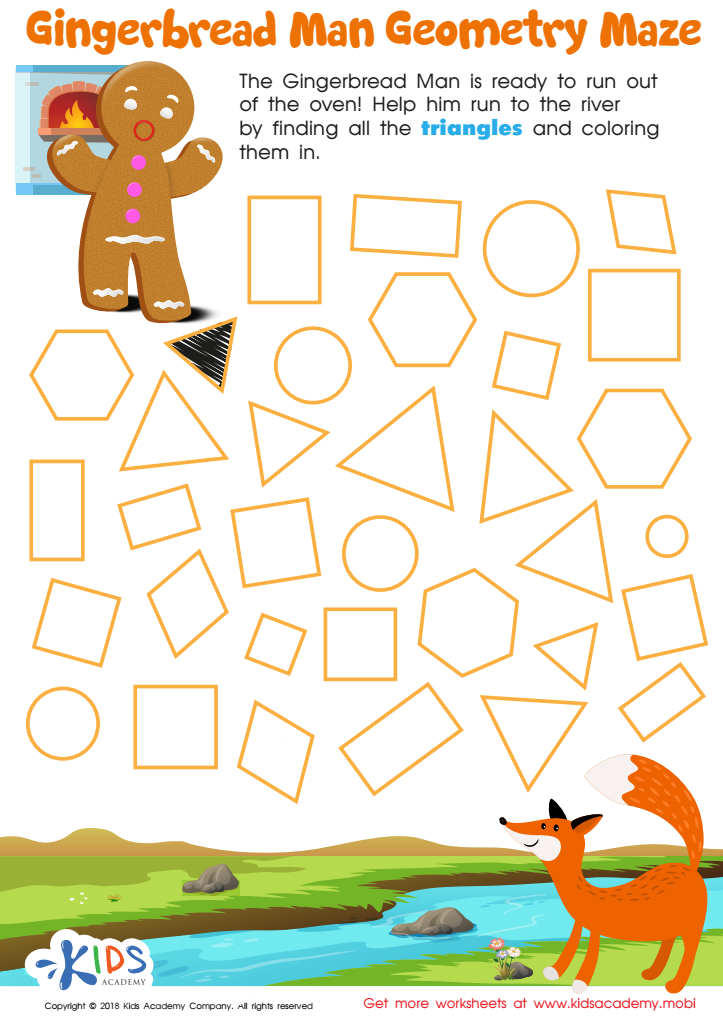
Gingerbread Man Geometry Maze Worksheet








Counting skills and an understanding of basic geometry are foundational elements in early childhood education. For 4-year-olds, developing these skills is crucial as they form the building blocks for future learning in mathematics and problem-solving.
Firstly, counting helps children grasp the concept of numbers and quantities, connecting them to their everyday experiences. Mastering counting fosters number sense, which is essential for all later mathematical endeavors. It encourages them to recognize patterns, develop spatial awareness, and enhances logical thinking.
Secondly, introducing normal geometry—shapes like circles, squares, and triangles—nurtures spatial reasoning abilities. Recognizing and naming shapes lays the groundwork for more complex mathematical concepts, such as understanding spatial relationships and symmetry. Engaging with geometry through play—such as building with blocks or drawing shapes—helps children make connections and retain information better.
Moreover, these skills also support cognitive development and enhance critical thinking. They are linked to academic success, improving literacy skills, and nurturing creativity.
Involving parents and teachers in nurturing counting and geometry lays essential cognitive groundwork, ensuring that children are not only ready for kindergarten but also equipped for lifelong learning. Engaging in these activities together can foster a love for learning and exploration in children.








