
Phonics Skills Normal Phonics Worksheets for Ages 5-6
38 filtered results
Difficulty Level
Grade
Age
-
From - To
Subject
Activity
Standards
Unlock exciting learning adventures with our Phonics Skills Normal Phonics Worksheets designed for ages 5-6! Tailored to nurture young minds, these engaging activities introduce fundamental phonics concepts seamlessly. Our worksheets emphasize recognizing letters, their corresponding sounds, and blending to form words. This playful approach not only makes learning enjoyable but also sets a strong foundation for reading fluency. Perfect for early learners, parents, and educators, these printable resources ensure interactive and effective phonics practice at home or in the classroom. Start this thrilling educational journey today and watch your child blossom into a confident reader with our exceptional phonics worksheets!
Favorites
With answer key
Interactive
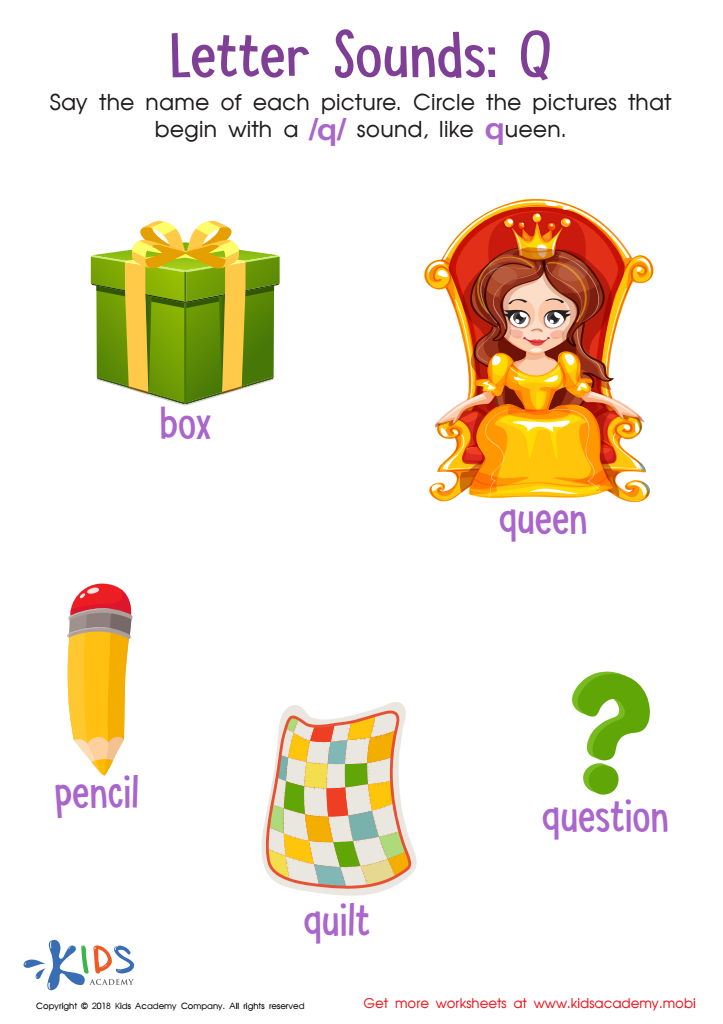
Letter Q Sounds Worksheet
Kids can get confused between "K" and "Q" sounds. Help them learn with this phonics worksheet. They'll name each image and read the word underneath. Point out that words with "Q" also have a "U" which affects how it sounds. Have them circle the matching pictures and watch as they learn this unique letter sound.
 Assign to My Students
Letter Q Sounds Worksheet
Worksheet
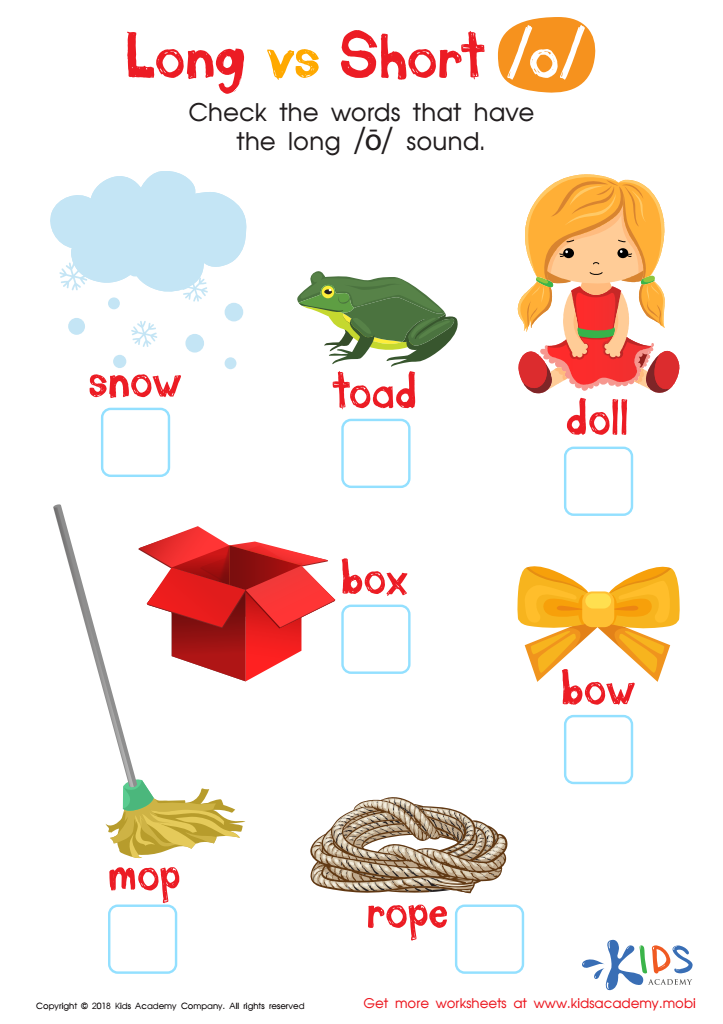
Long vs Short O Reading Worksheet
Help your child learn to identify the long and short «o» sound with this colourful worksheet. Guide them as they spot words with the long or short «o» sound. With practice, your child will find it easier to tell the difference between the two.
Long vs Short O Reading Worksheet
Worksheet
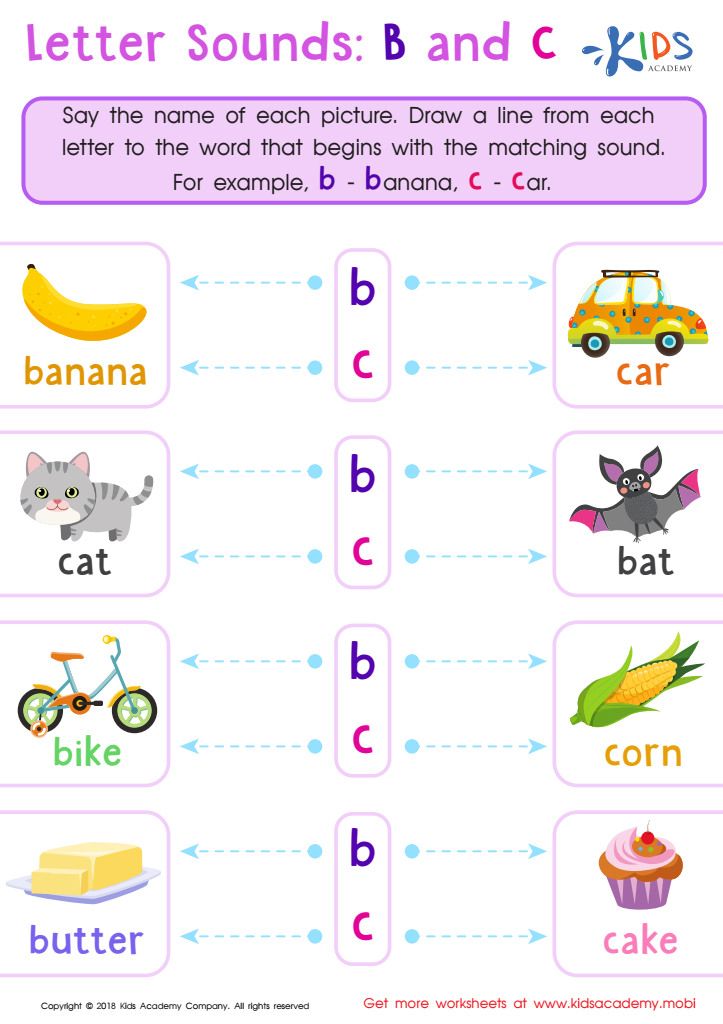
Letter B and C Sounds Worksheet
This fun worksheet offers bright, engaging pictures and helps kids learn to distinguish between the sounds of "B" and "C". With the use of pictures and familiar items, kids will trace lines to the correct initial consonant sound, while also developing fine-motor skills. It's a great way to build decoding ability!
Letter B and C Sounds Worksheet
Worksheet
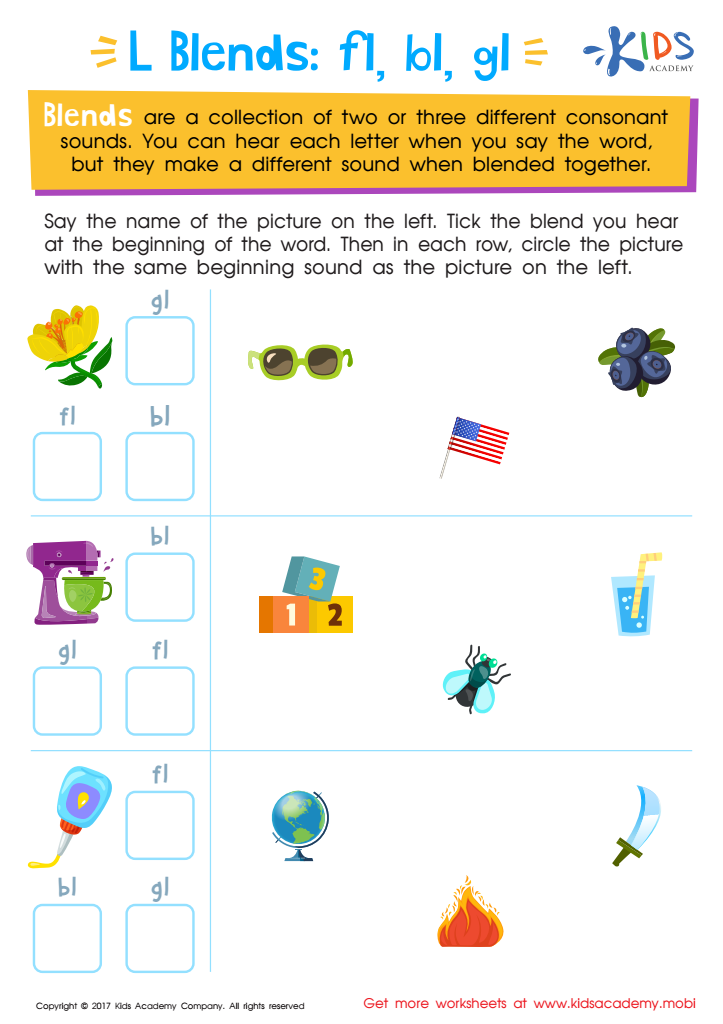
Blending Consonants: "Fl", "Bl" and "Gl" Printable
Help your child master consonant blends Fl, Bl, and Gl with this printable worksheet. Find words associated with the pictures and learn to better understand the difference between consonant blends. Vibrant images motivate and aid in learning. Download now for improved phonics success!
Blending Consonants: "Fl", "Bl" and "Gl" Printable
Worksheet
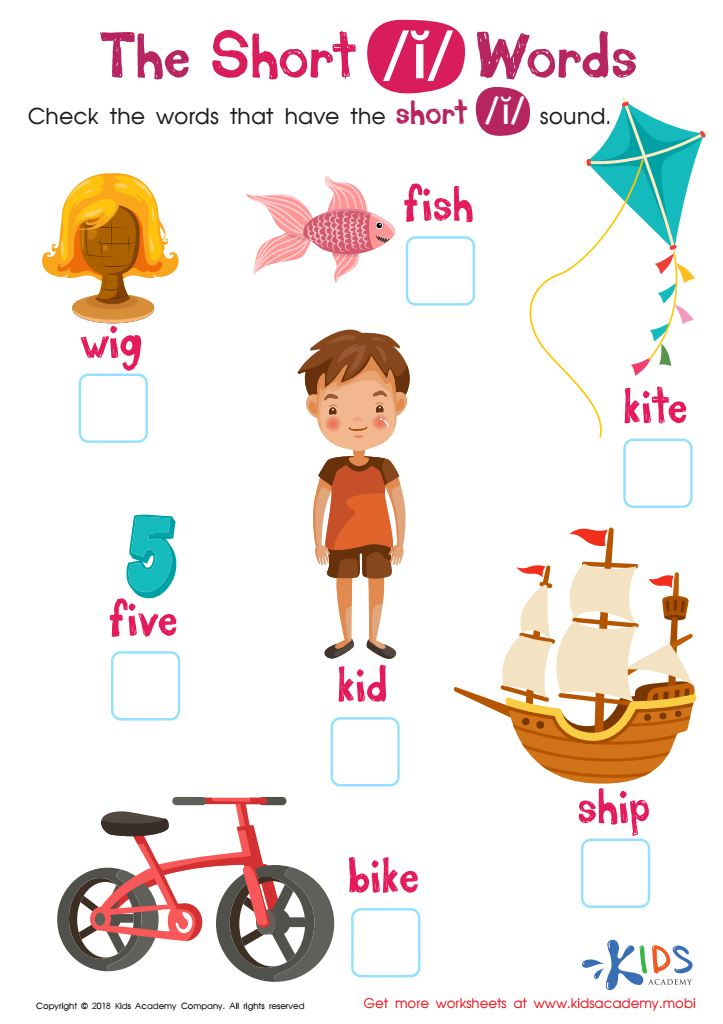
The Short I Words Reading Worksheet
Teach your kindergartner phonics with this printout worksheet! It introduces the short «i» sound and helps them differentiate and articulate sounds and letters of the alphabet. With practice, your child will soon find it easy to classify sounds into long and short vowels.
The Short I Words Reading Worksheet
Worksheet
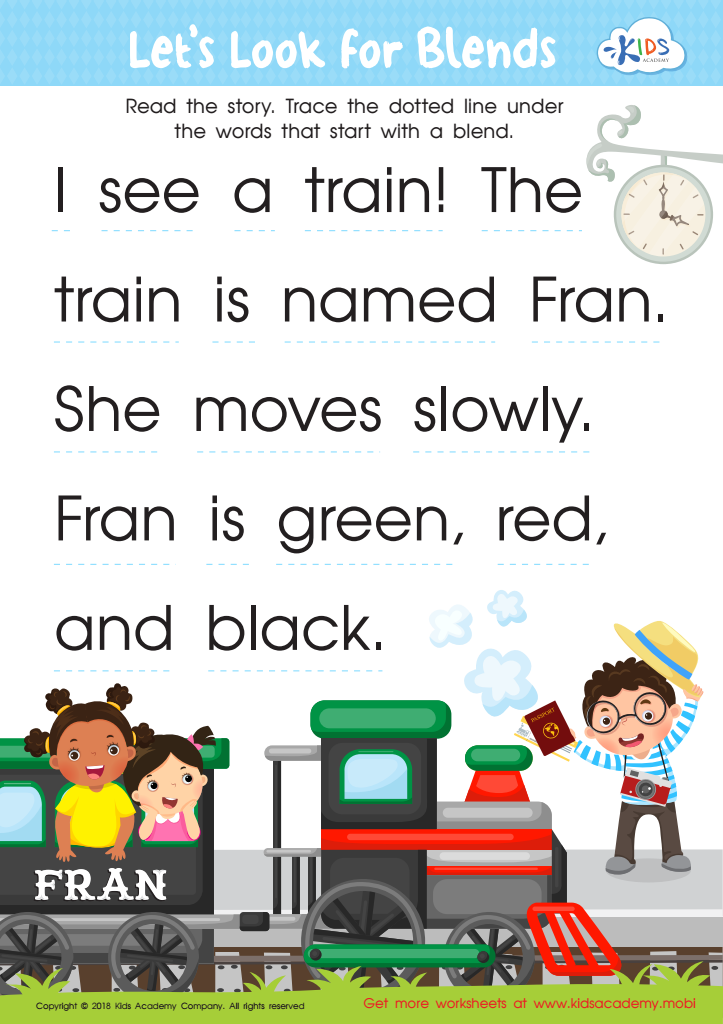
Let's Look for Blends Worksheet
Does your child love trains? Get them to read the story or help them read it aloud. Ask them to trace the words that start with blends on the dotted lines. This exercise will help them improve their blend-identifying skills!
Let's Look for Blends Worksheet
Worksheet
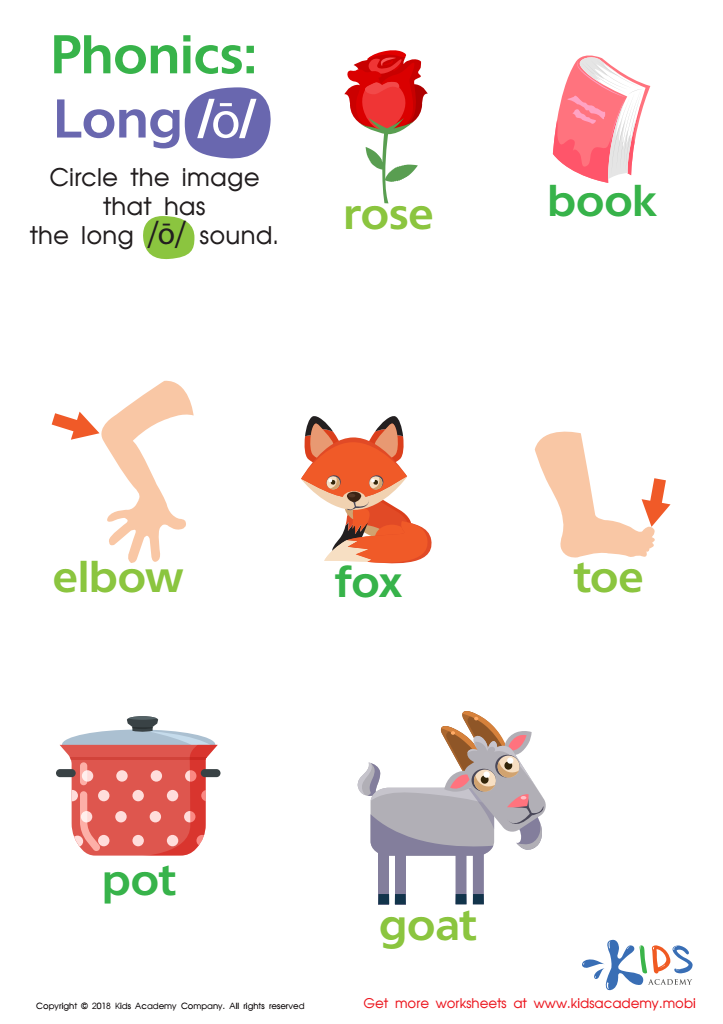
Phonics Long O Reading Worksheet
Are you ready to help your child learn the phonics long «o» sound? This worksheet is designed to aid them in getting familiar with the sound. After completing the exercise, your child should be able to differentiate letters, and recognize words with the long «o» sound. Encourage them to circle the images that have the sound.
Phonics Long O Reading Worksheet
Worksheet
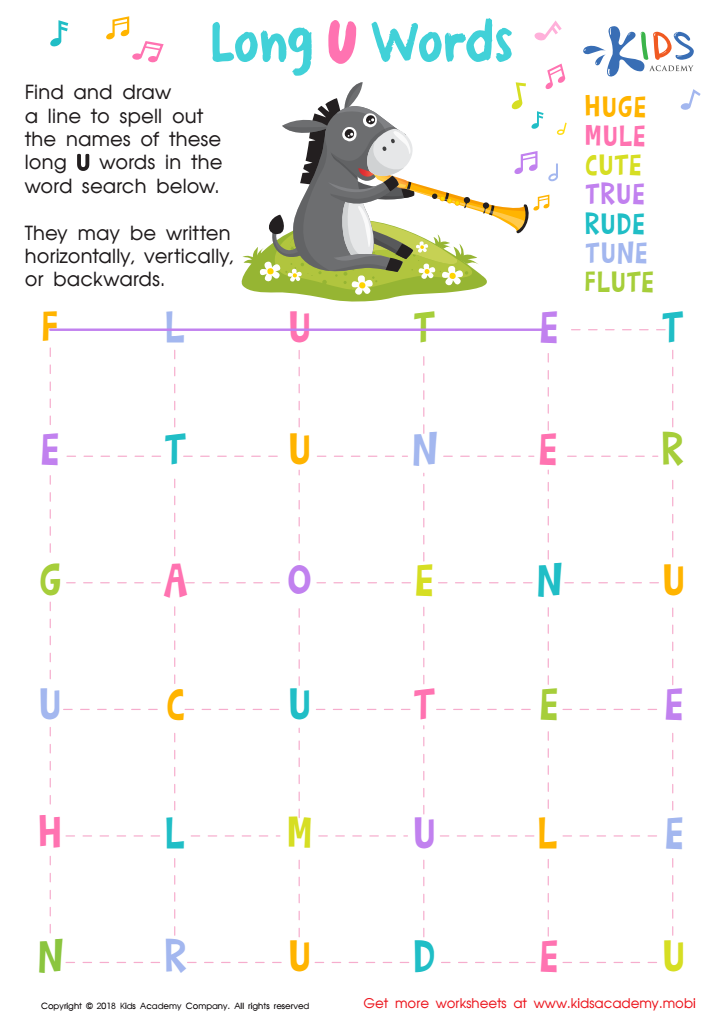
Long /u/ Words Worksheet
Your child needs to learn phonetics to enunciate and differentiate words. This fun worksheet encourages them to find and draw lines connecting the long 'U' words in the word search. Help them read the words on the right side of the picture, then look for them in the word search (horizontally, backwards or vertically).
Long /u/ Words Worksheet
Worksheet
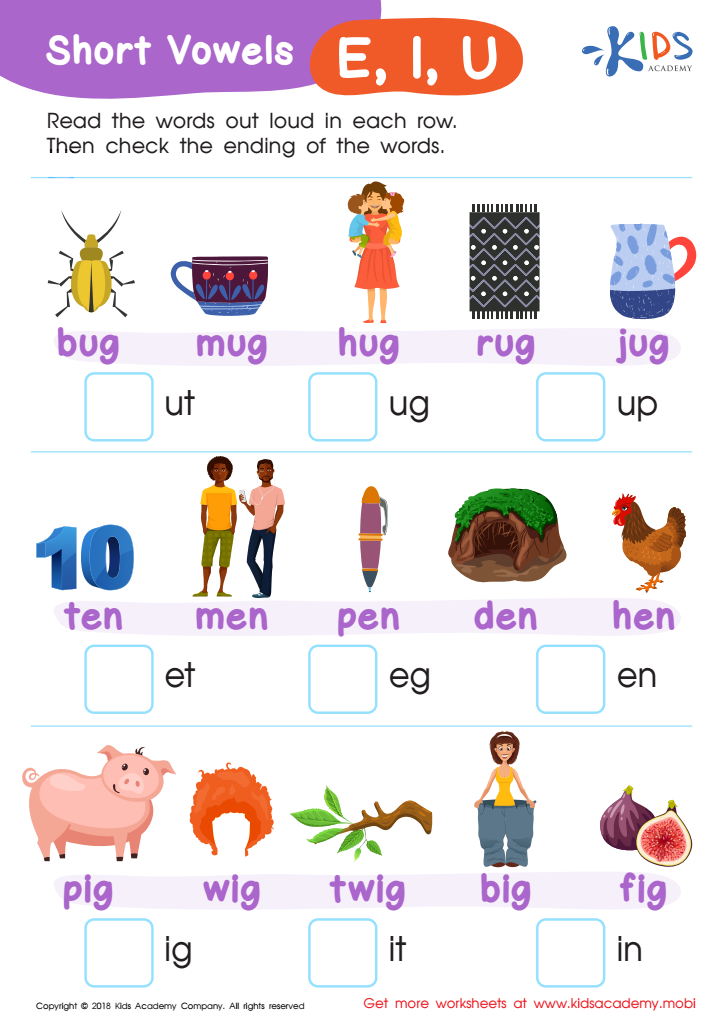
Short Vowels /e/, /i/, and /u/ Worksheet
Your emergent reader can have fun while practicing their short vowel sounds with this free, brightly colored worksheet. They'll identify one-syllable words by their pictures, then match the correct ending for each. They'll gain an understanding of how short vowel sounds vary in closed syllables with different endings, without even realizing it!
Short Vowels /e/, /i/, and /u/ Worksheet
Worksheet
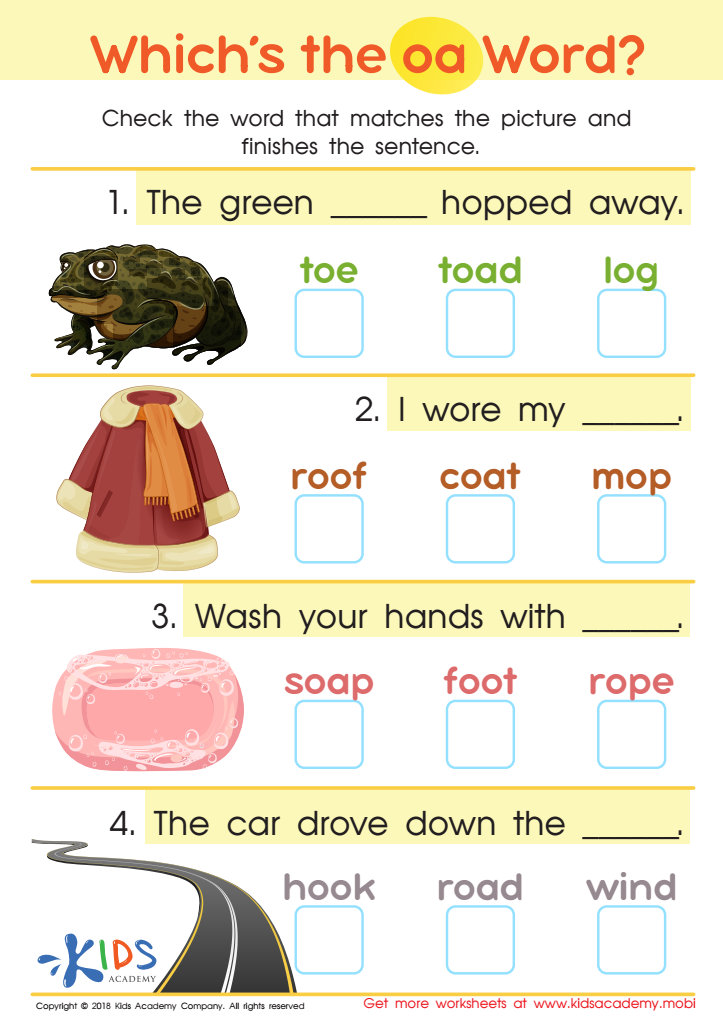
Which's the OA Word? Worksheet
Encourage your kids to complete this fun worksheet. Ask them to identify the animals and objects in the pictures. Read the incomplete sentences aloud, and then find the correct word to finish the sentence. Check their work.
Which's the OA Word? Worksheet
Worksheet
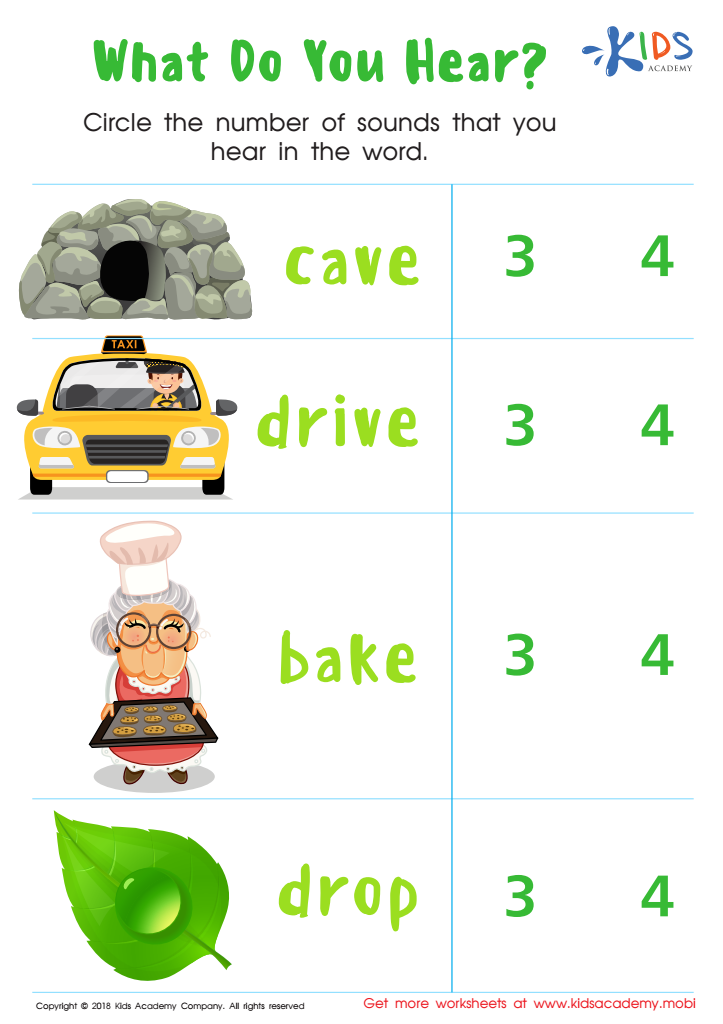
What Do You Hear? Worksheet
New readers can develop phonological awareness with this fun worksheet. They'll isolate sounds in words and count them, then circle the number of sounds heard. It'll help build their auditory discrimination and decoding skills, leading to more fluent reading. Without even knowing it, their reading skills are improving!
What Do You Hear? Worksheet
Worksheet
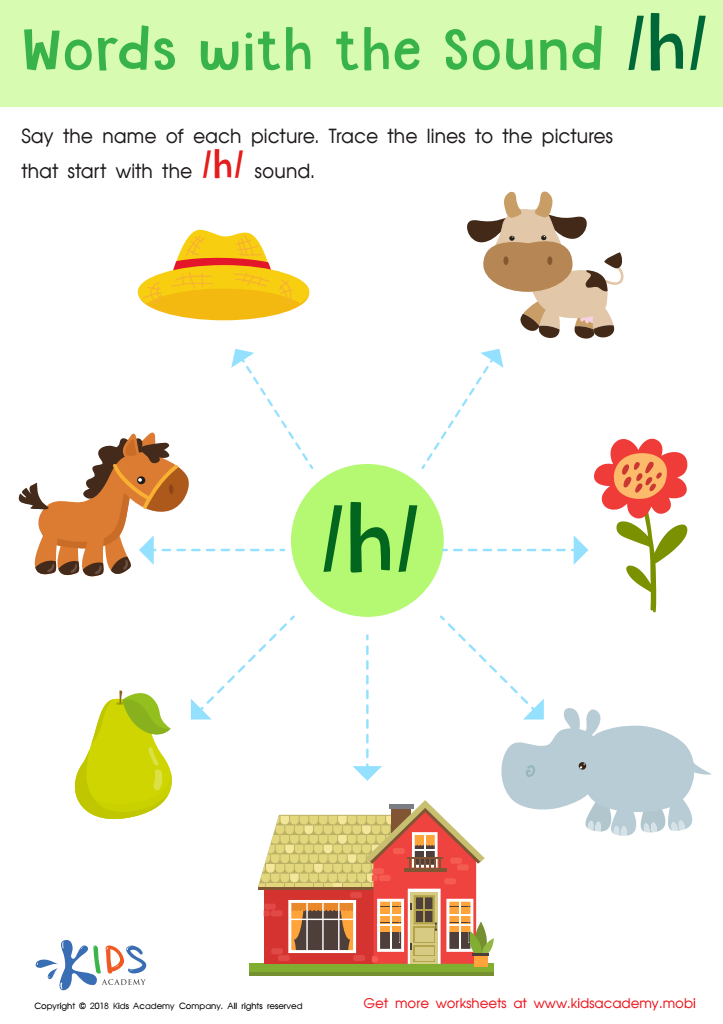
Words with sound h Reading Worksheet
The letter H can often be heard in words! Check your child's knowledge with an engaging worksheet from Kids Academy. Ask them to go around a circle and name each image aloud. Listen for the starting sound and trace the line from the middle letter to the images with the sound. This is a great way to practice phonics!
Words with sound h Reading Worksheet
Worksheet
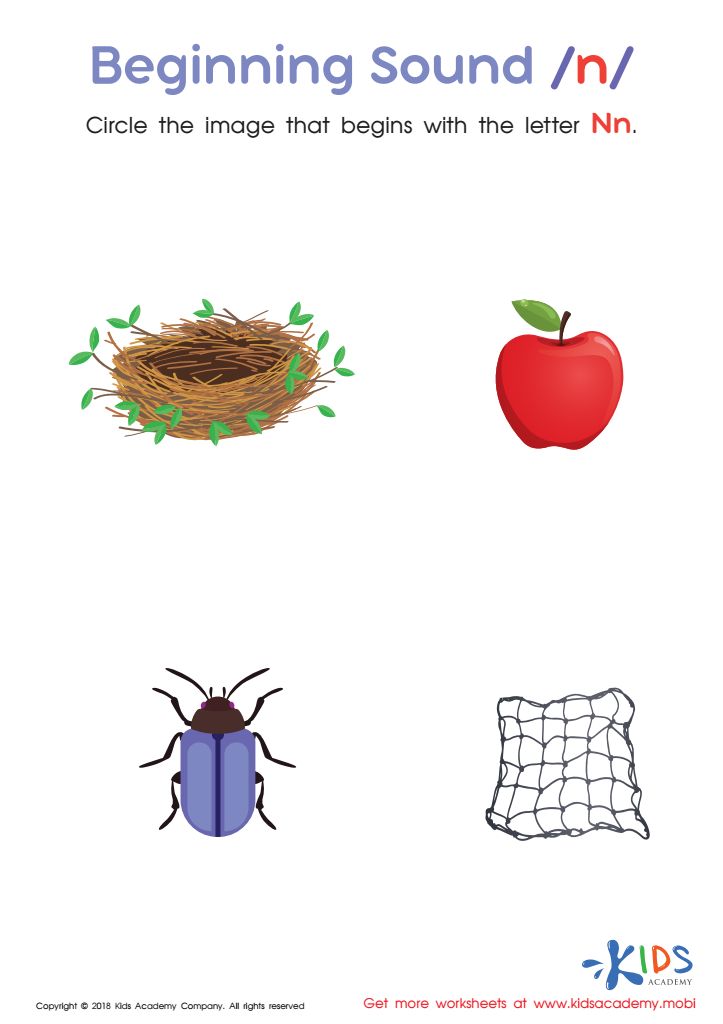
Beginning Sound «n» Worksheet
Help your emerging reader learn the initial «n» sound with this free PDF worksheet! Strengthen fine motor skills by tracing circles around words beginning with «n». Pictures are clear and engaging, giving beginning Phonics learners the right amount of practice and the confidence to succeed.
Beginning Sound «n» Worksheet
Worksheet
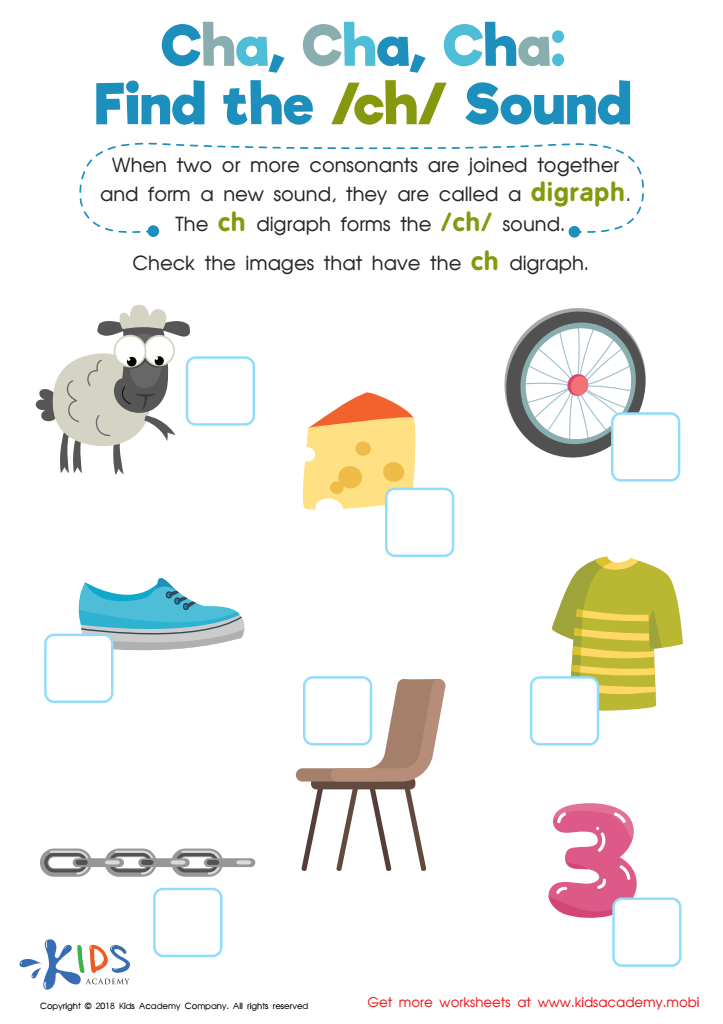
Cha, Cha, Cha: Find the /Ch/ Sound Worksheet
Have your students identify the objects in the images and if they struggle, help them check for the /ch/ digraph. This digraph forms a new sound when two or more consonants are combined, so it can be helpful to point it out to them in the colourful printout.
Cha, Cha, Cha: Find the /Ch/ Sound Worksheet
Worksheet
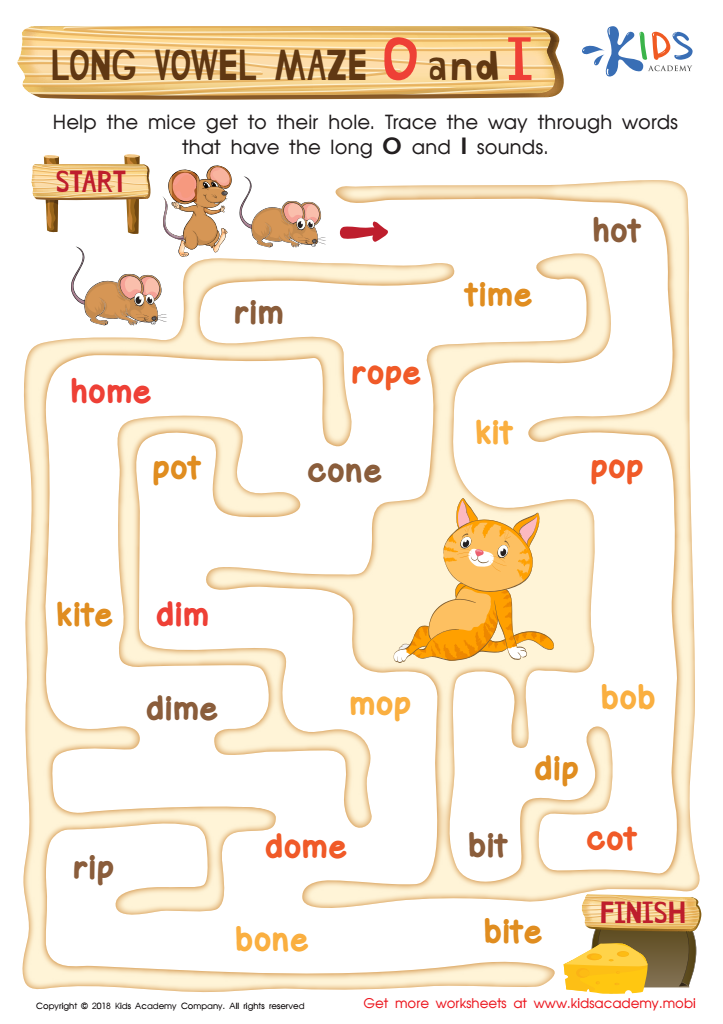
Long Vowel Maze /o/ and /i/ Worksheet
Help your new readers have fun and build their sight word vocabulary! Guide the mice to their prize cheese by having them trace the route on the worksheet, using words with the long o and long i sounds. But watch out for the kitty!
Long Vowel Maze /o/ and /i/ Worksheet
Worksheet
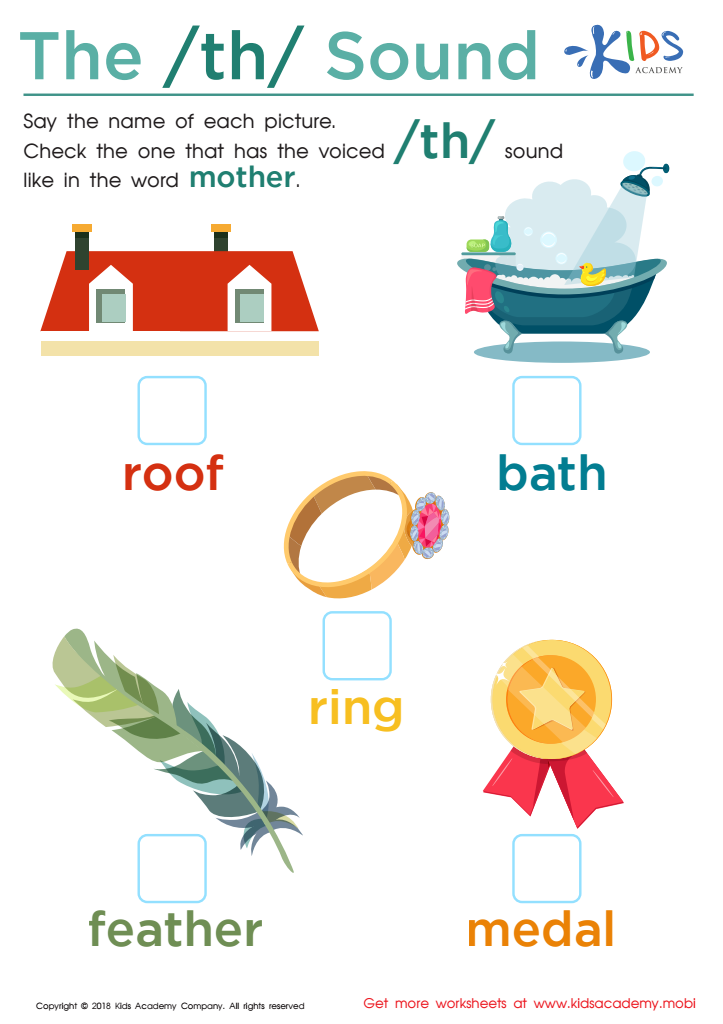
The /th/ Sound Worksheet
Confuse your students no more: have them use this worksheet to understand the /th/ sound and its two variants. With pictures, ask them to say the name of each one. Help them identify the voiced /th/ sound, like in 'mother', by having them say it aloud. Download the pdf to get started.
The /th/ Sound Worksheet
Worksheet
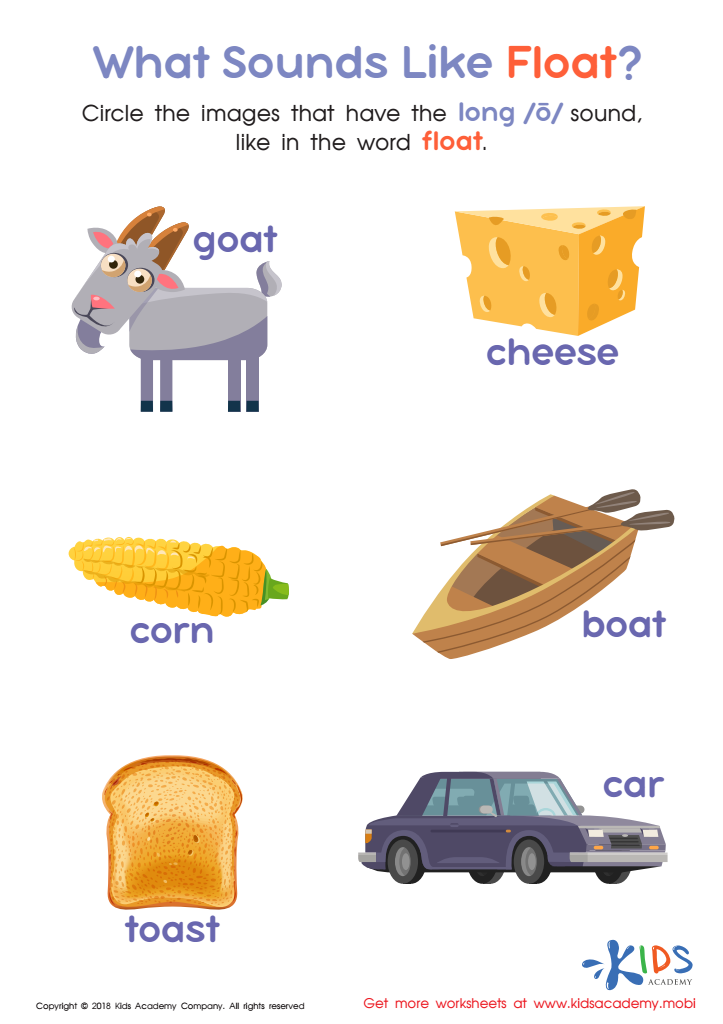
What Sounds Like Float? Worksheet
Help your kids practice the long /o/ sound with words such as 'boat', 'goat' and 'float'. Ask them to identify and circle the images in the worksheet that have the same sound. Award bonus points if they come up with more words with 'oa' spelling!
What Sounds Like Float? Worksheet
Worksheet
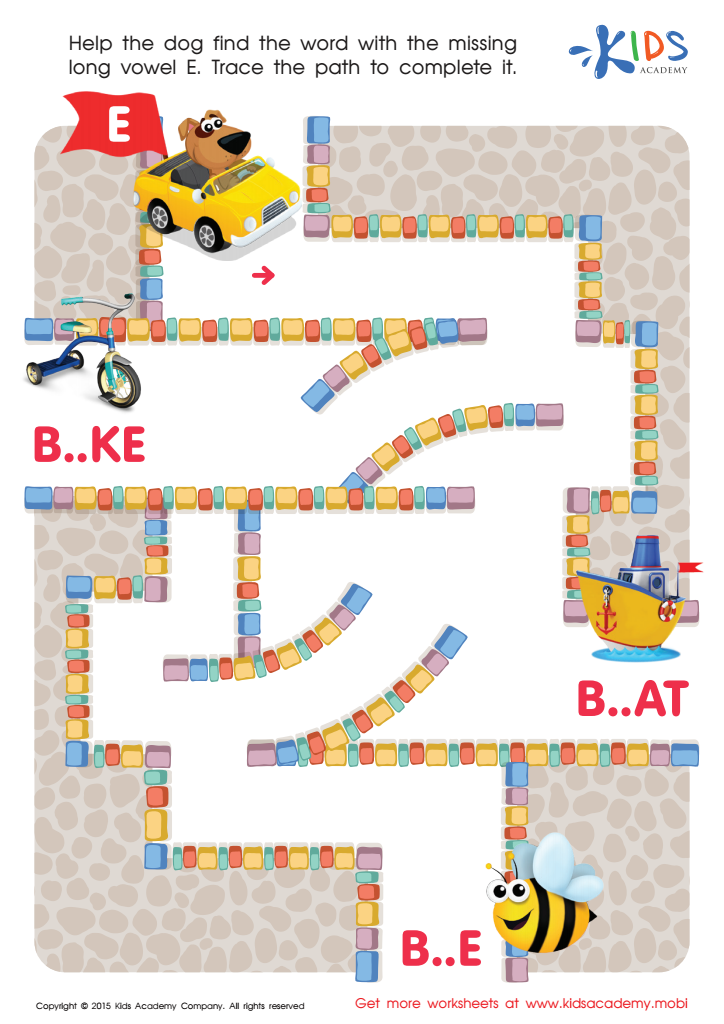
Long Vowel Sound E Worksheet
Practice distinguishing long and short vowel sound E with this free printable! Kids must complete the word “bee” by tracing the maze and adding the missing letter E. Remind them to say the word aloud to help sharpen their phonics ear. Get more phonics fun with the vowel sound E here.
Long Vowel Sound E Worksheet
Worksheet
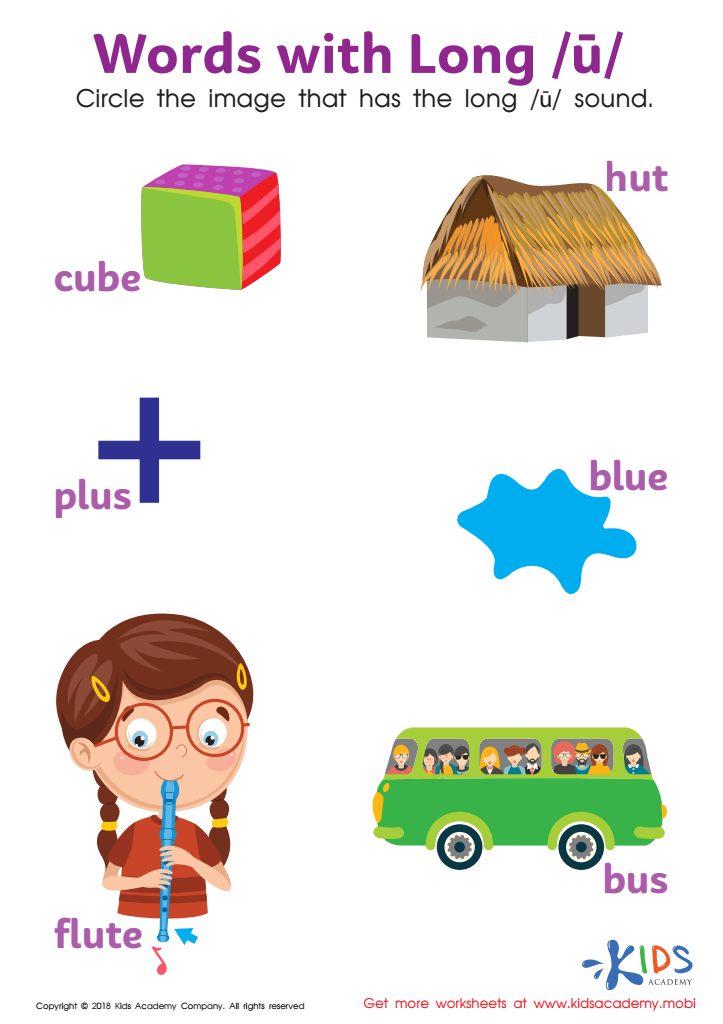
Words with Long U Reading Worksheet
Help your new reader master vowel recognition with this fun worksheet. By using picture clues and practicing fine motor skills, they'll learn to differentiate between words with the long and short «u» sound. Your learner will also get to practice vowel discrimination in high-frequency words. It's a great way to learn the importance of vowels in reading!
Words with Long U Reading Worksheet
Worksheet
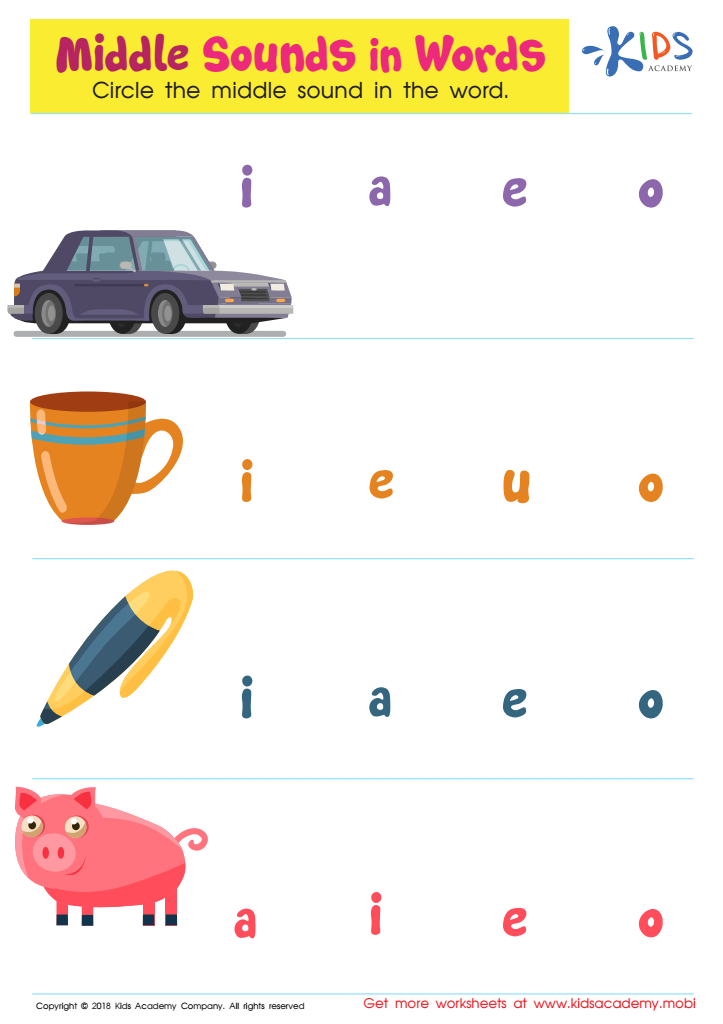
Middle Sounds in Words Worksheet
This worksheet helps emerging readers use picture clues to identify familiar words and practice tracing and fine-motor abilities. It also reinforces spelling by helping them distinguish middle sounds in words. A great way to build listening and literacy skills!
Middle Sounds in Words Worksheet
Worksheet
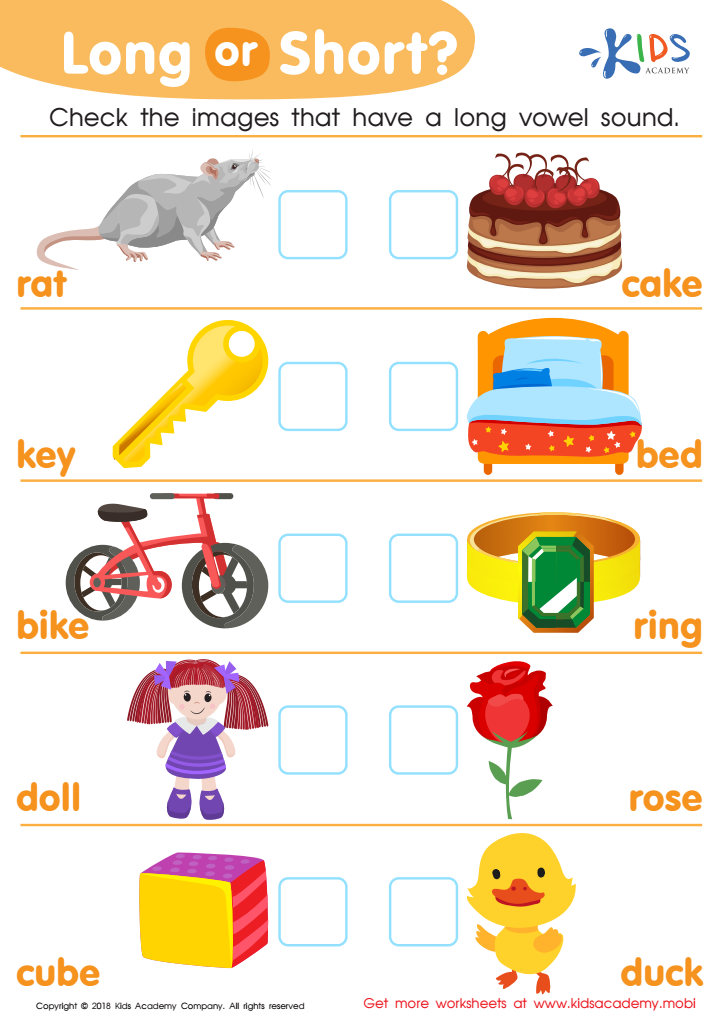
Long or Short Reading Worksheet
Every new reader needs to learn to recognize long and short vowel sounds. This phonics worksheet uses pictures of high-frequency words to help. Kids read the words and then check off images with long vowel sounds. It helps them learn to decode words and improves fine motor skills.
Long or Short Reading Worksheet
Worksheet
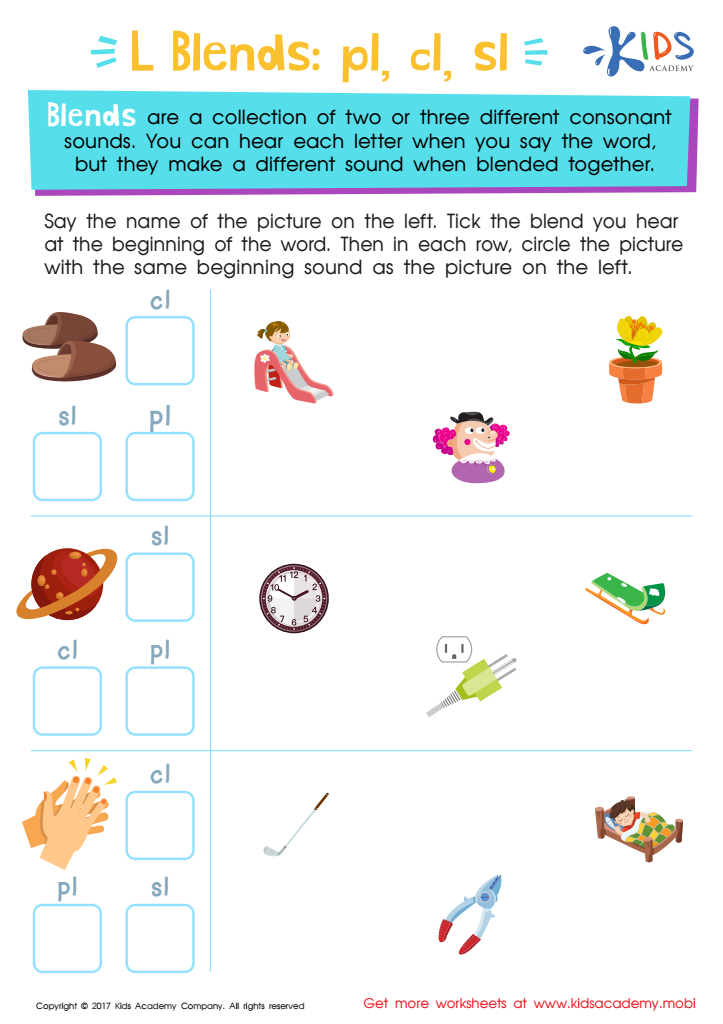
L Blends: "Pl", "Cl" and "Sl" Printable
This printable worksheet will help your child recognize and identify the Pl, Cl, and Sl consonant blends, sound them out, and identify them in print. Improve your child's reading and writing skills with fun and colorful phonics practice!
L Blends: "Pl", "Cl" and "Sl" Printable
Worksheet
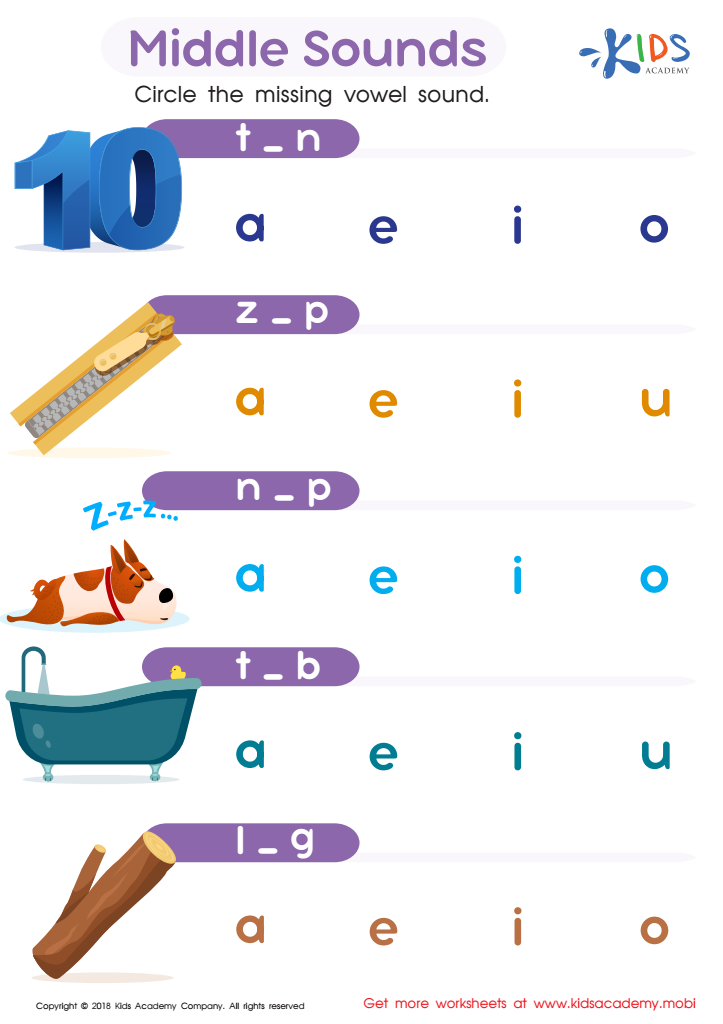
Middle Sounds Worksheet
Download this free worksheet and help your reader identify middle sounds in words. Pictures provide clues to the word, while tracing circles around the middle vowel sound strengthens fine motor and visual discrimination skills. It's a great way to teach sound discrimination between similar-sounding short vowels - a key component for proficient reading.
Middle Sounds Worksheet
Worksheet
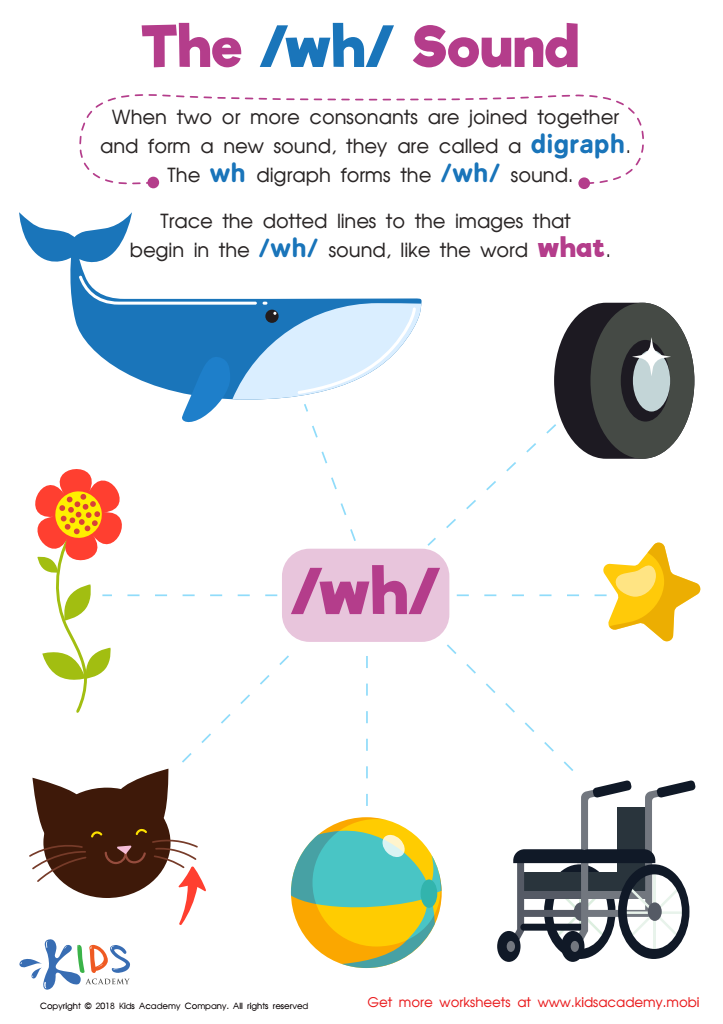
The /wh/ Sound Worksheet
Digraphs join two consonants to make a new sound, like /wh/. Give examples, like "whale", "when" and "why". Ask kids to name pictures in a worksheet and trace dotted lines to images beginning with the /wh/ sound; "what" is one example.
The /wh/ Sound Worksheet
Worksheet
Join Kids Academy for Free
Who is primarily going to use this learning content?








Phonics skills are crucial for early childhood literacy and, thus, should be a priority for parents and teachers of children ages 5-6. Phonics teaches young learners the relationship between letters and sounds, which is foundational for reading and writing. At this developmental stage, children are beginning to recognize the patterns in language, and phonics instruction provides the tools they need to decode and spell words effectively.
When children understand phonics, they can read more fluently, which fosters a love for reading and boosts confidence. This foundational skill aids in the development of other essential literacy skills, such as comprehension, vocabulary, and critical thinking. As children decode words, they can start to predict and recognize larger words and complex sentence structures, sharpening their overall literacy.
Moreover, phonics skills can prevent reading difficulties later on. Without a solid understanding of how letters build words, children might struggle to keep up with their peers academically, possibly leading to frustration, lower self-esteem, and a lack of motivation for learning.
Early mastery of phonics not only aligns with educational standards but also leverages a child's natural readiness and curiosity. Thus, focusing on systematic, engaging, and consistent phonics instruction is key to laying a robust literacy foundation for children.







