Filters

5 filtered results

Clear all filters
Favorites
With answer key
Interactive

5 filtered results

Difficulty Level

Grade


Subject

    Discover our engaging "Normal Two Vowels Together Worksheets" designed specifically for children aged 5-6. These worksheets provide a fun and interactive way for young learners to master the fascinating world of vowel combinations. Each worksheet encourages kids to identify, practice, and expand their understanding of two vowels that work together in words. By incorporating colorful visuals and relatable examples, our resources make learning an enjoyable experience. Perfect for classroom settings or at-home learning, these worksheets foster essential reading skills and phonemic awareness. Explore our collection today and help your child build a strong foundation in language arts!

    Check out this FREE Trial Lesson on Two Vowels Together for age 5-6!

    Long A Vowel Diagraph (ai)

    Favorites
    With answer key
    Interactive
    • 5-6
    • Two Vowels Together
    • Normal
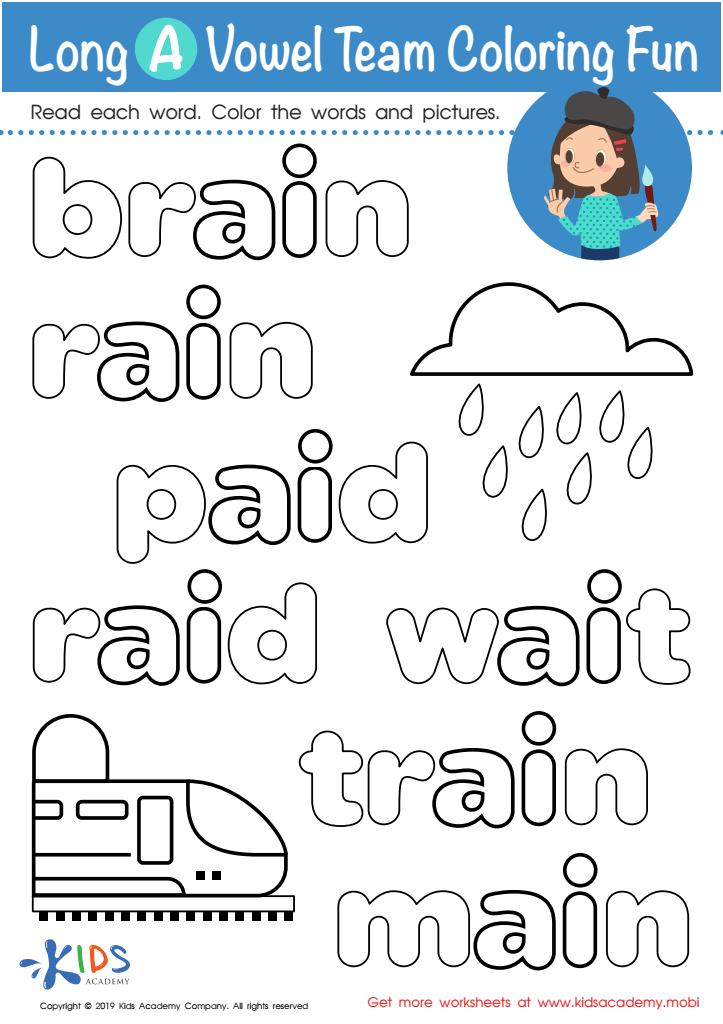
    Long A Vowel Team Coloring Fun Worksheet
    Long A Vowel Team Coloring Fun Worksheet

    Long A Vowel Team Coloring Fun Worksheet

    Divide your class into teams, give each a printout, then have them read aloud words with a long "A" sound (e.g. brain, paid). As they listen, let them reinforce this lesson by coloring in the words and pictures. Make phonics fun and interactive with this great coloring page!
    Download (PDF)
    Assign to My Students
    Long A Vowel Team Coloring Fun Worksheet
    Worksheet
    The AI Vowel Pair Worksheet
    The AI Vowel Pair Worksheet

    The AI Vowel Pair Worksheet

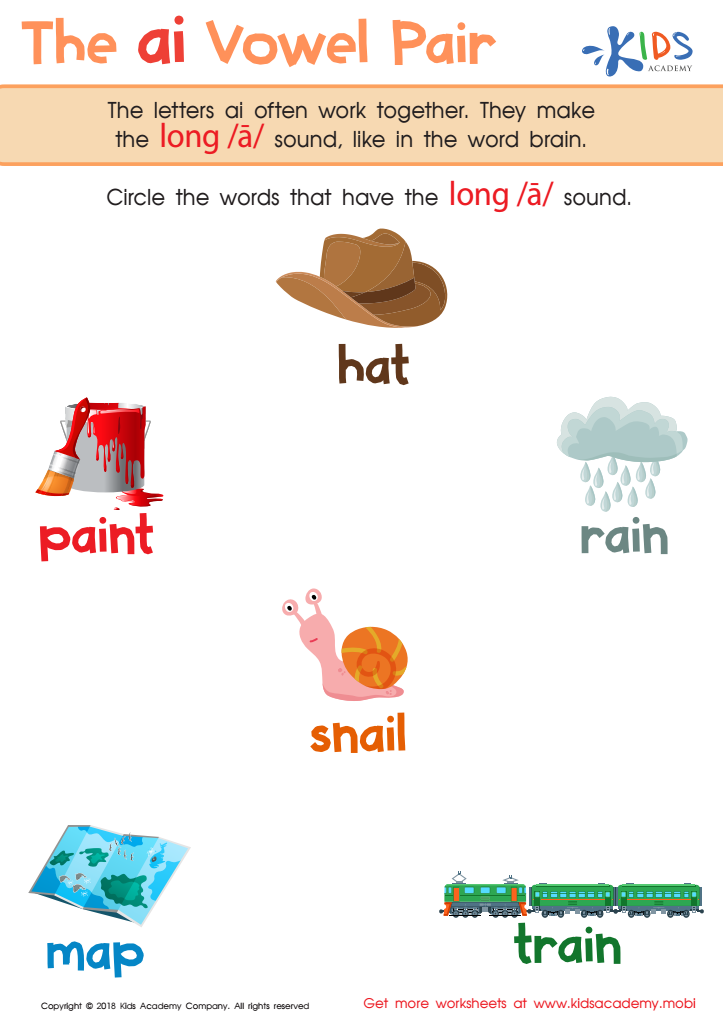
    Vowel pairs make different sounds than individual letters. The 'ai' combination often forms the long /a/ sound, like in 'brain' and 'strain'. Get your kids to look at the pictures in the worksheet, identify each and say the name aloud. Help them circle the words with the long /a/ sound.
    The AI Vowel Pair Worksheet
    Worksheet
    Is It EE, EA, or AY? Worksheet
    Is It EE, EA, or AY? Worksheet

    Is It EE, EA, or AY? Worksheet

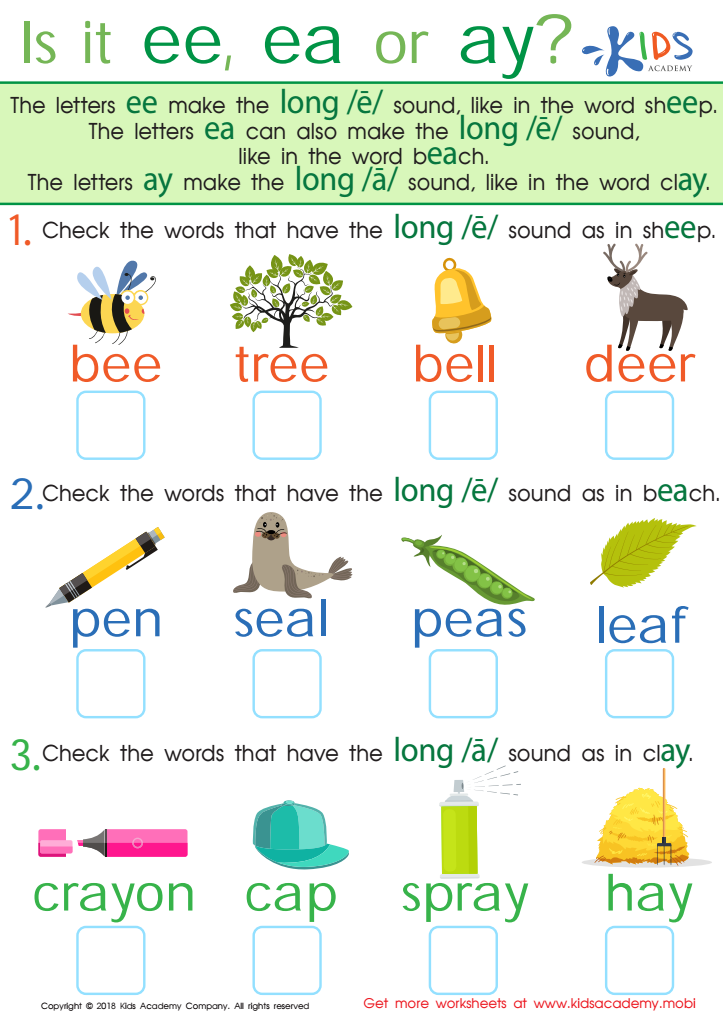
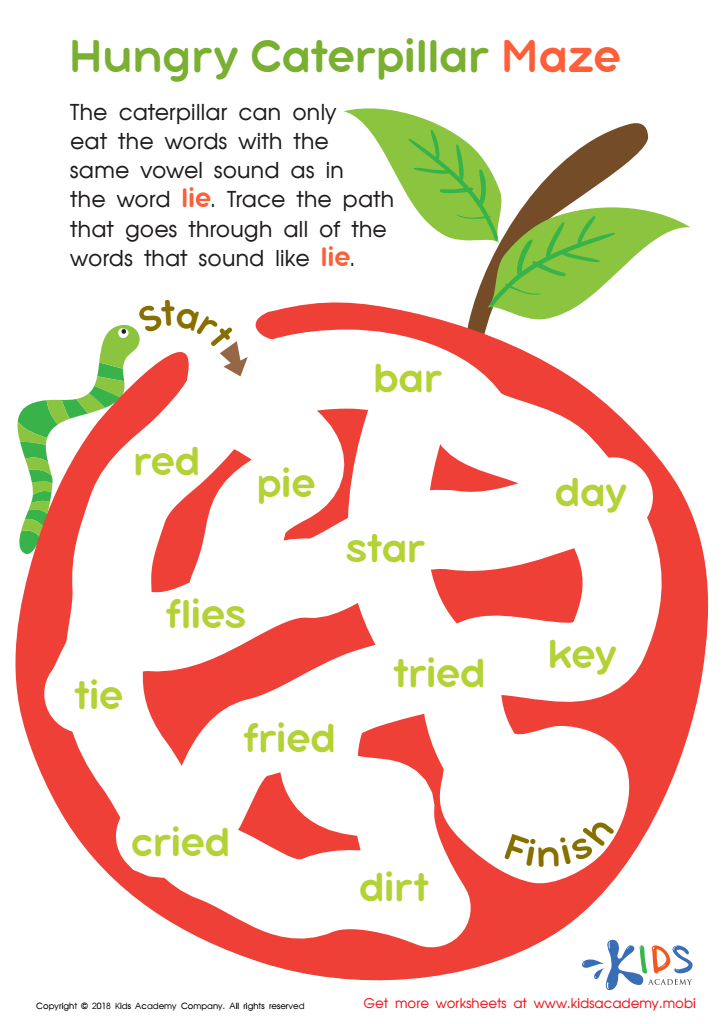
    When 'ee', 'ea' and 'ay' are in words, they usually make the long /e/ and /a/ sounds. Examples of words with 'ee' are "sheep", 'beach' and 'seat' with 'ea', and 'clay' and 'play' with 'ay'. Check this colourful worksheet with your kids; help them find the words that make the long /e/ sound like 'sheep'.
    Is It EE, EA, or AY? Worksheet
    Worksheet
    Hungry Caterpillar Maze Worksheet
    Hungry Caterpillar Maze Worksheet

    Hungry Caterpillar Maze Worksheet

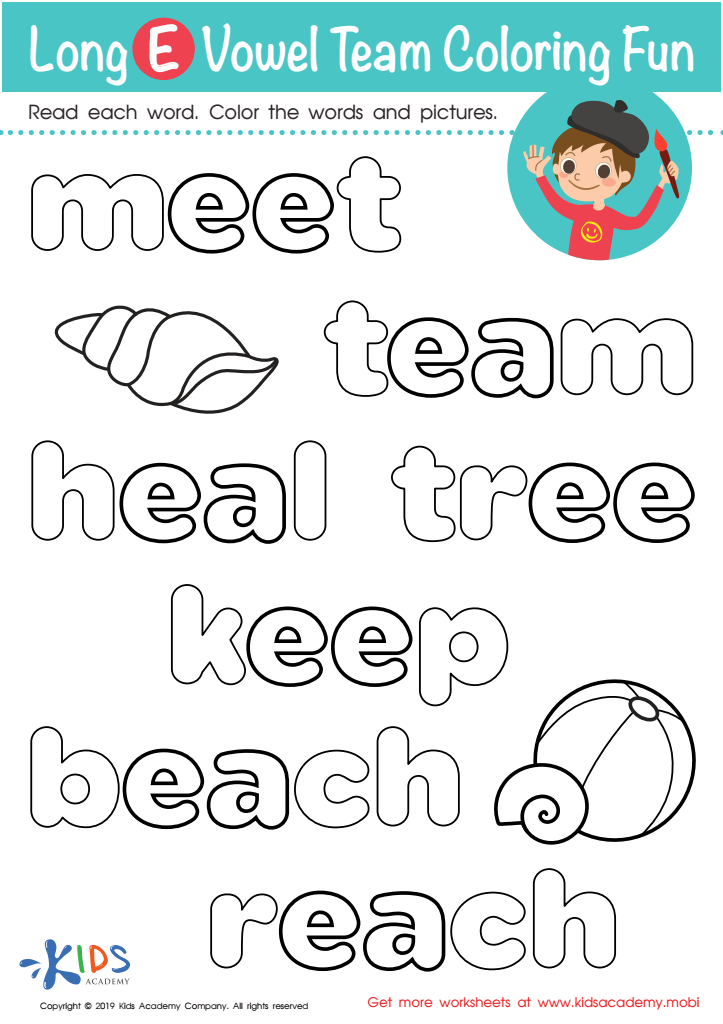
    Remind the kids that caterpillars turn into butterflies! This worksheet helps them practice their vowel sounds. They must trace the path of words that sound like ‘lie’ to help the caterpillar reach the finish line. It's a fun way to learn and explore!
    Hungry Caterpillar Maze Worksheet
    Worksheet
    Long E Vowel Team Coloring Worksheet
    Long E Vowel Team Coloring Worksheet

    Long E Vowel Team Coloring Worksheet

    Divide your students into teams and have them read words with long E sounds, such as "meet" and "team." Let them recognize that the sound can be created with either "ee" or "ea" letter pairings. Then, have the teams color words and pictures with the appropriate letters. This will make your phonics lesson fun and effective.
    Download (PDF)
    Assign to My Students
    Long E Vowel Team Coloring Worksheet
    Worksheet


    Understanding the concept of "Normal Two Vowels Together" is crucial for children aged 5-6 as it lays the foundation for their reading and writing skills. This concept pertains to vowel pairs commonly found in words, such as "ea," "ai," or "ou," that often create specific sounds. Recognizing these patterns is essential in helping young learners decode words, ultimately enhancing their phonemic awareness.

    When parents and teachers focus on this aspect of literacy, they help children develop confidence in their reading abilities. A strong grasp of vowel pairs allows children to tackle more complex texts, leading to improved comprehension and vocabulary. Additionally, understanding these combinations can diminish frustration and confusion that often arises with reading.

    Incorporating activities and games centered around vowel pairs can make learning engaging and fun, thereby fostering a positive attitude toward reading. This approach also encourages collaboration between parents and teachers, as they can share strategies to reinforce these concepts at home and in the classroom. Ultimately, by prioritizing Normal Two Vowels Together, adults support children’s literacy development, paving the way for academic success and a lifelong love of reading!