Critical Thinking Normal Geometry Worksheets for Ages 5-6
5 filtered results
-
From - To
Unlock your child's potential with our "Critical Thinking Normal Geometry Worksheets for Ages 5-6"! Designed to engage young minds, these worksheets foster essential critical thinking skills while introducing foundational geometry concepts in a fun and interactive way. Each activity encourages children to observe, analyze, and make connections, helping them to understand shapes, patterns, and spatial relationships. Ideal for early learners, these worksheets integrate play with education, making geometry exciting and approachable. Perfect for home or classroom use, our printable resources provide parents and educators with the tools needed to cultivate a love for math and develop crucial problem-solving abilities. Start the journey today!
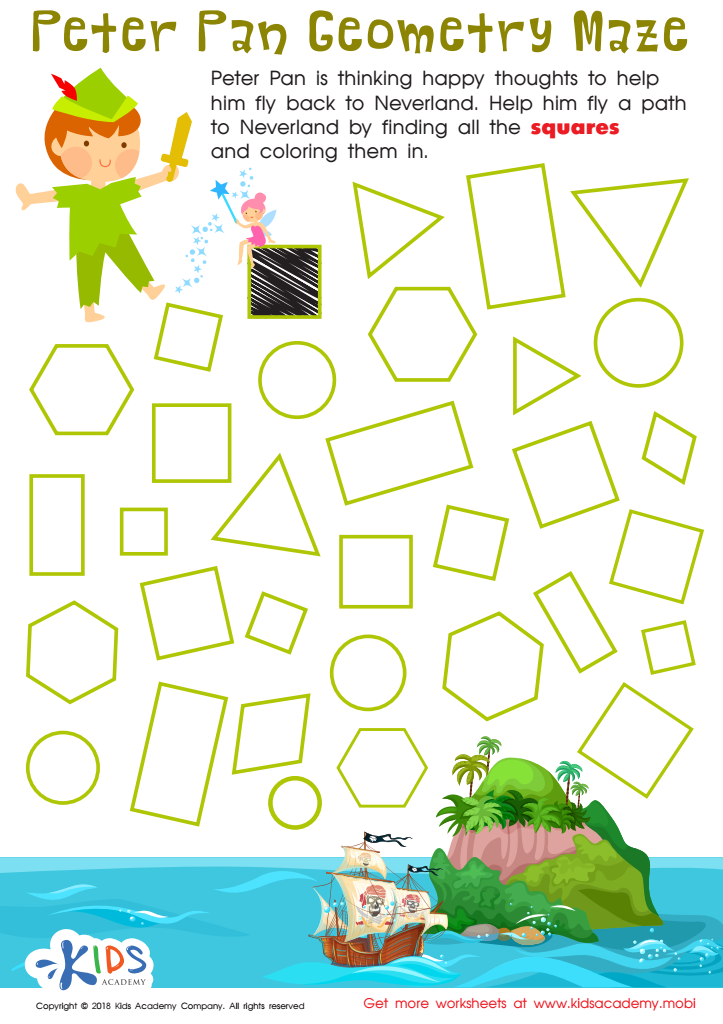
Peter Pan Worksheet
 Assign to My Students











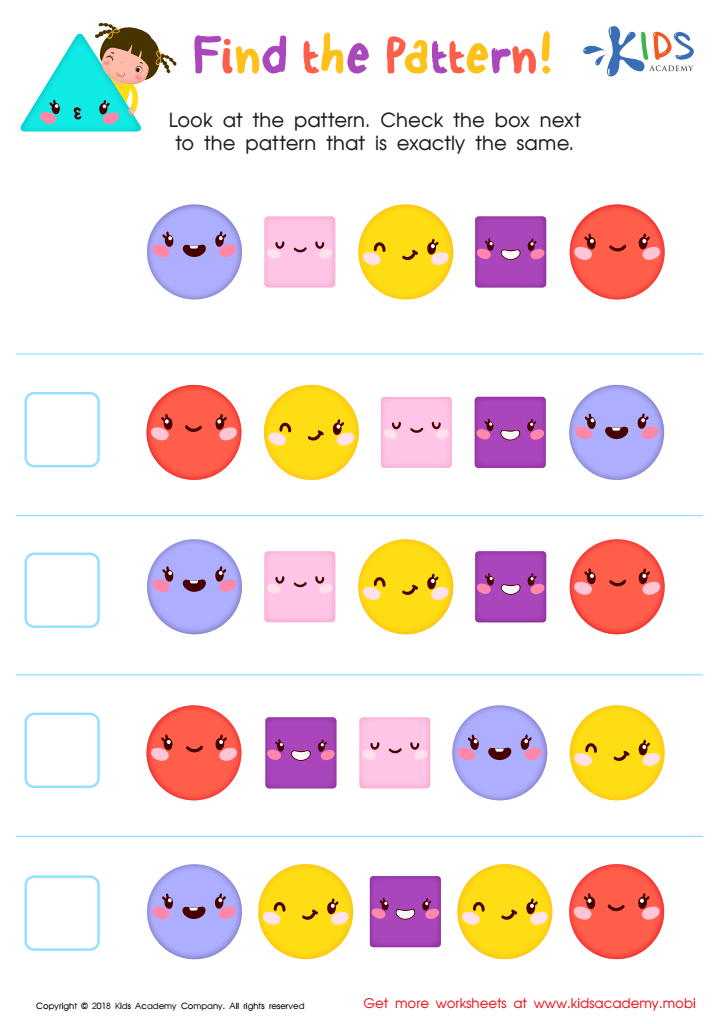
Find the Pattern Worksheet
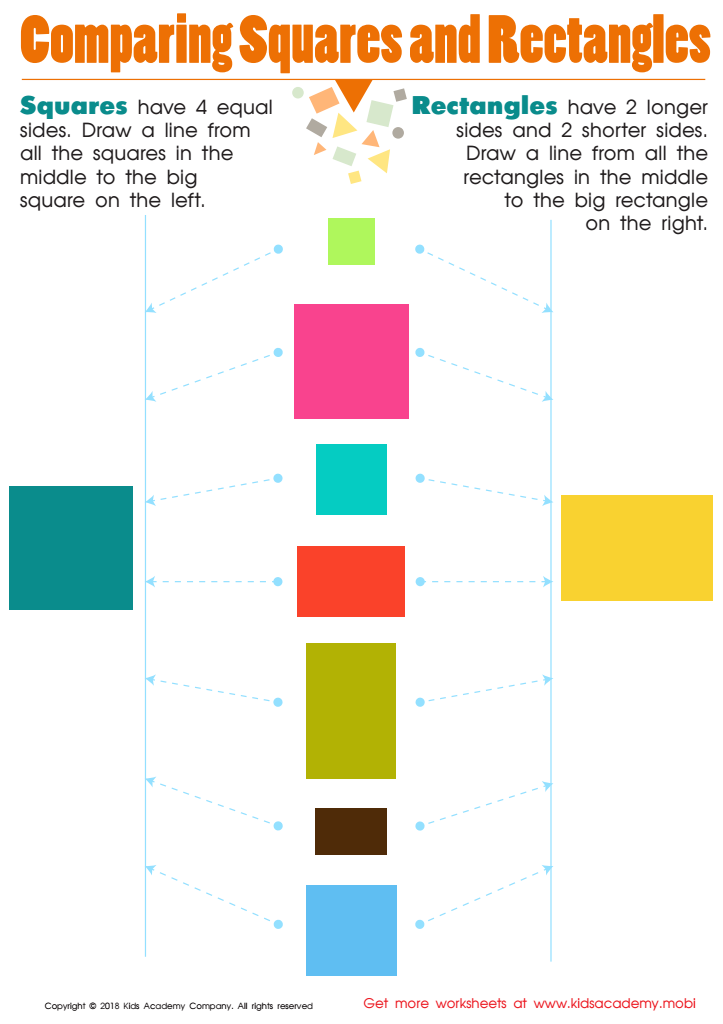
Comparing Squares Rectangles Worksheet
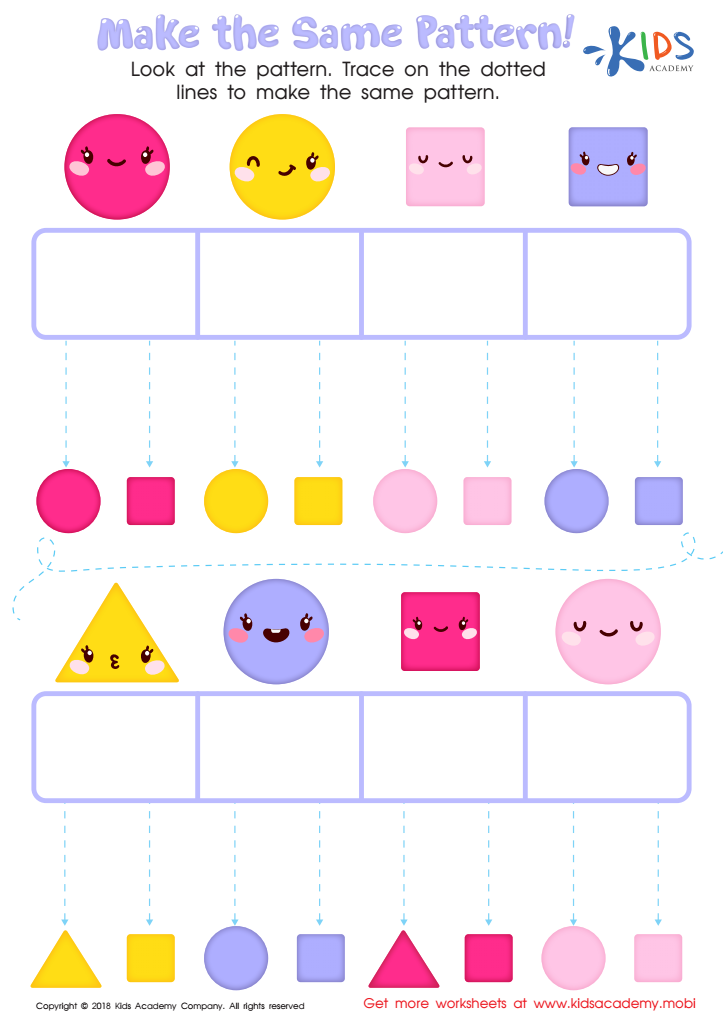
Make the Same Pattern Worksheet
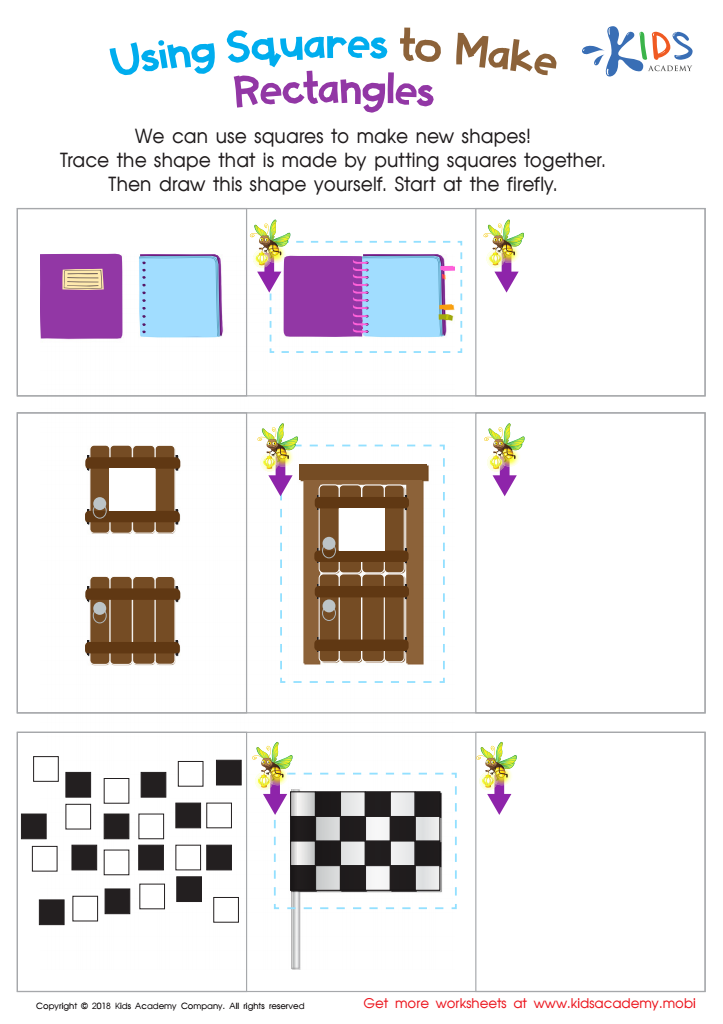
Using Squares to Make Rectangles Worksheet








Critical Thinking Normal Geometry for ages 5-6 is essential for fostering foundational skills in young learners. At this early stage, children are naturally curious and eager to explore their environments. Introducing them to critical thinking through geometry enriches their cognitive development and encourages problem-solving skills that extend beyond mathematics.
Understanding basic geometric concepts helps children recognize shapes, patterns, and spatial relationships in their everyday world. This not only boosts their mathematical abilities but also enhances their visual thinking, reasoning skills, and creativity. For example, when children engage in activities involving shape sorting or constructing simple structures, they learn to categorize and compare, which enhances their ability to think analytically.
Moreover, critical thinking in geometry encourages collaboration and communication, as children often work in groups, explaining their reasoning and listening to others' perspectives. This builds social skills that are vital for their overall development.
As parents and educators nurture these skills at such a formative age, they pave the way for greater academic success and a positive attitude toward learning. Ultimately, fostering critical thinking through geometry enriches children's experiences and equips them with essential tools they will use throughout their educational journeys.








