
Visual discrimination Normal Geometry Worksheets for Ages 5-6
3 filtered results
Difficulty Level
Grade
Age
-
From - To
Subject
Activity
Standards
Enhance your child's visual discrimination skills with our engaging Normal Geometry Worksheets designed specifically for ages 5-6. These worksheets help young learners identify shapes, patterns, and spatial relationships through fun, interactive activities. By focusing on visual discrimination, children will develop crucial problem-solving abilities and improve their overall math comprehension. Each worksheet is carefully crafted to foster creativity and promote learning while keeping your child engaged. Ideal for home or classroom use, these resources provide a perfect combination of education and enjoyment. Download and print today to give your child the tools they need for a successful foundation in geometry!
Favorites
With answer key
Interactive
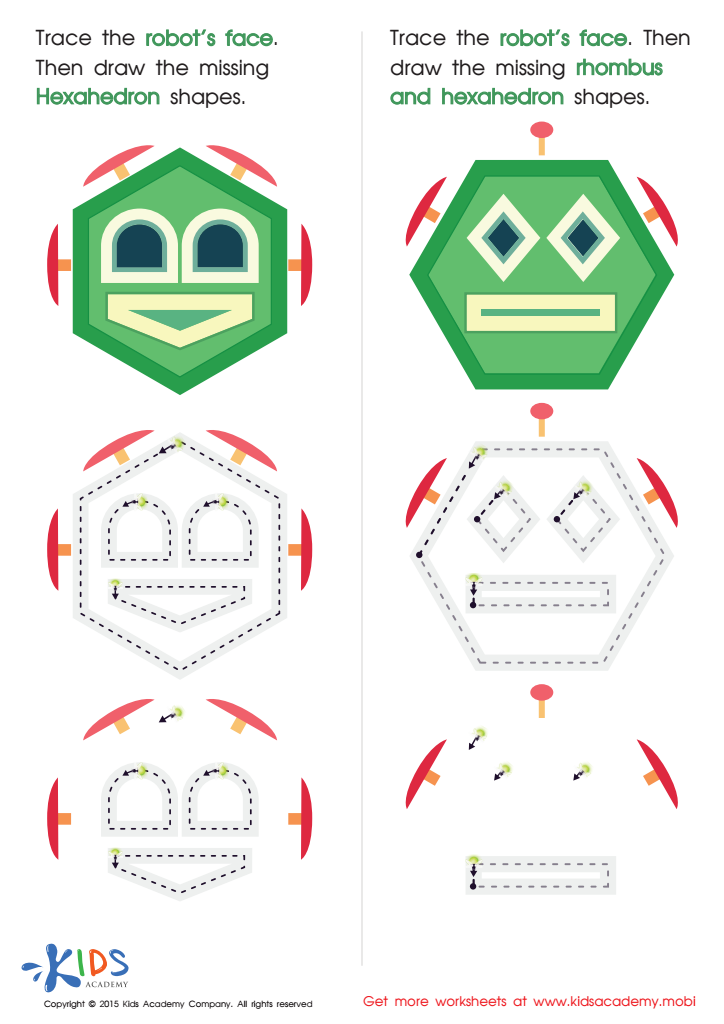
Practice Drawing Hexahedrons And a Rhombus Worksheet
Trace the Robot's face, draw hexahedron and rhombus shapes, then trace again. Our tracing shapes worksheets make it easy for kids to learn geometry. Get more materials from Kids Academy to practice all the shapes.
 Assign to My Students
Practice Drawing Hexahedrons And a Rhombus Worksheet
Worksheet











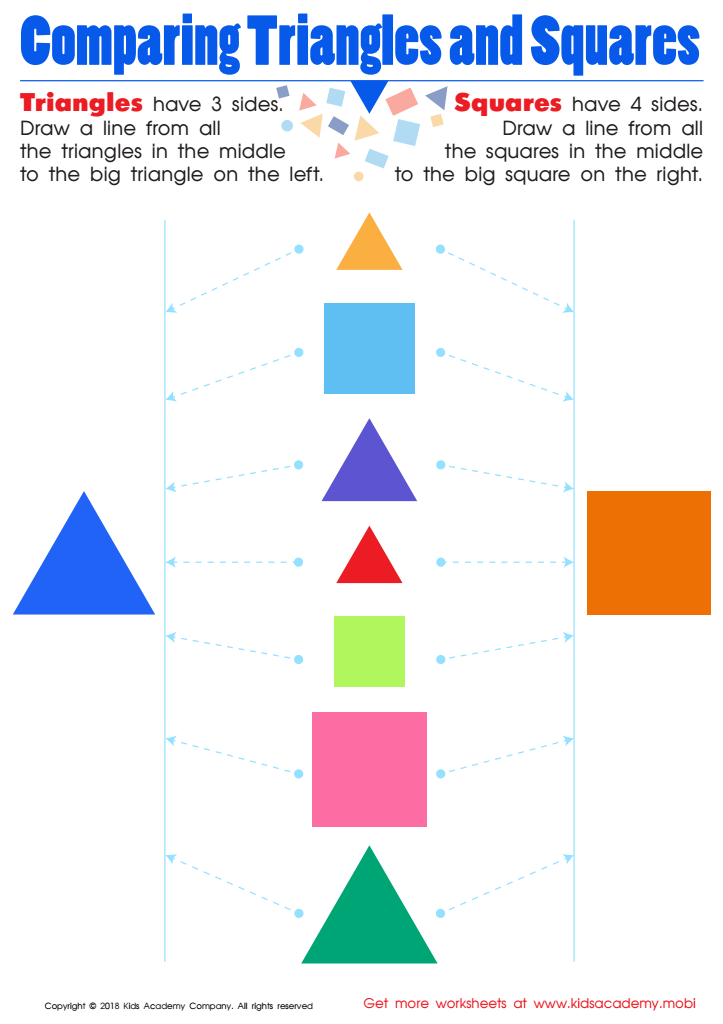
Comparing Triangles Squares Worksheet
Squares and triangles are different in the number of sides they have. Challenge kids to compare them with this fun worksheet! Read the descriptions at the top, then use the left and right shapes to match up the middle ones. Go down the page, joining the middle shapes to the side using the dotted lines!
Comparing Triangles Squares Worksheet
Worksheet
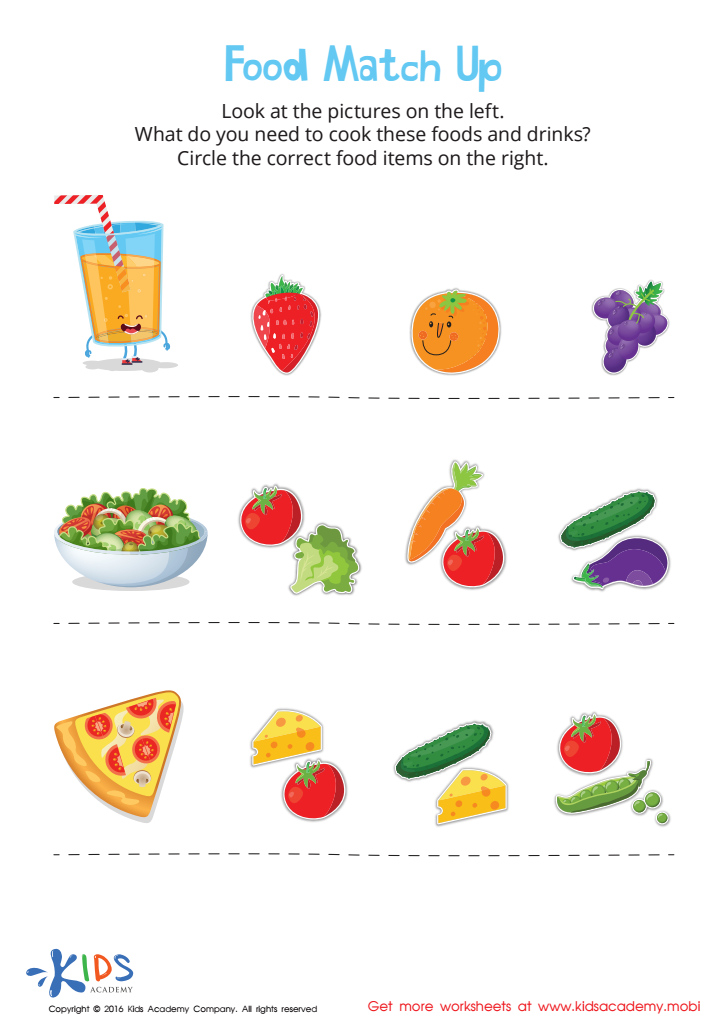
Food Match Up Worksheet
This worksheet will help your preschooler develop early math and cognitive skills. It challenges them to pay attention to details, understand how smaller parts make a whole, and increase important matching skills. Use it to give them a hands-on learning experience in the kitchen, and watch them understand how ingredients come together to make something delicious!
Food Match Up Worksheet
Worksheet
Join Kids Academy for Free
Who is primarily going to use this learning content?








Visual discrimination is the ability to see differences and similarities between objects, a vital skill for young learners, especially when it comes to understanding geometry. For children aged 5-6, fostering this skill can significantly contribute to their academic success and overall cognitive development. Parents and teachers should prioritize visual discrimination in geometry for several reasons.
First, it lays the foundation for mathematical understanding. Recognizing shapes, sizes, and spatial relationships is crucial as children begin to explore more complex mathematical concepts. Mastering visual discrimination helps children identify geometric shapes, which is the first step in learning about area, perimeter, and volume later on.
Second, this skill enhances critical thinking. Children learn to observe, compare, and contrast, fostering analytical skills that extend beyond math. Engaging in activities that promote visual discrimination encourages problem-solving and reasoning.
Lastly, developing visual discrimination supports literacy. Patterns and sequences in shapes can help children flag differences in letters and words as they begin reading, facilitating a connection between math and language skills.
In summary, encouraging visual discrimination in geometry helps young learners build a crucial cognitive foundation that supports their entire educational journey, making it an area of focus for both parents and teachers.








