
Reading comprehension Normal Animals Worksheets for Ages 5-6
7 filtered results
Difficulty Level
Grade
Age
-
From - To
Subject
Activity
Standards
Enhance your child's reading proficiency with our "Reading Comprehension Normal Animals Worksheets for Ages 5-6" from Kids Academy. Designed to captivate young minds, these colorful, educational worksheets build a solid foundation in reading comprehension through engaging animal-themed content. Each worksheet features simple passages accompanied by questions that develop critical thinking and understanding, fostering an early love for reading. Ideal for children just starting out on their literacy journey, these worksheets offer a perfect combination of fun and learning. Help your child explore the animal kingdom while boosting their reading skills today!
Favorites
With answer key
Interactive
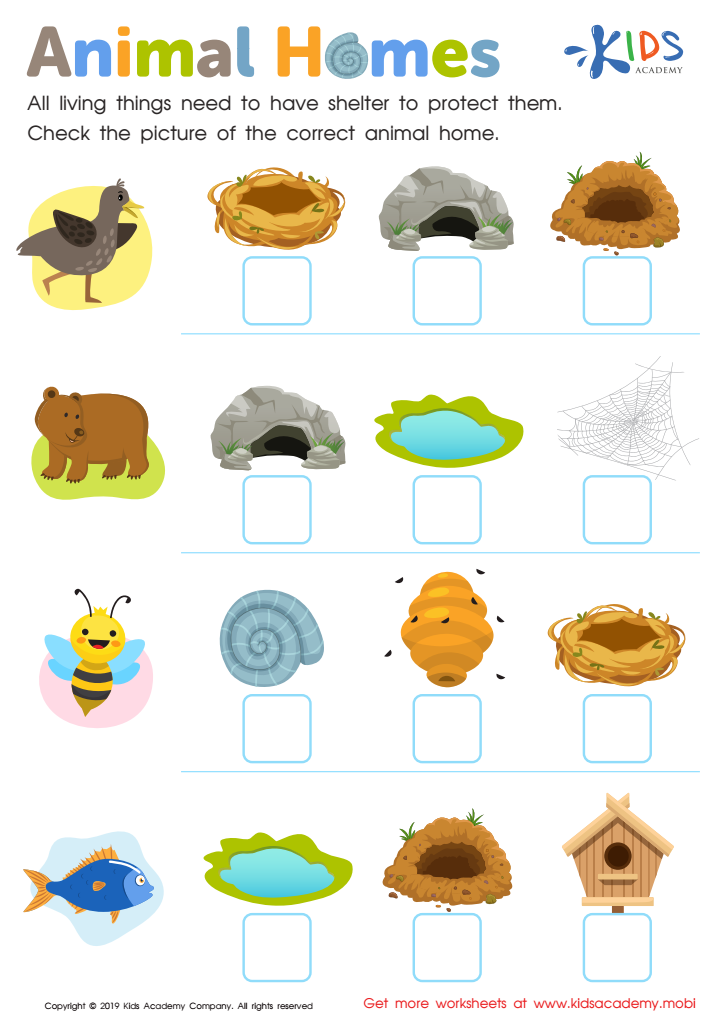
Animal Homes Worksheet
Students have homes where they can do things they love, sleep and stay safe from bad weather. Check the worksheet for animals and their shelters. Ask your kids to identify each and match the animal home to the picture. (80 words)
 Assign to My Students
Animal Homes Worksheet
Worksheet
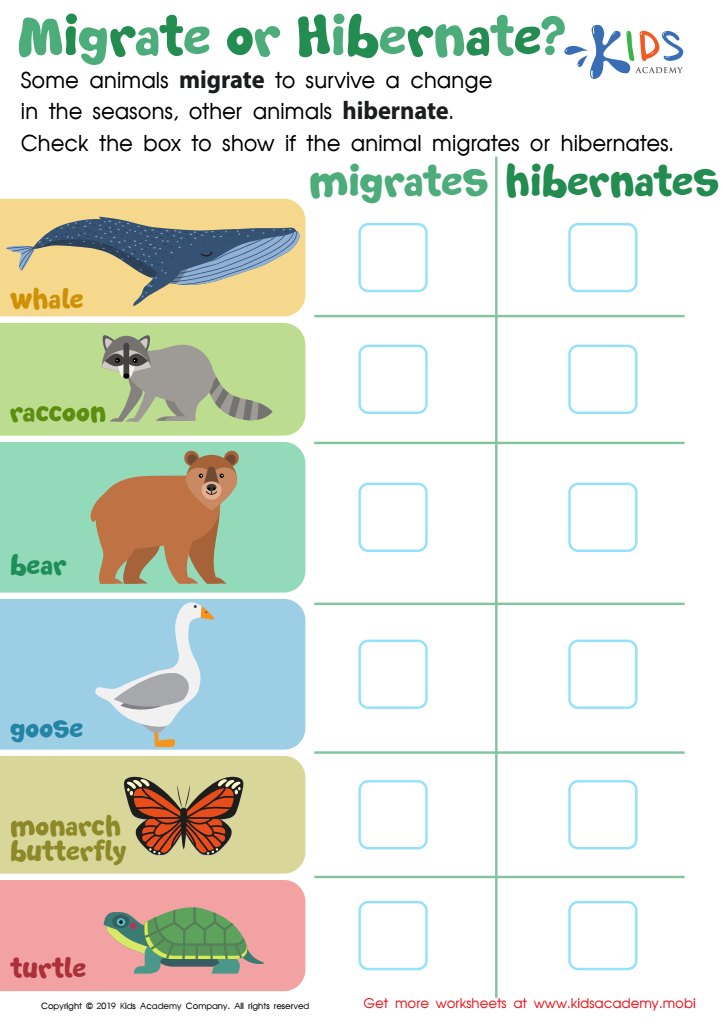
Migrate or Hibernate? Worksheet
Many animals survive by either migrating or hibernating when the weather changes. Migration involves traveling in flocks or herds to a more temperate climate, while hibernation is when animals stay in their homes and eat and sleep for a long period of time. Show your kids this worksheet and help them decide which strategy animals use to cope with the changing weather.
Migrate or Hibernate? Worksheet
Worksheet
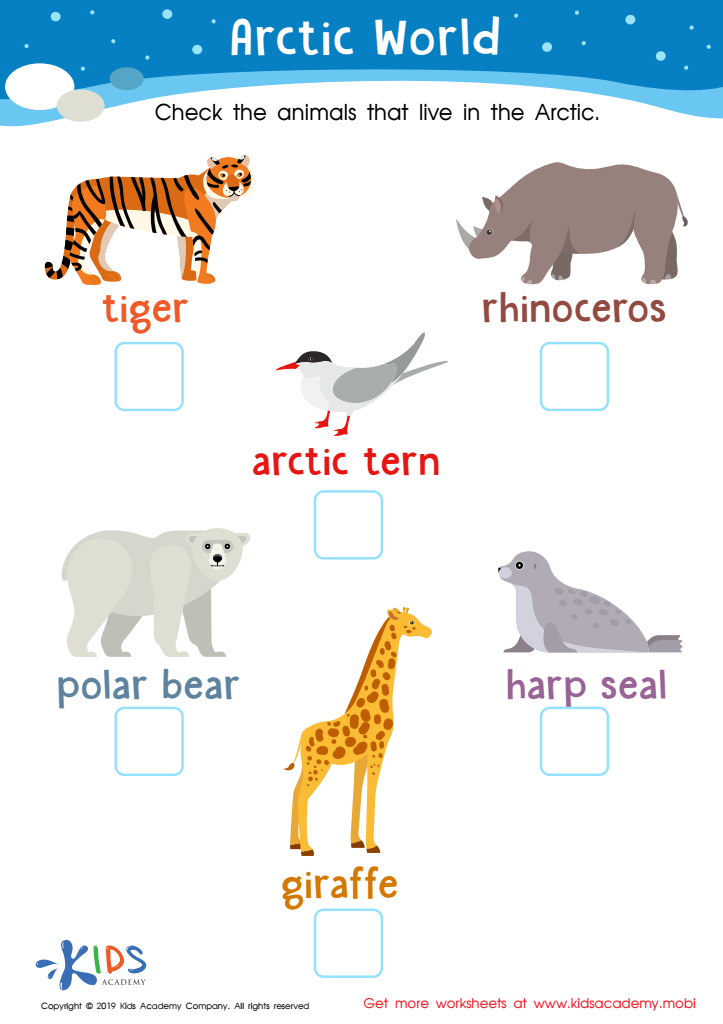
Arctic World Worksheet
Ask your students if they know where the Arctic is located and what lives there. If not, use a world atlas to show them. The Arctic is very cold and snow-covered; native animals have adapted to survive the harsh conditions. Look at the animals in the worksheet and help your students decide which ones live in the Arctic.
Arctic World Worksheet
Worksheet
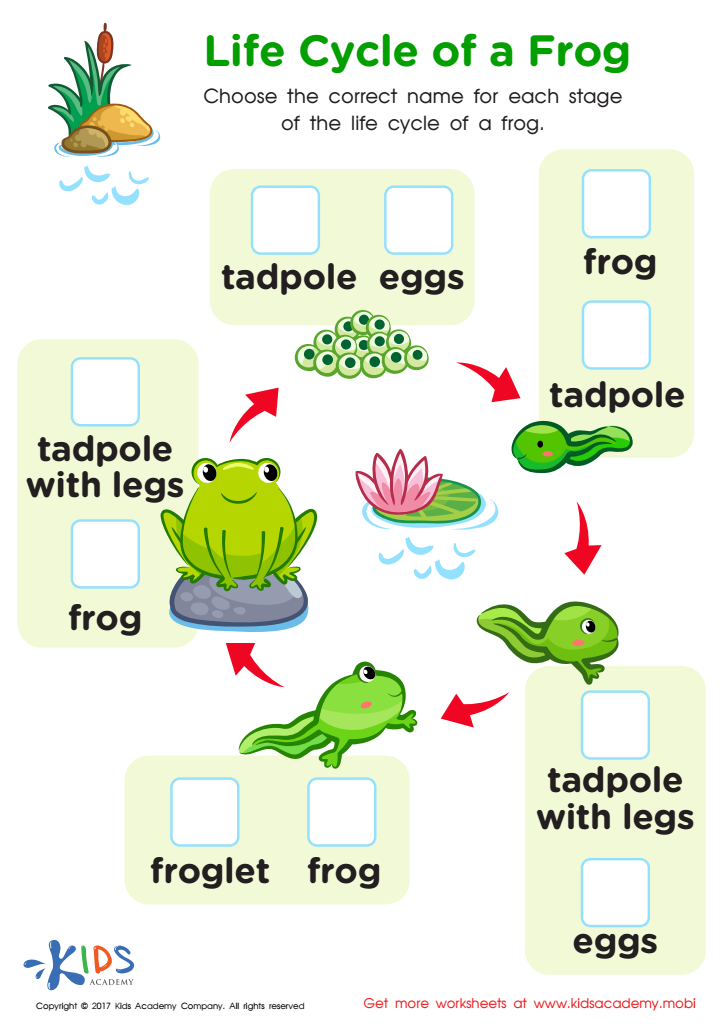
Life Cycle Frog Printable
Kids can explore the life cycle of frog with this fun worksheet! Draw lines from one stage to the next to follow the transformation from tadpole to frog and learn about the cycle of life.
Life Cycle Frog Printable
Worksheet
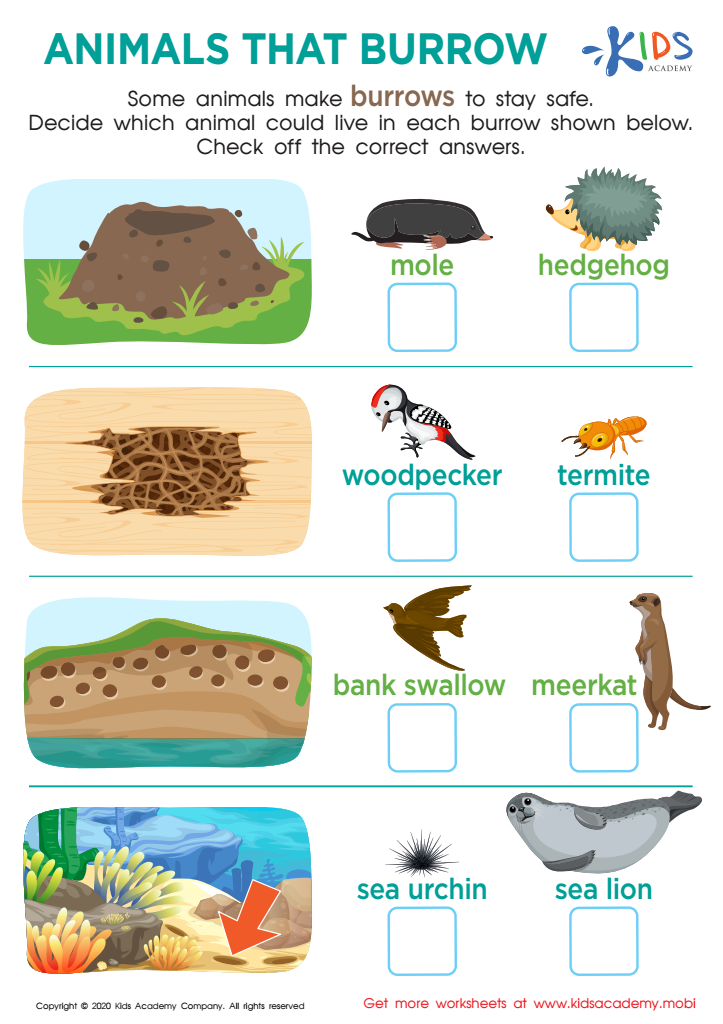
Animals That Burrow Worksheet
Teach your little one about animal protection with this Kids Academy PDF worksheet! Help them read the description of burrowing animals, then check off the pictures to discover which ones hide in holes. It's an exciting way to learn about the fascinating ways animals keep themselves safe from predators.
Animals That Burrow Worksheet
Worksheet
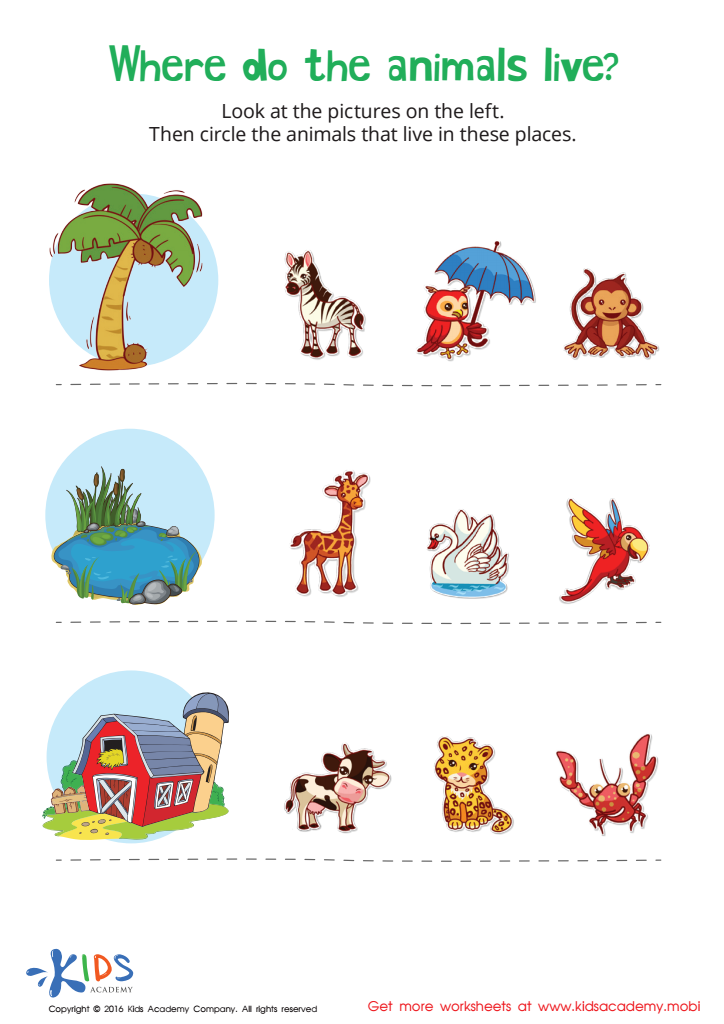
Where Animals Live Worksheet
Teaching early reading and math skills is important, but don't forget about science. With the Where Animals Live PDF worksheet, kids can identify their favorite animals and the environments they live in. Ask them what type of environment the animals like and introduce them to geography. It's great for logical reasoning and classification skills. Your kid will practice with their favorite animals and love the trip to the zoo afterwards!
Where Animals Live Worksheet
Worksheet
Join Kids Academy for Free
Who is primarily going to use this learning content?







Reading comprehension is a fundamental skill critical for young children's academic success and overall cognitive development. Introducing children aged 5-6 to texts about "Normal Animals" plays a significant role in this process. At this age, children are beginning to transition from recognizing letters and sounds to understanding and deriving meaning from sentences and simple stories.
Parents and teachers should pay special attention to reading comprehension because it enhances vocabulary. Reading about familiar animals provides context, making it easier for kids to grasp new words. Additionally, stories about animals often contain clear narratives that assist children in understanding the sequence of events, a key component of comprehension.
Engaging with texts about normal animals piques children's interest due to their innate curiosity about living creatures. This engagement sustains attention and makes the learning process enjoyable, laying the groundwork for a lifelong love of reading.
Furthermore, reading comprehension tasks promote critical thinking and empathy. As children learn about various animals and their habitats, they start making connections to the world around them and develop an appreciation for nature. By asking questions about the material, parents and teachers can encourage children to express thoughts and opinions, boosting confidence and communication skills.
Fostering strong reading comprehension skills at this early stage sets a solid foundation for all future learning, emphasizing why this aspect of early education is vital.








