Filters

12 filtered results

Clear all filters
Favorites
With answer key
Interactive

12 filtered results

Difficulty Level

Grade


Unlock the power of reading with our Phonics Skills Normal Consonants Worksheets, designed specifically for children ages 5-7. These engaging worksheets help young learners master consonant sounds through interactive activities that make learning fun. Each worksheet promotes phonemic awareness, supporting the development of crucial early reading skills. Your child will enjoy colorful illustrations and interactive exercises that reinforce their understanding of consonants and their blends. Perfect for classroom use or at-home learning, our resources will provide a solid foundation in phonics for budding readers. Download today and embark on an exciting journey of exploration and mastery in literacy!

Check out this FREE Trial Lesson on Consonants for age 5-7!

Review Blends

Favorites
With answer key
Interactive
  • 5-7
  • Phonics Skills
  • Consonants
  • Normal
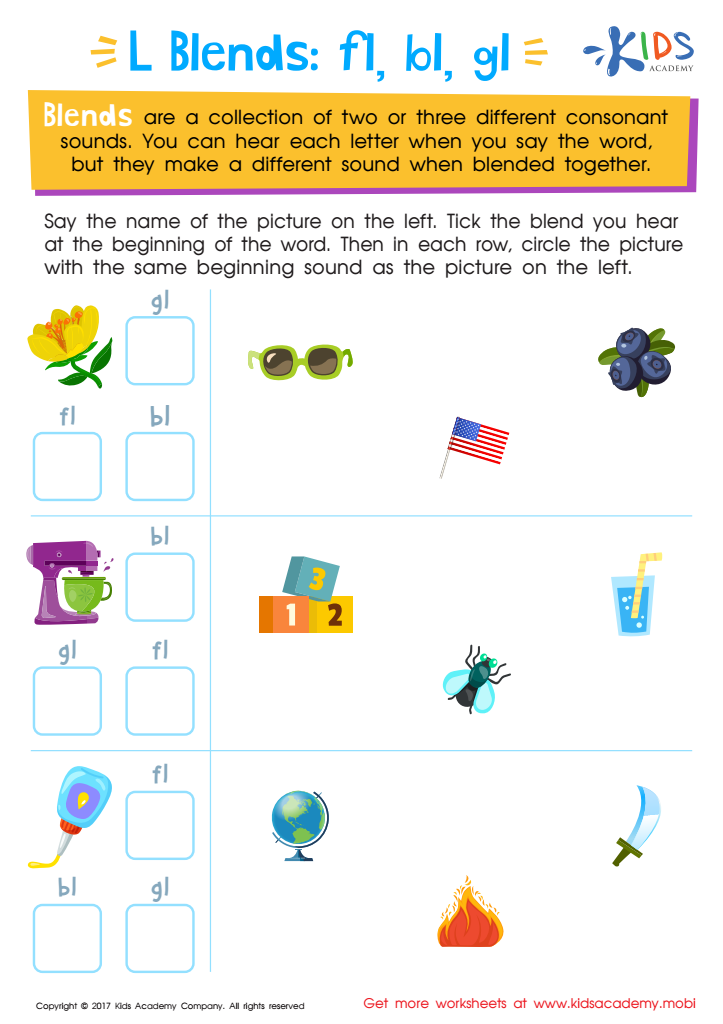
Consonant Blend Fl, Bl, and Gl Printable Worksheet

Blending Consonants: "Fl", "Bl" and "Gl" Printable

Help your child master consonant blends Fl, Bl, and Gl with this printable worksheet. Find words associated with the pictures and learn to better understand the difference between consonant blends. Vibrant images motivate and aid in learning. Download now for improved phonics success!
Blending Consonants: "Fl", "Bl" and "Gl" Printable
Worksheet
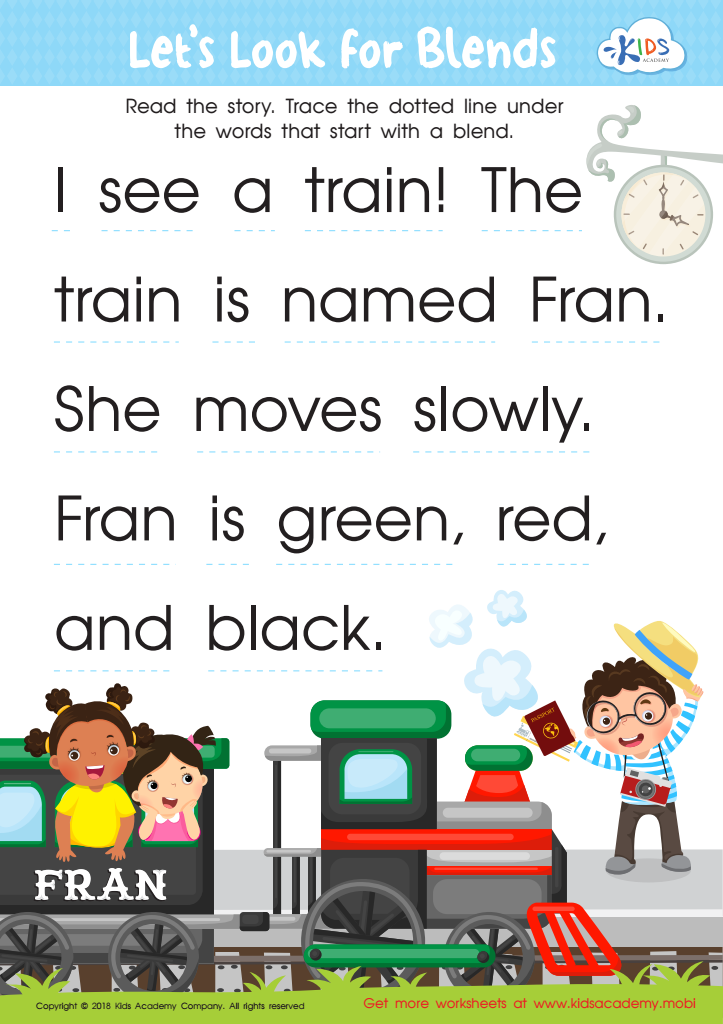
Let's Look for Blends Worksheet

Let's Look for Blends Worksheet

Does your child love trains? Get them to read the story or help them read it aloud. Ask them to trace the words that start with blends on the dotted lines. This exercise will help them improve their blend-identifying skills!
Let's Look for Blends Worksheet
Worksheet
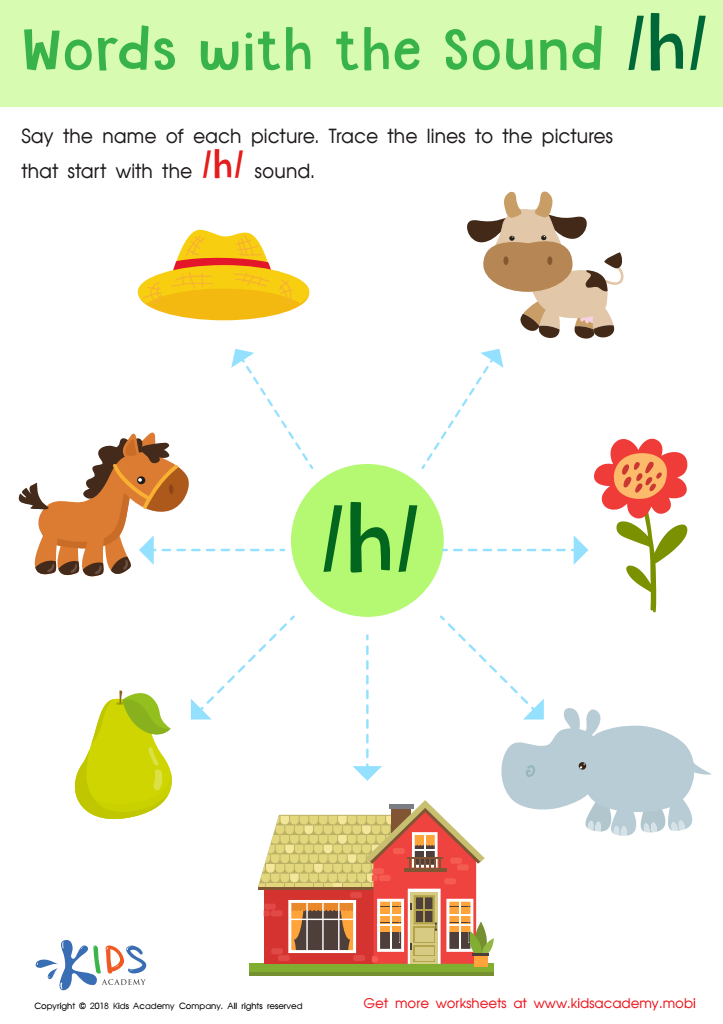
Words with sound h Reading Worksheet

Words with sound h Reading Worksheet

The letter H can often be heard in words! Check your child's knowledge with an engaging worksheet from Kids Academy. Ask them to go around a circle and name each image aloud. Listen for the starting sound and trace the line from the middle letter to the images with the sound. This is a great way to practice phonics!
Words with sound h Reading Worksheet
Worksheet
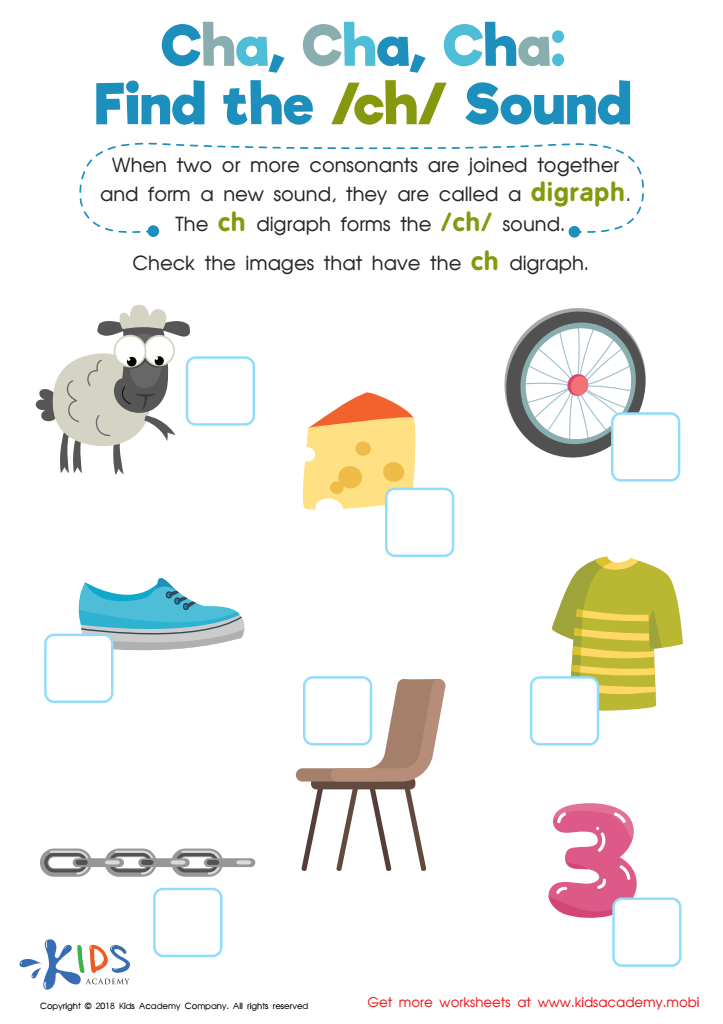
Cha, Cha, Cha: Find the /Ch/ Sound Worksheet

Cha, Cha, Cha: Find the /Ch/ Sound Worksheet

Have your students identify the objects in the images and if they struggle, help them check for the /ch/ digraph. This digraph forms a new sound when two or more consonants are combined, so it can be helpful to point it out to them in the colourful printout.
Cha, Cha, Cha: Find the /Ch/ Sound Worksheet
Worksheet
The /th/ Sound Worksheet
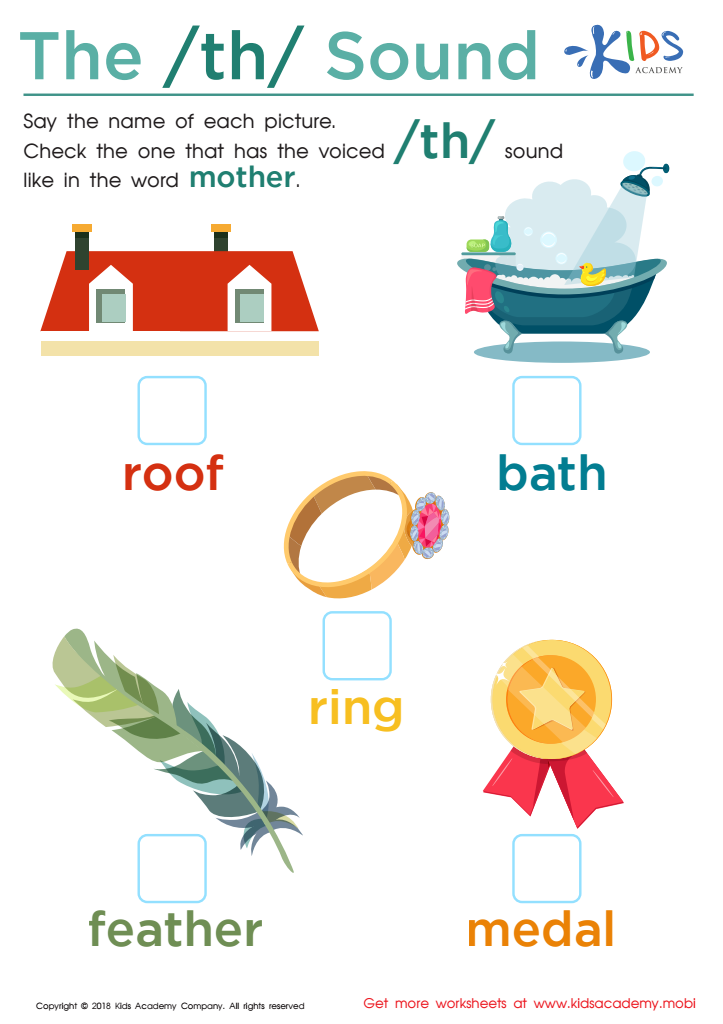
The /th/ Sound Worksheet

Confuse your students no more: have them use this worksheet to understand the /th/ sound and its two variants. With pictures, ask them to say the name of each one. Help them identify the voiced /th/ sound, like in 'mother', by having them say it aloud. Download the pdf to get started.
The /th/ Sound Worksheet
Worksheet
Consonant Blends Pl, Cl, and Sl Printable Worksheet

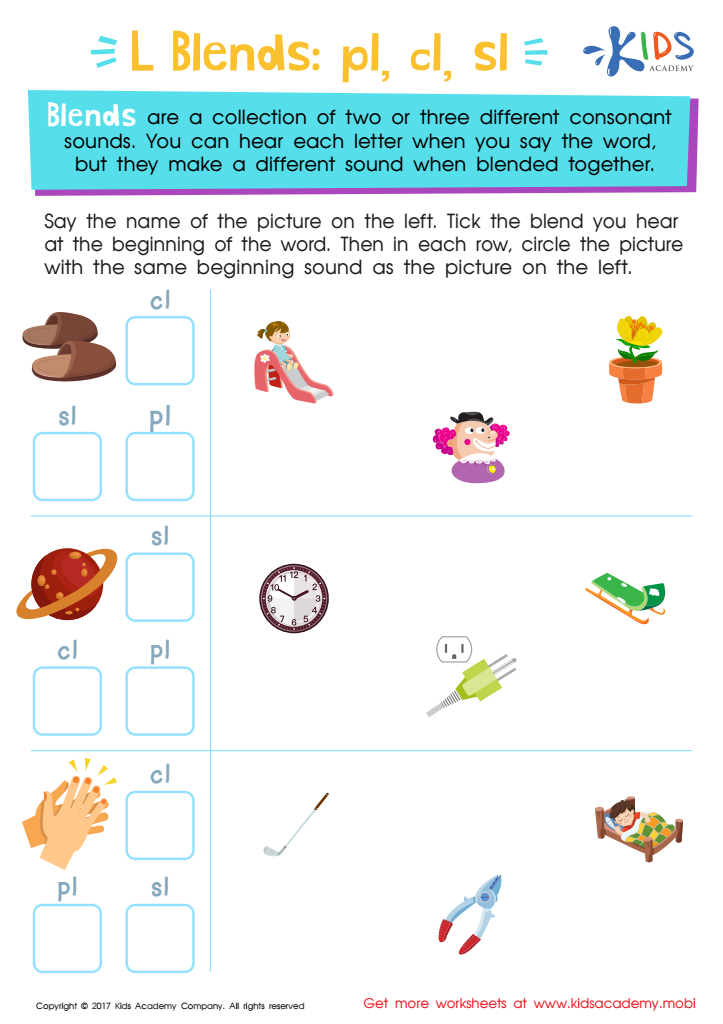
L Blends: "Pl", "Cl" and "Sl" Printable
This printable worksheet will help your child recognize and identify the Pl, Cl, and Sl consonant blends, sound them out, and identify them in print. Improve your child's reading and writing skills with fun and colorful phonics practice!
L Blends: "Pl", "Cl" and "Sl" Printable
Worksheet
The /wh/ Sound Worksheet

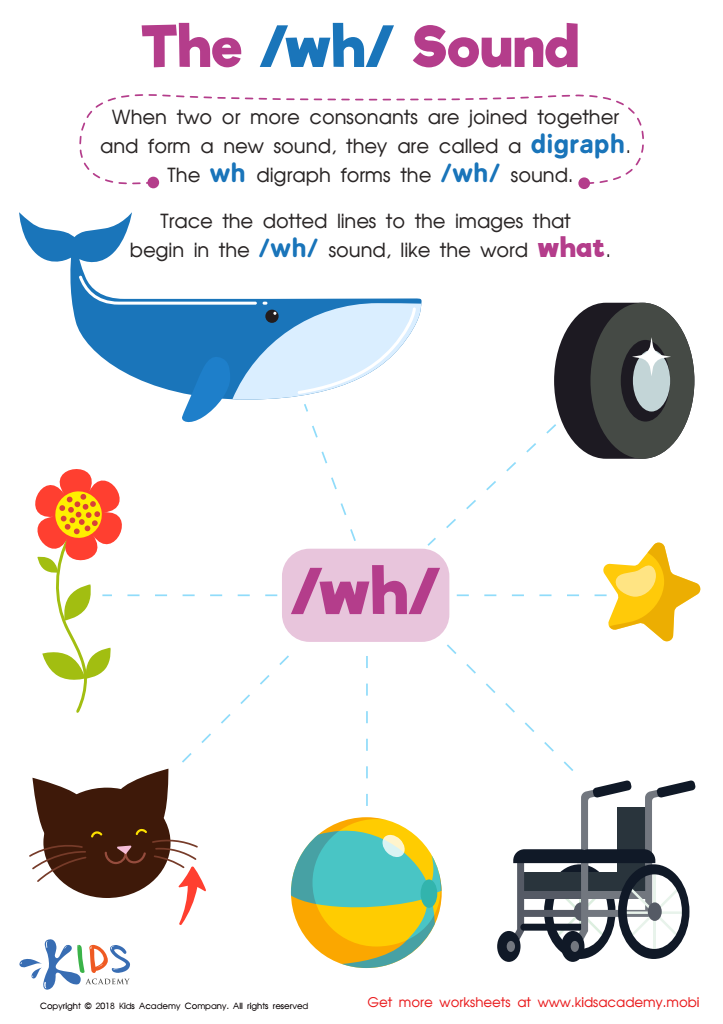
The /wh/ Sound Worksheet

Digraphs join two consonants to make a new sound, like /wh/. Give examples, like "whale", "when" and "why". Ask kids to name pictures in a worksheet and trace dotted lines to images beginning with the /wh/ sound; "what" is one example.
The /wh/ Sound Worksheet
Worksheet
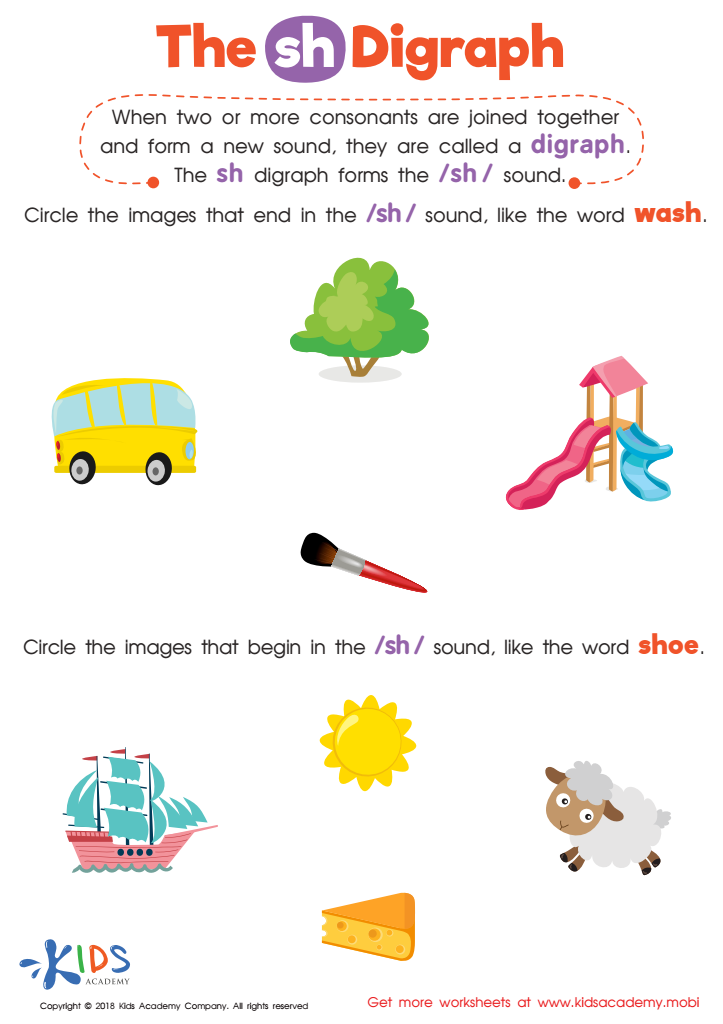
The SH Digraph Worksheet

The SH Digraph Worksheet

There are many phonetic sounds, each with its own unique sound. When two or more consonants are combined to create a new sound, it's called a digraph. Example: the sh digraph creates the /sh/ sound. Have kids look at the pictures and say the words aloud. Help them circle the images ending with /sh/, like 'wash'.
The SH Digraph Worksheet
Worksheet
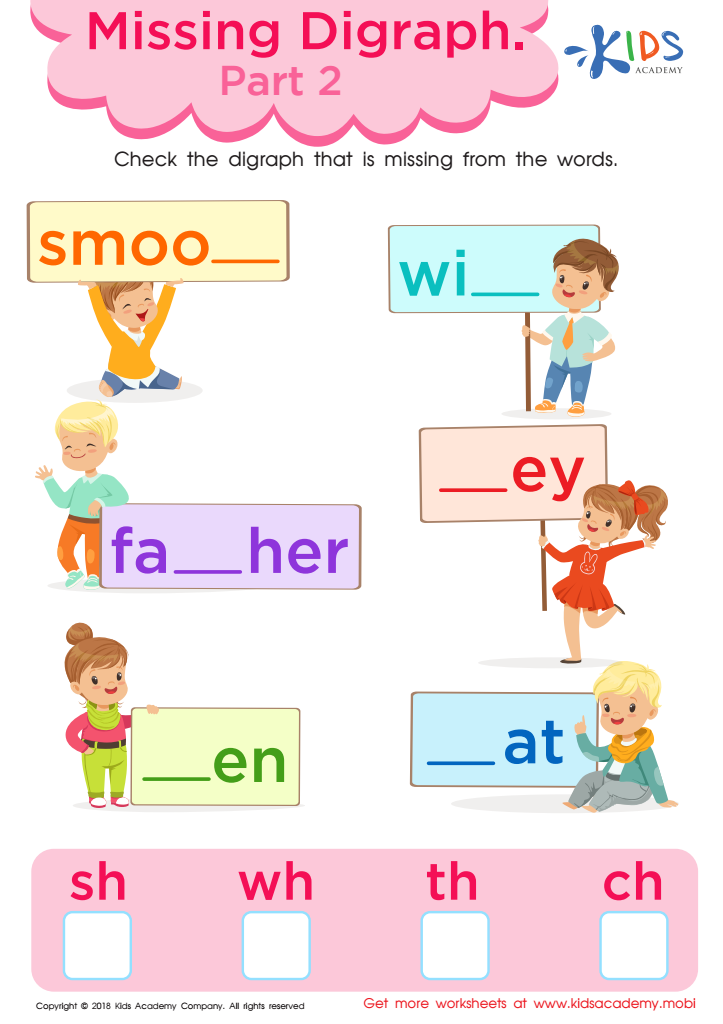
Missing Digraph: Part 2 Worksheet

Missing Digraph: Part 2 Worksheet

Practice the "th" digraph with this fun worksheet from Kids Academy! See how it appears at the beginning, middle, or end of words and help learners fill in the blanks. Check if they got it right by finding the th digraph at the bottom!
Missing Digraph: Part 2 Worksheet
Worksheet
Matching Consonant Sounds - Part 1 Worksheet Preview

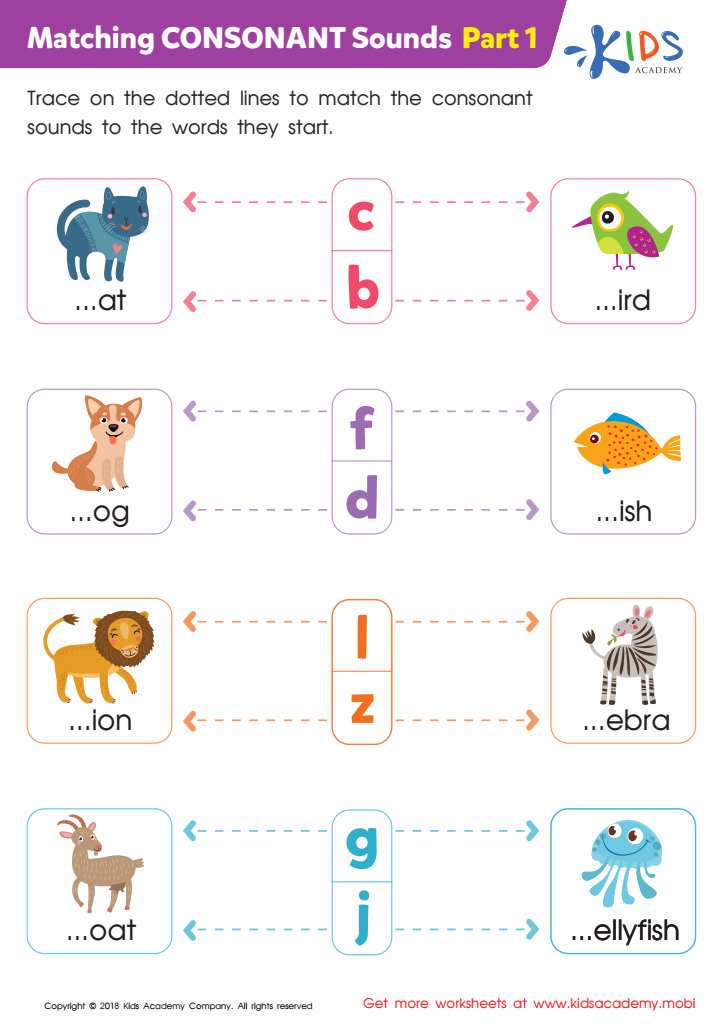
Matching Consonant Sounds: Part 1 Worksheet
Decide which letter matches each word and picture in this fun phonics worksheet. Slide your finger over each word, trying out each letter to check for matches. Once each pair is solved, trace the dotted lines with pencil to complete the printable. Who knew learning could be so enjoyable?
Matching Consonant Sounds: Part 1 Worksheet
Worksheet
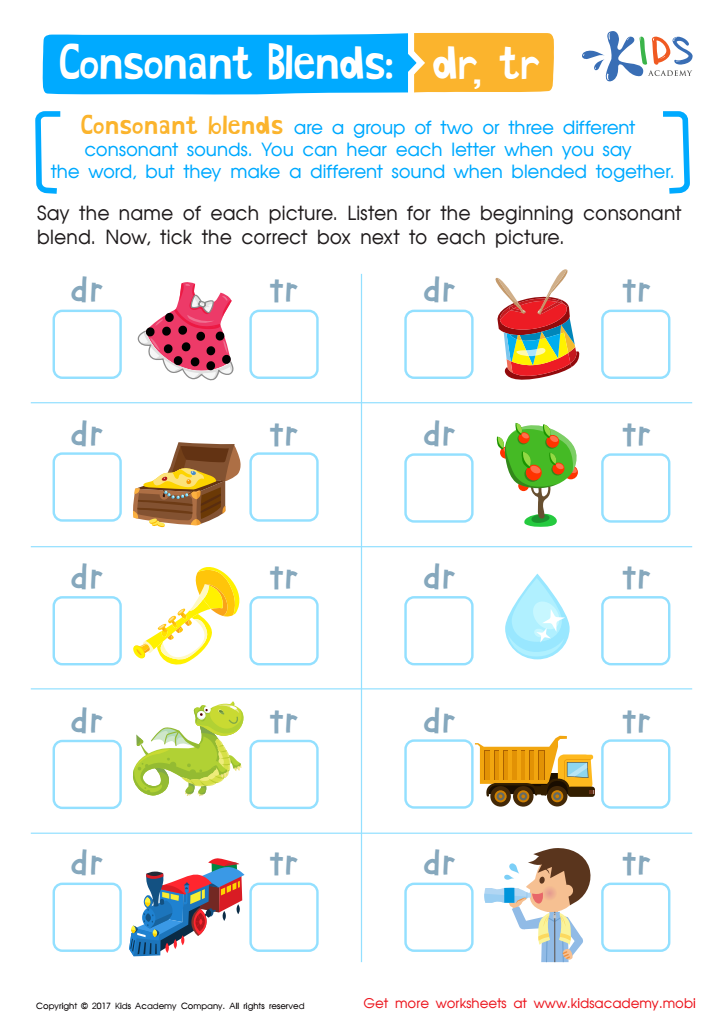
Consonant Blend Dr and Tr Printable Worksheet

Consonant Blends: "Dr" and "Tr" Printable
Pictures of the words provide a visual cue, and sound-outs help with auditory cues.
Consonant Blends: "Dr" and "Tr" Printable
Worksheet
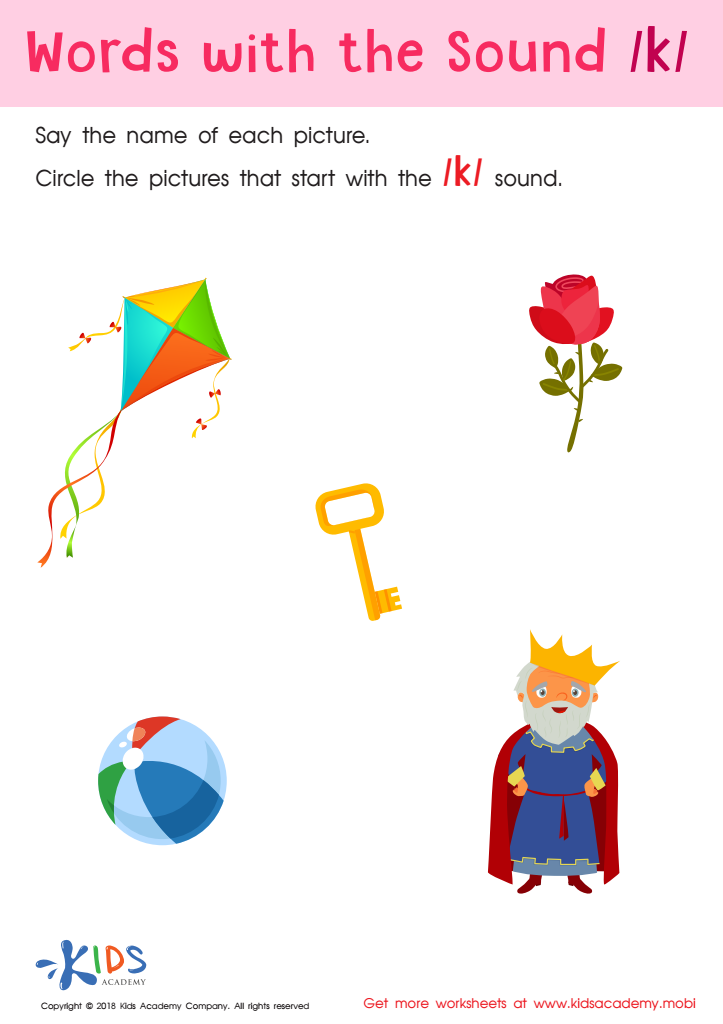
Words with sound k Reading Worksheet


Words with sound k Reading Worksheet

Help your preschooler master the hard "k" sound with this fun worksheet from Kids Academy! Ask your child to say each picture aloud and circle only the pictures that start with "k". This early reading exercise will boost phonics skills and is sure to be loved by your little learner!
Words with sound k Reading Worksheet
Worksheet


Phonics skills, particularly as they relate to normal consonants, play a crucial role in early literacy development for children ages 5-7. During this critical developmental stage, children are laying the foundation for reading and writing, making it essential for parents and teachers to prioritize phonics instruction. Understanding normal consonants helps children recognize letter sounds, making it easier for them to decode words during reading. This ability not only enhances their reading fluency but also boosts their confidence as readers.

Moreover, strong phonics skills promote spelling proficiency. When children grasp consonant sounds, they can better understand spelling patterns and structures, leading to improved writing abilities. This connection establishes a solid link between reading and writing, ultimately fostering a comprehensive literacy foundation.

Additionally, phonics instruction can be engaging and fun, incorporating games, songs, and activities that hold children's attention and pique their interest. Engaged learners are more likely to develop a love for reading, which is crucial for lifelong learning.

By nurturing phonic skills, parents and teachers empower children to become competent readers and writers, enhancing their overall academic success and instilling a passion for literacy that can last a lifetime. Therefore, supporting the development of these skills should be a top priority in early education.