Filters

54 filtered results

Clear all filters
Favorites
With answer key
Interactive

54 filtered results

Difficulty Level

Grade


Subject

    Check out this FREE Trial Lesson on Chess for age 5-7!

    Special Moves: Promotion

    Favorites
    With answer key
    Interactive
    • 5-7
    • Chess
    • Normal
    How Bishops Move Worksheet
    How Bishops Move Worksheet

    How Bishops Move Worksheet

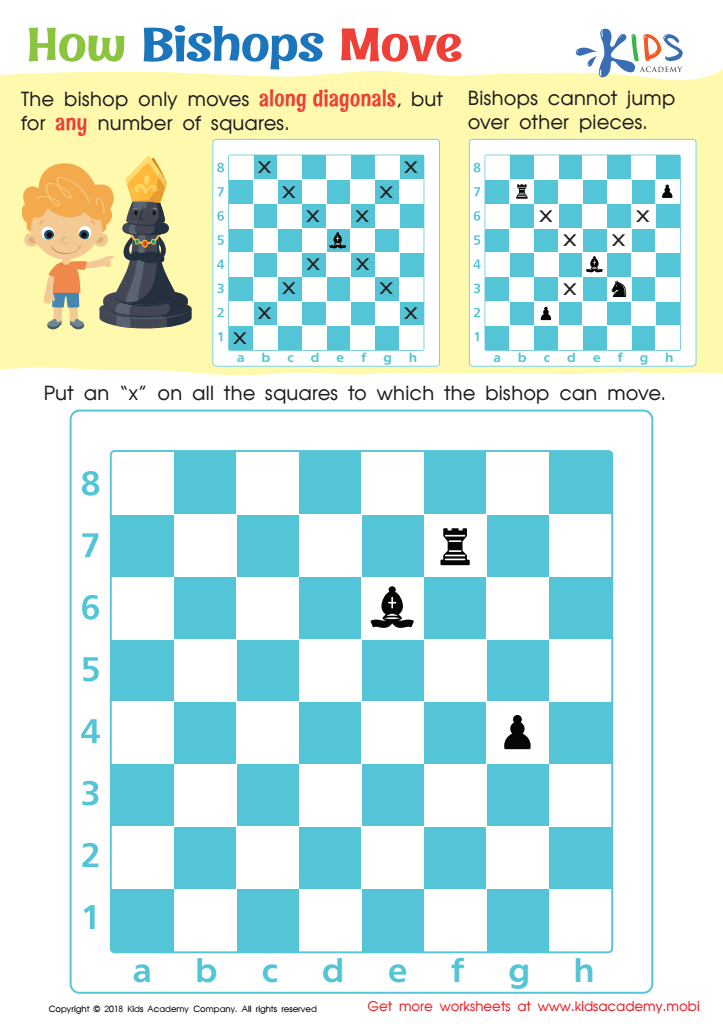
    There is no such thing as too much sharpening of skills. Encourage your child to learn more about chess technicalities with this simple worksheet. It shows them how a bishop moves: along diagonals any number of squares, but it can't jump over other pieces.
    How Bishops Move Worksheet
    Worksheet
    Rook and Bishop Worksheet
    Rook and Bishop Worksheet

    Rook and Bishop Worksheet

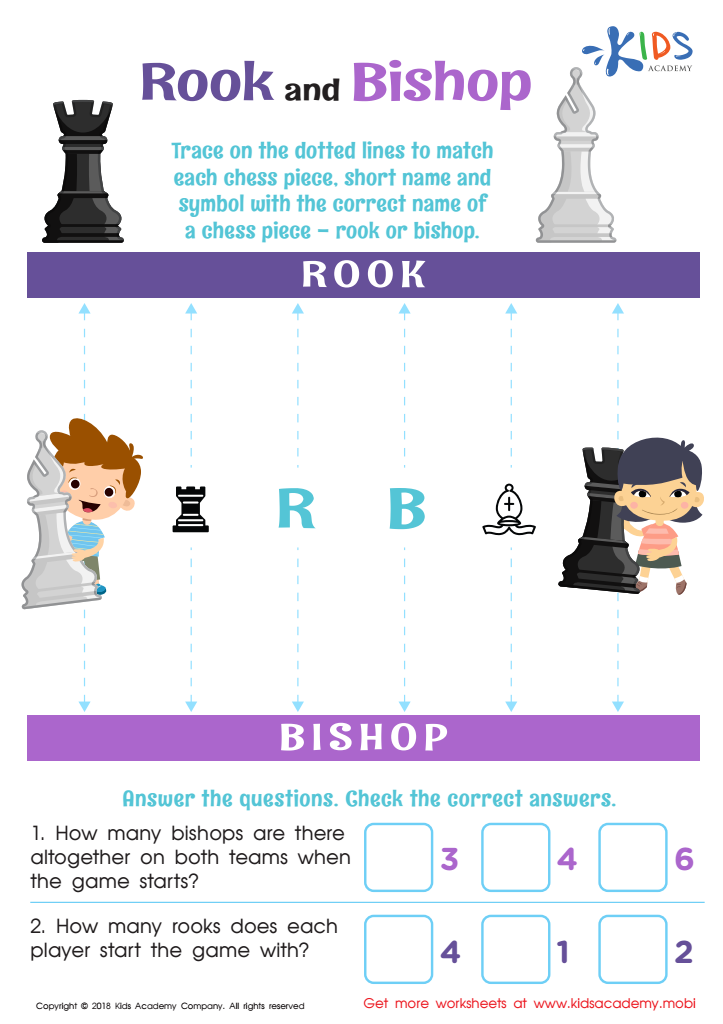
    This tracing sheet helps your child learn chess pieces by matching each piece, short name and symbol to the correct name. After tracing, have them answer the questions and check their answers. It's a great way for them to become familiarized with chess.
    Rook and Bishop Worksheet
    Worksheet
    Knight Quest Worksheet
    Knight Quest Worksheet

    Knight Quest Worksheet

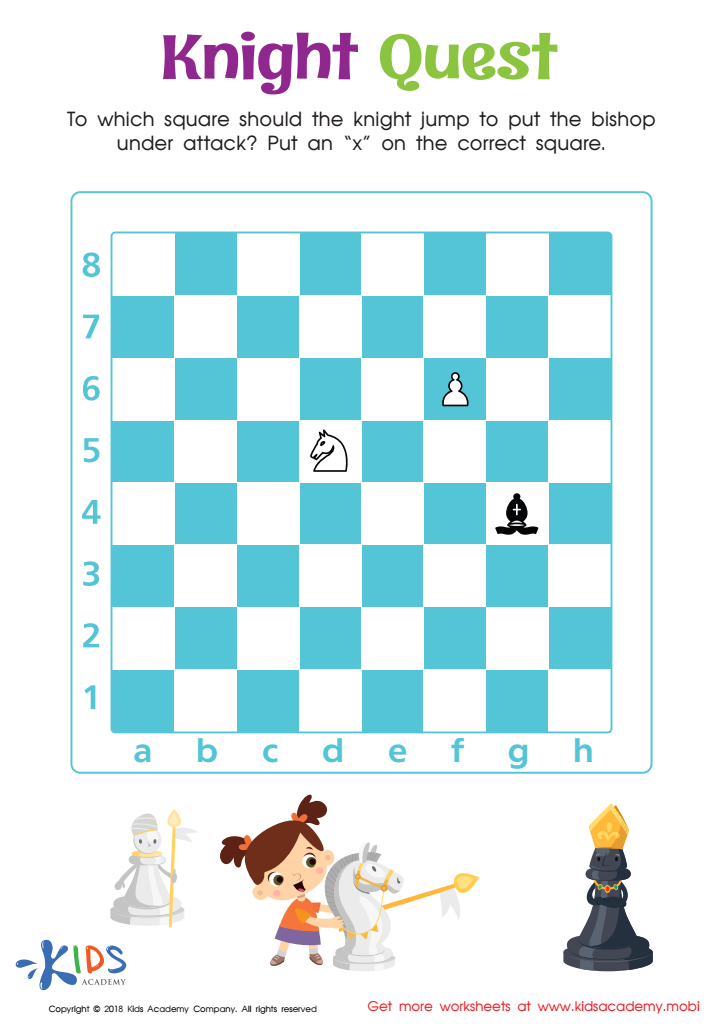
    Testing your child's strategic planning and chess skills? Give them this worksheet: Ask them to mark an 'x' on the square where the knight should jump to attack the enemy bishop. See how well they plan for a win! (80 words)
    Knight Quest Worksheet
    Worksheet
    Smart Capturing Worksheet
    Smart Capturing Worksheet

    Smart Capturing Worksheet

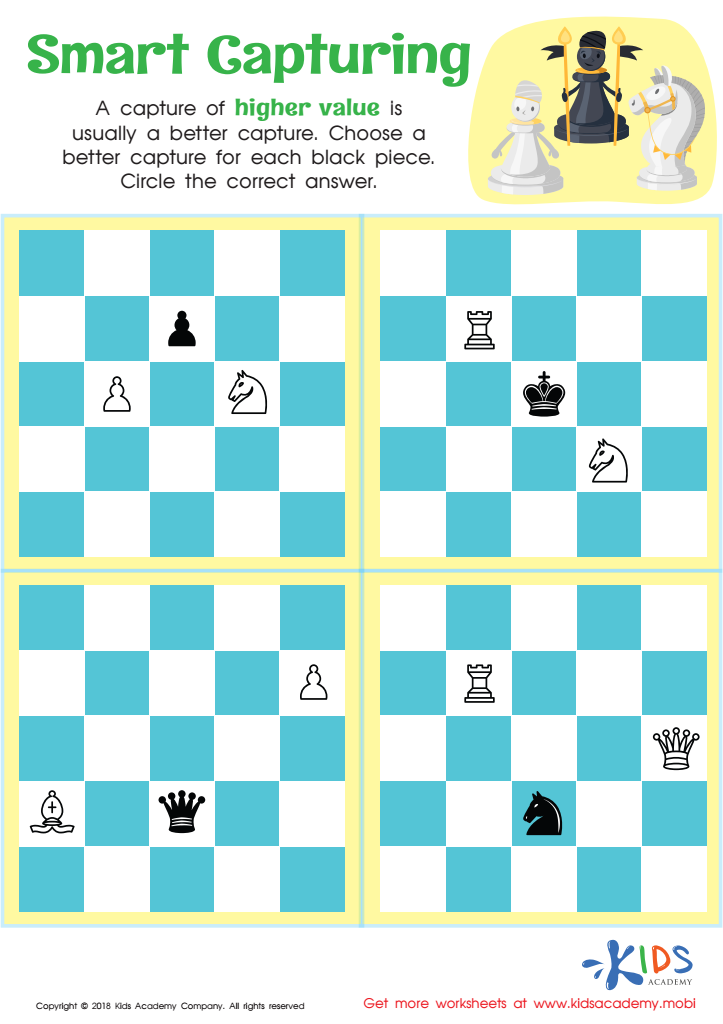
    Chess is a game of strategy and calculation. When presented with two captures, a player should always go for the one that yields the highest value. For example, taking a knight over a pawn. In this worksheet, your children will choose the best capture for each black piece. Ask them to circle the correct answers. (80 words)
    Smart Capturing Worksheet
    Worksheet
    Promotion Practice Worksheet
    Promotion Practice Worksheet

    Promotion Practice Worksheet

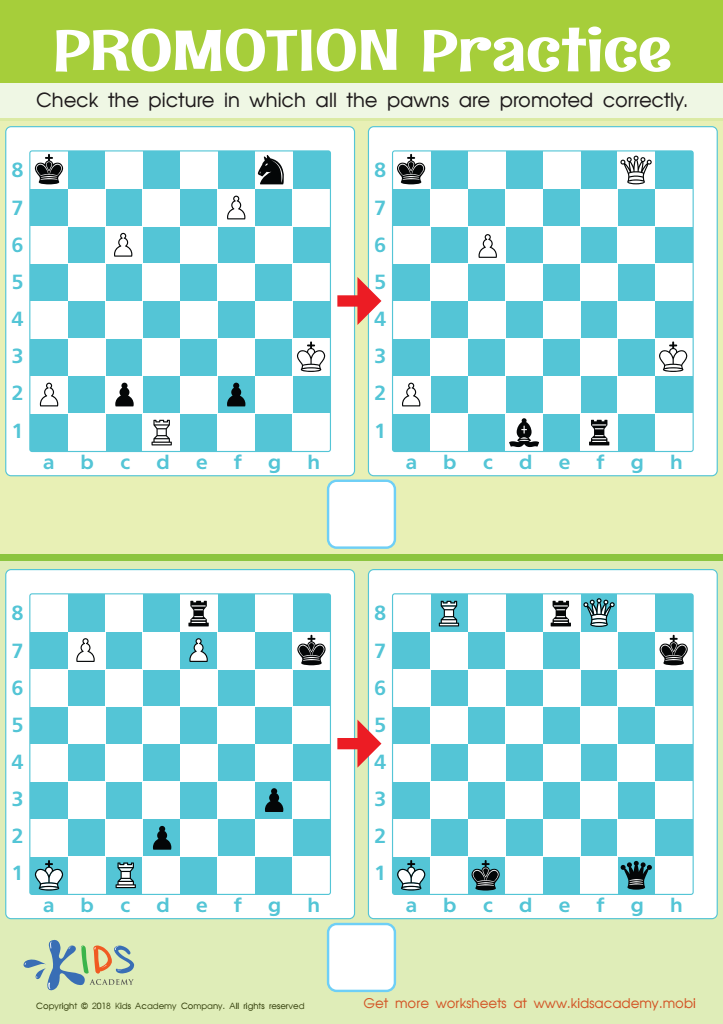
    Test your kids' promotions skills with this worksheet! Ask them to find the pictures in which the pawns are correctly promoted. Remember, when a pawn reaches the last rank it may be promoted to a queen, bishop, knight or rook. In addition, a pawn can be promoted when it captures a chess piece on the last rank.
    Promotion Practice Worksheet
    Worksheet
    Setting up the Chessboard: Part 1 Worksheet

    Setting up the Chessboard: Part 1 Worksheet

    Setting up the Chessboard: Part 1 Worksheet

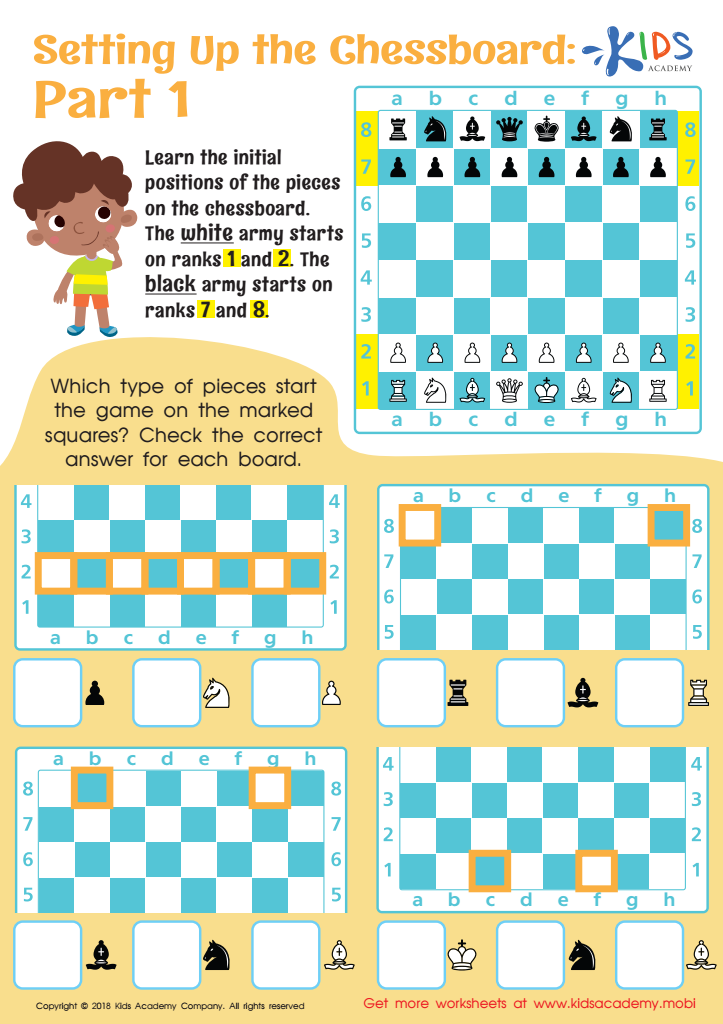
    Teach your child the starting positions of the black and white armies on the chessboard. Black pieces are placed on ranks 7 and 8, and white pieces on ranks 1 and 2. Have them check the highlighted boxes on the chessboard to make sure they know the correct pieces to start with.
    Setting up the Chessboard: Part 1 Worksheet

    Worksheet


    ... 2 3

    Introducing normal chess to children aged 5-7 offers numerous developmental benefits that could form a solid foundation for both academic and social growth. First and foremost, chess is a powerful tool for enhancing cognitive skills. It encourages young minds to think ahead, plan strategically, and weigh different possible outcomes. These critical thinking and problem-solving skills are valuable not just in academics but also in everyday decision-making.

    Additionally, chess boosts memory as children need to remember the rules, the moves of each piece, and strategies to anticipate their opponent's moves. This exercise of the mind can translate into improved memory and concentration in classroom settings. Moreover, chess teaches patience and the importance of thinking before acting; these lessons are essential for emotional development.

    Socially, playing chess can foster a sense of sportsmanship. Kids learn to win gracefully and lose with dignity, lessons that build character and emotional resilience. It can also be a wonderful way to bond with peers, teachers, and family members, creating a shared interest that bridges generations.

    Finally, chess opens up a world of cultural and historical learning, providing a fun way to explore these topics. In short, chess is much more than a game; it is a multifaceted educational tool that can enrich the early years of learning in a delightful and engaging manner.