Comparing lengths Normal Worksheets for Ages 5-7
4 filtered results
-
From - To
Explore our engaging selection of comparing lengths worksheets tailored for ages 5-7! These educational resources help children grasp the fundamentals of measuring and comparing different lengths. Perfect for young learners, our worksheets incorporate fun activities that involve everyday objects, fostering practical understanding. Kids will enjoy sorting, ordering, and matching exercises designed to develop critical thinking and problem-solving skills. Printable and easy to use, these worksheets are a fantastic addition to any learning environment, whether at home or in the classroom. Spark your child's curiosity and boost their confidence in math with our comparing lengths worksheets!
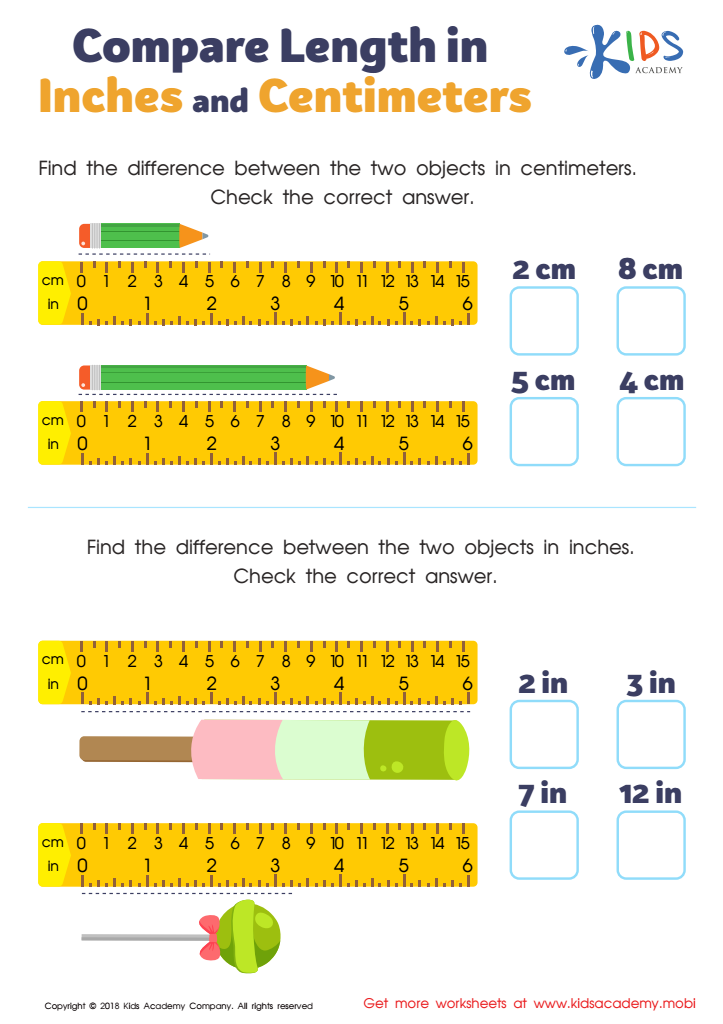
Compare Length in Inches and Centimeters Worksheet
 Assign to My Students
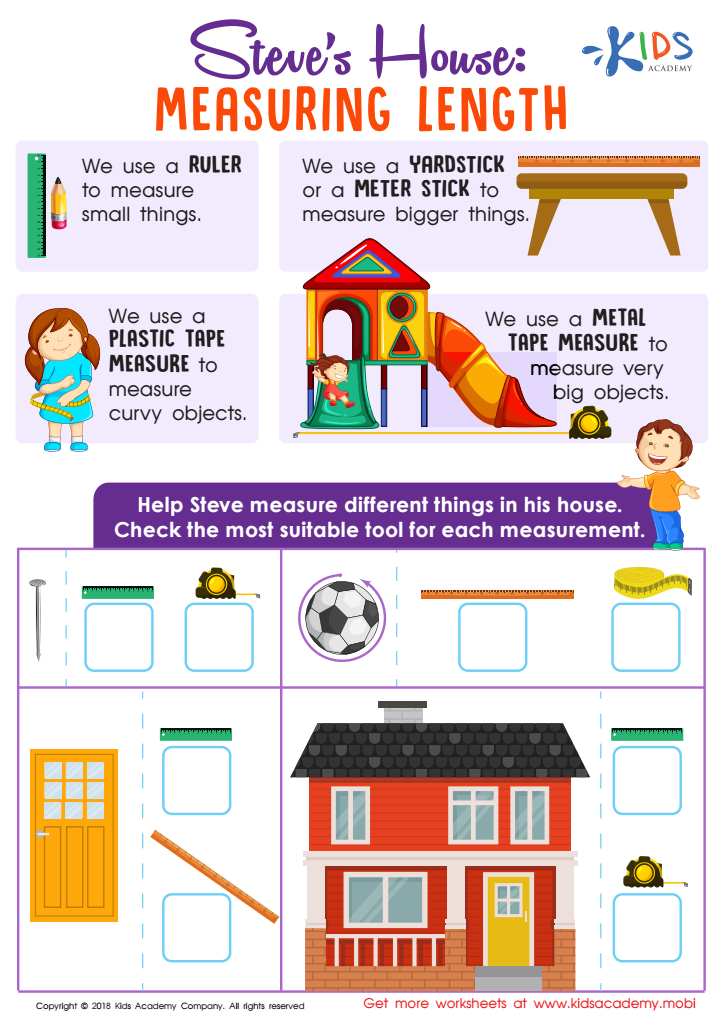
Steve's House: Measuring Length Worksheet
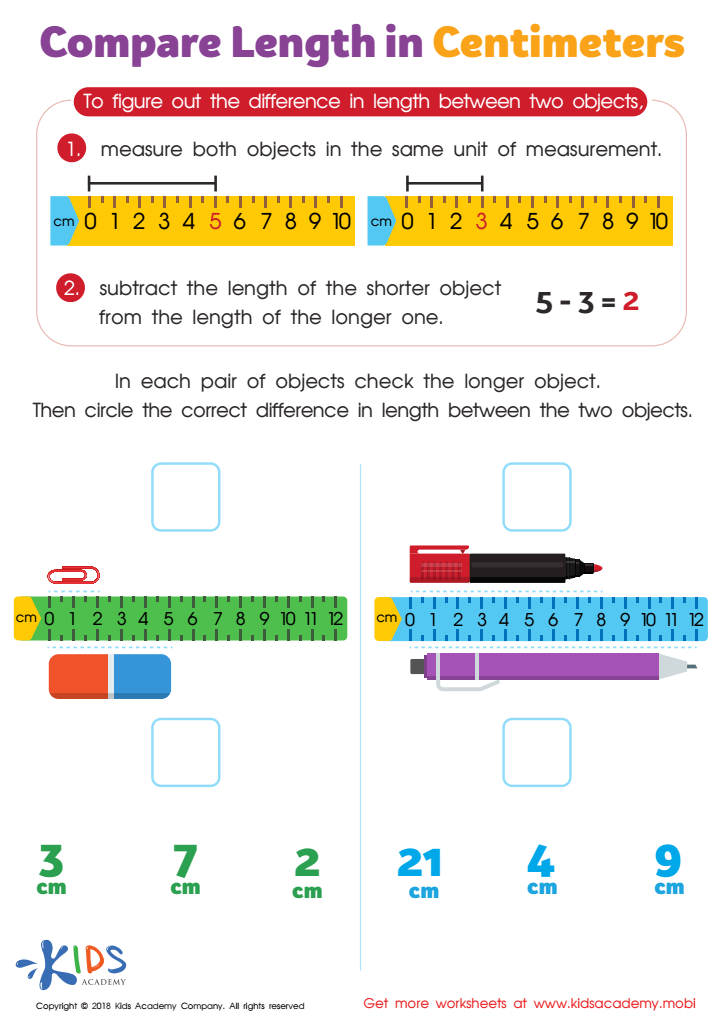
Compare Length in Centimeters Worksheet
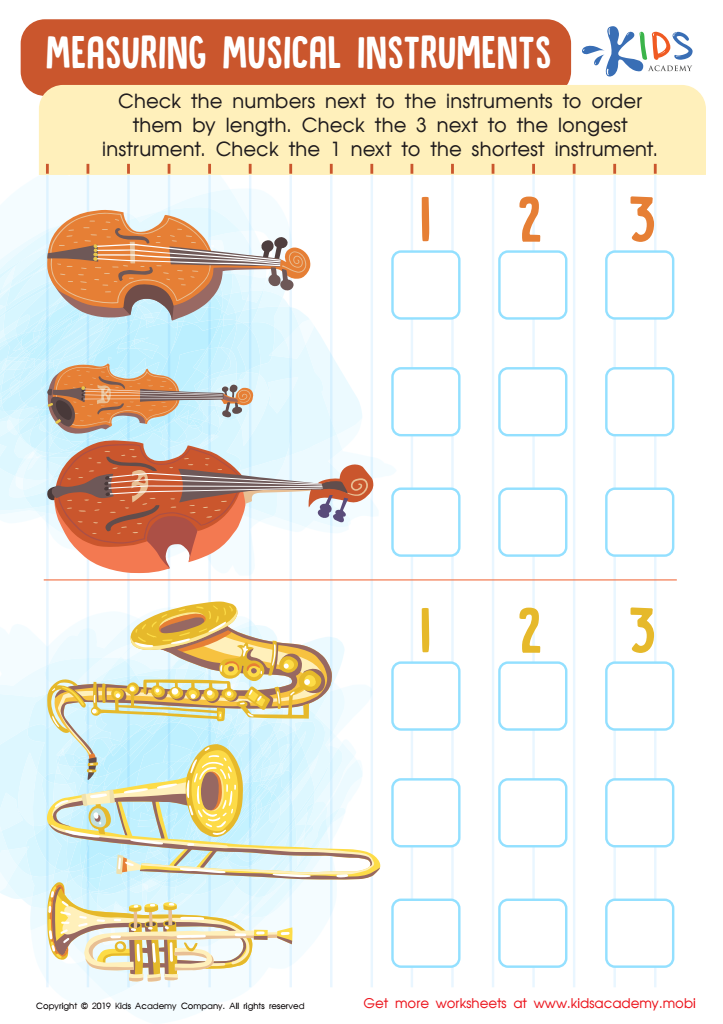
Measuring Musical Instruments Worksheet







Comparing lengths is an essential early math skill for children aged 5-7 that provides a foundation for numerical understanding and reasoning. At this developmental stage, children are naturally curious about their environment, and comparing lengths serves as a real-world application of measuring and quantifying objects.
-
Enhances Critical Thinking: These activities encourage children to observe, analyze, and make decisions about sizes, helping to build their problem-solving abilities.
-
Develops Language Skills: As youngsters describe their comparisons, they practice using comparative language such as "longer," "shorter," "taller," and "smaller," enriching their vocabulary and communication skills.
-
Supports Spatial Awareness: Understanding the concepts of length and height fosters better spatial reasoning, a crucial skill in everyday life and further fields like geometry.
-
Builds Foundation for Math Concepts: Comparing lengths lays the groundwork for more complex mathematical ideas such as measurement, addition, and subtraction, as children begin to conceptualize different units and quantities.
-
Encourages Group Activities: Measuring and comparing often happen in a group context, promoting teamwork and social interaction as they communicate their findings and listen to peers.
By engaging in activities that involve comparing lengths, parents and teachers can help children develop a robust mathematical foundation and cognitive skills critical for their future academics and personal growth.








