Comparing sizes Normal Worksheets for Ages 5-7
3 filtered results
-
From - To
Foster early math skills with our "Comparing Sizes Normal Worksheets for Ages 5-7". These engaging printables are designed to help young learners understand the concept of size comparison through fun and interactive activities. Each worksheet encourages children to compare and contrast different objects, honing their observational skills while reinforcing basic math principles. Ideal for both classroom and at-home learning, these worksheets lay a solid foundation in sorting and categorization, essential skills for ongoing math success. Download now and watch your child’s confidence and competence in comparing sizes grow!
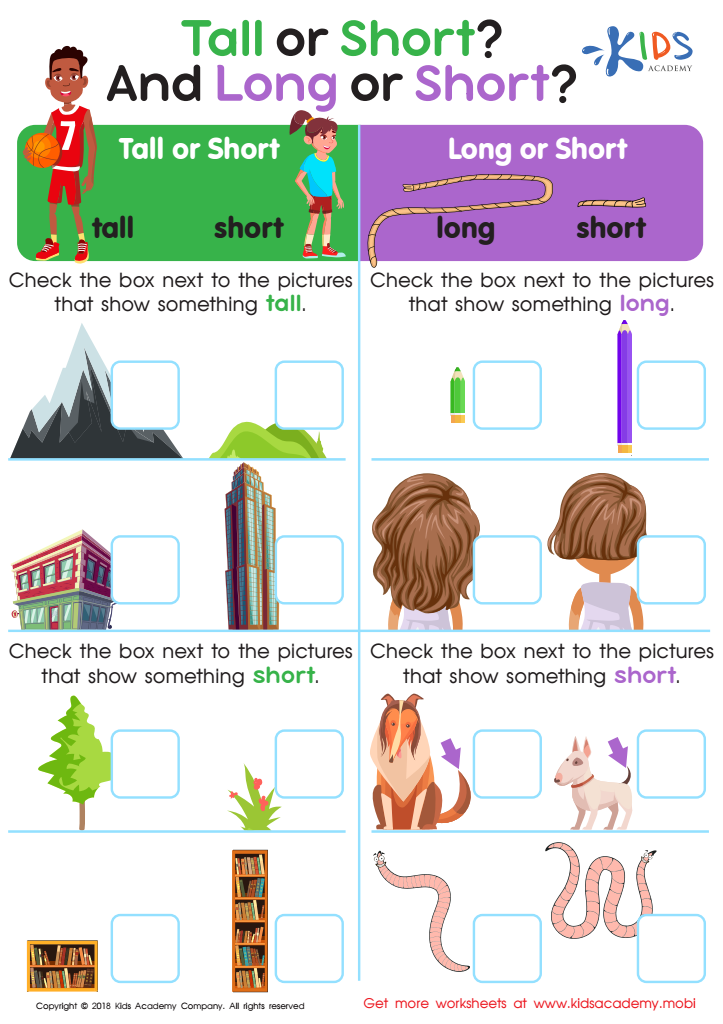
Tall or Short and Long or Short? Worksheet
 Assign to My Students
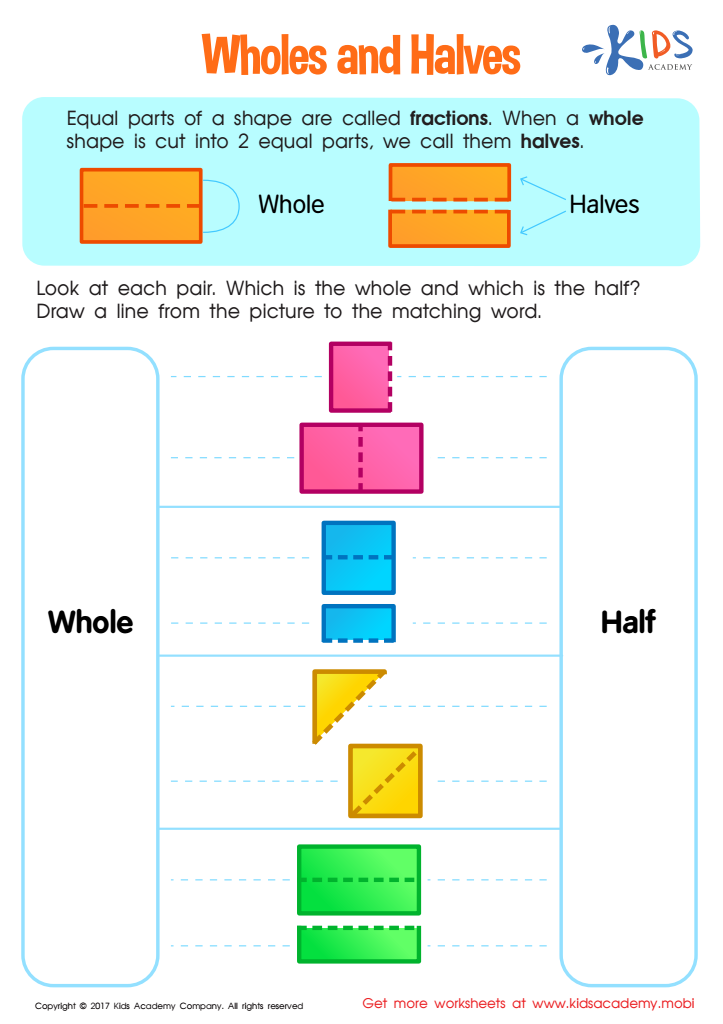
Wholes and Halves Worksheet
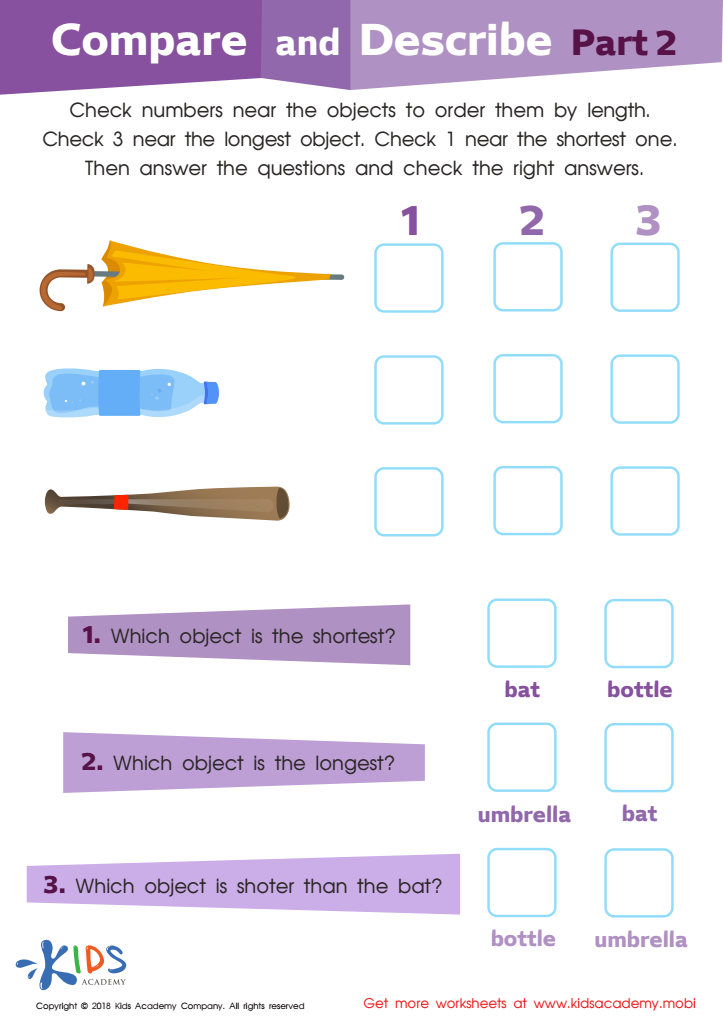
Compare and Describe: Part 2 Worksheet







Comparing sizes is a fundamental skill that parents and teachers should focus on for children aged 5-7 because it lays the groundwork for essential mathematical understanding and cognitive development. At this age, children are naturally curious and start to make sense of the world around them. Teaching them to compare sizes helps them develop critical thinking and observational skills by understanding concepts like bigger-smaller, taller-shorter, and longer-shorter. These comparisons are foundational for grasping more complex mathematical concepts such as measurement, geometry, and even data analysis later on.
Moreover, comparing sizes enhances vocabulary and language development. When children describe objects using comparative terms, they expand their descriptive language skills, which helps in communicating more precisely. It also sharpens their ability to categorize and sort objects, which is vital for organization, problem-solving, and scientific thinking.
Socially, learning about sizes encourages interactive play and cooperation as children might compare toys, blocks, or natural objects together. This fosters an environment of collaborative learning and builds their ability to follow instructions and adhere to collaborative goals.
Ultimately, caring about comparing sizes supports a well-rounded development, bridging the gap between physical, cognitive, and social skills, and sets the stage for academic success in more advanced topics that they will encounter in later years.








