Visual learning enhancement Normal Worksheets for Ages 5-7
4 filtered results
-
From - To
Enhance your child’s visual learning skills with our expertly designed worksheets for ages 5-7. At Kids Academy, our printable worksheets focus on boosting visual perception, pattern recognition, and spatial awareness, helping young learners grasp critical concepts with ease. Crafted by educational professionals, these engaging activities make learning fun, interactive, and effective. By incorporating visual elements, our worksheets support better retention and understanding, laying a solid foundation for future academic success. Discover a world of vibrant, easily accessible content tailored to your child's developmental needs, promoting a love for learning through stimulating and enjoyable exercises.
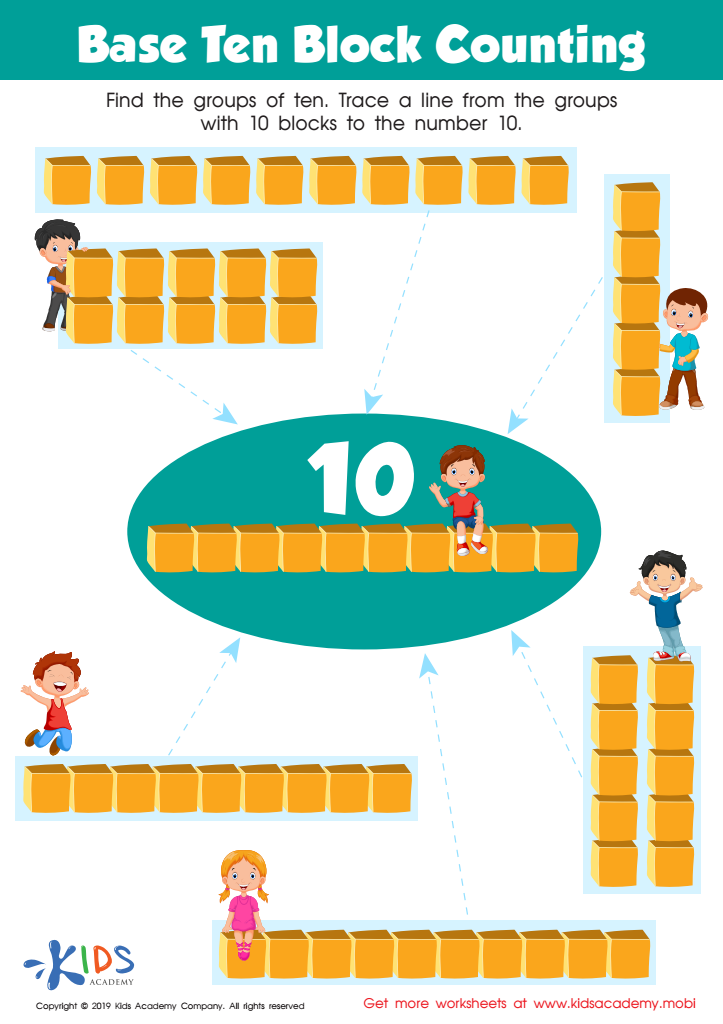
Base Ten Block Counting Worksheet
 Assign to My Students
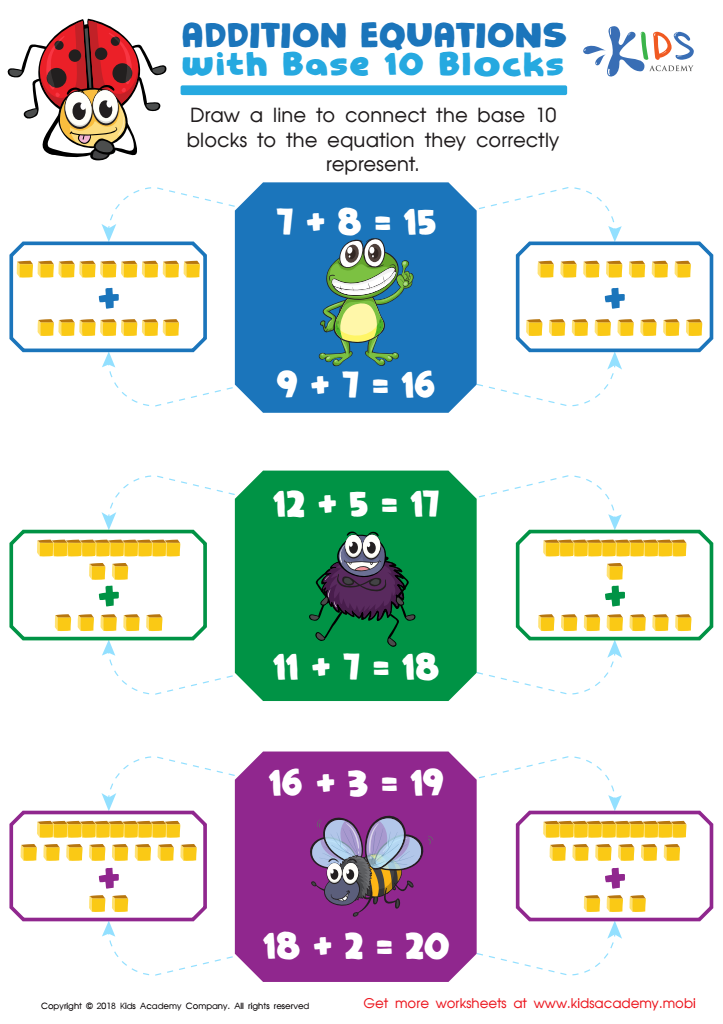
Addition Equations With Base 10 Blocks Worksheet
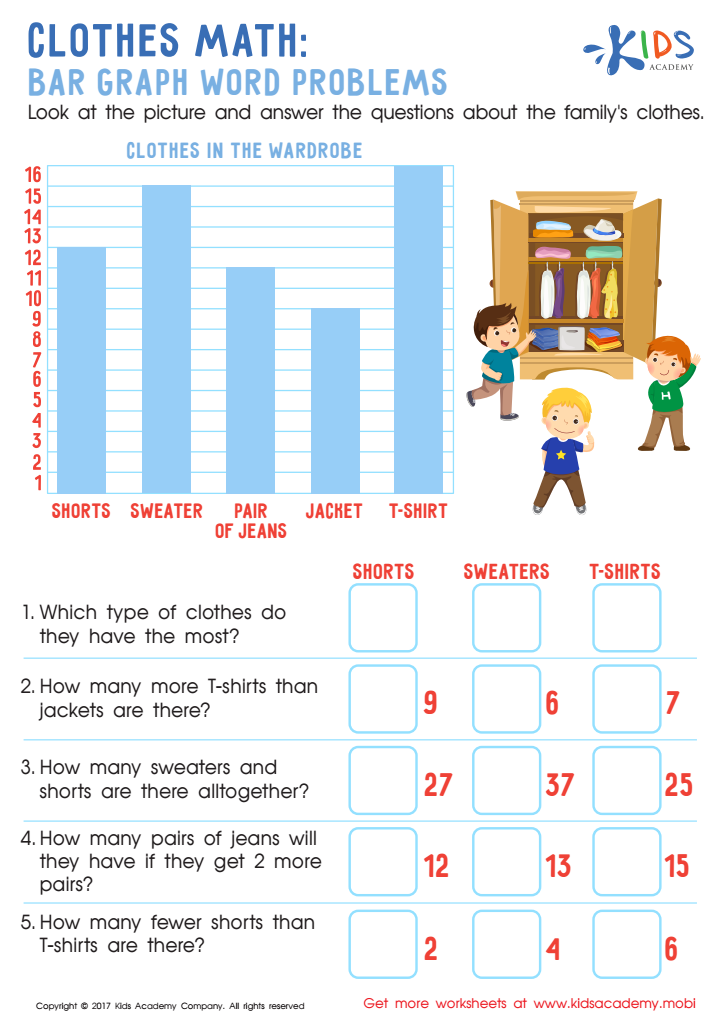
Clothes Math: Bar Graph Word Problems Worksheet
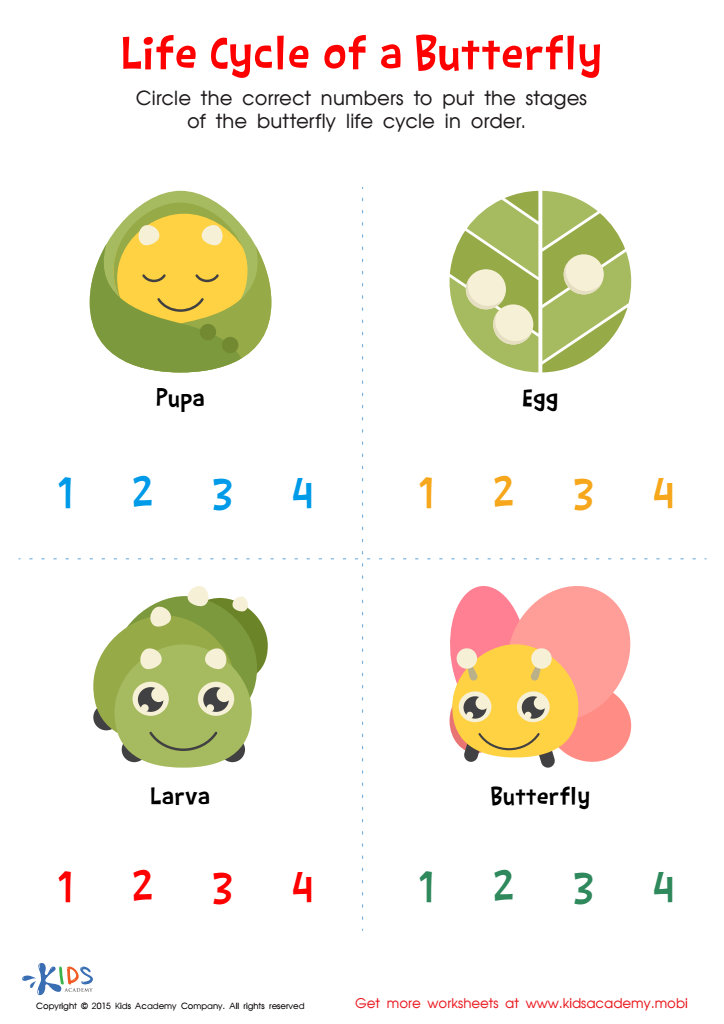
Life Cycle of Butterfly Printable







Visual learning plays a crucial role in the developmental stages of children aged 5-7, a period marked by rapid cognitive growth and the strengthening of foundational skills. Incorporating visual elements into learning can significantly enhance comprehension and retention for young learners. This type of learning engages multiple senses, making it easier for children to process, understand, and remember new information.
For parents and teachers, ensuring that children are exposed to rich visual learning environments means using tools like pictures, charts, and videos alongside traditional teaching methods. These aids can make abstract concepts more concrete. For example, visualizing basic math problems with objects or shapes can help children better grasp numbers and operations.
Additionally, visual learning caters to diverse learning styles, particularly for those who may struggle with verbal instructions alone. By integrating bright, engaging visuals, educators can capture children's attention more effectively, keep them motivated, and make learning enjoyable. This approach also helps in developing critical skills like observation, pattern recognition, and spatial reasoning.
In summary, prioritizing visual learning enhancement for young children aids cognitive development, supports various learning styles, and fosters a more engaging and effective educational experience. Both parents and teachers should value and integrate visual learning practices to build a strong educational foundation for their children.








