Cognitive Development Normal 2D Shapes Worksheets for Ages 5-7
5 filtered results
-
From - To
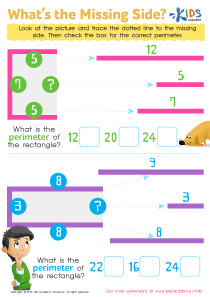
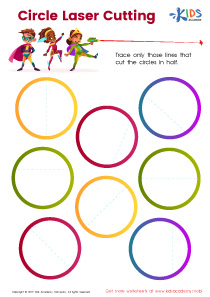
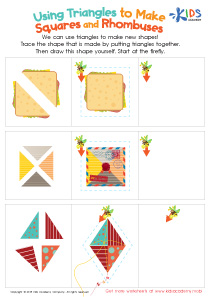
Discover a collection of Cognitive Development Normal 2D Shapes Worksheets, thoughtfully designed for ages 5-7. These engaging resources from Kids Academy help children recognize and understand essential 2D shapes while enhancing their cognitive skills. Each worksheet combines fun activities with educational content, promoting shape identification, pattern recognition, and critical thinking. Perfect for both classroom and home learning, our worksheets are created to align with standard math curricula, ensuring your child builds a strong foundation in geometry. Foster cognitive development and make learning enjoyable for your young math enthusiasts with these expertly curated materials.
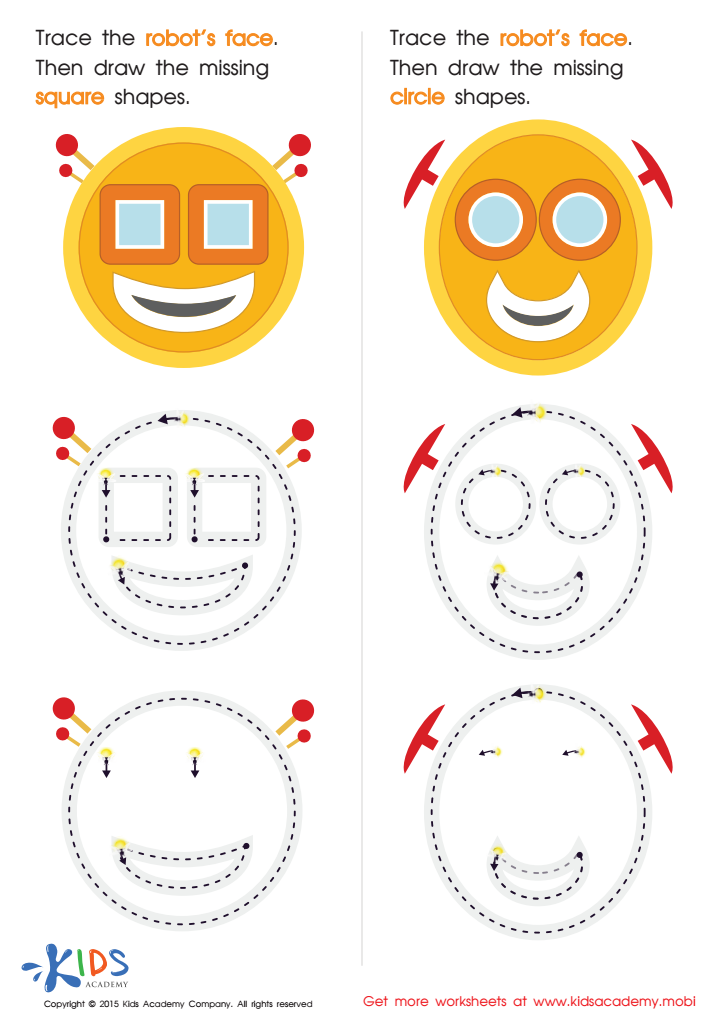
Practicing to Draw Circles And Squares Printable
 Assign to My Students











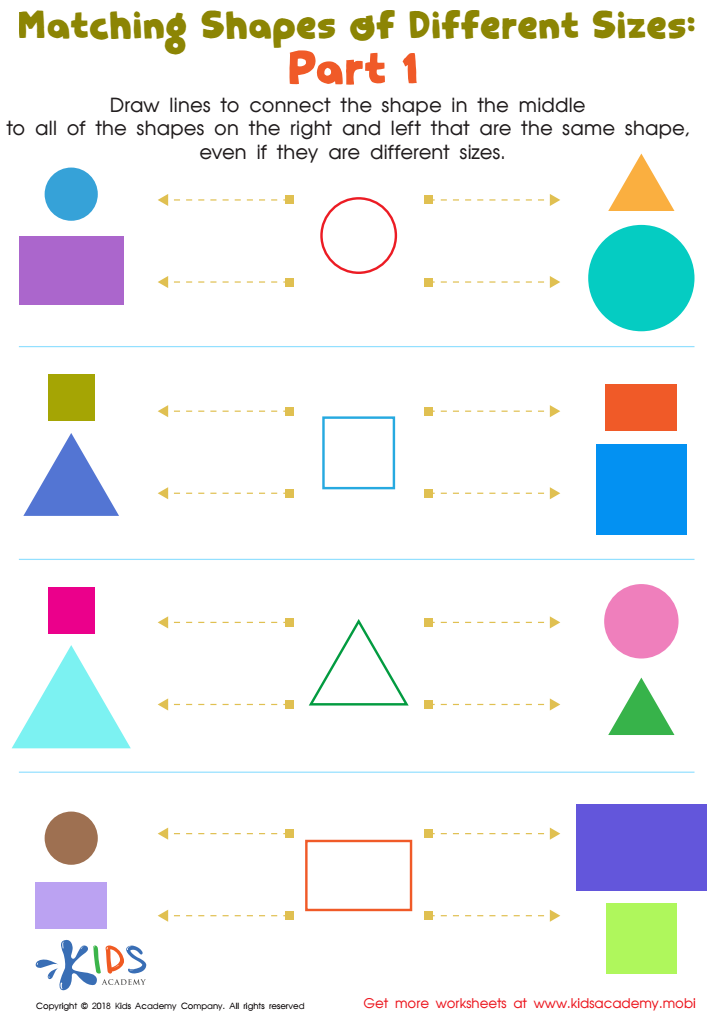
Geometry: part 1 Worksheet
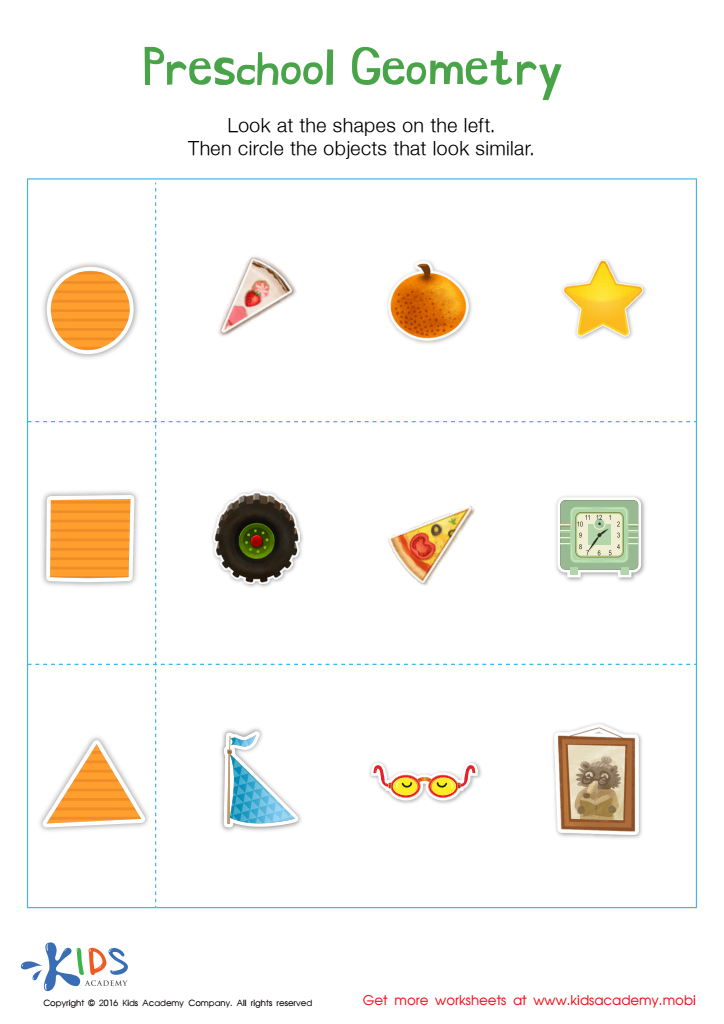
Preschool Geometry Match Up Worksheet
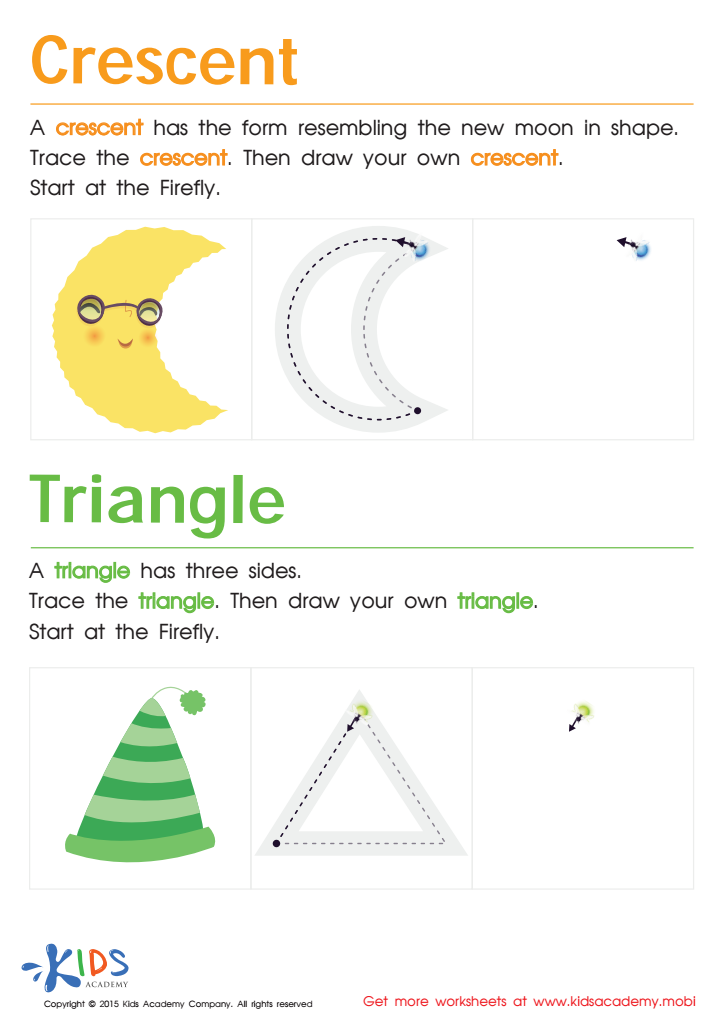
Learning to Draw Crescents And Triangles Worksheet
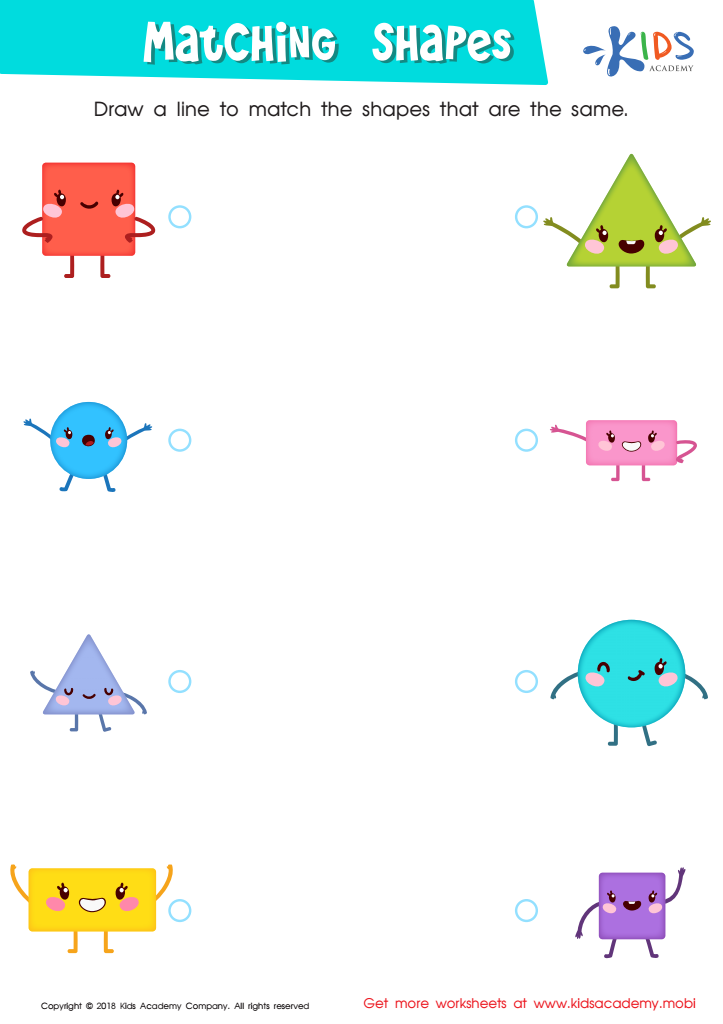
Matching Shapes Worksheet








Cognitive development in children ages 5-7 is crucial as it lays the foundation for future learning and problem-solving abilities. Introducing normal 2D shapes, such as circles, squares, triangles, and rectangles, plays a significant role in this process. Understanding these shapes helps young learners enhance their spatial awareness, an essential skill for comprehending more complex mathematical concepts later on, such as geometry and algebra.
Recognizing and manipulating 2D shapes also supports the development of fine motor skills as children draw and build these shapes with materials like clay and blocks. Moreover, such activities foster hand-eye coordination and precision. Cognitive development related to 2D shapes extends to language skills as well, as children learn to describe attributes and relationships—terms like edges, vertices, and symmetry become part of their vocabulary.
Incorporating 2D shapes into learning settings allows learners to engage in classification and sorting, boosting their ability to recognize patterns, a critical component of logical reasoning. By caring about this aspect of cognitive development, parents and teachers provide children with the tools to approach more abstract concepts confidently and lay the groundwork for academic success across various subjects. Hence, introducing children to these basic geometrical concepts early on is essential for a robust cognitive developmental trajectory.