Filters

10 filtered results

Clear all filters
Favorites
With answer key
Interactive

10 filtered results

Difficulty Level

Grade


Enhance your child's math journey with our "Counting Skills Normal Addition Worksheets for Ages 5-7." These engaging, printable worksheets help young learners master basic addition through fun and interactive exercises. Ideal for kids in Kindergarten to 1st grade, each worksheet focuses on improving counting and addition skills, providing ample practice opportunities. With colorful visuals and age-appropriate challenges, children will enjoy learning while building a strong numerical foundation. Download now from Kids Academy to support your child's early math education and watch their confidence soar as they add up numbers effortlessly! Perfect for both classroom and at-home use.

Check out this FREE Trial Lesson on Addition for age 5-7!

Relate Subtraction and Addition

Favorites
With answer key
Interactive
  • 5-7
  • Counting skills
  • Addition
  • Normal
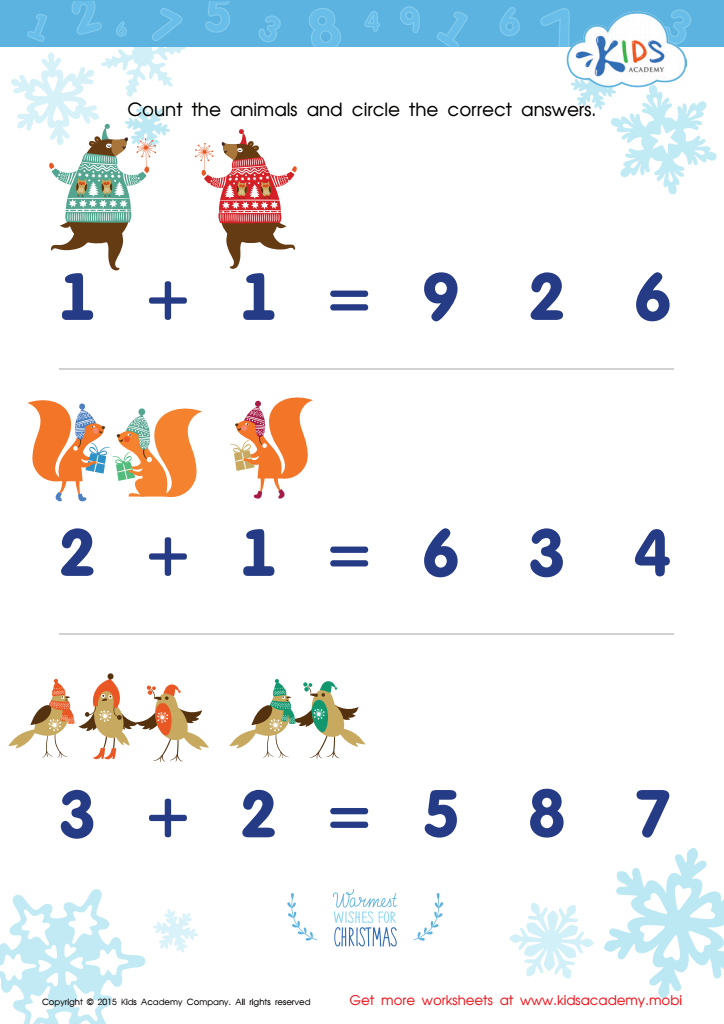
Math PDF Worksheet: Count Funny Animals

Count Funny Animals Worksheet

Get your kid in the Christmas spirit with this festive addition worksheet! They'll have fun counting the colorful animals and writing in the numbers. Our graphic layout makes it easy for them to visualize and solve the task. Print it out and help your kid keep their math skills sharp this winter with Kids Academy!
Count Funny Animals Worksheet
Worksheet
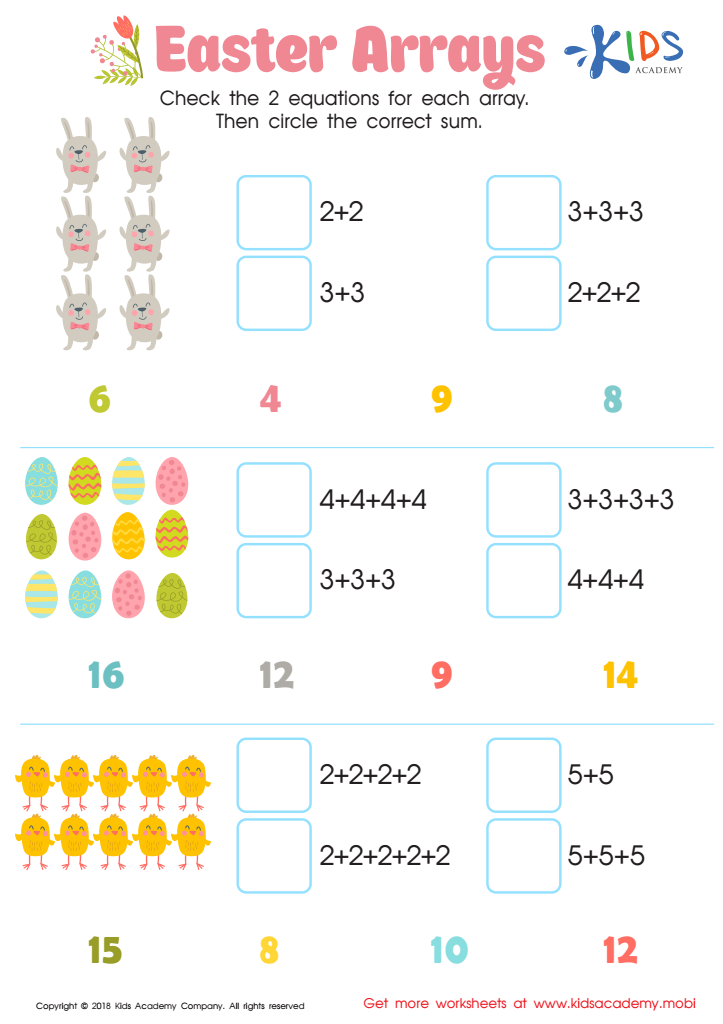
Easter Arrays Worksheet

Easter Arrays Worksheet

Does your child love Easter? Do they adore the Easter bunny and egg hunts? Help them have fun with this worksheet! Go through it with them and check the equations for each array. Then, have them circle the correct sum. It's a great way to make the holiday extra exciting!
Easter Arrays Worksheet
Worksheet
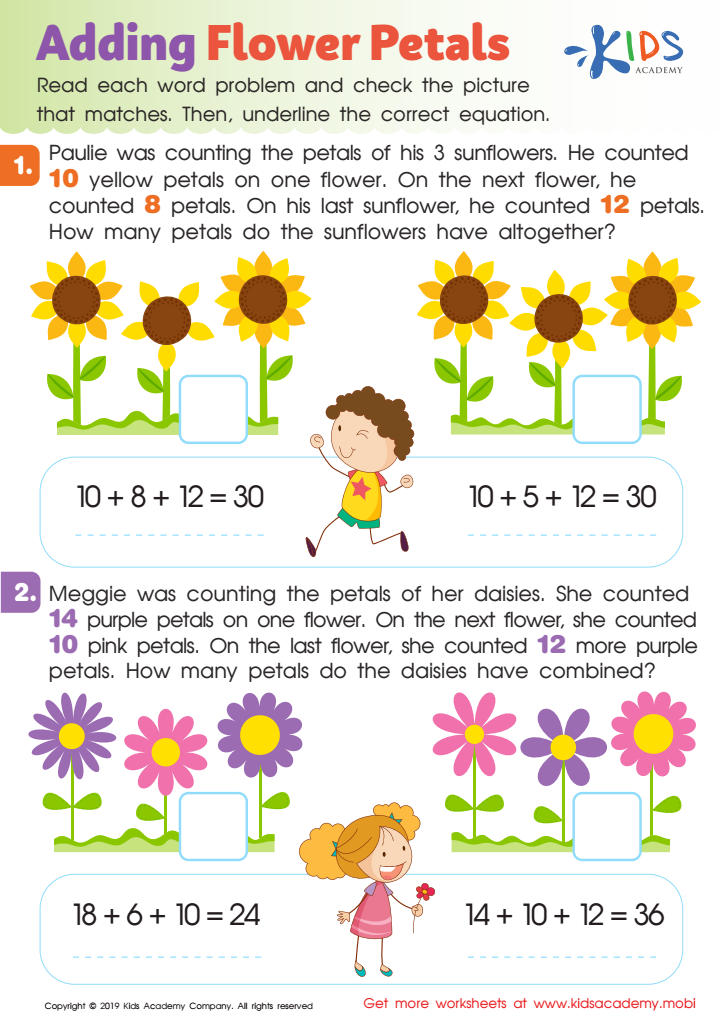
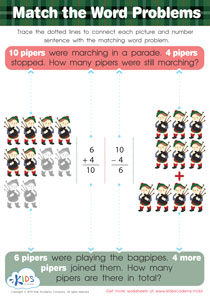
Adding Flower Petals Worksheet

Adding Flower Petals Worksheet

This free worksheet helps little mathematicians learn to understand word problems. They'll read each one and match it to the corresponding picture. Important info is highlighted, teaching kids to look for key info when solving problems. Then they'll underline the correct number equation that matches the picture. A great way to practice problem-solving skills!
Adding Flower Petals Worksheet
Worksheet
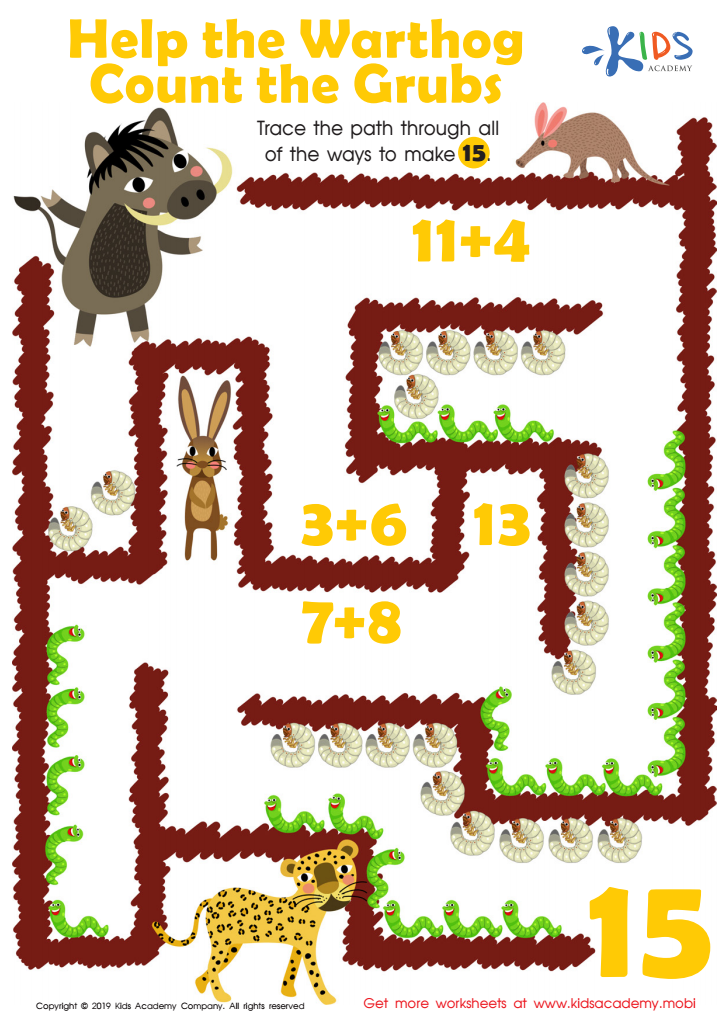
Help the Warthog Count the Grubs Worksheet

Help the Warthog Count the Grubs Worksheet

Test your kids' knowledge of wild animals. Ask them to name some they know, then have them identify the animals on this worksheet. If they can't, take the time to tell them the names. Finally, trace the warthog's path through the maze by solving the equations and going through paths that make 15.
Help the Warthog Count the Grubs Worksheet
Worksheet
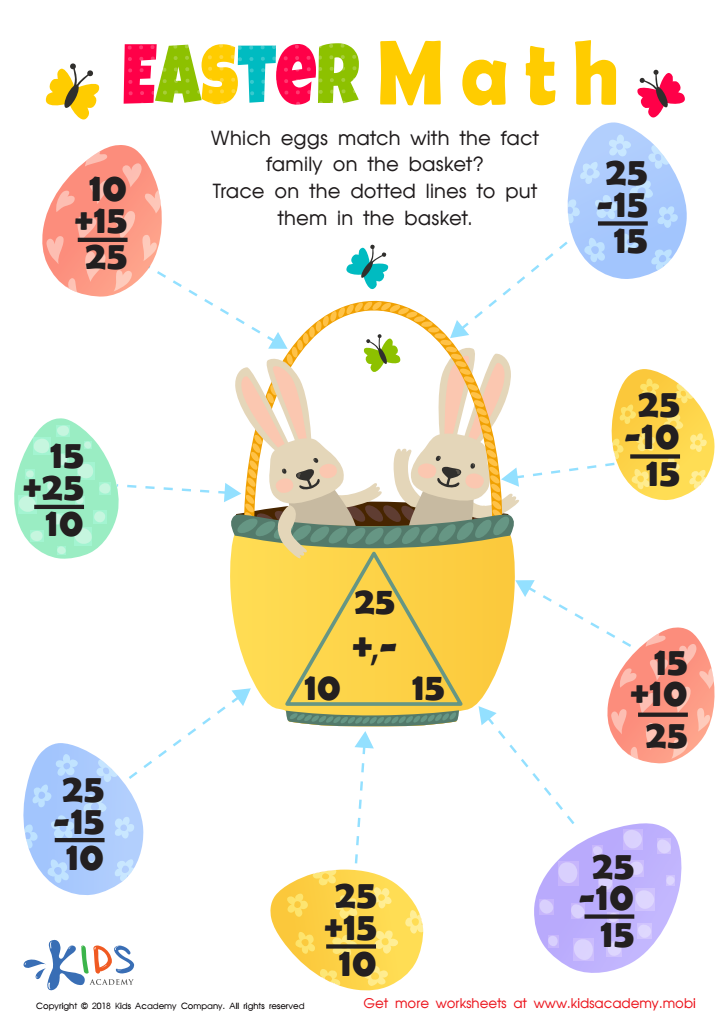
Fact Families: Easter Math Worksheet

Fact Families: Easter Math Worksheet

Kids will love this vibrant PDF packed with Easter math fun! Match facts with the colorful eggs, add and subtract multiples of five to boost automaticity, and have a blast with the bunny friends!
Fact Families: Easter Math Worksheet
Worksheet
Addition Facts: Double Dice Worksheet

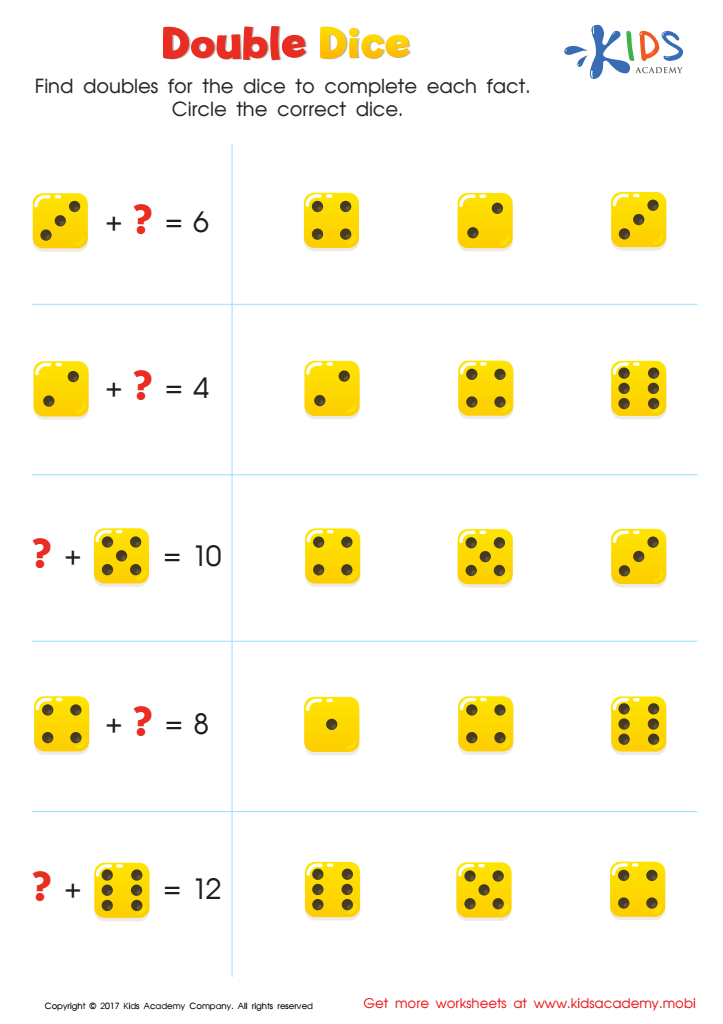
Addition Facts: Double Dice Worksheet

Are you looking for ways to make maths more engaging for kids? Maths can be a bore, but by teaching kids from an early age that it can be fun, they won't struggle with it. This worksheet is a great way to start: your child needs to identify the number on the left dice and find its double on the right. The sum of the two dice is also given.
Addition Facts: Double Dice Worksheet
Worksheet
Collect Sticks Worksheet

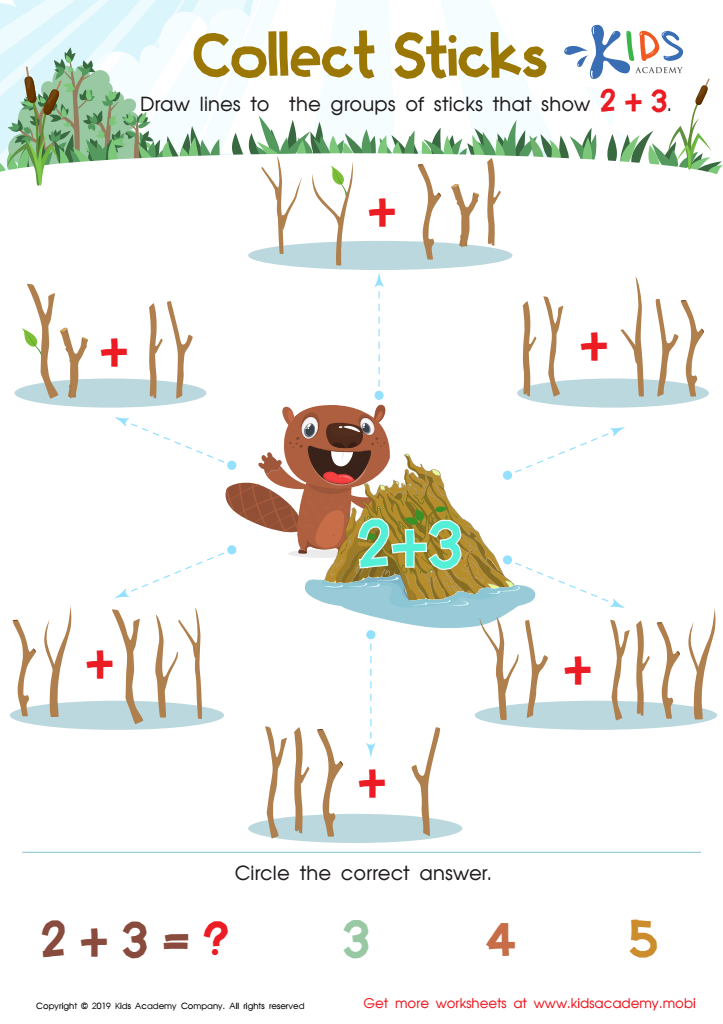
Collect Sticks Worksheet

Let math be fun for your kids with a simple and colorful worksheet exercise. Addition and subtraction can be daunting, but you can make it enjoyable with exercises like this one. Get them to draw lines to the groups of sticks that show 2+3 and watch them light up.
Collect Sticks Worksheet
Worksheet
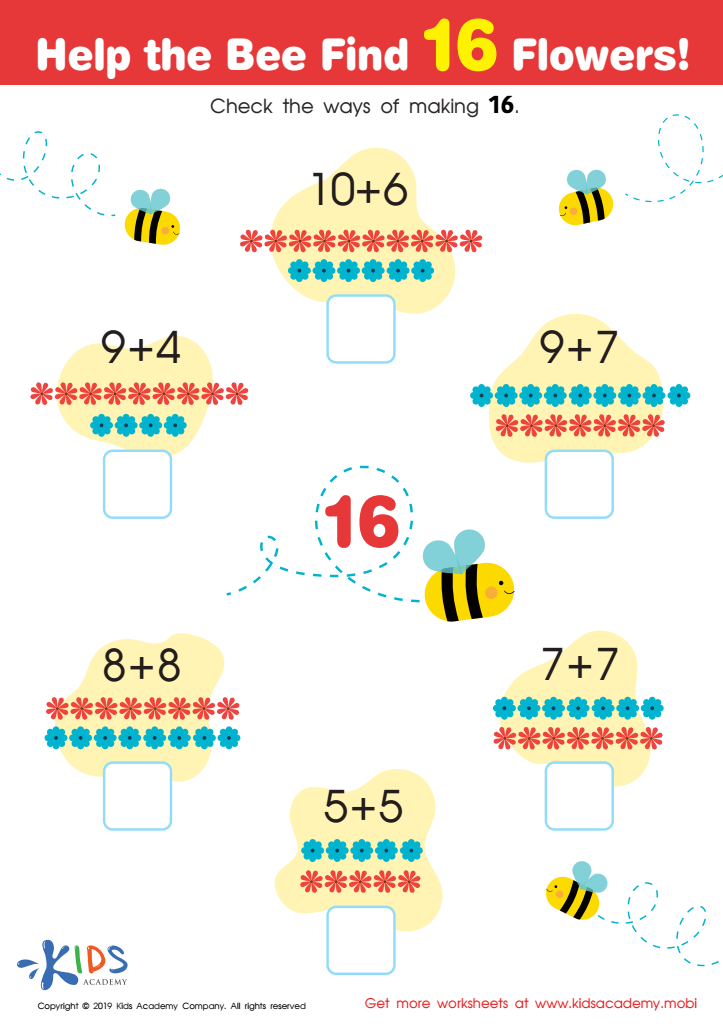
Help the Bee Find 16 Flowers Worksheet

Help the Bee Find 16 Flowers Worksheet

Ask your students to count as high as they can. Show them that different numbers can equal the same figure with examples like 2+2=4 and 3+1=4. Ask for more examples, then help the bees find 16 flowers by checking the ways of making 16.
Help the Bee Find 16 Flowers Worksheet
Worksheet
14 in School Worksheet

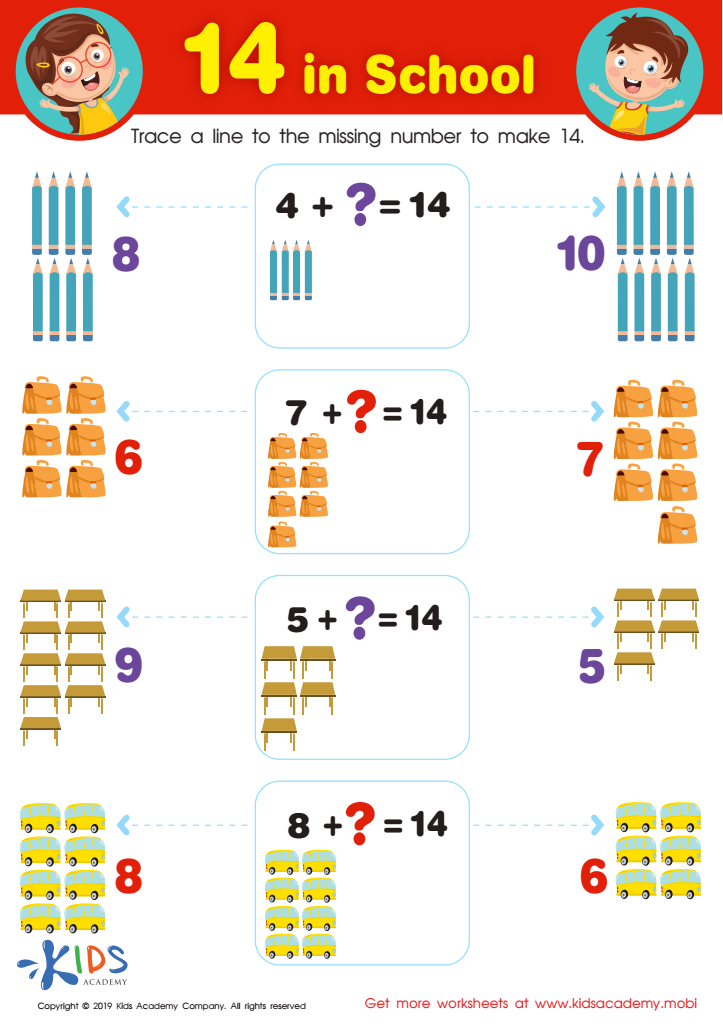
14 in School Worksheet

Remind your kids that adding different sets of numbers can give the same total (e.g. 2+3=5, 4+1=5). Ask them for more examples. Afterwards, work through the exercise. Help them count the objects and trace a line to the missing number that makes the total 14.
14 in School Worksheet
Worksheet
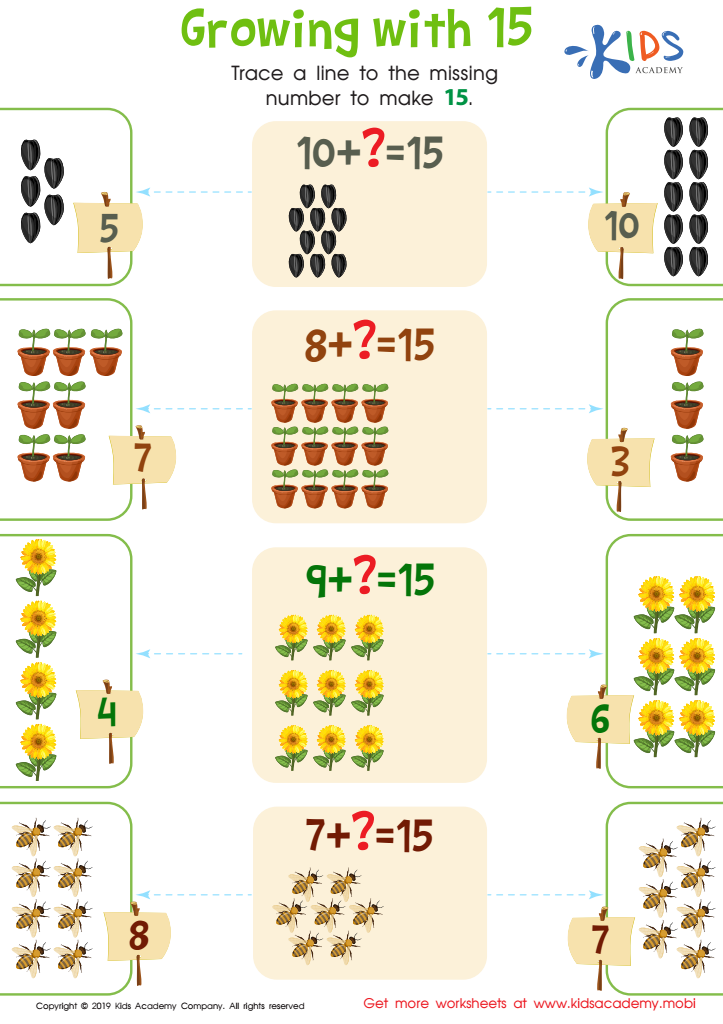
Growing with 15 Worksheet


Growing with 15 Worksheet

Remind your kids that adding different sets of numbers can give the same total (e.g. 2+3=5, 4+1=5). Test their understanding by asking them for more examples. Move onto the worksheet: count objects, then trace the line to the number making a total of 15.
Growing with 15 Worksheet
Worksheet


Counting skills and normal addition are foundational components of early childhood education, especially for children aged 5-7. Mastering these mathematical basics plays a critical role in a child's overall cognitive development and future academic success.

Firstly, counting skills are the building blocks for all higher mathematics. They help children understand number concepts, such as quantity and order. When children can count, they begin to grasp the idea of how one number follows another, which is essential for understanding the more complex operations they will encounter later.

Secondly, normal addition, or simple arithmetic, forms the basis of all mathematical operations. By learning to add, children develop logical thinking and problem-solving skills. These critical abilities extend beyond math, aiding in everyday decision-making and reasoning tasks.

Additionally, possessing robust counting and addition skills supports a child's confidence and enthusiasm towards learning. Achieving success in basic math builds self-esteem and motivates children to tackle more challenging subjects down the line.

Finally, early mastery of these skills sets the stage for future academic achievement. Children who exhibit strong counting and addition skills early on are better prepared for more advanced mathematics and related subjects in later school years. For these reasons, both parents and teachers should prioritize the development of counting and normal addition skills for children in this age group.