
Following instructions Normal Numbers Worksheets for Ages 5-7
3 filtered results
Difficulty Level
Grade
Age
-
From - To
Subject
Activity
Standards
Enhance your child's learning experience with our "Following Instructions Normal Numbers Worksheets" designed specifically for ages 5-7. These engaging worksheets help young learners develop essential skills in number recognition and comprehension while promoting the ability to follow directions accurately. Each activity is tailored to encourage critical thinking and foster independence as children solve fun and interactive exercises. Perfect for home or classroom use, these worksheets support early math development in a playful manner, making learning enjoyable. Download your worksheets today and watch your child grow more confident in their mathematical abilities while cultivating a strong foundation for future learning.
Favorites
With answer key
Interactive
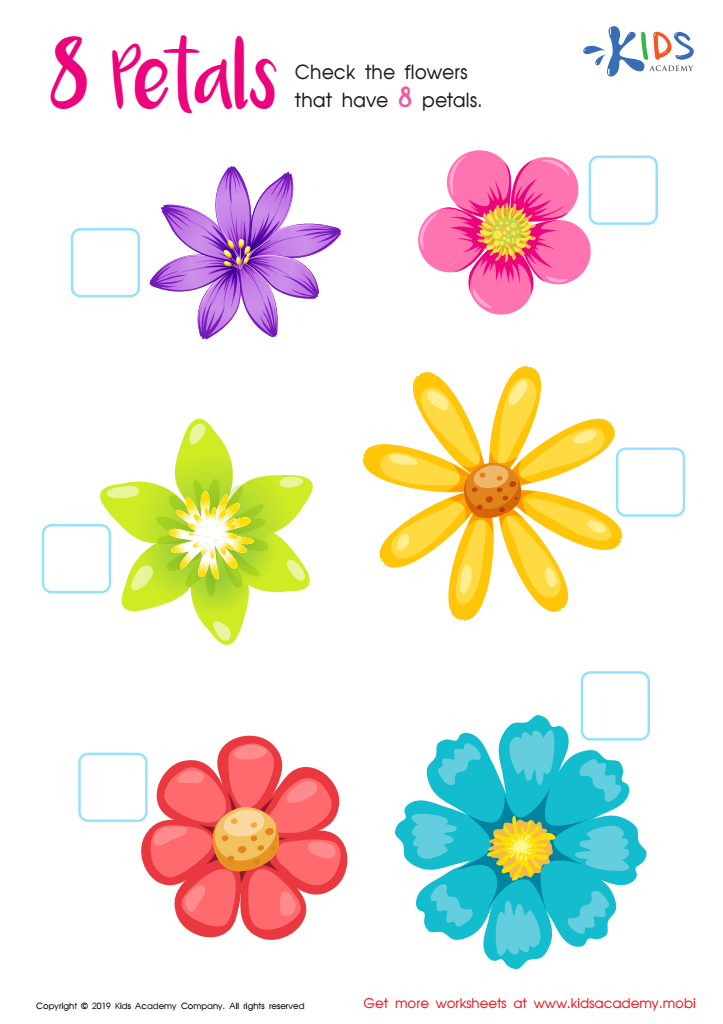
8 Petals Worksheet
Help your children master counting with this fun worksheet. It's filled with colorful flowers and they must count the petals and check the flowers with 8 petals. It's a great way to practice their counting skills and have some fun too!
 Assign to My Students
8 Petals Worksheet
Worksheet
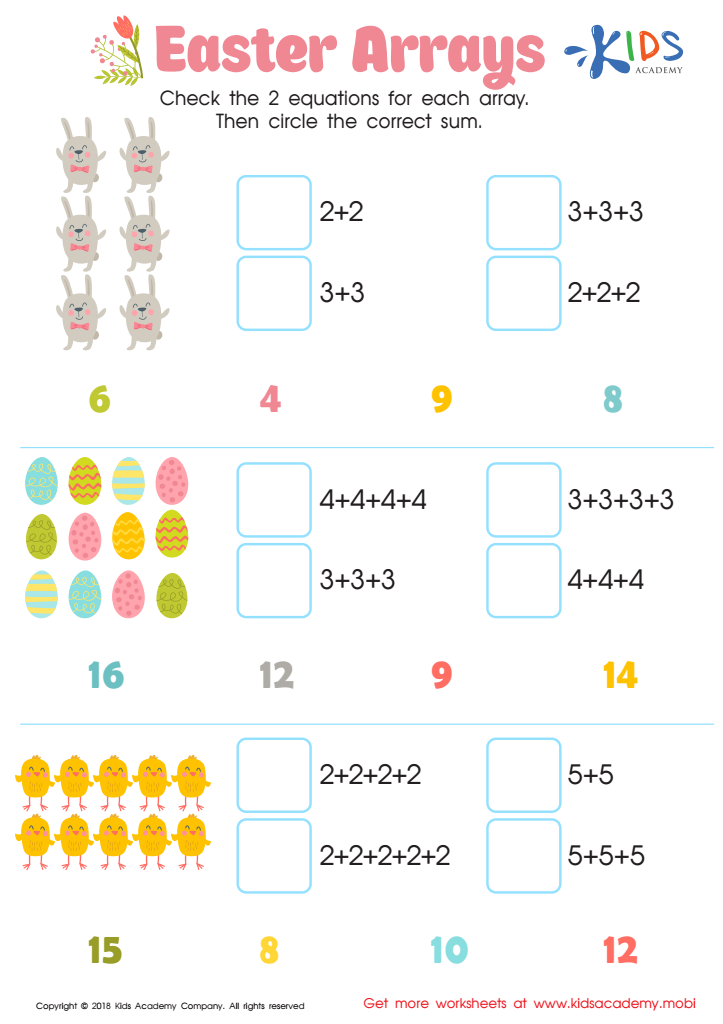
Easter Arrays Worksheet
Does your child love Easter? Do they adore the Easter bunny and egg hunts? Help them have fun with this worksheet! Go through it with them and check the equations for each array. Then, have them circle the correct sum. It's a great way to make the holiday extra exciting!
Easter Arrays Worksheet
Worksheet
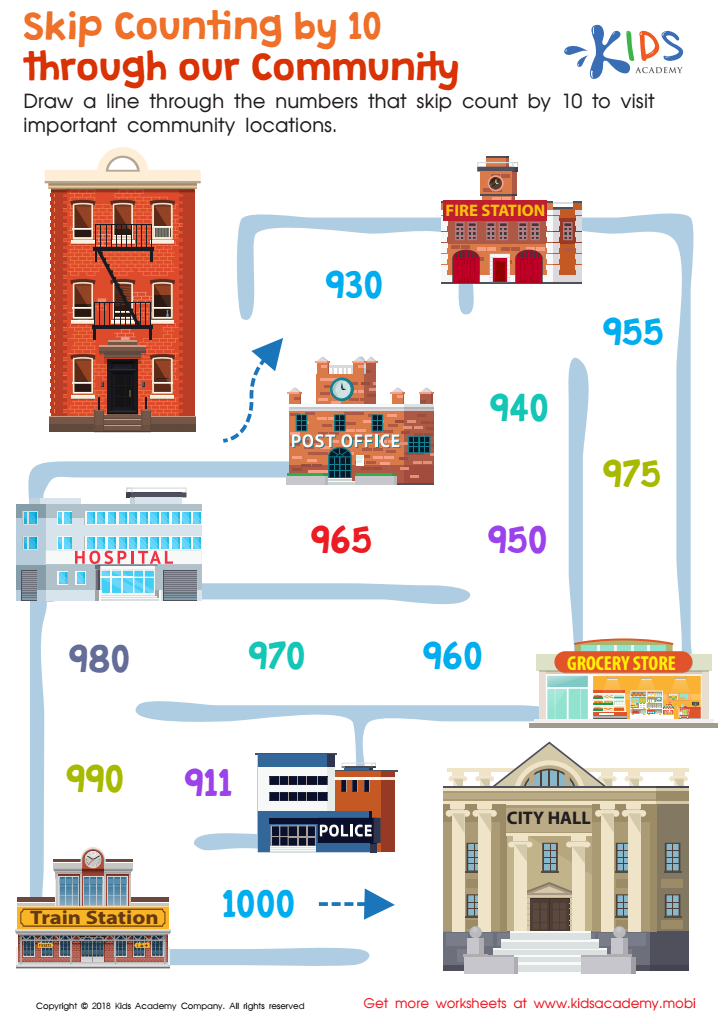
Skip Counting by 10 Through Our Community Worksheet
Our kids need to 'make a ten' and skip count by tens to boost their speed and accuracy in math. This cool, free worksheet takes them on a journey through their local community to practice counting by tens. They'll work on social studies and fine motor skills while having fun with the maze they get to count by tens in!
Skip Counting by 10 Through Our Community Worksheet
Worksheet
Join Kids Academy for Free
Who is primarily going to use this learning content?








Parents and teachers should prioritize teaching children aged 5-7 about following instructions and understanding normal numbers because these skills form the foundation for their academic and social development. At this age, children are typically introduced to basic math concepts and practical everyday activities, making it essential for them to grasp how to follow directions accurately.
First, understanding and adhering to instructions help children develop crucial self-regulation and organizational skills. This ability is essential not only for academic success but also in fostering independence. When children learn to follow instructions, they become more capable of completing tasks independently, which boosts their confidence.
Second, normal numbers are part of early mathematical literacy and are vital for simple calculations, grouping, and understanding quantities in daily life. Mastering normal numbers translates to improved problem-solving abilities, laying the groundwork for more complex mathematical concepts in later years.
Lastly, learning to follow directions promotes positive social interactions, as children engage in group activities and collaborative learning. It builds communication skills and encourages teamwork, helping them navigate social situations effectively. Ultimately, equipping children with these foundational skills prepares them for academic challenges and lifelong learning.








