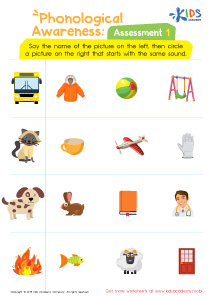
Sound Association Normal Consonants Worksheets for Ages 5-8
3 filtered results
-
From - To
Discover our "Sound Association Normal Consonants Worksheets for Ages 5-8" at Kids Academy. Designed to enhance phonemic awareness, these engaging worksheets help young learners connect sounds to their corresponding consonants. Through fun activities and exercises, children develop essential reading and spelling skills by practicing sound recognition and association with consonant letters. These printable resources offer diverse learning experiences tailored to early grade students, making foundational literacy both exciting and effective. Perfect for classroom use or at-home practice, our worksheets support your child's journey towards mastering the basics of phonics with ease and confidence.
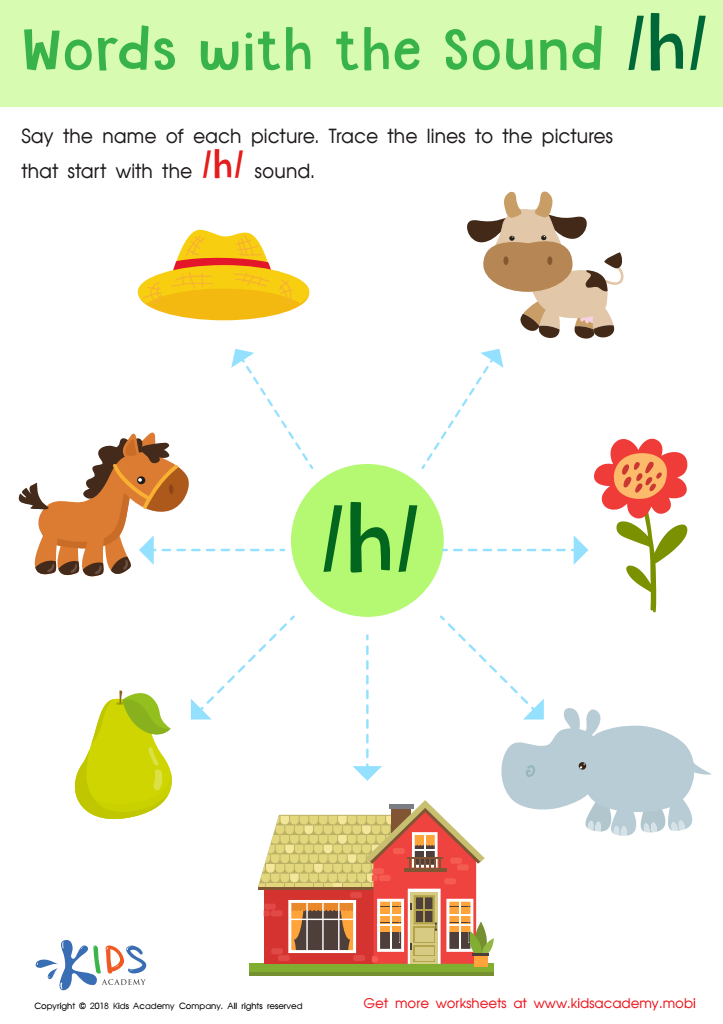
Words with sound h Reading Worksheet
 Assign to My Students
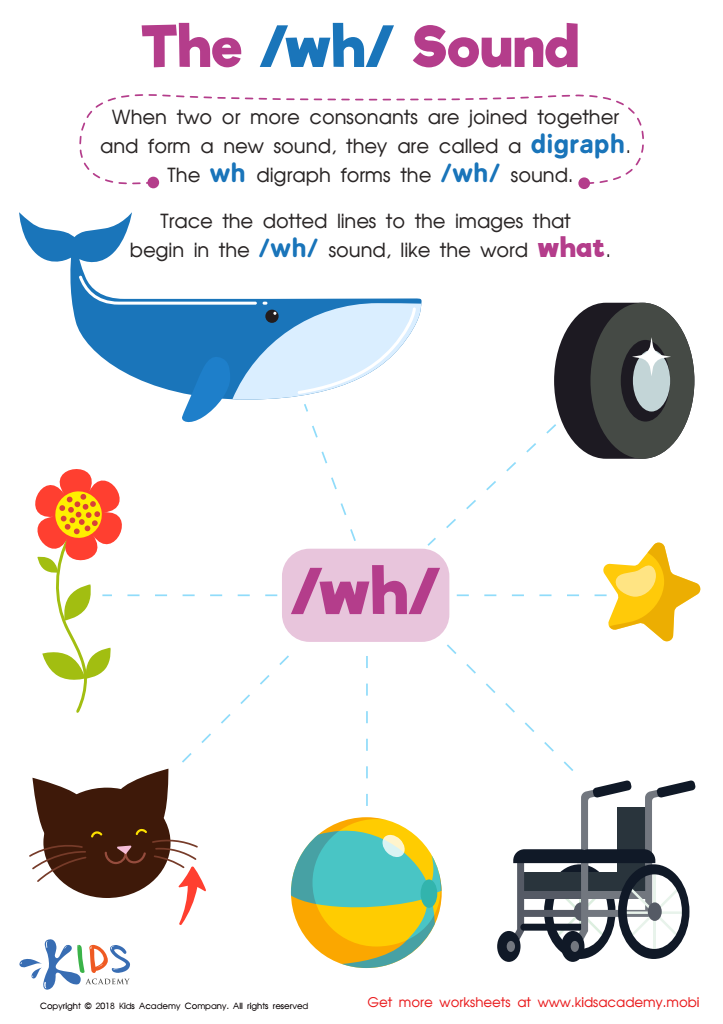
The /wh/ Sound Worksheet
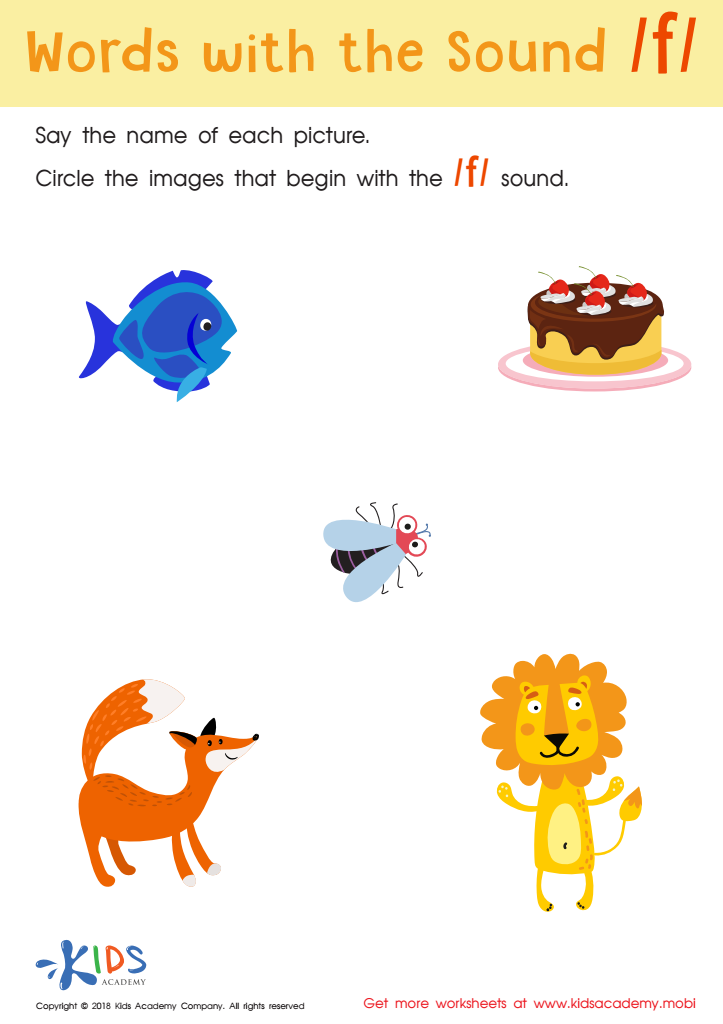
Words with sound f Reading Worksheet



Sound association with normal consonants is crucial for children aged 5-8 because it lays the foundation for literacy development. During these formative years, children are at a critical stage for language acquisition, and understanding how sounds correspond to letters is integral for their reading and writing skills. When students can accurately associate consonants with their respective sounds, they can begin to decode words and blend sounds together to read, which significantly enhances their reading fluency.
Moreover, mastering consonant sounds can boost a child's confidence and interest in learning. It allows for smoother progression to more complicated phonemic tasks, such as understanding more complex words and sentence structures. In addition, it enhances their ability to spell, as spelling also requires an understanding of sound-letter relationship.
For parents and teachers, focusing on sound association with consonants provides an early intervention that can prevent future literacy challenges. Early success in reading is linked to continued academic achievement, creating a positive feedback loop in the child’s educational journey. As such, the time and effort invested in teaching these fundamentals engage children more effectively and equip them with the tools they need for lifelong learning.
By prioritizing sound association with consonants, parents and teachers are supporting not just literacy, but overall cognitive and academic development.