
Lowercase identification Normal Alphabet Worksheets for Ages 5-8
4 filtered results
Difficulty Level
Grade
Age
-
From - To
Subject
Activity
Standards
Enhance your child's reading and writing skills with our engaging Lowercase Identification Normal Alphabet Worksheets, designed specifically for ages 5-8. These fun, interactive worksheets help young learners recognize and identify lowercase letters, fostering a solid foundation in literacy. Packed with colorful graphics and various activities, these resources cater to different learning styles, making learning enjoyable and effective. Ideal for both classroom and at-home use, our worksheets encourage practice through games and exercises that promote letter familiarity. Download now to give your child the confidence to master the alphabet and embark on their reading journey with enthusiasm!
Favorites
With answer key
Interactive
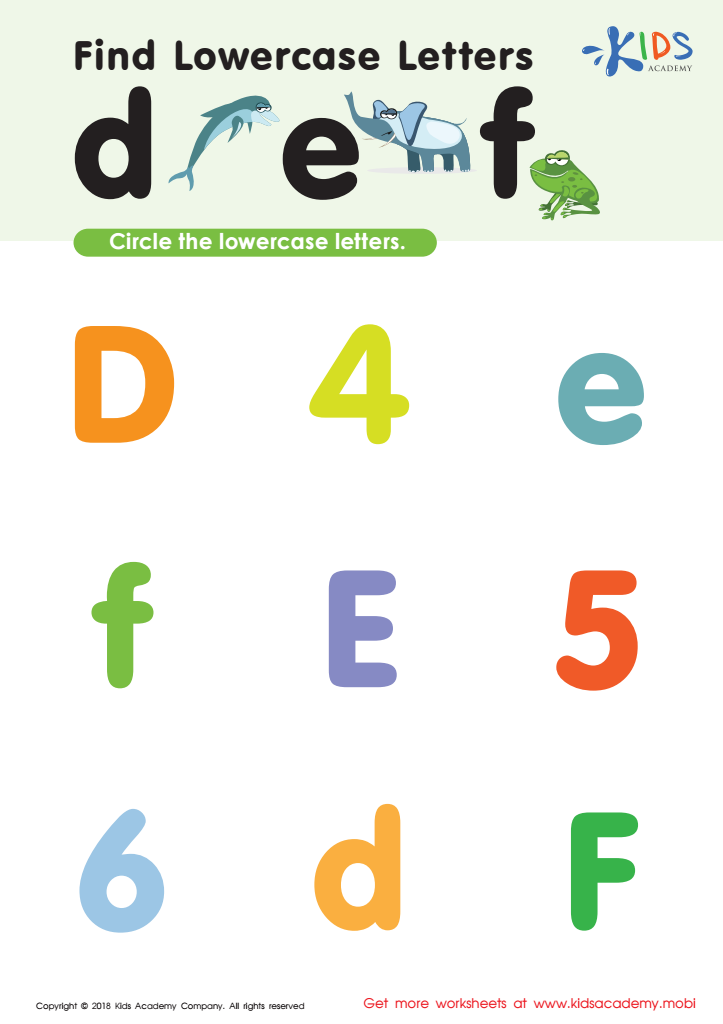
Find Lowercase Letters d e f Worksheet
Engage your child's brain with this fun, colorful worksheet. They'll identify and circle lowercase letters among other numbers and uppercase letters in bright colors. This will keep their attention as they learn, and can be downloaded in PDF form!
 Assign to My Students
Find Lowercase Letters d e f Worksheet
Worksheet
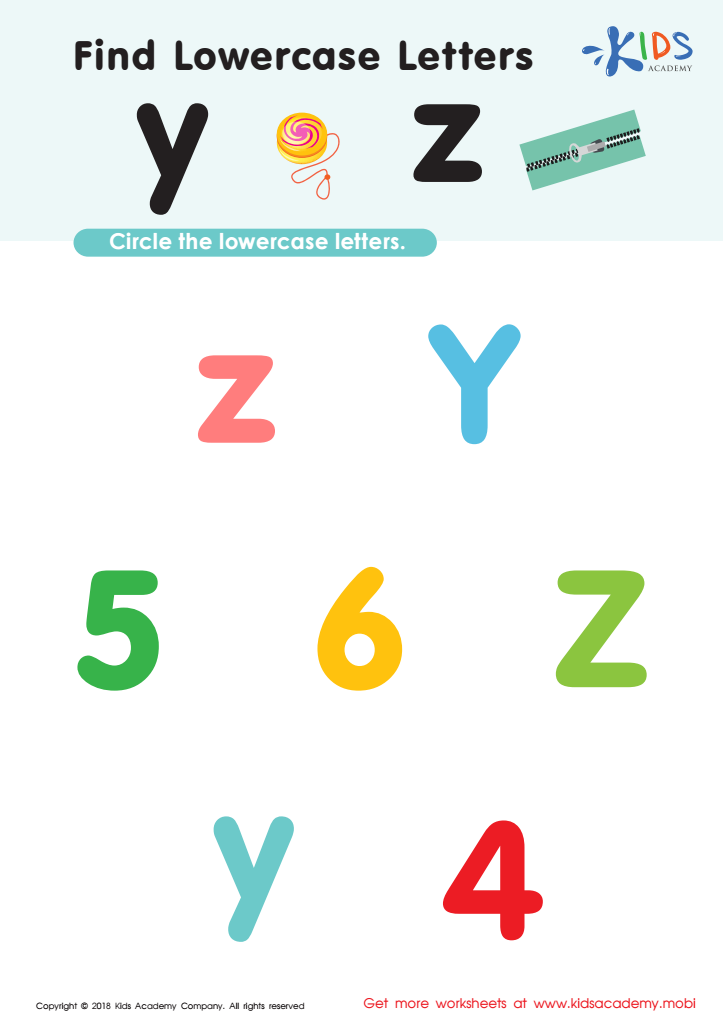
Find Lowercase Letters y z Worksheet
Help your kid learn the alphabet. Before they can move on to words and reading, they must first know the lower and uppercase letters. Show them how to find the letters y and z in this worksheet, which is filled with uppercase letters and numbers. Together, find and circle them.
Find Lowercase Letters y z Worksheet
Worksheet
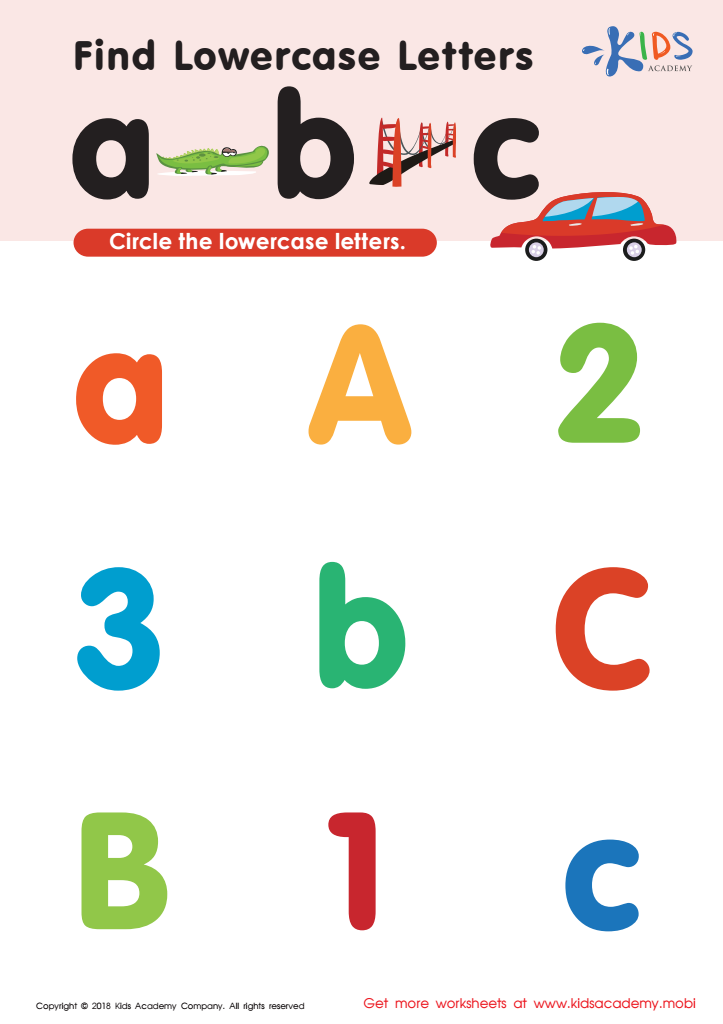
Find lowercase letters a b c Worksheet
Help your child identify lowercase letters with this worksheet. Carefully look at each letter and have your child circle the lowercase ones. This exercise is vital in helping them understand the alphabet and the difference between lower and uppercase letters.
Find lowercase letters a b c Worksheet
Worksheet
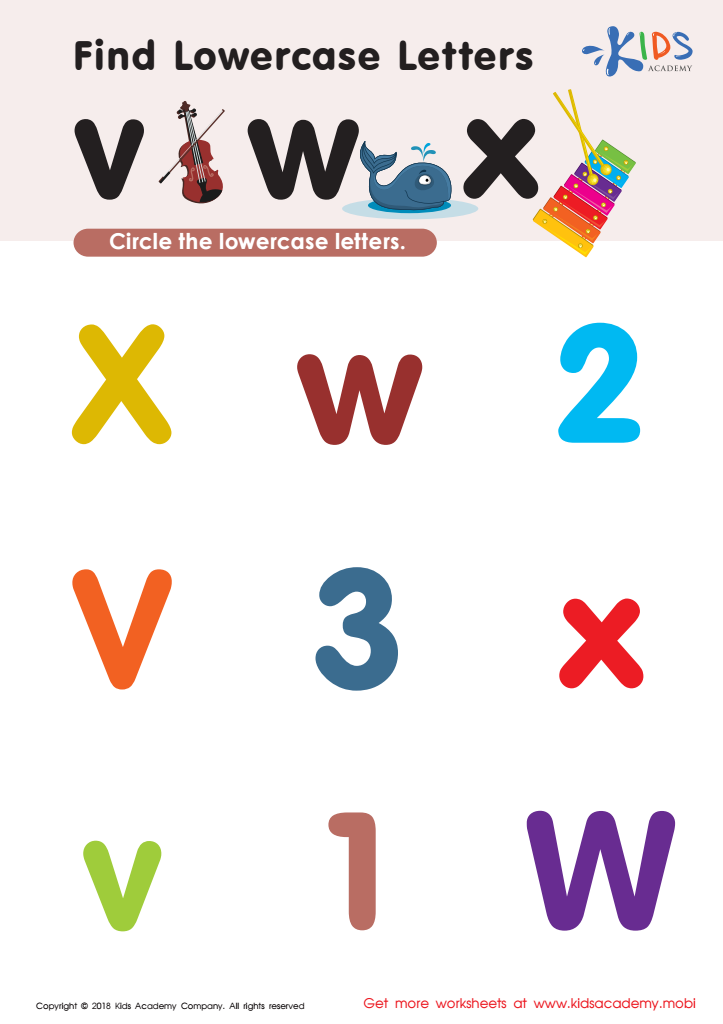
Find Lowercase Letters v w x Worksheet
If your child doesn't know the alphabet, get them this helpful worksheet. It's an easy exercise to build their understanding of the alphabet and lowercase letters. Find the letters v, w, and x among other uppercase letters and numbers in the downloadable PDF.
Find Lowercase Letters v w x Worksheet
Worksheet
Join Kids Academy for Free
Who is primarily going to use this learning content?








Understanding lowercase alphabet letter identification is crucial for children aged 5 to 8 as it forms the foundation of their literacy development. At this stage, children are developing essential reading and writing skills, and recognizing lowercase letters is key to reading fluency and comprehension. Lowercase letters are used far more frequently in everyday text than uppercase letters; thus, familiarity with them enables children to decode words effectively.
For parents and teachers, nurturing this skill is vital. By supporting lowercase letter recognition, caregivers can enhance children's confidence and interest in reading. Engaging activities, like alphabet games or reading simple books, can transform learning into a fun experience, encouraging a love for literacy.
Moreover, lowercase recognition helps children understand the differences in letter forms, aiding in writing correct formation and spelling. It improves their ability to make connections between phonetics and written language. As these foundational skills are built, children become better equipped for future academic challenges, ultimately fostering a stronger, more informed learner. Parental involvement and teacher guidance ensure that students reap the full benefits of their literacy education, paving the way for successful reading and writing in later educational stages.







