Sound differentiation Normal Alphabet Worksheets for Ages 5-8
3 filtered results
-
From - To
Introduce your child to the delightful world of phonics with our Sound Differentiation Normal Alphabet Worksheets designed for ages 5-8. These engaging worksheets sharpen young learners’ ability to distinguish different sounds, enhancing their reading and pronunciation skills. Each worksheet is tailored to build a foundation in letter-sound relationships, making early literacy both fun and educational. With a user-friendly approach and captivating activities, your child will effortlessly grasp essential phonics concepts. Empower your child’s learning journey with Kids Academy and help them achieve language mastery through consistent practice and interactive tasks. Academic success starts with sound differentiation!
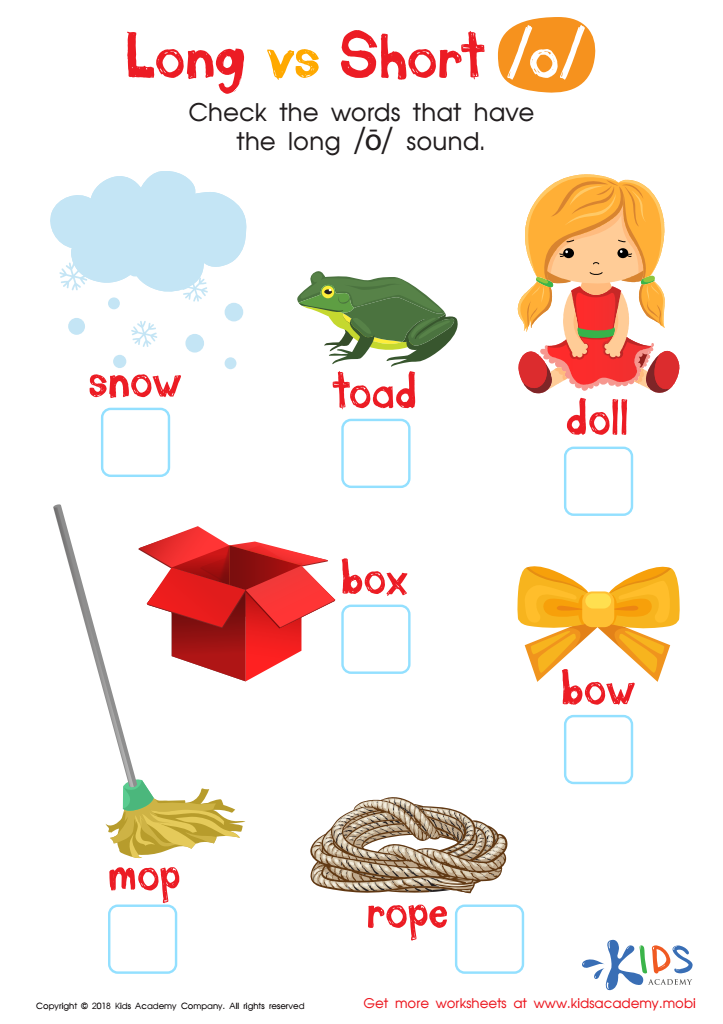
Long vs Short O Reading Worksheet
 Assign to My Students
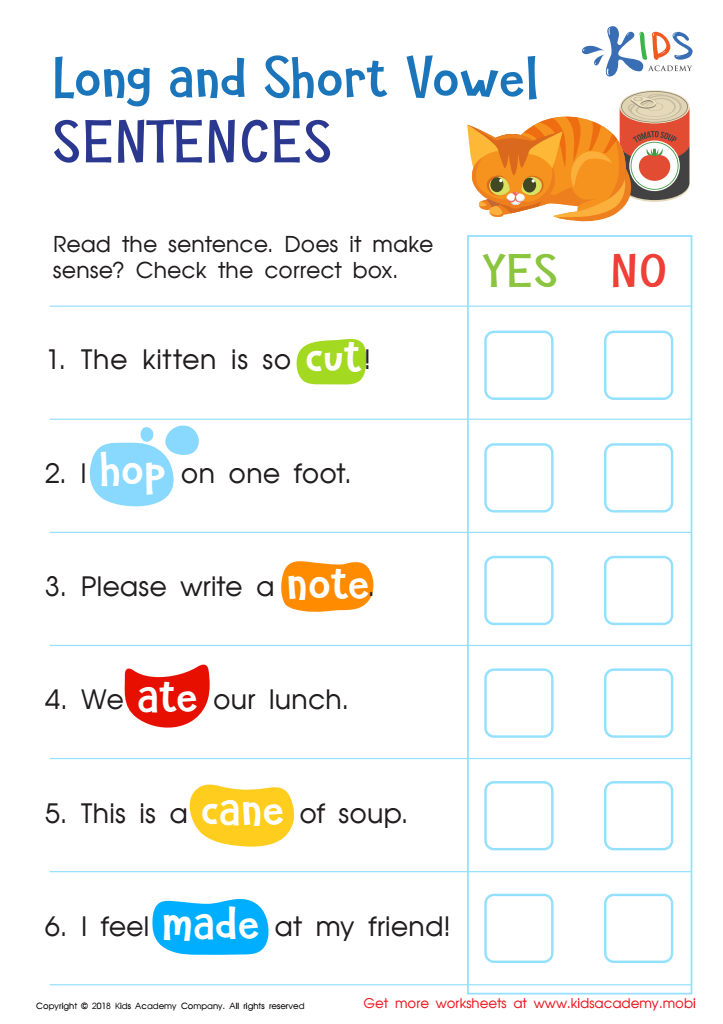
Long and Short Vowel Sentences: Assessment Worksheet
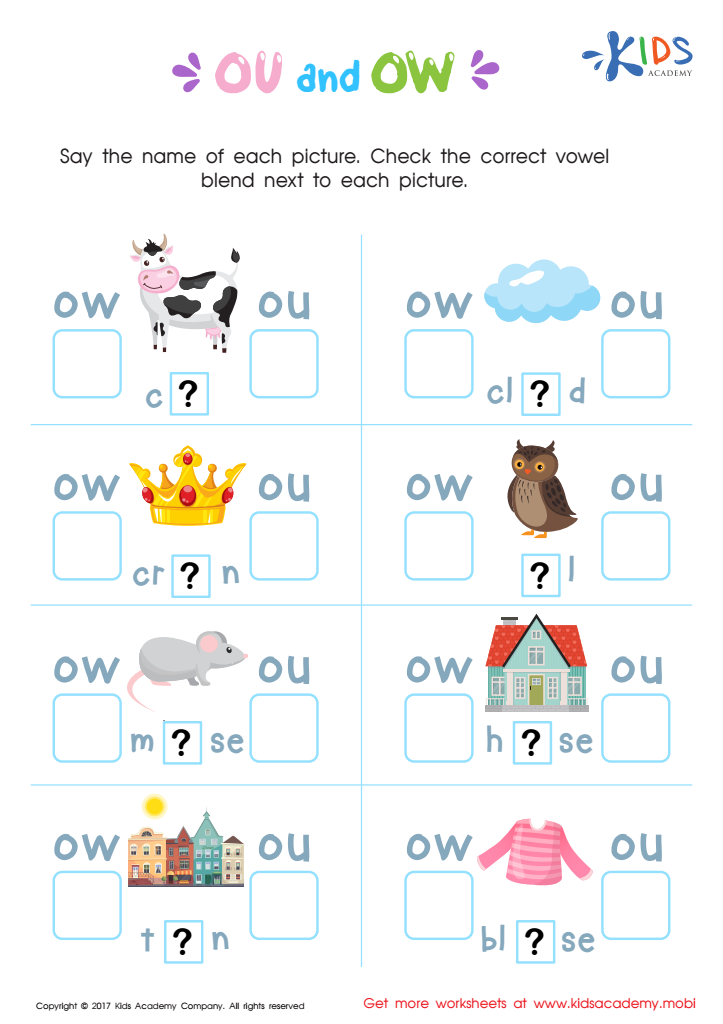
OU and OW Words Worksheet








Sound differentiation and familiarity with the alphabet are foundational skills that significantly impact a child's early literacy development, making it critical for parents and teachers to pay close attention during the ages of 5-8. During this formative period, children are highly receptive to phonemic awareness—the ability to hear, identify, and manipulate individual sounds in spoken words. Mastery of sound differentiation contributes directly to proficient reading skills. It helps children decode words, making reading more fluent and enjoyable. When children can distinguish between similar sounds, they are less likely to mix up letters and words, leading to better comprehension and more accurate spelling.
Understanding the normal alphabet, with each letter's corresponding sounds, forms the basis of phonics education. Early phonics instruction is crucial as it bridges the gap between spoken and written language. Children who can link letters to their respective sounds can develop strong reading and writing skills more quickly.
Moreover, fostering these skills at a young age boosts a child’s confidence and enthusiasm for learning. Early success in reading sets a positive trajectory for their academic journey, promoting a lifelong love of reading. Integrating sound differentiation and alphabet recognition into dynamic, playful learning activities ensures that young learners remain engaged, facilitating better retention and solid understanding.







