Phonological awareness Normal Phonics Worksheets for Ages 5-8
3 filtered results
-
From - To
Unlock your child's reading potential with our Phonological Awareness Normal Phonics Worksheets designed specifically for ages 5-8. These engaging and interactive worksheets focus on essential skills such as sound recognition, blending, and segmenting, which are fundamental for developing literacy. Ideal for both classroom and home learning, our activities are aligned with early childhood education standards to ensure your child builds a strong foundation in phonics. Each worksheet is crafted to promote enjoyment in learning while enhancing critical listening and speaking skills. Start your child’s journey to becoming a confident reader with our thoughtfully designed phonological awareness resources today!
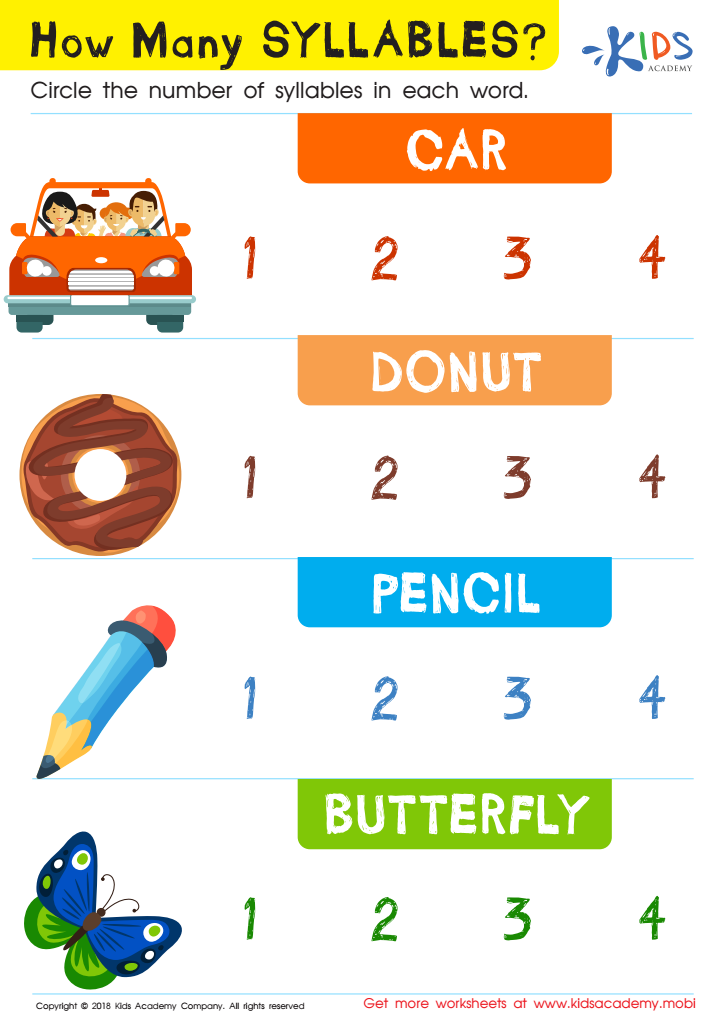
How Many Syllables? Worksheet
 Assign to My Students
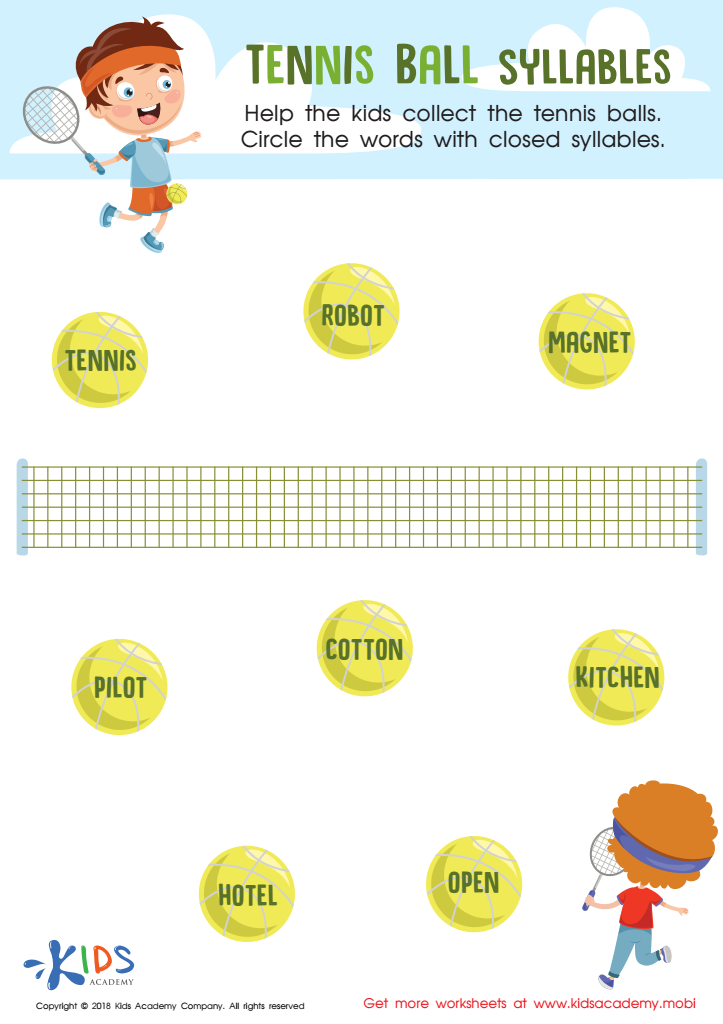
Tennis Ball Syllables Worksheet
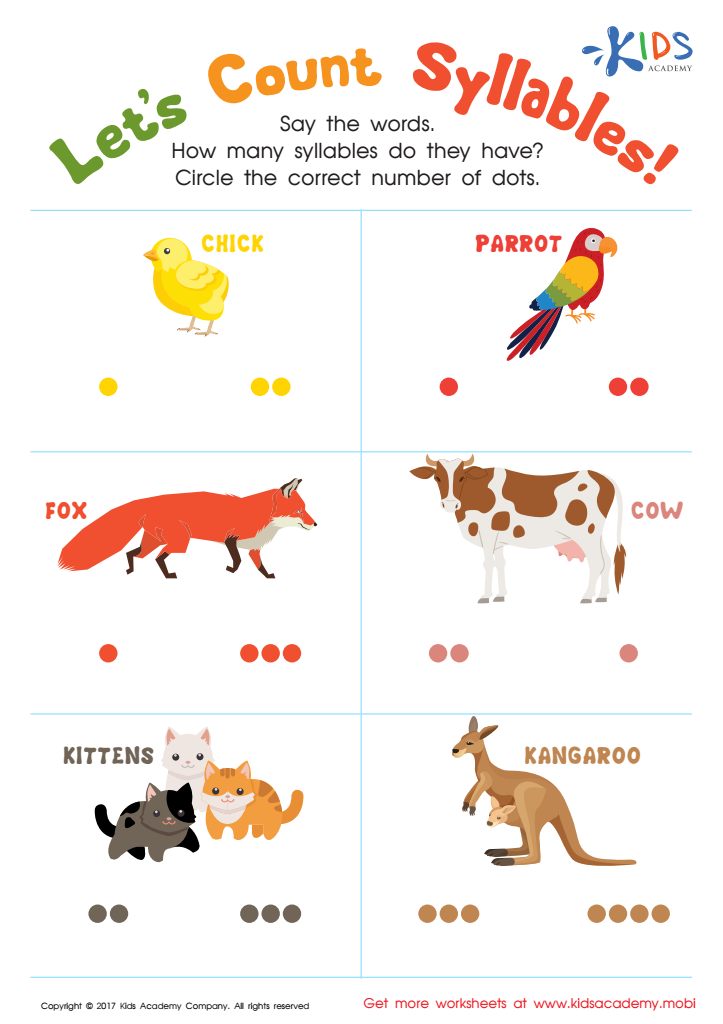
Lets Count Syllables Worksheet








Phonological awareness and phonics are fundamental components of early literacy that dramatically influence a child's reading and writing abilities. For parents and teachers of children aged 5-8, understanding these concepts is crucial for fostering the development of essential language skills.
Phonological awareness is the ability to identify and manipulate sounds in spoken language. It includes skills such as recognizing rhymes, counting syllables, and segmenting sounds. These skills are vital because they lay the foundation for reading comprehension. Children who are phonologically aware are better equipped to decode new words and understand text.
Phonics, on the other hand, connects sounds to letters, teaching children how to read by understanding the relationship between sounds and their corresponding letters or groups of letters. Mastery of phonics enables children to progress from decoding words to gaining fluency in reading.
When parents and teachers emphasize phonological awareness and phonics, they equip children with critical tools for literacy. This investment not only enhances their academic success but also boosts their confidence and enjoyment of reading, setting the stage for lifelong learning. Supporting these skills early on can lead to improved communication abilities, better academic performance, and a more enriching educational experience.







