Filters

6 filtered results

Clear all filters
Favorites
With answer key
Interactive

6 filtered results

Difficulty Level

Grade


Elevate your child’s handwriting skills with our comprehensive Handwriting Practice Normal Uppercase Letters Worksheets, specifically designed for kids ages 5-8. These engaging, printable worksheets are expertly crafted to help young learners master each letter of the alphabet. Featuring clear tracing guidelines and practice lines, our worksheets aim to improve fine motor skills, letter recognition, and penmanship. Perfect for parents and teachers, these worksheets are a valuable resource for enhancing early handwriting practice. Start building your child’s confidence and proficiency in writing uppercase letters today with our approachable and fun educational materials!

Check out this FREE Trial Lesson on Uppercase Letters for age 5-8!

Tracing Uppercase Letters A-I

Favorites
With answer key
Interactive
  • 5-8
  • Handwriting practice
  • Uppercase Letters
  • Normal
Uppercase Letters J, K, and L Worksheet Preview

Uppercase Letters J, K, and L Worksheet

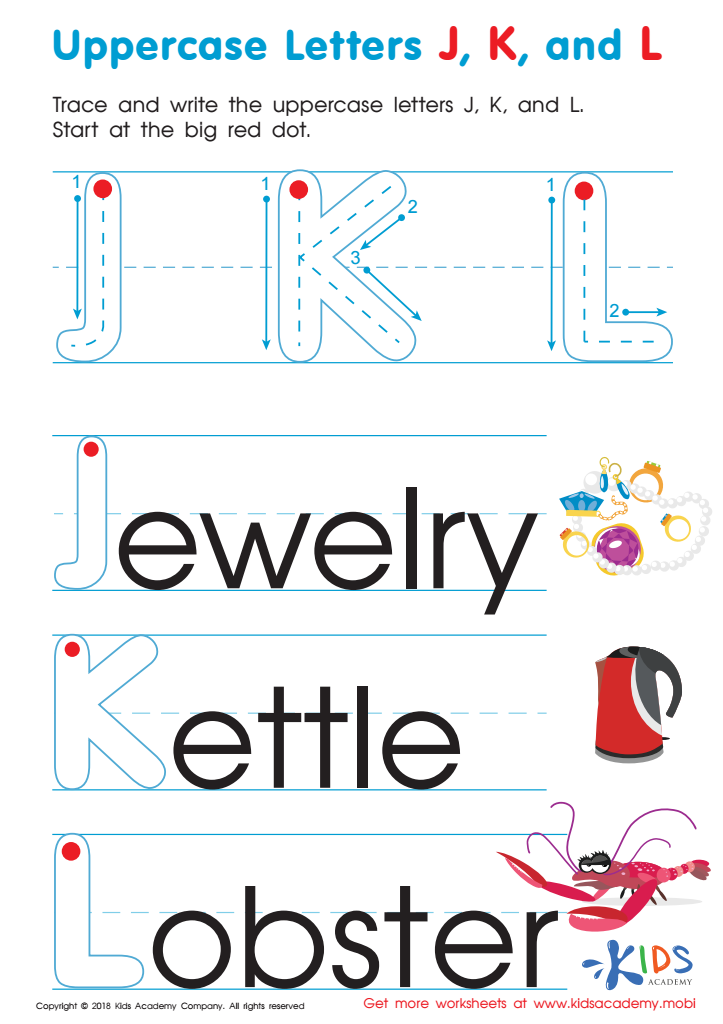
Jewelry, kettle and lobster share a common trait: their names start with J, K and L, 3 letter neighbors found in the middle of the alphabet. This traceable worksheet helps kids learn letter sounds and practice writing. Arrows and tracing lines make it easy to form neat pencil strokes. Red dot shows where kids should start. Perfect for preschoolers and kindergarteners!
Uppercase Letters J, K, and L Worksheet
Worksheet
Uppercase Letters S, T, and U Worksheet

Uppercase Letters S, T, and U Worksheet

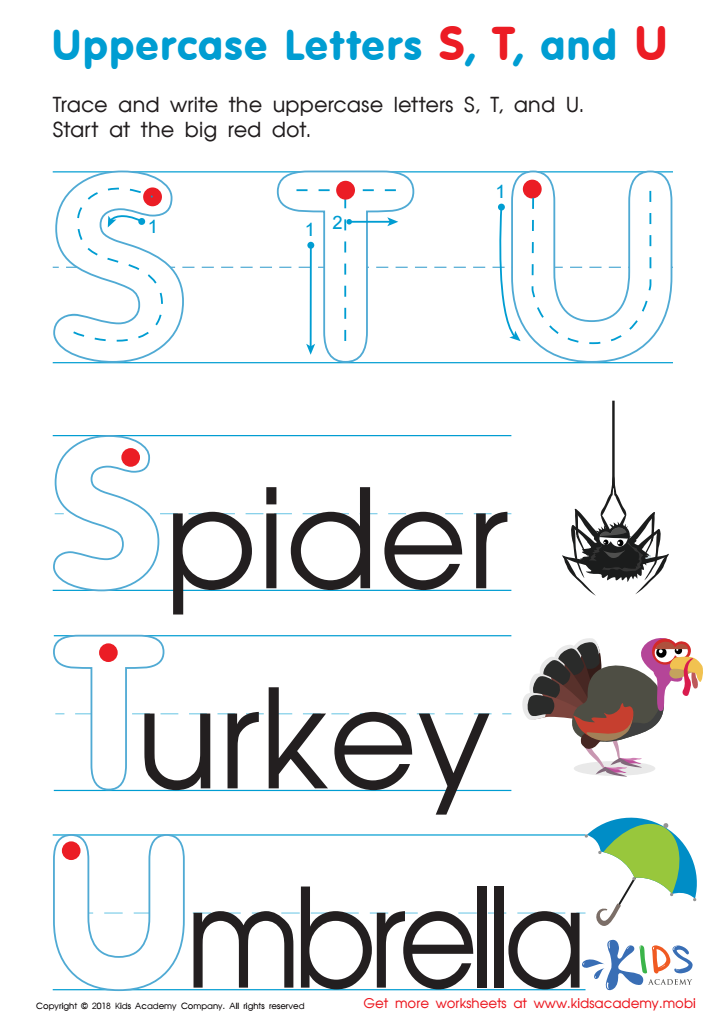
Help your kids learn to write upper-case letters with this fun tracing sheet. Start at the big red dot for each letter: S, T, and U. Show them the pictures and ask what letter each word starts with. Guide their hand and watch them learn!
Uppercase Letters S, T, and U Worksheet
Worksheet
Uppercase Letters G, H, and I Worksheet Preview

Uppercase Letters G, H, and I Worksheet

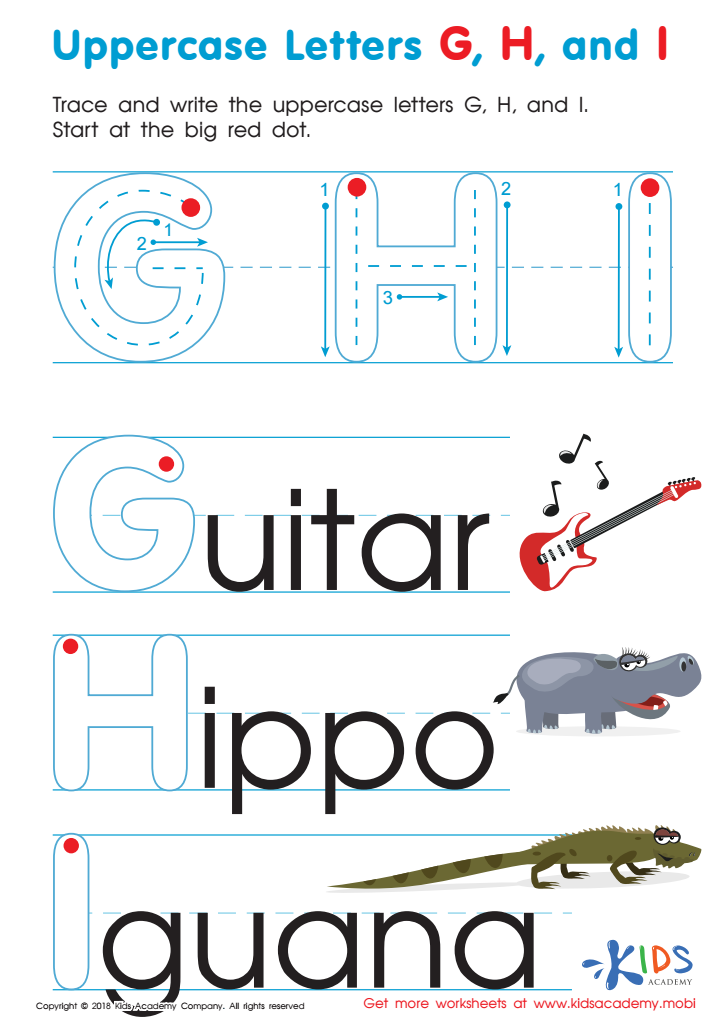
Trace each letter with the big red dot, connecting them to sounds as you go. Then write G to I. Congrats on a job well done! Rock on with a cute hippo and iguana while working on this delightful kindergarten worksheet!
Uppercase Letters G, H, and I Worksheet
Worksheet
Uppercase Letters D, E, and F Worksheet Preview


Uppercase Letters D, E, and F Worksheet

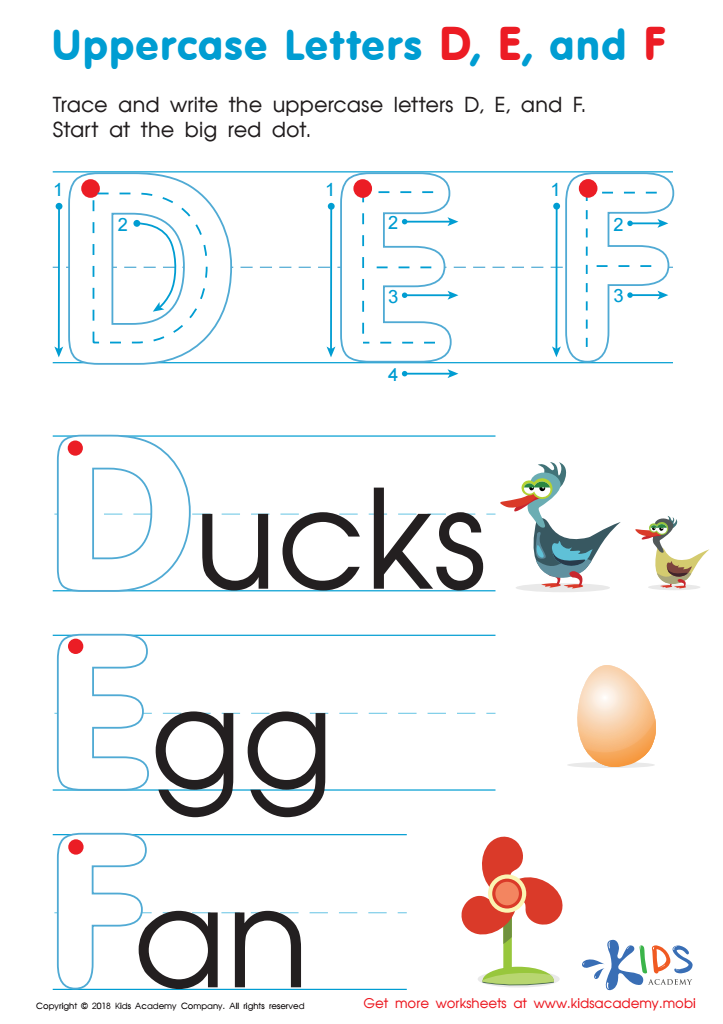
A-F are important letters! Get kids tracing with this free printable worksheet. Help them learn the right pencil strokes by following the tracing lines, starting at the big red dot. Reinforce letter sounds with the colorful pictures. 80 words.
Uppercase Letters D, E, and F Worksheet
Worksheet
Uppercase Letters Y Z Worksheet

Uppercase Letters Y Z Worksheet

Help your child learn their ABCs with this fun tracing activity! They must trace and write Y and Z in uppercase form, starting from the red dot. Kids will love the fun images for extra engagement. Guiding their hand carefully will help them practice and perfect their writing skills.
Uppercase Letters Y Z Worksheet
Worksheet
Uppercase Letters V, W, and X Worksheet


Uppercase Letters V, W, and X Worksheet

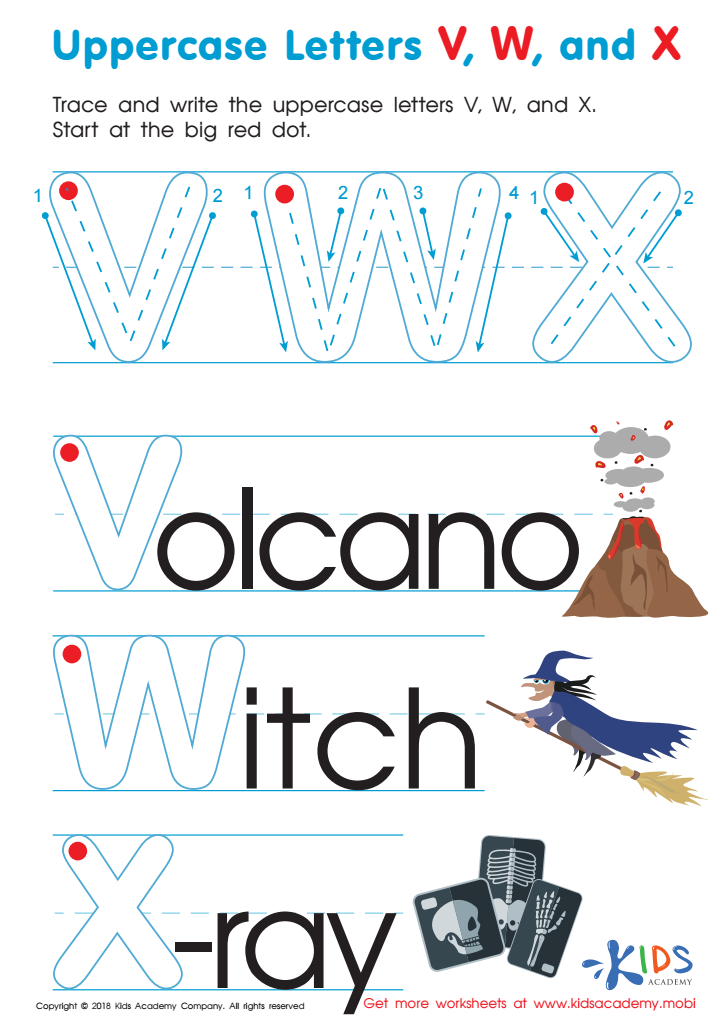
This worksheet is perfect for kids struggling to write uppercase letters V, W, and X. Warm up their brains first by having them name words starting with these letters. Then, help them trace and write each letter from the big red dot. With your assistance, they will quickly sharpen their writing skills.
Uppercase Letters V, W, and X Worksheet

Worksheet


Handwriting practice, especially for normal uppercase letters, is crucial for children ages 5-8 as it lays the foundation for their literacy skills. Around this age, children are in a critical developmental stage where fine motor skills are enhanced through structured activities. Regular handwriting practice helps in improving these motor skills, ensuring better hand-eye coordination and muscle memory.

Moreover, understanding and forming uppercase letters correctly is vital because it prepares children for all future writing tasks. Uppercase letters can be simpler for children to start with due to their uniform size and uncomplicated shapes. This early writing practice also enhances cognitive development by reinforcing letter recognition, linking visual symbols and sounds, and aiding in phonemic awareness and reading skills.

Handwriting practice for young children also fosters patience, discipline, and attention to detail. When children put effort into their handwriting, they learn to value the process of creating written content, which promotes a growth mindset and boosts self-esteem.

From a social perspective, clear handwriting can help children communicate more effectively with peers and teachers, developing better interpersonal relationships and academic confidence. Therefore, parents and teachers should prioritize handwriting practice for normal uppercase letters to provide the groundwork for comprehensive educational growth and lifelong communication skills.