Filters

6 filtered results

Clear all filters
Favorites
With answer key
Interactive

6 filtered results

Difficulty Level

Grade


Discover our engaging "Word Recognition Normal Vowels Worksheets" designed for children aged 5-8. These interactive worksheets provide a fun and structured way to enhance vowel recognition and word reading skills. With a variety of activities, kids will practice identifying short and long vowel sounds, complete word puzzles, and match pictures with words. Our resources are tailored to foster early literacy, boost comprehension, and build confidence in young learners. Perfect for use at home or in the classroom, these worksheets make learning enjoyable while setting a solid foundation for future reading success. Start your child’s literacy journey today!

Check out this FREE Trial Lesson on Vowels for age 5-8!

Digraphs

Favorites
With answer key
Interactive
  • 5-8
  • Word Recognition
  • Vowels
  • Normal
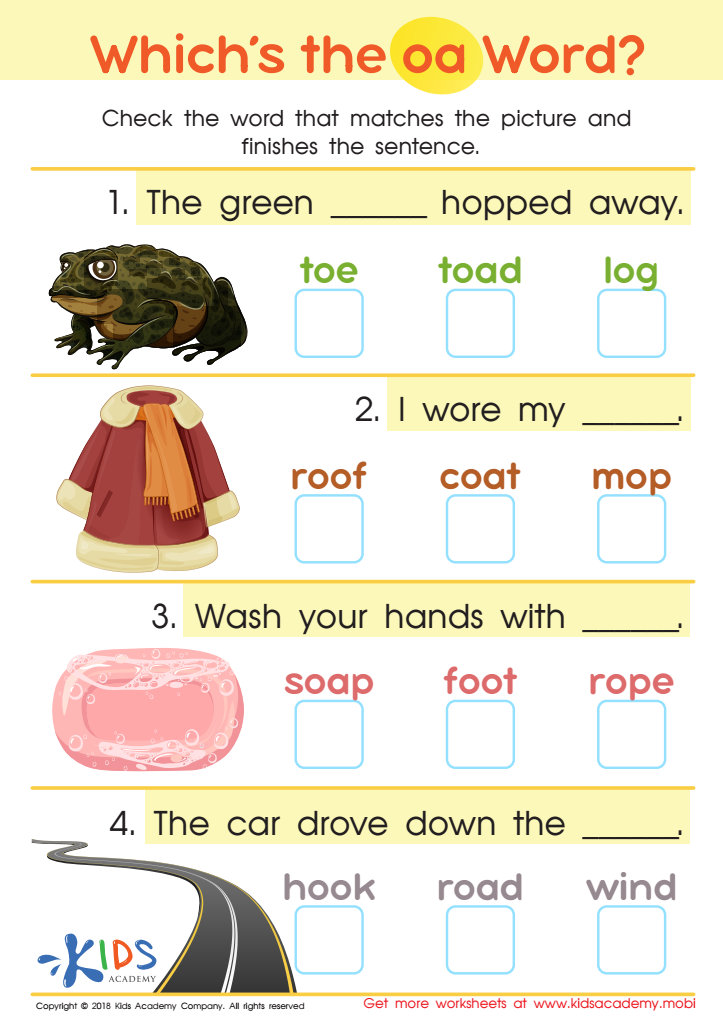
Which's the OA Word? Worksheet

Which's the OA Word? Worksheet

Encourage your kids to complete this fun worksheet. Ask them to identify the animals and objects in the pictures. Read the incomplete sentences aloud, and then find the correct word to finish the sentence. Check their work.
Which's the OA Word? Worksheet
Worksheet
Reading: OW and OU Words Worksheet

Reading: OW and OU Words Worksheet

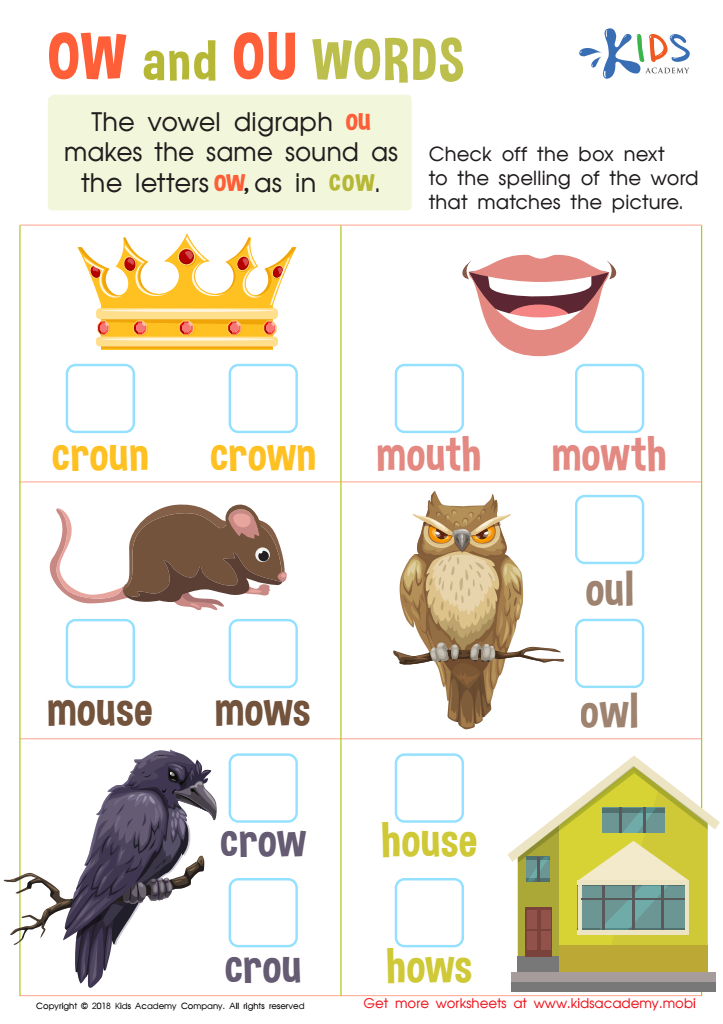
Help your kids learn phonetics! Explain the different sounds and long/short variations. Emphasize that some vowel sounds are the same, e.g. ou = ow in cow. For practice, have them read aloud the words in the worksheet and check the box next to the spelling that matches the picture.
Reading: OW and OU Words Worksheet
Worksheet
Words with ea Worksheet

Words with ea Worksheet

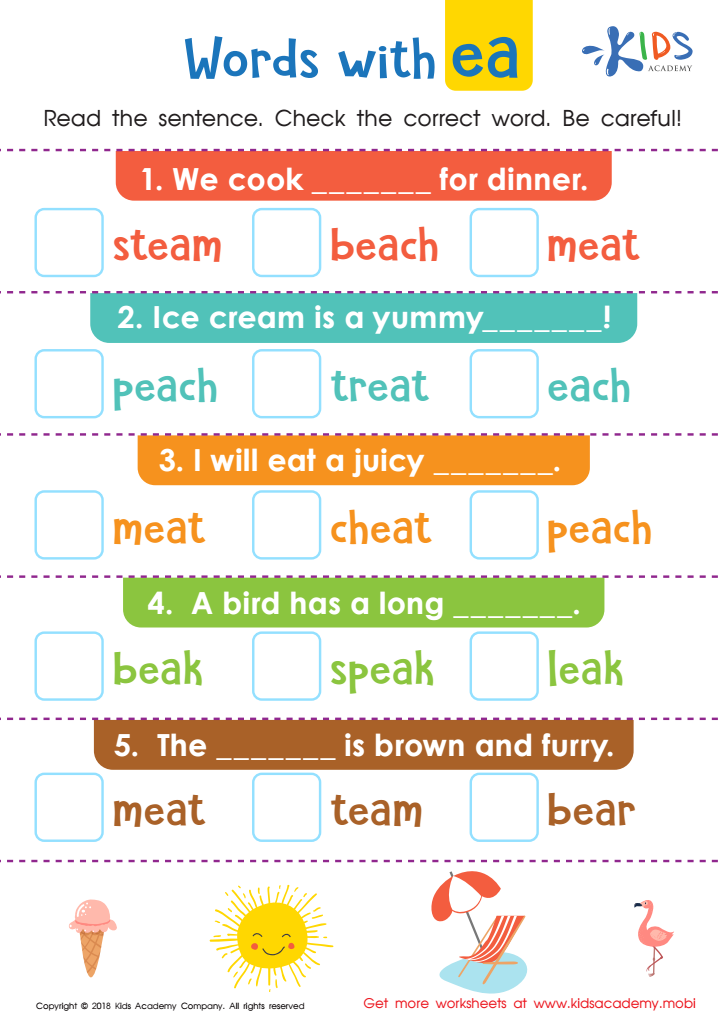
Beginning readers may struggle with -ea vowel digraphs, which can have multiple sounds and be tricky to decode. This cheerful worksheet helps kids practice reading sentences with missing -ea words, using context clues to fill in the blanks. They'll also be exposed to various -ea sound examples, and build their sight word knowledge.
Words with ea Worksheet
Worksheet
Is It Silent? Worksheet

Is It Silent? Worksheet

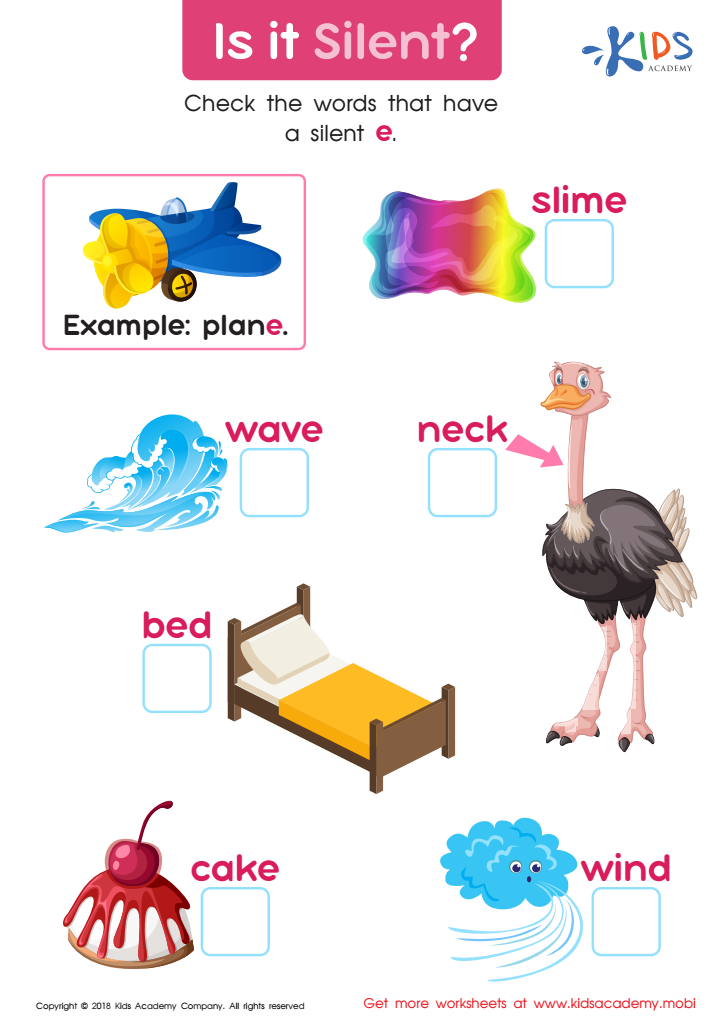
Phonetics can be tricky, like the sound of /e/ in 'egg' vs. the silent /e/ at the end of 'slime'. Ask your students to give more examples. Read out the words in this worksheet with your kids and ask them to identify the silent /e/ ones.
Is It Silent? Worksheet
Worksheet
Phonics for Kids | Long Vowel Sound E | PDF Worksheet 1

Long Vowel Sound E Worksheet

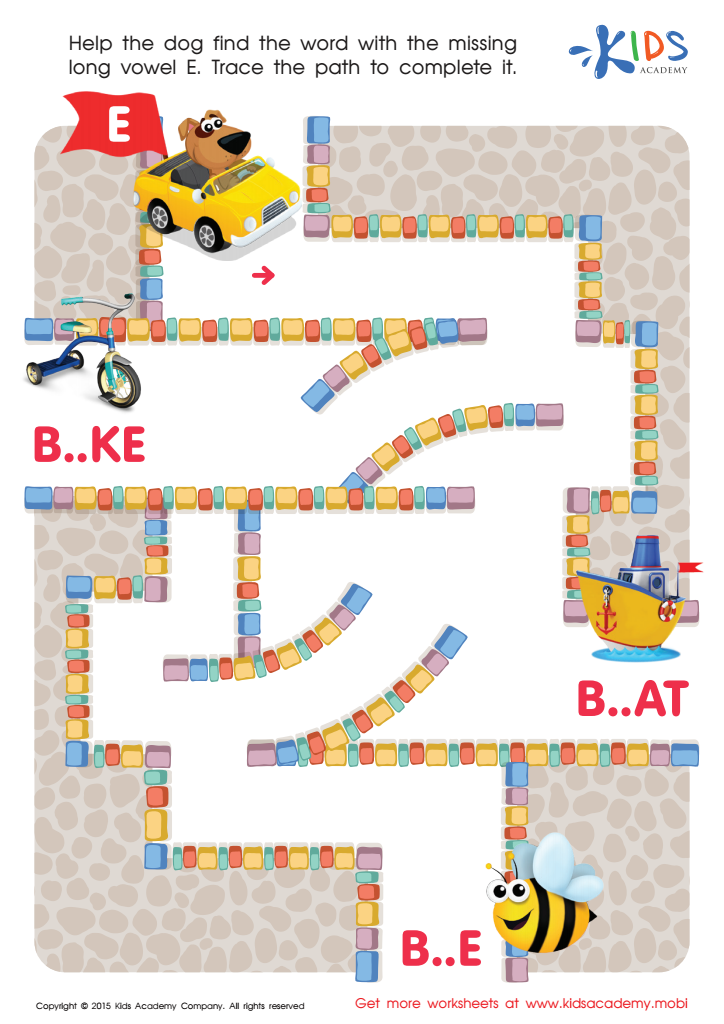
Practice distinguishing long and short vowel sound E with this free printable! Kids must complete the word “bee” by tracing the maze and adding the missing letter E. Remind them to say the word aloud to help sharpen their phonics ear. Get more phonics fun with the vowel sound E here.
Long Vowel Sound E Worksheet
Worksheet
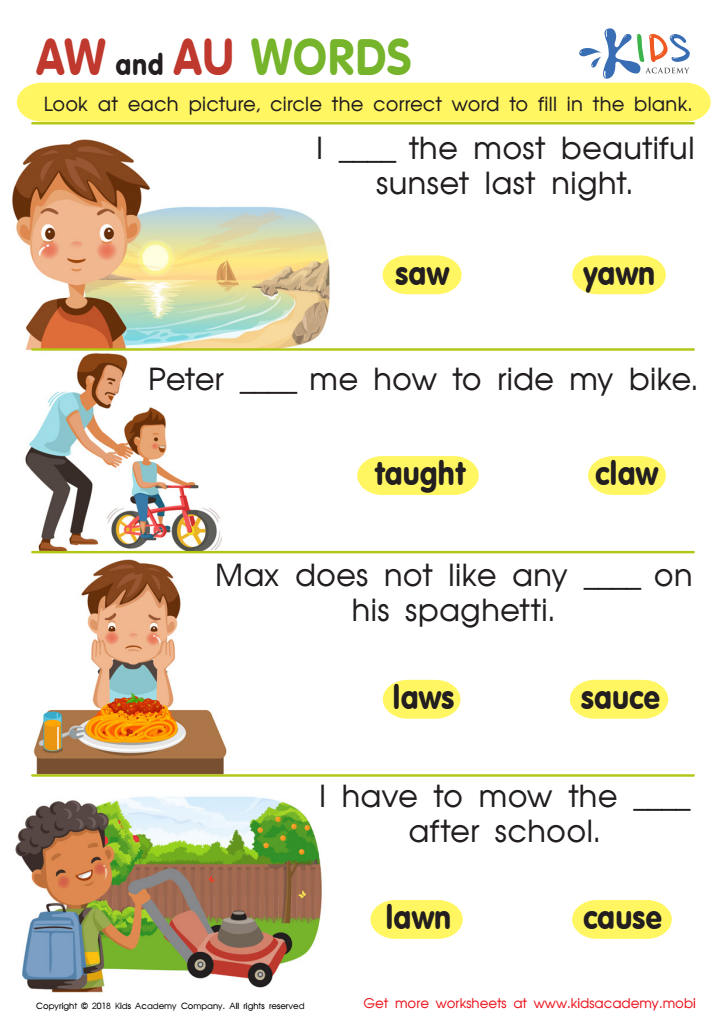
Reading: AW and AU Words Worksheet


Reading: AW and AU Words Worksheet

This worksheet helps kids recognize that /au/ and /aw/ can make the same sound. Students read sentences and pick the correct word with one of the digraphs. Understanding digraphs improves decoding and reading fluency. Perfect for reading and phonics classes.
Reading: AW and AU Words Worksheet

Worksheet


Word recognition, particularly with normal vowels, is critical for children ages 5-8 as it serves as a foundational skill for reading and literacy development. At this age, children are transitioning from learning letters and sounds to beginning to read words fluently. When children understand how to recognize words that include normal vowels, they increase their reading comprehension and overall confidence.

Additionally, vowel sounds are essential in English as they form the backbone of most words. Mastering word recognition allows children to decode unfamiliar words, enhancing their vocabulary and ability to express thoughts clearly. Considering this development phase, parents and teachers should create engaging activities that focus on normal vowel patterns to cultivate these skills.

Moreover, early mastery of word recognition influences later academic success. Children who struggle with reading may face challenges in all subjects as they progress beyond early education. Fostering an environment that prioritizes word recognition will not only support immediate literacy skills but also contribute to long-term educational achievement. Encouraging reading at home and through guided instructional practices in school will ensure children develop the necessary skills to become proficient readers, setting them up for success in their academic endeavors.