Basic geometry understanding Normal Worksheets for Ages 5-8
4 filtered results
-
From - To
Explore our engaging Basic Geometry Understanding worksheets designed for children aged 5 to 8. These dynamic resources introduce essential geometric concepts such as shapes, patterns, and spatial awareness through fun and interactive activities. Each worksheet is crafted to foster critical thinking and problem-solving skills while making learning enjoyable. Ideal for classroom use or homework reinforcement, our worksheets promote creativity and a solid grasp of fundamental geometry. With colorful illustrations and age-appropriate exercises, kids will thrive as they explore the fascinating world of shapes. Dive into geometry and watch your child's understanding grow with our comprehensive and accessible tools!
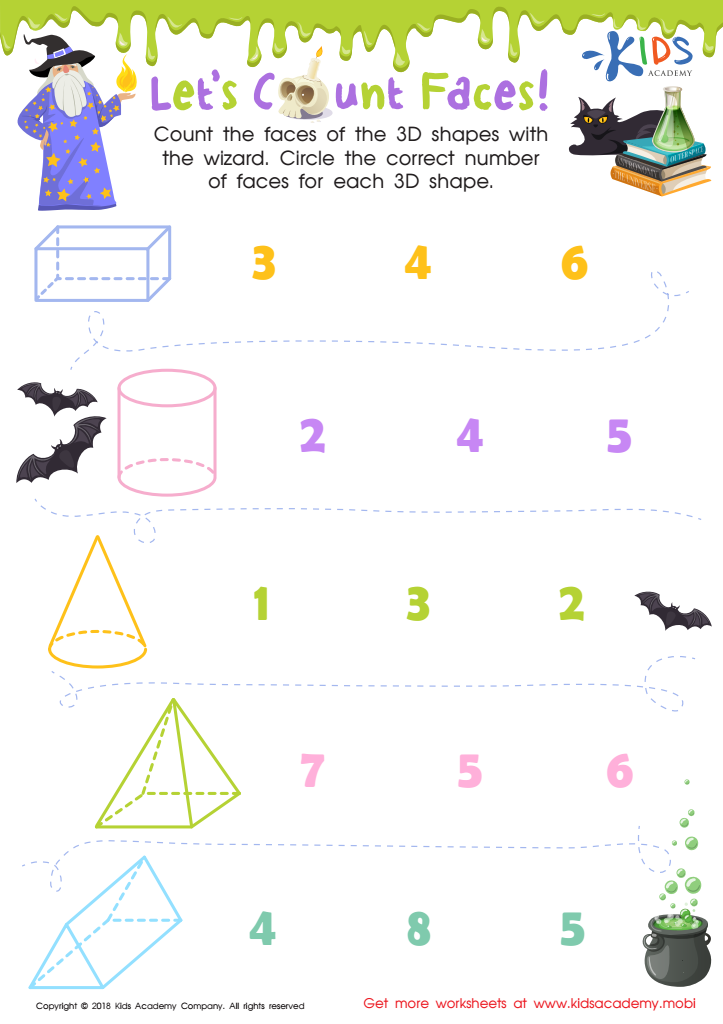
Let's Count Faces! Worksheet
 Assign to My Students
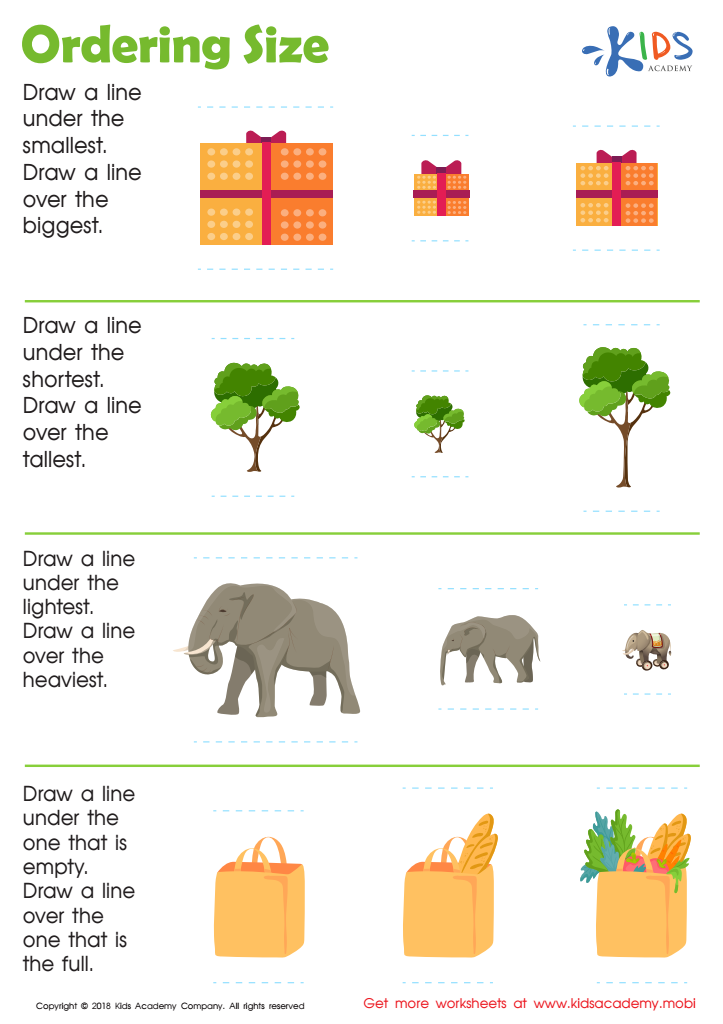
Ordering Size Worksheet
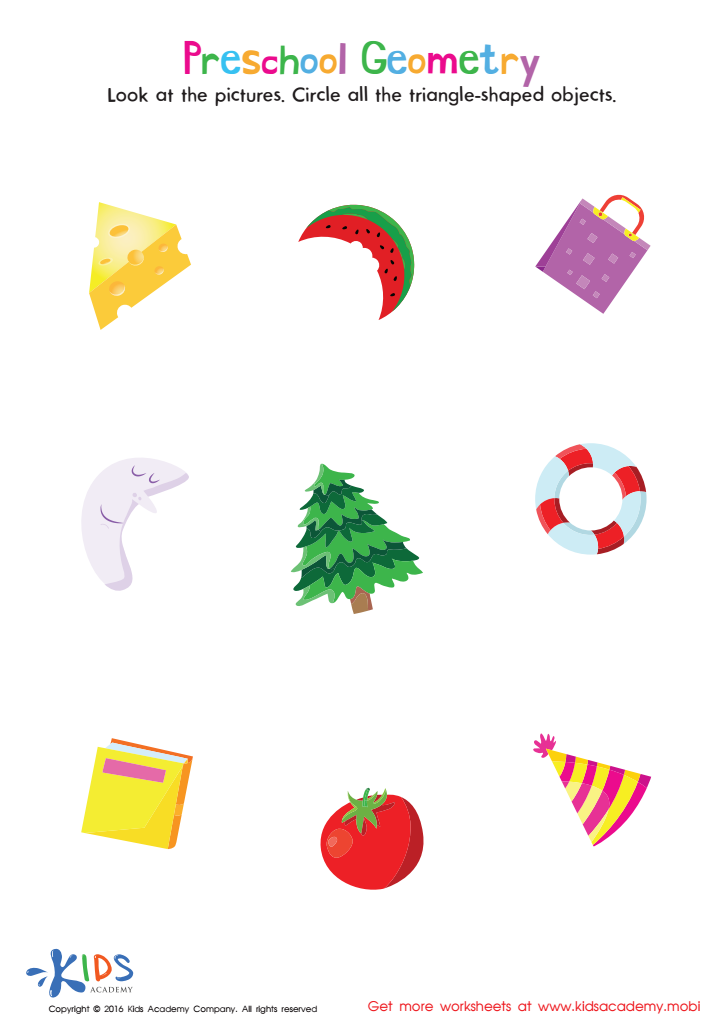
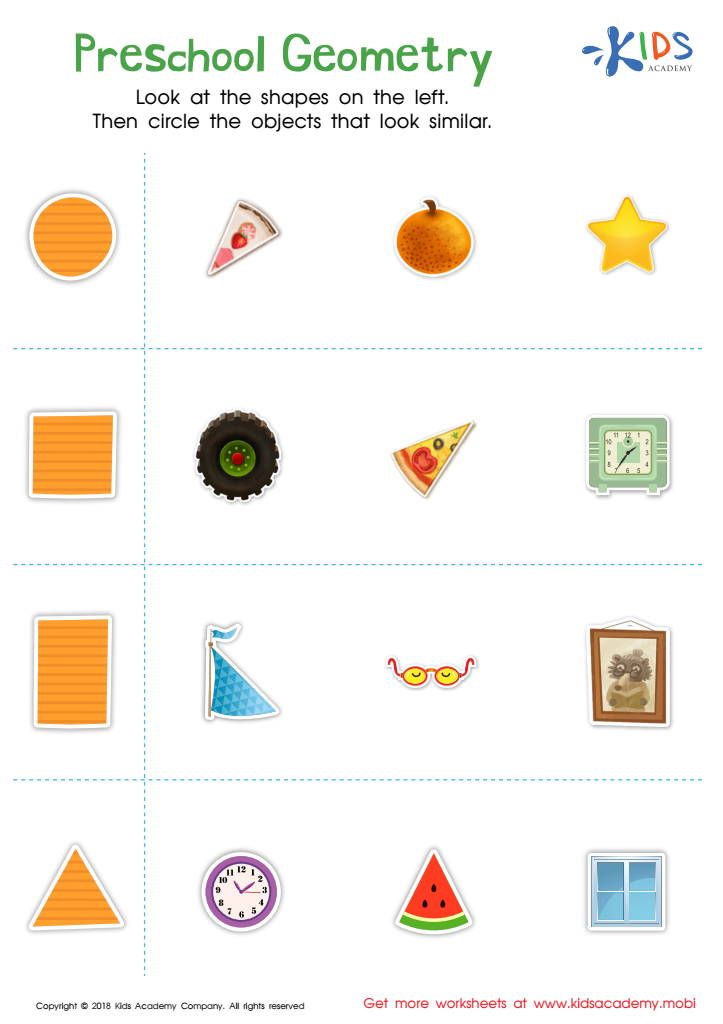
Preschool Geometry Worksheet






Understanding basic geometry is essential for children aged 5 to 8 as it lays a foundational skill set crucial for their overall academic development and everyday life. At this age, children are naturally curious and explore their environment; geometry helps them describe and categorize the shapes and spaces around them. Engaging with concepts such as shapes, sizes, positions, and measurements fosters critical thinking and problem-solving skills, enabling children to make connections between math and real-world situations.
Furthermore, early geometry education enhances spatial awareness, which is vital for future subjects like science, art, and physical education. It aids in developing logical reasoning as children begin to understand relationships, symmetry, and patterns. Simple activities like sorting objects by shape or size encourage creativity and analytical skills while making math enjoyable.
Additionally, a strong grasp of basic geometry sets the stage for later mathematical concepts, making transitions to more complex topics seamless. For parents and teachers, this means nurturing confident learners who see math as a practical and enjoyable part of everyday life, potentially fostering a love for learning that can last a lifetime. Thus, investing time in geometry at this early stage contributes enormously to children's cognitive and social growth.








