Color Identification Normal Worksheets for Ages 5-8 - Page 2
26 filtered results
-
From - To
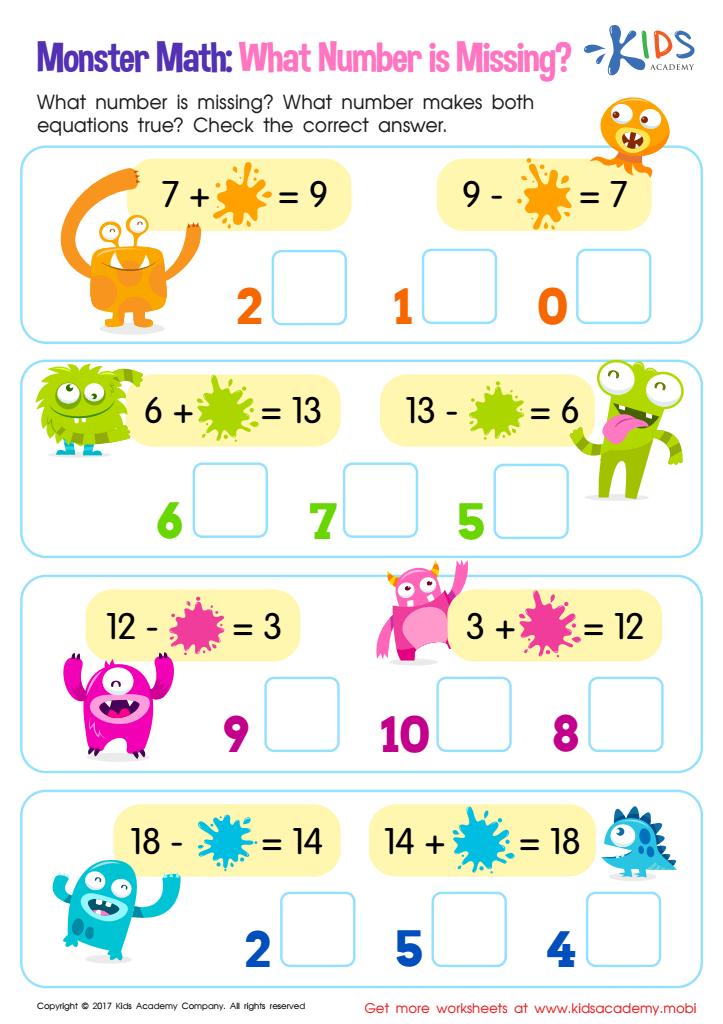
Missing Number: Monster Math Worksheet
 Assign to My Students
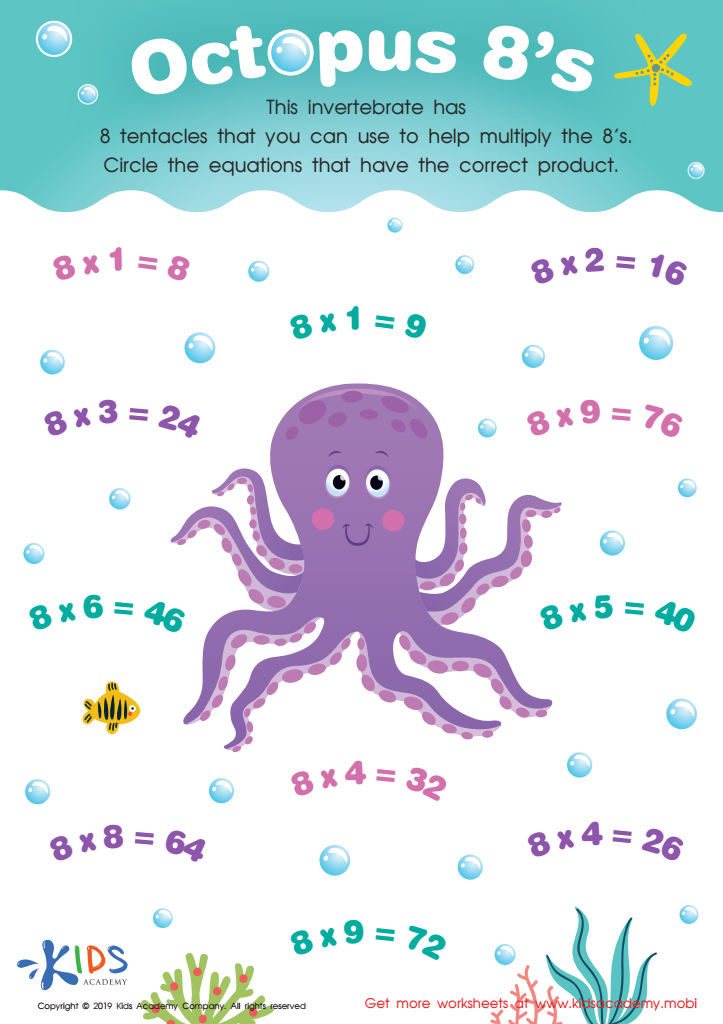
Octopus 8’s Worksheet







Understanding color identification is fundamental for children ages 5-8 as it serves as a cornerstone in their cognitive and social development. Colors play an essential role in early education, helping children build their language skills by expanding their vocabulary. When children learn to identify colors, they also learn to categorize and differentiate objects in their environment, which enhances critical thinking and problem-solving skills.
Moreover, color recognition fosters creativity and self-expression. Artistic activities such as painting, drawing, or crafting utilize color, encouraging children to explore their imaginations and communicate their thoughts visually. Beyond creativity, identifying colors can aid in emotional literacy; different colors often represent various emotions, helping children articulate their feelings more effectively.
Additionally, color identification connects with everyday experiences. Recognizing colors in their surroundings—like traffic lights, clothing, or nature—makes learning practical and relevant. It also improves not just their observational skills but their spatial awareness and ability to navigate the world.
For parents and teachers, fostering color identification means nurturing confident, expressive, and cognitively aware children, setting the stage for lifelong learning and development. Ensuring children master this skill prepares them for future academic endeavors while encouraging social interaction and emotional growth beyond the classroom.








